
 Bitcoin
  Ethereum
  Tether
  XRP
XRP  BNB
BNB  USDC
USDC  Solana
  TRON
TRON  Lido Staked Ether
  Figure Heloc
US dollar-denominated stablecoins may expose emerging economies to external macro shocks and financial stability risks, according to the Financial Stability Board. 🔗 Source 💡 DMK Insight The Financial Stability Board’s warning about US dollar-denominated stablecoins is a big deal for emerging markets. These stablecoins can create vulnerabilities, especially if local economies are already shaky. If a macro shock hits, like a sudden dollar strength or policy change in the US, countries relying on these stablecoins could face liquidity crises. Traders should be aware of how this could impact currencies in emerging markets, especially those with high dollar exposure. Look for potential volatility in these currencies as investors reassess their risk exposure. If you’re trading in these regions, keep an eye on economic indicators like inflation rates and central bank policies, as they could signal shifts in stability. Also, watch for any regulatory changes that might arise from this warning, as they could create new trading opportunities or risks. 📮 Takeaway Monitor emerging market currencies for volatility as the FSB’s warning could trigger shifts in investor sentiment and liquidity risks.

Federal regulation looms as 11 states go after prediction markets
Kalshi is facing off with state regulators around the US, who claim that prediction markets are a form of gambling and recognize that they are a significant source of potential revenue. 🔗 Source 💡 DMK Insight Kalshi’s clash with state regulators could reshape the prediction market landscape. As regulators push back, viewing prediction markets as gambling, traders should consider the implications for liquidity and market access. If Kalshi loses ground, it could stifle innovation and limit trading opportunities in this niche. On the flip side, if they successfully navigate these challenges, it might pave the way for more robust frameworks that could legitimize and expand the market. Keep an eye on how this regulatory battle unfolds, as it could influence related assets like cryptocurrencies that thrive on speculative trading. Watch for any announcements or rulings in the coming weeks that could signal a shift in market dynamics. 📮 Takeaway Monitor Kalshi’s regulatory developments closely; a favorable outcome could enhance market legitimacy and trading opportunities in prediction markets.

CFTC chief launches innovation task force focused on crypto framework
The task force will work with industry participants to develop regulatory approaches for crypto, AI and prediction markets. 🔗 Source 💡 DMK Insight The formation of a task force to regulate crypto, AI, and prediction markets is a game changer for traders. Regulatory clarity can significantly impact market sentiment and trading strategies. For instance, if the task force leans towards stricter regulations, we might see increased volatility in crypto assets as traders react to potential compliance costs and operational changes. On the flip side, a more favorable regulatory environment could boost institutional investment, driving prices higher. Keep an eye on how this task force’s developments influence market trends, especially in the crypto space, where uncertainty often leads to rapid price swings. Watch for announcements from this task force in the coming weeks, as they could set the stage for major shifts in trading strategies. If you’re trading crypto, consider adjusting your positions based on the regulatory news flow, particularly around key dates when updates are expected. 📮 Takeaway Monitor the task force’s announcements closely; regulatory clarity could lead to significant price movements in crypto markets.

Australian February CPI: Core (trimmed mean) 3.3% y/y (vs. expected 3.4%)
CPI for February slightly lower than expected both headline and underlying (core). Australian shares have added to gains. March, of course, has brought fuel price surges. We’ll get that news in a month.I’m seeing the figures being greeted with joy. Dial it back folks, the target band the RBA shoots for is 2-3%. I’ll have more to come on this separately … ADDED, here we are, more detail etc,:Australia February CPI cools slightly, but energy shock clouds inflation outlook This article was written by Eamonn Sheridan at investinglive.com. 🔗 Source 💡 DMK Insight CPI figures for February came in lower than expected, but here’s why traders should stay cautious: While Australian shares are rallying on this news, the reality is that the RBA’s target band remains a critical factor. A slight dip in CPI doesn’t negate the ongoing pressures from rising fuel prices, which could skew inflation expectations in the coming months. Traders should be wary of overreacting to this initial optimism; the real test will be how these figures influence the RBA’s next moves. If inflation persists above target levels, we could see a shift in monetary policy that impacts both equities and the AUD. Keep an eye on the AUD/USD pair, as it may react sharply to any shifts in sentiment regarding interest rates. Watch for key levels around 0.6700 and 0.6800, which could serve as resistance or support depending on upcoming economic indicators. In the broader context, this CPI data could also ripple through commodity markets, especially oil, as fuel prices are a significant component of inflation. If fuel costs continue to rise, it might counteract any positive sentiment from the CPI report. So, while the initial reaction is bullish, the underlying risks remain, and traders should monitor fuel price developments closely. 📮 Takeaway Watch the AUD/USD closely around 0.6700 and 0.6800 as fuel prices could impact inflation expectations and RBA policy shifts in the coming weeks.

SpaceX IPO filing imminent, report says deal could raise over $75bn
SpaceX is reportedly preparing to file for an IPO that could raise over $75bn, though the size and structure remain uncertain given its already high private valuation.The Information carries the report, gated. Summary:SpaceX reportedly preparing to file IPO prospectus imminently. Deal could target a raise of more than $75bn, per report. Retail allocation may exceed 20%, unusually large. Follows recent integration with Musk’s xAI ecosystem. Would rank among largest IPOs ever if confirmed.SpaceX is reportedly moving closer to a long-anticipated public listing, with plans to file its IPO prospectus as soon as this week or next, according to a report citing a person familiar with the matter.Advisers involved in the process are said to be targeting a capital raise of more than $75 billion, a figure that, if realised, would place the offering among the largest in market history. While details remain preliminary and subject to change, the reported size has drawn attention given that most mega IPOs historically have raised significantly less capital, even when valuations were substantial.The report also indicated that the retail investor allocation could exceed 20%, which would be unusually high for a deal of this scale. Large IPOs are typically dominated by institutional demand, and such a sizeable retail component could reflect an effort to broaden participation in what is likely to be one of the most closely watched listings in years.SpaceX’s IPO has been widely anticipated for some time, though timing has remained uncertain due to the company’s strong access to private capital markets. The latest developments suggest a potential shift, possibly influenced by broader strategic positioning around Elon Musk’s expanding technology ecosystem.Recent corporate activity has further elevated investor interest. SpaceX has reportedly merged with Musk’s artificial intelligence venture xAI, which has been valued at around $250 billion. The integration highlights growing overlap between aerospace, satellite communications and AI infrastructure, particularly as SpaceX’s Starlink network becomes increasingly central to global data connectivity.In terms of valuation context, SpaceX has previously been valued in private markets in the range of roughly $150–200 billion. This raises questions about how a $75 billion capital raise would be structured, as such a figure would imply either a very large free float or a significantly higher valuation at listing. As a result, market participants are likely to treat early reports cautiously until more concrete details emerge in formal filings.For markets, the potential IPO represents a major upcoming liquidity event and a key test of appetite for large-scale growth listings. It could also have broader implications for equity issuance trends, particularly if it successfully attracts both institutional and retail demand at scale. This article was written by Eamonn Sheridan at investinglive.com. 🔗 Source 💡 DMK Insight SpaceX’s potential IPO could shake up the market, and here’s why: a $75bn raise would not only set a record but also attract massive institutional interest. For traders, this is a pivotal moment. If the IPO goes through, expect volatility in related sectors like aerospace and tech, as investors reposition their portfolios. The anticipation alone could lead to speculative trading in companies like Boeing or Lockheed Martin, which may see increased interest as investors look for exposure to the space industry. Keep an eye on the broader market sentiment; if the IPO is well-received, it could signal a bullish trend across tech stocks. Conversely, if the offering falters, it might trigger a sell-off in high-growth sectors. Watch for the filing date and any preliminary pricing details. These will be crucial indicators of market appetite. Also, monitor how institutional players react, as their movements could dictate short-term price action in related equities. 📮 Takeaway Traders should watch for SpaceX’s IPO filing date and initial pricing details, as these will significantly impact market sentiment and related stocks.
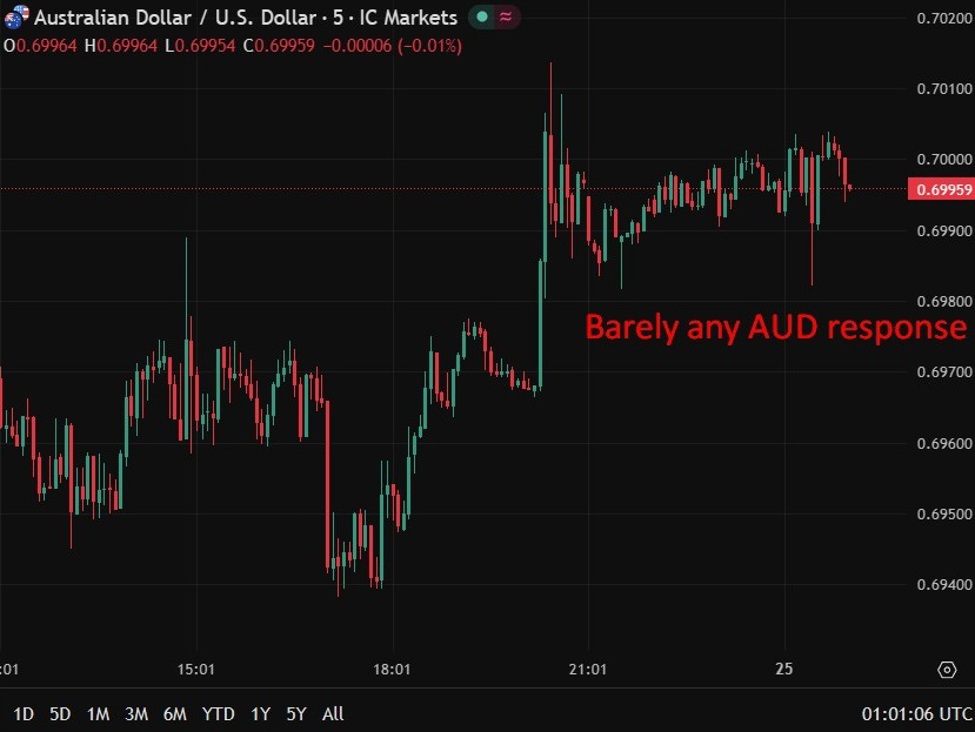
Australia February CPI cools slightly, but energy shock clouds inflation outlook
Australia’s February CPI showed modest cooling, but inflation remains above target and the data predates a sharp energy-driven inflation shock, leaving risks tilted to the upside.Summary:Australia February CPI cooled slightly to 3.7% y/y (vs 3.8% prior/exp). Monthly CPI flat at 0.0% m/m, down from 0.4%. Trimmed mean came in soft m/m at 0.2% (vs 0.3% exp), y/y at 3.3%. Inflation still above RBA target band, with non-tradables sticky. Data pre-dates March energy shock, meaning upside risks remain.Australia’s inflation data for February showed a modest cooling in price pressures, though underlying inflation remains above target and the outlook has been materially complicated by the recent surge in energy prices.Data from the Australian Bureau of Statistics showed headline CPI was unchanged on a monthly basis in February, coming in at 0.0% m/m after a 0.4% rise in January. On an annual basis, inflation eased slightly to 3.7% y/y from 3.8%, coming in just below expectations for an unchanged reading.Core inflation also showed some moderation at the margin. The trimmed mean rose by 0.2% m/m, undershooting forecasts of 0.3%, while the annual pace held at 3.3% y/y following a downward revision to January’s figure. While this suggests some easing in momentum, the level of underlying inflation remains above the Reserve Bank of Australia’s 2–3% target band.The detail of the report points to a still-sticky domestic inflation backdrop. Non-tradables inflation continues to pose a challenge, indicating persistent price pressures in services and other domestically driven components. This reinforces the view that inflation in Australia was already running too high even before the latest external shocks.Importantly, the February data predates the sharp rise in global energy prices seen in March, driven by escalating geopolitical tensions in the Middle East. This timing is critical for policymakers, as it means the current inflation readings do not yet reflect the expected pass-through from higher fuel, electricity and gas costs.The removal of earlier government rebates is also beginning to show through in electricity pricing, suggesting households may face further increases in utility costs in coming months. Combined with rising fuel prices, this points to a likely reacceleration in inflation in the near term.For the RBA, the data presents a mixed picture. While the monthly print was relatively benign and slightly softer than expected, inflation remains above target and forward-looking risks have clearly shifted to the upside. As a result, the report is unlikely to alter the central bank’s tightening bias, particularly given its recent emphasis on energy-driven inflation risks. This article was written by Eamonn Sheridan at investinglive.com. 🔗 Source 💡 DMK Insight Australia’s February CPI data is a mixed bag, and here’s why it matters now: While the year-over-year inflation rate dipped to 3.7%, the flat monthly CPI signals potential stagnation, especially with energy prices likely to surge soon. Traders should be wary; this data doesn’t fully capture the looming energy-driven inflation shock that could push prices higher. The Reserve Bank of Australia (RBA) might be forced to adjust its monetary policy sooner than expected, which could impact AUD pairs. If inflation continues to rise, watch for the RBA’s response—interest rate hikes could follow, affecting forex markets and potentially leading to volatility in AUD/USD. Keep an eye on the 0.65 level for AUD/USD; a break below could signal bearish sentiment, while a rebound might indicate a bullish reversal. On the flip side, the cooling CPI could be interpreted as a sign that the RBA’s previous tightening measures are having an effect, which might provide temporary support for the AUD. However, the real risk lies in the energy sector’s influence on inflation, making it crucial to monitor oil prices and energy market trends closely. The next few months will be pivotal, so traders should stay alert for any shifts in RBA policy or unexpected inflation data. 📮 Takeaway Watch the AUD/USD closely around the 0.65 level; a break could signal bearish momentum as inflation risks rise.
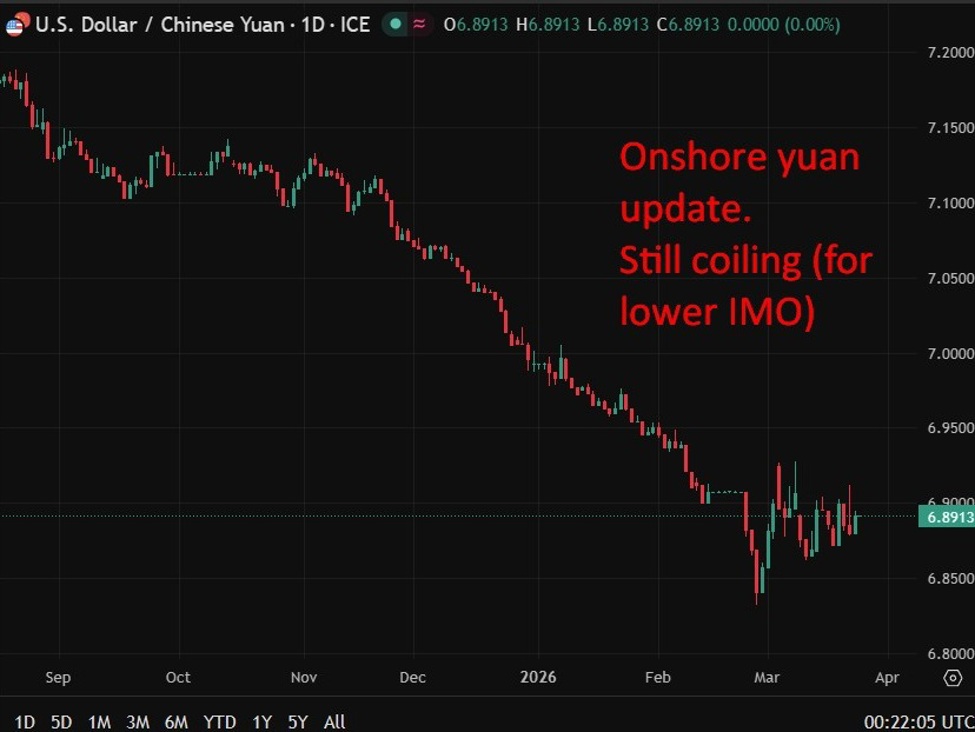
PBOC sets USD/ CNY mid-point today at 6.8911 (vs. estimate at 6.8819)
The PBOC allows the yuan to fluctuate within a +/- 2% range, around this reference rate.PBOC injects 20.5bn yuan in 7-day reverse repos at 1.4% (unchanged) in open market operations This article was written by Eamonn Sheridan at investinglive.com. 🔗 Source 💡 DMK Insight The PBOC’s recent 20.5 billion yuan injection signals a commitment to stabilize the yuan amid market volatility. With the yuan allowed to fluctuate within a +/- 2% range, traders should keep a close eye on how this impacts forex pairs, particularly USD/CNY. The unchanged 1.4% rate on reverse repos indicates the central bank’s cautious approach to liquidity, which could affect market sentiment. If the yuan weakens significantly, we might see increased volatility in related assets like commodities and equities, especially those tied to Chinese economic performance. Watch for any shifts in the yuan’s value as it approaches the upper or lower bounds of its fluctuation range, as this could trigger broader market reactions. Additionally, monitor the daily trading volume and sentiment indicators to gauge how traders are positioning themselves in response to these developments. 📮 Takeaway Keep an eye on the yuan’s movement within its +/- 2% range; a breach could lead to significant market shifts, especially in USD/CNY trades.

Iran prefers JD Vance for talks, over Witkoff or Kushner, highlighting trust issues
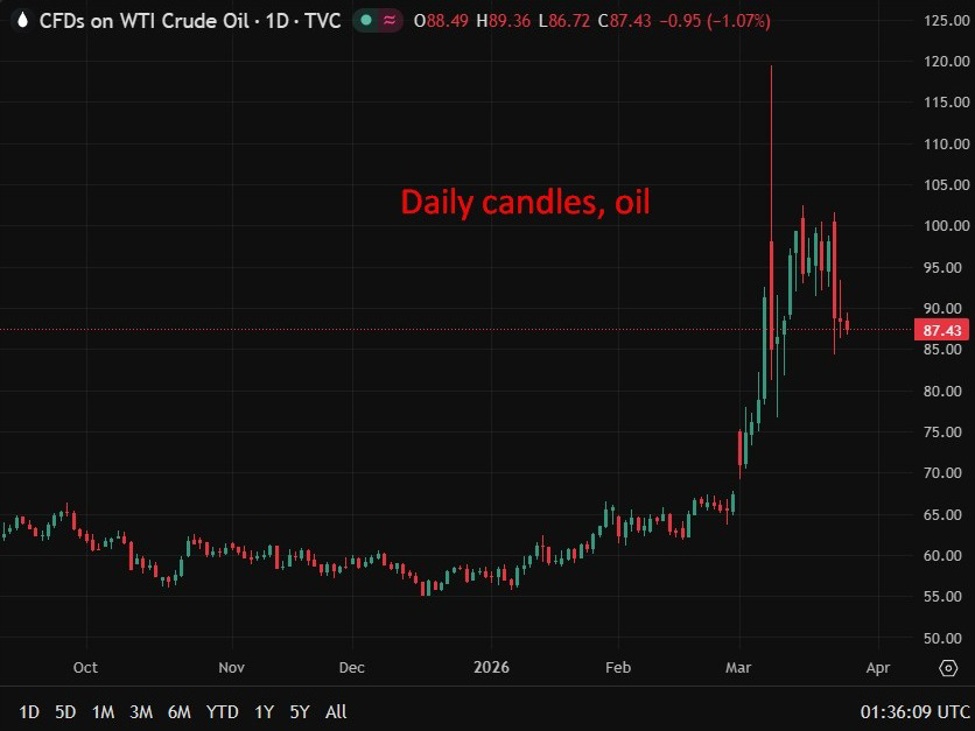
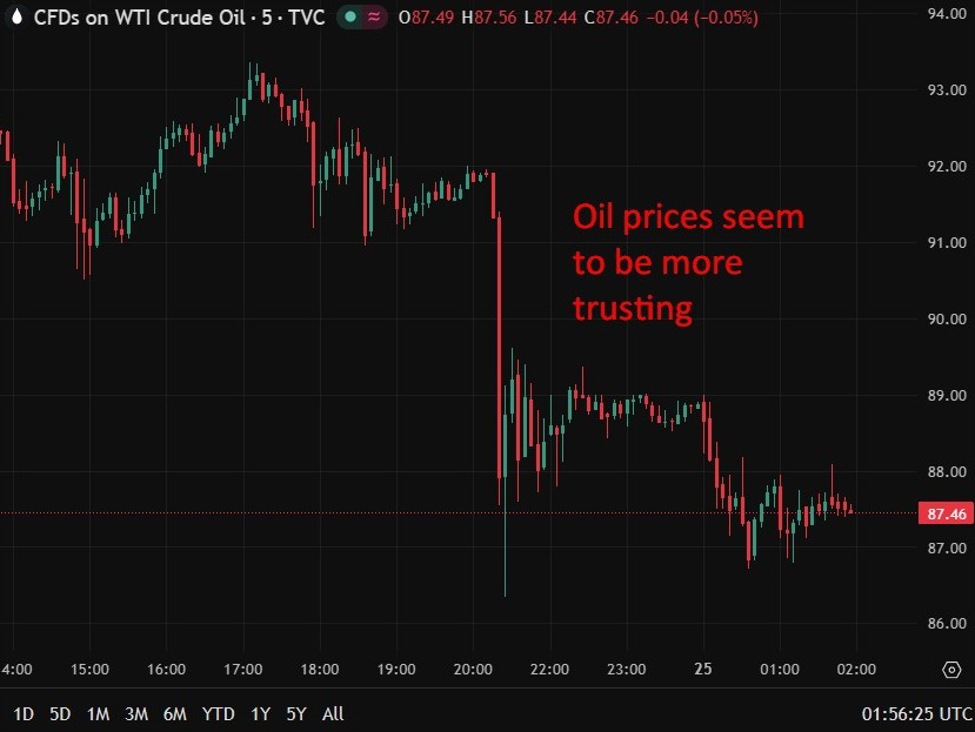
Its been a day of developments in the Middle East. It appears on balance positive:Oil falls on report of possible one-month ceasefire under Witkoff-Kushner planUS-Iran ceasefire proposal is complex, 15 points need to be agreed. Hormuz would open.Oil steady as US-Iran ceasefire talks face Israel uncertainty and broader Iran demandsand this earlier:ICYMI: Iran allows conditional Hormuz transit as thousands of ships remain stalled…. but:Israel expands conflict footprint with strike on key Russia–Iran Caspian supply route.And, I am not alone in pondering whether Trump is using diplomacy with Iran to buy time while positioning troops:US to deploy 3,000 82nd Airborne troops to Gulf amid Iran warOn with this post, though. Iran has indicated it prefers to negotiate with Vice President JD Vance rather than other US envoys, highlighting trust issues and adding uncertainty to already fragile ceasefire talks.Summary:Iran prefers negotiating with Vice President JD Vance over Witkoff/Kushner. Signals trust breakdown after failed talks and subsequent military action. US insists Trump decides negotiators; all key officials remain involved. Talks in Islamabad still possible but seen as uncertain. Highlights fragile diplomacy and internal friction around negotiation channels.Iran has signalled a preference to engage with US Vice President JD Vance in any renewed diplomatic talks, rather than special envoy Steve Witkoff or Jared Kushner, according to regional sources cited by CNN.The message, reportedly conveyed through back channels to Washington, reflects a perceived breakdown in trust following the collapse of earlier negotiations and the subsequent escalation into military action involving the US and Israel. Iranian officials are said to view discussions involving Witkoff and Kushner as unlikely to yield progress under current conditions.By contrast, Vance is seen by Tehran as more inclined toward de-escalation and a negotiated end to the conflict. Regional sources suggested there is a perception that the vice president would be more focused on bringing hostilities to a close, making him a more appealing counterpart for renewed talks.However, the situation remains complex. Despite Iran’s stated preference, Witkoff continues to play a central role in the US diplomatic effort, and Tehran may ultimately have little choice but to engage with whichever representatives the Trump administration appoints. As one source noted, while Iran can express a preference, it cannot dictate the composition of the US negotiating team.Washington has pushed back against the narrative. President Trump said that all key members of his diplomatic team are involved in ongoing efforts, while the White House emphasised that the decision on negotiators rests solely with the president. Officials also dismissed the reporting as potentially motivated by foreign influence, suggesting that unnamed regional sources may be attempting to shape perceptions.Looking ahead, a potential meeting between US and Iranian officials later this week in Islamabad remains on the table, though expectations for a breakthrough appear limited. Even proponents of the talks are said to be sceptical about whether they will ultimately take place.For markets, the development underscores the fragile and fragmented nature of current diplomatic efforts. While the existence of back-channel communication suggests negotiations are still alive, the lack of alignment on interlocutors highlights the difficulty of achieving meaningful progress in the near term.Maybe it’s the beard? This article was written by Eamonn Sheridan at investinglive.com. 🔗 Source 💡 DMK Insight Oil prices are reacting to potential geopolitical shifts, and here’s why that matters: The news of a possible one-month ceasefire under the Witkoff-Kushner plan is a significant development for traders. If the US-Iran talks progress, it could ease tensions in the Strait of Hormuz, a critical chokepoint for global oil supply. This uncertainty has kept oil prices steady, but any breakthrough could lead to a sharp decline in prices as supply fears diminish. Traders should keep an eye on the 15 points that need agreement; if they’re resolved, we could see a major shift in market sentiment. But there’s a flip side—if talks stall or if Israel’s position complicates matters, oil could spike again. The market is sensitive to these developments, so monitoring news closely is essential. Watch for key price levels around recent highs and lows, as they could signal breakout points. The next few weeks will be crucial as these negotiations unfold, and traders should prepare for volatility based on headlines. 📮 Takeaway Keep an eye on oil prices around key support and resistance levels as US-Iran ceasefire talks progress; volatility is likely in the coming weeks.
Iran proposes regional military alliance excluding US and Israel. Again.
Iran proposed a regional security alliance excluding the US and Israel, signalling a push to reshape Middle East security dynamics and reduce reliance on external powers. The proposal is not new, but its more aggressive framing during active conflict reinforces shifting regional security dynamics and geopolitical risk.Summary:Iran proposes regional security and military union excluding US and Israel. Calls for Gulf/Muslim nations to take collective control of security. Messaging framed as rejection of US military presence. Invokes historical conflicts to argue for regional unity. Signals geopolitical realignment push amid ongoing conflict.Iran has proposed the creation of a regional security and military alliance among neighbouring countries, explicitly excluding the United States and Israel, in a move that underscores its push for a reshaped Middle East security architecture.In a statement delivered in Arabic, an Iranian Armed Forces spokesperson called on regional nations to pursue collective defence arrangements independent of external powers. The messaging directly challenged the role of the United States in the region, arguing that security should be managed internally rather than by distant actors.“Dear Muslim brothers, we do not need a country that is thousands of kilometers away to ensure our region’s security, nor do we need a country that views Islamic countries as cash cows. What good has America and its bases in the region brought you?”The proposal reflects Iran’s longstanding position advocating for the removal of US military presence from the Gulf and broader Middle East. By framing the initiative as a cooperative regional effort, Tehran appears to be attempting to reposition itself as a security partner rather than solely a source of instability in the eyes of neighbouring states.The spokesperson also invoked historical precedent, referencing past Arab military defeats to argue that fragmentation and lack of coordination have weakened regional security in the past.“We must learn from the mistakes of the past and the lack of supportive force which caused the Arabs’ defeat in the 1967 and 1973 wars. We must unite to ensure our security and establish a comprehensive defense union.”The timing of the proposal is notable, coming amid heightened tensions, ongoing military exchanges, and competing diplomatic efforts aimed at securing a ceasefire. It also coincides with increased US military positioning in the region, further highlighting the strategic divide between Washington and Tehran.For markets, the announcement adds another layer to an already complex geopolitical backdrop. While the proposal itself is unlikely to lead to immediate structural change, it signals Iran’s intent to challenge existing security frameworks and could contribute to longer-term regional realignment narratives.In the near term, the development reinforces elevated geopolitical risk, particularly as it highlights competing visions for regional security at a time when conflict dynamics remain fluid. This article was written by Eamonn Sheridan at investinglive.com. 🔗 Source 💡 DMK Insight Iran’s push for a regional security alliance could shake up oil markets significantly. With tensions rising and the US and Israel sidelined, traders should keep an eye on crude oil prices, especially if this leads to supply disruptions. The geopolitical risk premium could spike, impacting not just oil but also currencies tied to energy exports, like the Russian ruble or the Saudi riyal. If the alliance gains traction, we might see volatility in energy stocks and ETFs, particularly those heavily invested in Middle Eastern oil production. Watch for any immediate reactions in the oil futures market, especially around key levels like $80 per barrel, which could act as a psychological barrier. The real story is how this alliance could embolden Iran and its allies, potentially leading to more aggressive actions in the region, which traders need to factor into their risk assessments moving forward. 📮 Takeaway Monitor crude oil prices closely, especially around $80 per barrel, as geopolitical tensions could trigger significant volatility.
Iran distrusts Trump ceasefire peace push as US pairs diplomacy with military pressure.
Iran is wary of Trump’s push for talks, believing previous negotiations were used as cover for strikes, even as the US presses ahead with a 15-point plan and a growing military build-up. Info via Axios (though I mentioned it earlier) Summary:Iran suspects Trump’s peace push may be a setup for further strikes. Tehran told mediators it has been “tricked twice” and is wary of talks. US still wants in-person talks in Pakistan and is pushing a 15-point plan. Military build-up continues alongside diplomacy, reinforcing Iranian distrust. Highlights how fragile and conflicted ceasefire prospects remainIran is increasingly sceptical of President Donald Trump’s latest push for peace talks, telling mediators it believes previous diplomatic efforts were used as cover for military escalation and that it does not want to be “fooled again,” according to Axios.The report underscores the deep trust deficit now shaping any attempt to restart negotiations between Washington and Tehran. Iranian officials have reportedly conveyed their concerns to mediators including Pakistan, Egypt and Turkey, arguing that two prior rounds of diplomacy were followed by major US- and Israel-backed attacks despite public claims that talks were still being pursued.That history appears to be central to Tehran’s reluctance. According to the report, Iranian officials view the latest US military movements, including troop reinforcements and broader force build-up in the region, as further evidence that Trump may be using the prospect of talks as a tactical ruse rather than pursuing negotiations in good faith.From the US side, however, the message is that military pressure and diplomacy are being pursued in parallel. The administration appears to be building leverage while keeping open the option of a negotiated settlement. One Trump adviser reportedly described the strategy as having “a hand open for a deal” while also maintaining the capacity to strike.Axios said Washington is seeking an in-person meeting with Iran in Islamabad as soon as Thursday and has already transmitted a 15-point proposal through mediators. The package reportedly covers ending the war, reopening the Strait of Hormuz, sanctions relief, and securing assurances around Iran’s nuclear activity, missile programme and support for regional proxies.At the same time, the Pentagon’s military posture continues to intensify. More fighter squadrons, Marine units and thousands of troops are expected to arrive in the region, while the command element of the 82nd Airborne Division and an infantry brigade have also been directed to deploy. Officials reportedly say even if talks proceed, plans still envision another two to three weeks of war.For markets, the key message is that diplomacy remains alive, but deeply compromised. Iran’s mistrust, combined with the US strategy of negotiating under military pressure, suggests any path to ceasefire will remain highly uncertain and vulnerable to renewed escalation. This article was written by Eamonn Sheridan at investinglive.com. 🔗 Source 💡 DMK Insight Iran’s skepticism towards Trump’s negotiation strategy could have immediate geopolitical implications, particularly in the oil markets. As tensions rise, traders should keep a close eye on crude oil prices, which often react sharply to geopolitical events. If Iran perceives the U.S. military build-up as a threat, we could see a spike in oil prices as supply concerns mount. Moreover, this situation could affect broader market sentiment, especially in energy stocks and ETFs. If Iran decides to retaliate or ramp up its military posturing, we could see a cascading effect not just on oil but also on currencies of oil-dependent economies. Traders should monitor the $70 per barrel level for WTI crude as a key resistance point; a breach could signal a bullish trend. On the flip side, if negotiations somehow progress positively, we might see a pullback in oil prices, creating a potential buying opportunity for those looking to enter long positions. Keep an eye on any news from the upcoming talks and military developments, as they could shift market dynamics rapidly. 📮 Takeaway Watch for crude oil prices around $70 per barrel; geopolitical tensions with Iran could trigger volatility in energy markets.