
 Bitcoin
  Ethereum
  Tether
  BNB
BNB  XRP
XRP  USDC
USDC  Solana
  TRON
TRON  Lido Staked Ether
  Figure Heloc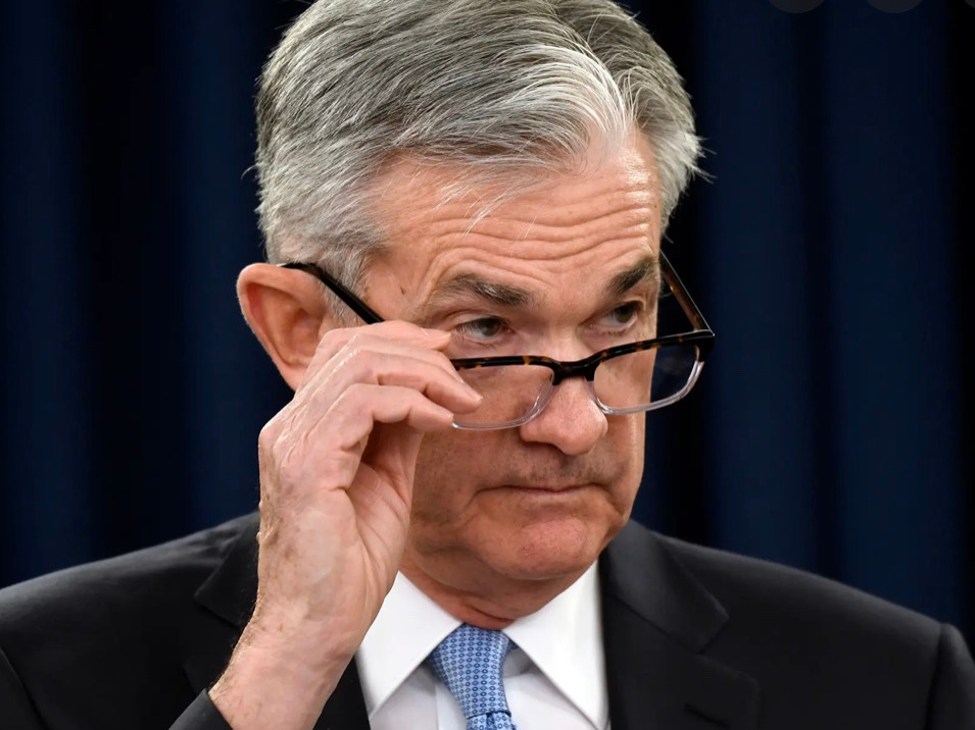
Summary:Powell to deliver brief remarks at award event on Saturday at 1430 GMT/1030 US Eastern time Appearance tied to American Society for Public Administration conferenceRemarks expected to be non-policy and pre-preparedNo press conference or Q&A scheduledFollows Fed decision to hold rates steady this weekPowell emphasised need for further inflation progressMarkets see continued higher-for-longer policy stanceOil-driven inflation risks complicating outlookLow probability of market-moving signals at this event Unexpected comments could still impact Monday openFederal Reserve Chair Jerome Powell is scheduled to deliver brief remarks on Saturday at an award event, though the appearance is not expected to carry meaningful policy signals following this week’s Federal Open Market Committee (FOMC) decision.According to the Federal Reserve calendar, Powell will speak at the American Society for Public Administration conference, where he is set to give short, pre-prepared remarks tied to an award acceptance. The event is not structured as a policy address and does not include a press conference or formal Q&A, limiting the likelihood of market-moving commentary.The appearance comes just days after the Fed left interest rates unchanged, maintaining its current policy stance as officials continue to assess the path of inflation and growth. Chair Powell struck a cautious tone in his post-meeting press conference, emphasising that further progress on inflation is required before considering rate cuts.Markets interpreted the meeting as reinforcing a “higher-for-longer” bias, with policymakers remaining data-dependent amid persistent inflation risks. Recent volatility in oil prices, driven by escalating tensions in the Middle East, has added another layer of uncertainty, complicating the disinflation outlook and the Fed’s policy path.While Powell’s weekend remarks are not expected to deviate from this framework, the timing means any unexpected comments on inflation, energy prices or rate expectations could draw attention when markets reopen. However, such outcomes are typically rare for ceremonial appearances.More broadly, the distinction highlights the importance of differentiating between formal policy communications—such as FOMC statements and press conferences, and lower-profile public engagements. With markets highly sensitive to Fed signals, clarity around the nature of each appearance remains critical for interpreting potential impact. This article was written by Eamonn Sheridan at investinglive.com. 🔗 Source 💡 DMK Insight Powell’s upcoming remarks could stir market sentiment, especially after the Fed’s recent decision to hold rates steady. With no press conference or Q&A, traders might interpret his comments as a signal for future monetary policy direction. The focus on inflation progress suggests that any hints about the Fed’s tightening path could impact not just equities but also forex pairs sensitive to interest rate changes. For instance, if Powell hints at a more aggressive stance, we could see the dollar strengthen against major currencies. Traders should keep an eye on the USD’s reaction, particularly against the euro and yen, as these pairs often respond sharply to Fed commentary. Watch for volatility spikes around the 1430 GMT mark, as market participants digest his words. The real story is whether Powell’s remarks will align with the current market expectations or create a divergence that could lead to swift price movements. 📮 Takeaway Monitor USD pairs closely around Powell’s remarks at 1430 GMT for potential volatility and shifts in market sentiment.
Goldman Sachs expect Bank of England on hold for the rest of 2026
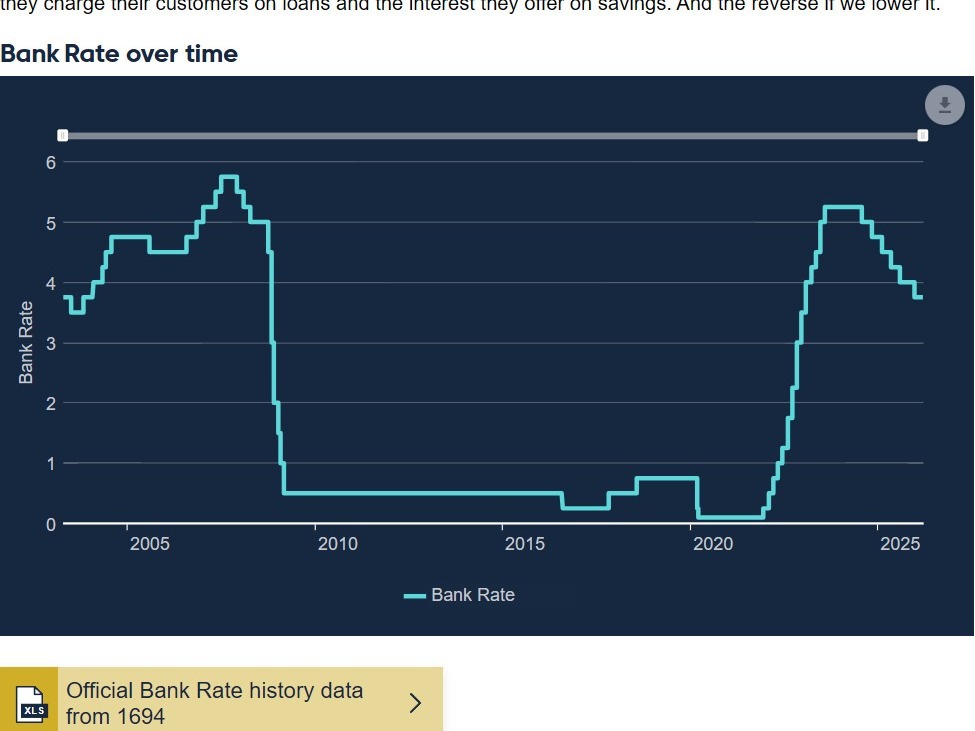
Goldman Sachs Expects BoE to remain on hold throughout 2026 vs prior forecast of quarterly cuts from July Expect that the MPC will gradually lower bank rate in 2027 to a terminal rate of 3% (Reuters headlines) This article was written by Eamonn Sheridan at investinglive.com. 🔗 Source 💡 DMK Insight Goldman Sachs’ shift in BoE rate expectations is a game changer for traders: The forecast of the Bank of England holding rates steady through 2026, rather than initiating cuts as previously anticipated, signals a significant shift in monetary policy outlook. For traders, this means recalibrating strategies around GBP pairs, especially if the market had priced in rate cuts. The BoE’s decision impacts inflation expectations and could lead to a stronger pound in the near term, especially against currencies like the USD and EUR. Look for GBP/USD to react to this news, particularly if it approaches key resistance levels. If the pound strengthens, it could challenge recent highs, while a failure to break through might indicate a consolidation phase. Keep an eye on the upcoming MPC meetings and any inflation data releases, as these will be crucial for gauging the market’s response. The real story is how this affects broader market sentiment—if traders start to believe that the BoE is serious about maintaining rates, we could see shifts in risk appetite across asset classes, including equities and commodities. 📮 Takeaway Watch GBP/USD closely; a break above recent resistance could signal a bullish trend as the BoE maintains rates through 2026.
investingLive Asia-Pacific FX news wrap: Gold bounced back above $4730
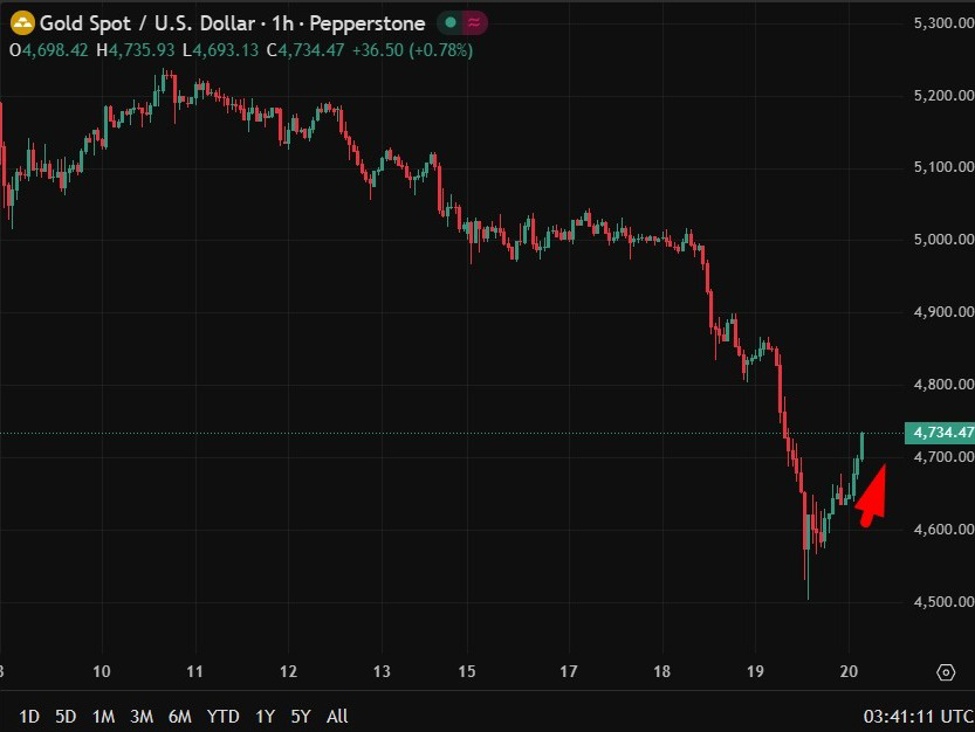
Goldman Sachs expect Bank of England on hold for the rest of 2026Powell to speak Saturday after Fed held rates. This is not a policy related speech.Tesla plans major solar expansion with Chinese equipment suppliers, eyes $2.9B dealMorgan Stanley delays Fed rate cut outlook to September, December (from June, September)PBOC sets USD/ CNY mid-point today at 6.8898 (vs. estimate at 6.8773)Saudi see oil hitting $180 if Iran conflict keep supply disrupted, risk demand destructionHSBC favours U.S. and Asia equities despite Middle East risksGoldman Sachs warns oil could exceed 2008 all time high peak on supply disruptionsReports that the U.S. deploys more Marines and ships to Middle East due to Iran tensionsWTO cuts global trade outlook, says Middle East conflict lifts energy risksJPMorgan cut S&P500 target to 7200 (from 7500), warn oil price surge raises recession riskEU calls for halt to energy strikes amid Middle East supply risksRBNZ to expand communication, adding briefings after every policy decision.New Zealand February trade deficit narrows, exports and imports both beat expectationsQatar LNG exports cut 17% after Iranian strikes on key gas facilities. Years to repair.Gold falls on rising yields; tentative rebound seen toward $4,800investingLive Americas market news wrap: Big market moves in oil, gold and FXIn summary:Middle East tensions persist with missile and drone exchanges across the regionSaudi, Kuwait and Bahrain air defences activated against Iranian attacks“Boots on the ground” timeline seen at least three weeks awayOil prices eased despite ongoing conflict and supply risksSaudi officials warn oil could surge toward $180 if disruptions persistGold rebounds above $4,730 amid geopolitical uncertaintyPBOC leaves Loan Prime Rates unchanged for tenth straight monthUSD/JPY rises toward 158.30 despite quiet session and Japan holidayMajor FX pairs soften, with EUR/USD and GBP/USD lowerTesla in talks for $2.9B solar equipment deal with Chinese suppliersGeopolitical tensions in the Middle East remained elevated, with Iran launching a fresh barrage of missiles toward Israel, while Israeli forces reportedly targeted Iranian regime infrastructure in Tehran. Regional spillover risks were evident, with Saudi Arabia confirming its air defences intercepted multiple drones in the Eastern Province, while Kuwait and Bahrain also activated systems in response to incoming threats.Speculation around potential ground operations continued to circulate, with timelines suggesting any “boots on the ground” scenario remains at least several weeks away, and, once initiated, unlikely to be reversed.Despite the escalation, oil prices eased during the session, before recovering. The down move followed remarks from Israeli officials indicating that strikes on Iran’s South Pars gas field are unlikely to be repeated, alongside comments from Prime Minister Netanyahu suggesting the conflict may conclude sooner than expected. That said, underlying risks remain elevated. Separate reporting indicated Saudi officials see a scenario where oil prices could surge toward $180 per barrel if disruptions to supply persist into late April.Gold prices moved higher, reclaiming levels above $4,730.In China, the People’s Bank of China left its Loan Prime Rates unchanged for a tenth consecutive month, with the one-year rate at 3.0% and the five-year at 3.5%. The central bank continues to guide policy primarily through its 7-day reverse repo rate, currently at 1.4%, which serves as the key benchmark for liquidity conditions and broader lending rates. Japanese markets were closed for a public holiday, removing a key source of liquidity from the region and limiting activity in physical U.S. Treasuries. In FX, USD/JPY advanced toward 158.30 in a relatively quiet session, while EUR/USD and GBP/USD edged lower.In corporate developments, Tesla is reportedly in talks to purchase around $2.9 billion worth of solar manufacturing equipment from Chinese suppliers, including Suzhou Maxwell Technologies, as part of plans to significantly expand U.S.-based solar capacity.—Oil: This article was written by Eamonn Sheridan at investinglive.com. 🔗 Source

EU leaders make the rare choice of appointing Vujčić as next ECB vice president
Croatian central bank governor, Boris Vujčić, is the name confirmed to be appointed as the next ECB vice president. He will be presiding over a non-negotiable 8-year term, taking over from Spain’s Luis de Guindos starting 1 June. There’s no drama or controversy with this one as de Guindos is ending his own 8-year term on 31 May.And under EU law, members of the ECB executive board cannot be reappointed. As such, de Guindos will be departing the central bank when his term expires in about two months from now.On Vujčić’s appointment, it’s quite the symbolic gesture. That especially when you consider that Croatia had only joined the euro in 2023. He was also a key figure in making that transition happen, but to be bestowed upon the second in-command post at the ECB is quite something.It’s a bit of a rarity when it comes to the ECB, in which the top jobs tend to fall to the bigger nations so to speak. Then again, this feels like a power play by EU leaders as well to be honest.As a reminder, ECB chief economist Philip Lane will see his own term expire on May next year. Meanwhile, ECB president Christine Lagarde will see her term expire on October next year. With regards to Lagarde, she might even be departing the central bank earlier than that.Taking into account that there will be upcoming vacancies soon, the appointment of Vujčić is sort of one to balance out the geopolitical scales within the EU itself. Normally, you get the north versus south debate or to put it more crudely the bigger nations versus the periphery nations.As such, one can safely infer that EU leaders are well considering that so as to appoint one of the bigger names in this game of musical chairs. If Germany or Spain takes up the top post at the central bank, you can bet that France will want a say in having a name for the chief economist post.So, putting Vujčić as vice president sort of allows for a “simpler” play of events going into next year. This article was written by Justin Low at investinglive.com. 🔗 Source 💡 DMK Insight Boris Vujčić’s appointment as ECB vice president could signal a shift in monetary policy focus. With a stable 8-year term starting June 1, traders should consider how Vujčić’s views on inflation and interest rates might influence the eurozone’s economic landscape. His background suggests a pragmatic approach, which could lead to more cautious monetary tightening. This is crucial as the ECB navigates inflationary pressures while trying to support growth. Keep an eye on the euro’s performance against the dollar, especially if Vujčić hints at a shift in policy direction. If the euro strengthens, it could impact forex pairs significantly, particularly EUR/USD. Watch for any statements from Vujčić in the coming weeks that might provide insight into his priorities and strategies, especially during the next ECB meeting. The market’s reaction could be immediate, so stay alert for volatility around that timeframe. 📮 Takeaway Monitor Vujčić’s upcoming statements for clues on ECB policy shifts, especially regarding euro strength against the dollar in the coming weeks.
JP Morgan now sees ECB, BOE rate hikes to come as early as April
It took a while for it to really strike deep, but the seeds were already planted in the first week of the Middle East conflict. And now with Iran also trying to disrupt things on a broader scale, we are seeing inflation fears sweep across markets this week.Higher oil prices are the main issue now and that will already start to have an impact, seeing a major shift in central bank expectations.After having forecast both the ECB and BOE to keep interest rates unchanged throughout the year, JP Morgan is now one to see rate hikes for both as early as April next.On the ECB, the firm expects to see two rate hikes in April and July now. However, they note that “in terms of timing, there will be an inclination to wait for new forecasts at the June meeting but a confirmation of the March baseline at the time of the April meeting should suffice to trigger a rate hike”.Despite the more hawkish shift though, JP Morgan also sees a case of the ECB reversing the tightening steps this year. They argue that once the risk of second-round effect passes, the central bank will have scope to pull back on rates again. As such, they are penciling in one rate cut for next year in 2H 2027.As for the BOE, the firm now expects two rate hikes in April and July as well. That as inflation is likely to creep higher in the UK before only falling back next year. However, they don’t see that happening until the spring of 2027. As such, the BOE will not regain much appetite for rate cuts in the meantime. JP Morgan is penciling in two rate cuts in Q2 and Q4 2027, following the two rate hikes this year.For some context, market pricing for the ECB before the war was for zero rate changes through the year. As for the BOE, traders were pricing in ~52 bps of rate cuts this year before the US-Iran conflict began. Quite the change, huh? This article was written by Justin Low at investinglive.com. 🔗 Source 💡 DMK Insight Inflation fears are back on the table, and here’s why that matters for traders: rising oil prices can ripple through the entire market. As tensions in the Middle East escalate, particularly with Iran’s involvement, crude oil prices are likely to spike further, which could lead to increased costs across various sectors. Traders should keep an eye on the correlation between oil and inflation metrics, as higher energy costs often translate into broader inflationary pressures. This could impact everything from consumer spending to central bank policies, especially if inflation data starts to surprise to the upside in the coming weeks. Look for key resistance levels in oil prices; if they break above recent highs, it could trigger a wave of selling in equities as investors reassess growth prospects. Additionally, monitor the broader market indices for any signs of weakness, particularly if inflation data starts to shift sentiment. The real story is how quickly these geopolitical tensions can alter the trading landscape, so stay alert for any sudden market reactions. 📮 Takeaway Watch for oil prices breaking key resistance levels; a sustained rise could trigger broader market volatility and inflation concerns in the coming weeks.
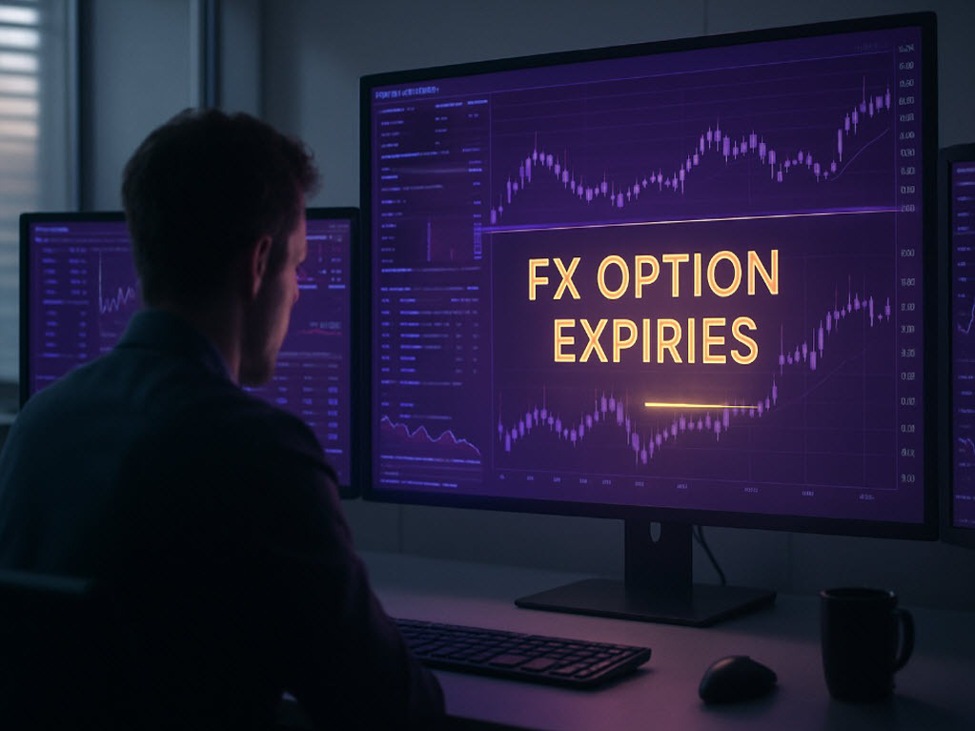
FX option expiries for 20 March 10am New York cut
There aren’t any major expiries to take note of on the day, with the full list seen below.There are some holding relatively close by for EUR/USD and AUD/USD at the 1.1500 and 0.7050 levels respectively. However, they aren’t likely to feature much into play. As things stand, dollar sentiment remains the key driver of price action as we look to close out the week. In that lieu, US-Iran headlines, oil prices, and the risk mood are all bigger factors influencing trading sentiment. And after all, they are pretty much all bound together still in trading this week.The dollar fell off yesterday despite some mixed market sentiment. Central bank rate hike expectations are growing and that pinned down equities. However, Wall Street did post a modest recovery in hopes that the Middle East conflict will end sooner rather than later. That also saw oil prices come off the boil with Brent crude in particular closing at $108.65, after having hit a high just above $119.So, the mix of everything will once again be in focus. That alongside the bond market too, after seeing 10-year Treasury yields hit 4.32% overnight before settling down to 4.25%. With central banks back in focus though, short-term yields are also one to keep an eye out for. A big mover yesterday was 2-year gilt yields, which shot up by over 30 bps to 4.43%. 2-year Treasury yields also jumped from 3.78% to a high of 3.95% but dropped back off after to 3.79%.As such, rate spreads will also be a consideration for the dollar against some major currencies at this time.For now though, we are seeing the dollar find a bit of respite in what has been quite a mixed week before the sharper drop yesterday. But I would expect things to heat up later in the day, especially when we get closer to US trading again.For more information on how to use this data, you may refer to this post here.Head on over to investingLive (formerly ForexLive) to get in on the know! This article was written by Justin Low at investinglive.com. 🔗 Source 💡 DMK Insight With no major expiries today, traders should focus on dollar sentiment and key levels. The EUR/USD and AUD/USD are hovering near 1.1500 and 0.7050, respectively, but these levels might not see significant action. Given the current dollar sentiment, which appears stable, traders should watch for any shifts that could impact these pairs. If the dollar strengthens, it could push EUR/USD lower, potentially testing support levels. Conversely, a weakening dollar might give these pairs a boost, especially if they break above their respective levels. Keep an eye on economic indicators or news that could sway sentiment, as they might trigger volatility in these pairs. The real story is that while today’s expiries aren’t major, the market’s reaction to dollar sentiment could create opportunities. Watch for any unexpected moves around these levels, especially in the context of upcoming economic data releases. 📮 Takeaway Monitor the EUR/USD at 1.1500 and AUD/USD at 0.7050 for potential volatility driven by dollar sentiment shifts.
Barclays, Morgan Stanley also now see two rate hikes by the ECB for this year
The bandwagon is starting to grow, with the two latest calls adding to the one from JP Morgan earlier here. And much like JP Morgan, both Barclays and Morgan Stanley had previously forecast no rate changes by the ECB for the year. And amid the latest developments in the Middle East and higher energy prices, they are revising their respective calls.Barclays also sees two rate hikes by the ECB now, with the first one to come in April. They then expect the central bank to deliver the second one in June.As for Morgan Stanley, they are seeing a bit of a later timeline for the ECB rate hikes. The first one is penciled in for June and the next one being in September this year. And much like JP Morgan, they see the ECB pivoting back to rate cuts again at some point next year too:”Faced with lower growth, we think the ECB will likely cut rates again in June and September 2027 to 2%, bringing rates back to neutral territory.”At the same time, Morgan Stanley also revises their call for the BOE outlook as well. The firm previously expected the BOE to cut rates twice this year (April and November) but now see the central bank staying on hold throughout the whole of 2026. This article was written by Justin Low at investinglive.com. 🔗 Source 💡 DMK Insight The growing consensus among major banks like JP Morgan, Barclays, and Morgan Stanley about the ECB’s rate stability is crucial for traders right now. This signals a potential shift in monetary policy expectations, which could influence the euro’s strength against the dollar and other currencies. If the ECB maintains its current rates, it may lead to a stronger euro, impacting forex pairs like EUR/USD. Traders should keep an eye on upcoming ECB meetings and any economic data releases that could sway these forecasts. However, there’s a flip side to this optimism. If inflation data surprises to the upside, the ECB might be forced to reconsider its stance, leading to volatility in the euro and related assets. This uncertainty could create trading opportunities for those prepared to act quickly. Watch for key support and resistance levels in the EUR/USD pair, particularly around recent highs, as these could indicate market sentiment shifts. The next few weeks will be critical for gauging the ECB’s direction and its impact on the broader forex market. 📮 Takeaway Monitor the ECB’s upcoming meetings and inflation data closely; a surprise could lead to significant volatility in the euro and related forex pairs.
ECB hawk says will need to consider April rate hike if inflation outlook sours further
Nagel said that the central bank will have to consider a rate hike as early as next month, that is if price pressures continue to ramp up further amid the Middle East conflict. Adding that:”As things currently stand, it is conceivable that the medium-term inflation outlook could deteriorate and inflation expectations could rise on a sustained basis, meaning that a more restrictive monetary policy stance would probably be necessary.”This adds to the report from yesterday here: ECB officials see the possibility of rate hikes at the April meeting, June more likelyThe main issue for Europe now is a massive surge in gas futures amid Iran strikes on key energy facilities in the Gulf region. Dutch TTF gas prices have jumped up to above $60 levels and are keeping some 100% higher than the ECB’s own baseline staff projections. That in itself will call for a big re-evaluation by policymakers on how the outlook will develop next.And unless the Middle East conflict settles down in the next one to two weeks, there is every possibility that the ECB may be forced into a preemptive rate hike next month. We’re already seeing the likes of JP Morgan and Barclays call for that today too.In terms of market pricing, it is still more of a coin flip at this stage. The odds of a 25 bps rate hike is sitting at ~57% with ~43% priced for no change currently. However, the odds of a rate hike going into June then rise quite dramatically to ~93%. This article was written by Justin Low at investinglive.com. 🔗 Source 💡 DMK Insight The potential for a rate hike next month is looming, and here’s why that matters: inflation pressures are mounting, especially with geopolitical tensions in the Middle East. Traders need to keep a close eye on economic indicators, particularly inflation data, as any significant uptick could prompt the central bank to act sooner than expected. This could lead to volatility in both the forex and crypto markets, especially for assets sensitive to interest rate changes. If inflation continues to rise, we might see a shift in market sentiment, pushing traders to reassess their positions. Look for key inflation reports in the coming weeks, as they could dictate market direction. On the flip side, if inflation stabilizes or declines, the central bank may hold off on hikes, which could provide a temporary boost to risk assets. So, watch for those inflation metrics and be prepared for rapid shifts in sentiment. 📮 Takeaway Monitor upcoming inflation reports closely; a significant rise could trigger a rate hike and impact forex and crypto markets significantly.

German producer prices fall in February but the script will flip come next month
German producer prices -0.5% vs +0.3% m/m expectedPrior -0.6%; revised to -0.1%This will arguably be the last report before it all changes up due to the Middle East conflict. As such, I wouldn’t look much into this as the data is rather dated at this point in time. The main drag for the lower producer prices in February was due to energy prices. That is seen down 1.8% on the month and down 12.5% compared to February 2025.Yes, the script will flip when we get to March due to a surge in European gas prices surely. So, this latest report here can be discarded as a thing of the past.Besides the point on energy prices though, German producer prices actually held up more strongly in February. If excluding energy, producer prices were seen up 0.2% on the month and 1.0% year-on-year.The breakdown shows an increase in prices for capital goods (+0.2%), consumer goods (+0.1%), and intermediate goods (+0.3%).So, do keep in mind that the price trend for other sub-indices is already showing some stubbornness. And when you have to pair that with higher energy prices to come in the months ahead, that points to worrying inflation developments for Europe’s largest economy.It is no wonder that Nagel is warning that a rate hike is needed as early as next month here. This article was written by Justin Low at investinglive.com. 🔗 Source 💡 DMK Insight German producer prices just dropped 0.5%, and here’s why that matters: This unexpected decline, especially against a backdrop of a 0.3% increase forecasted, signals potential weakness in the manufacturing sector. With the previous figure revised from -0.6% to -0.1%, it’s clear that the trend isn’t just a blip. Traders should be cautious, as this data could influence the ECB’s monetary policy decisions, particularly with the ongoing Middle East conflict likely to disrupt supply chains and energy prices. Look, while this report might seem dated, it sets the stage for volatility in related markets, especially commodities and the euro. If inflationary pressures ease, we could see a shift in interest rate expectations, impacting forex pairs like EUR/USD. Keep an eye on the 1.05 level for EUR/USD; a break below could signal further downside. Watch for any comments from ECB officials in the coming days that might hint at their response to these trends. 📮 Takeaway Monitor the EUR/USD around the 1.05 level; a break could indicate further downside as inflation expectations shift.

US stocks with their backs against the wall in the final stretch of the week
The drop in Wall Street yesterday could’ve been so much worse. A late-day rally helped to salvage something towards the end but is it enough to stop the bleeding this week? The only comfort is that some reassurances from US president Trump on the war at least helped to prop up sentiment a little. But in a time of conflict, actions speak louder than words.For now, market players might cling on to hope. But the longer this drags on, the more anxious and worrying it will be. That especially if oil prices continue to pull higher in the weeks ahead. It’s been quite a back and forth week in the oil market but overall, prices are still looking sharp in the grand scheme of things.And amid growing fears of central bank raising interest rates, that’s also weighing on risk sentiment. And US stocks were beaten down badly at one point yesterday, only but for a late recovery. Still, the charts don’t look pretty.The S&P 500 index closed below both its 100 (red line) and 200-day (blue line) moving averages for the first time since May last year. That’s a notable break but dip buyers are still barely hanging on around the October and November lows last year closer to the 6,538-50 region. That now acts as the key line in the sand in terms of support level for the index.A firm break below that will open the floodgates in triggering further downside for US equities in general.The same applies for the Nasdaq amid a drop to its lowest since September last year at one point yesterday. Sellers are also trying to solidify a firm break below the 200-day moving average (blue line), also the first since May last year.For now, the November lows around the 22,000-43 region is still somewhat holding up. And like the S&P 500 index, a firmer break below this key line in the sand will spell much more trouble for tech shares moving forward.As one can see from the charts, we’re on the verge of a potentially huge technical breakdown for US stocks. Dip buyers now have their backs against the wall in trying to defend the key levels noted above ahead of the weekend.Headline risk is everything at the moment and just be mindful that it won’t take much to trigger more fear in markets. And even if there aren’t any sudden outside risks, investors will still also gradually get more nervous the longer this war drags on. That is something to keep in mind.Besides the point in equities, keep an eye out for the likes of precious metals too. If you think the heavy selling at one point yesterday was bad, wait until we see stocks trigger stops on any further break lower from this point. That can cascade further to margin calls and trigger more volatile selling in the likes of gold and silver as market players need to front up the cash. This article was written by Justin Low at investinglive.com. 🔗 Source 💡 DMK Insight The late-day rally on Wall Street might not be enough to stabilize ETH, currently at $2,151.14, as traders remain cautious about broader market sentiment. With the ongoing geopolitical tensions and their impact on investor confidence, ETH’s price could face downward pressure if Wall Street continues to struggle. Traders should keep an eye on the correlation between equity markets and crypto; a sustained downturn in stocks could lead to further sell-offs in digital assets. Additionally, watch for ETH’s support level around $2,100—if it breaks below that, we could see a more significant decline. On the flip side, if Wall Street manages to regain momentum, it could provide a much-needed lift for ETH, especially if it breaks above resistance at $2,200. The next few days will be crucial for gauging market sentiment and potential volatility, so stay alert for any shifts in trading volume or news from economic indicators that could sway investor behavior. 📮 Takeaway Watch ETH closely around the $2,100 support level; a break could signal further declines, while a rally above $2,200 may indicate recovery.