
 Bitcoin
  Ethereum
  Tether
  BNB
BNB  XRP
XRP  USDC
USDC  Solana
  TRON
TRON  Lido Staked Ether
  Figure Heloc
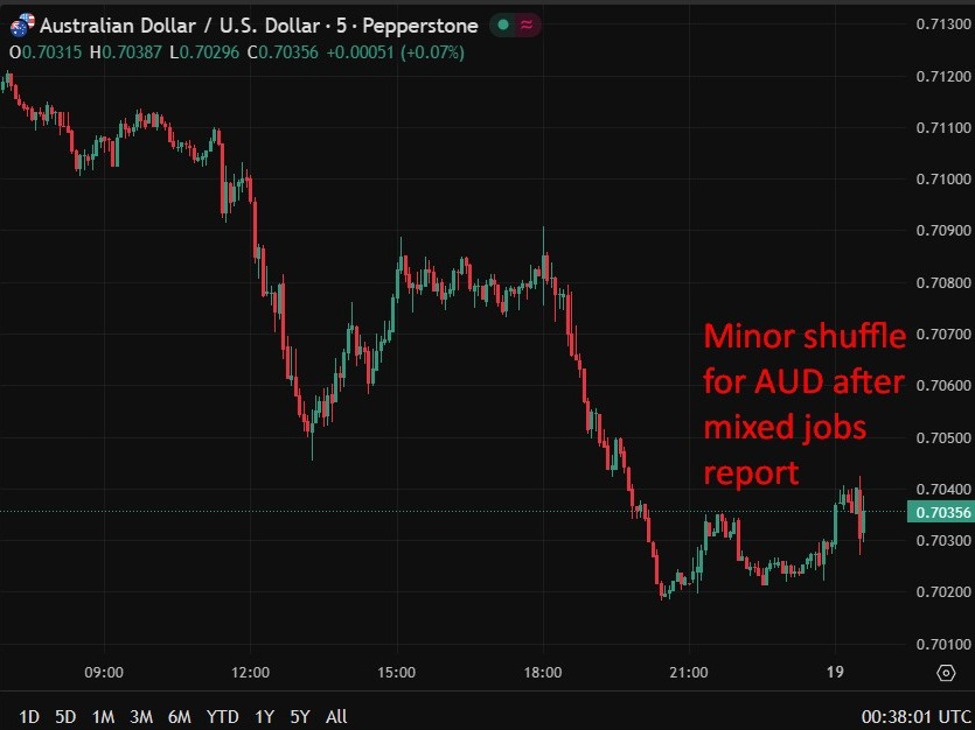
I’ll have details and analysis posted separately. ADDED – here we are, more: Australian February 2026 unemployment rate 4.3% (expected 4.1%, prior 4.1%)Mixed report this one, big number of jobs added, unemployment rate jumps, more job seekers in the market, full time jobs collapse. This article was written by Eamonn Sheridan at investinglive.com. 🔗 Source 💡 DMK Insight The unexpected rise in Australia’s unemployment rate to 4.3% could shake market confidence. While the addition of jobs is a positive sign, the increase in unemployment suggests more people are entering the job market without enough positions available, which could indicate underlying economic weakness. This mixed report complicates the outlook for the Australian dollar and may lead traders to reassess their positions. If the trend continues, we might see volatility in AUD pairs, especially against the USD, as traders react to potential shifts in monetary policy. Keep an eye on the 4.1% level; if it holds as a resistance, further declines in AUD could follow. Additionally, watch for reactions from the Reserve Bank of Australia, as they may need to adjust their strategies in response to these labor market dynamics. 📮 Takeaway Monitor the AUD/USD pair closely; a sustained breach above 4.1% in unemployment could trigger significant selling pressure.
RBA warns Middle East conflict could trigger global shock and market repricing
RBA warns the Middle East conflict could trigger a severe global shock, with risks of disorderly asset repricing, higher inflation from oil, and rising sovereign debt stress, even as Australia’s financial system remains resilient.Summary:RBA warns Middle East conflict could trigger severe global shockHighlights risk of disorderly repricing across assets and sovereign debtOil surge seen as inflationary, while weighing on growth and demandGlobal vulnerabilities elevated amid low risk premia and high leverageAustralian banks and households seen as resilient buffersRising global yields, fiscal deficits and AI risks flaggedFinancial system risks rising across cyber, liquidity and geopoliticsThe Reserve Bank of Australia has delivered a stark warning on the global macro outlook, flagging the escalating Middle East conflict as a potential trigger for a severe international shock that could reverberate across financial markets and economies.In its latest Financial Stability Review, the RBA highlighted the growing risk that disruptions to energy supply, particularly oil, could drive a renewed inflation shock while simultaneously weighing on global demand. With crude prices already surging sharply since the conflict began, the central bank warned that prolonged supply disruptions could destabilise the global economy.A key concern for policymakers is the potential for a disorderly repricing of financial assets. The RBA noted that years of low risk premia and rising leverage have left markets vulnerable to sharp corrections if geopolitical risks intensify. Sovereign debt markets were singled out as a particular pressure point, with persistent budget deficits across advanced economies increasing the risk of a sudden rise in yields.Beyond energy and rates, the RBA outlined a broad set of global vulnerabilities. These include the possibility of a sharp reversal in AI-related investment if productivity gains fail to materialise, growing exposure to cyber and operational risks, and the potential erosion of confidence in global policy frameworks amid increasingly unconventional economic policies.The central bank also pointed to structural risks in China’s financial system, citing high debt levels and ongoing weakness in the property sector as key fragilities in the global outlook.Despite the heightened external risks, the RBA struck a relatively constructive tone on domestic resilience. Australian banks were described as well-capitalised and capable of absorbing loan losses, while households and businesses were seen as generally well positioned to withstand higher borrowing and energy costs. The exchange rate was also noted as a potential shock absorber, with a weaker Australian dollar helping to cushion external pressures.The warning comes just days after the RBA raised interest rates to 4.1% in a narrow decision, reflecting concerns that inflation risks tied to the conflict could persist. Markets are now pricing a meaningful chance of further tightening, even as the global growth outlook becomes more uncertain. —Separately, we’ve just had a very mixed Australian jobs report:Australian February 2026 unemployment rate 4.3% (expected 4.1%, prior 4.1%) This article was written by Eamonn Sheridan at investinglive.com. 🔗 Source 💡 DMK Insight The RBA’s warning about the Middle East conflict is a wake-up call for traders: global markets are on edge. With potential for disorderly asset repricing, traders should be on high alert for volatility, especially in commodities like oil. Rising tensions could push oil prices higher, which historically correlates with inflation spikes. This could impact everything from equities to bonds, as higher inflation typically leads to tighter monetary policy. Keep an eye on key levels in oil markets; a sustained break above recent highs could signal broader market stress. Additionally, watch for shifts in sovereign debt yields, as rising stress in one region can ripple through to others, affecting risk sentiment across the board. The next few weeks could be pivotal, so monitoring geopolitical developments and their market reactions will be crucial for positioning. Don’t overlook the potential for a flight to safety; gold and the USD might see increased demand as traders seek refuge from volatility. If the situation escalates, expect rapid shifts in market sentiment, so stay nimble and ready to adjust your strategies accordingly. 📮 Takeaway Watch for oil price movements and sovereign debt yields; a break above key oil levels could signal broader market instability.
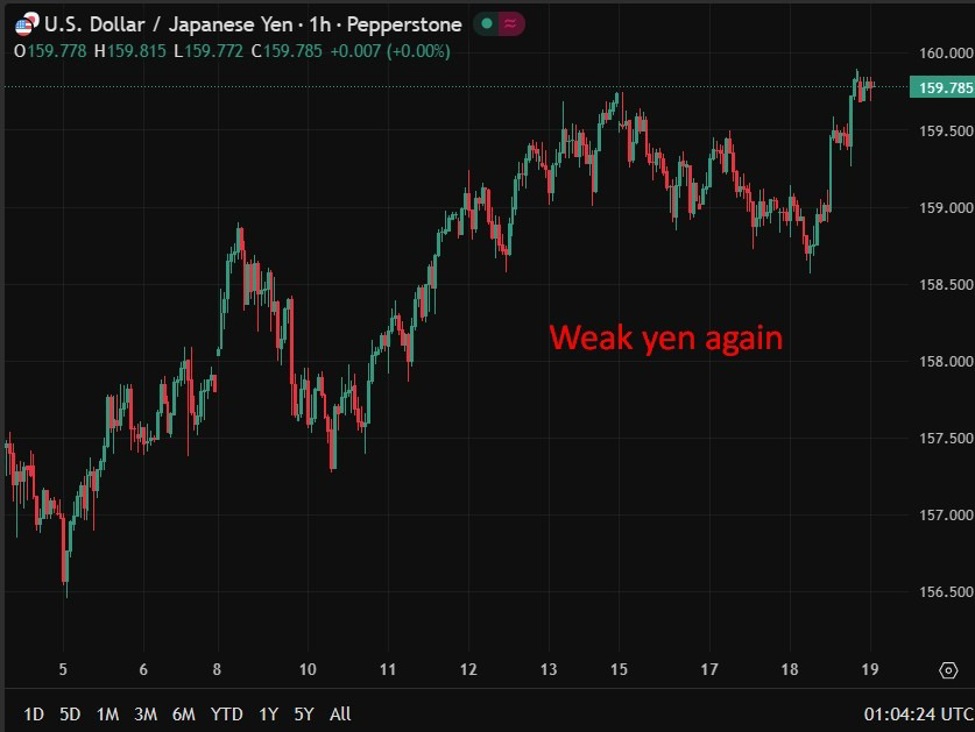
Japan warns on speculative FX moves, keeps intervention option in focus
Summary:Japan flags speculative FX moves driving yen volatilityFinance Minister Katayama signals readiness to interveneAuthorities monitoring markets with “extremely high vigilance”Government reiterates BOJ independence despite geopolitical tensionsKihara stresses inflation should be wage-driven, not cost-pushComments come amid heightened global volatility and weaker yenReinforces intervention risk without signalling policy shiftJapanese officials have stepped up verbal intervention on currency markets, warning of speculative-driven moves in the yen while reaffirming the government’s readiness to act against excessive volatility.Finance Minister Katayama said foreign exchange fluctuations were being driven in part by speculative activity, adding that authorities were closely monitoring developments with an “extremely high level of vigilance.” She reiterated that Japan stands prepared to take “necessary actions at any time” to address disorderly market conditions, reinforcing a familiar policy stance aimed at stabilising the currency.The remarks come as the yen trades under renewed pressure amid heightened global uncertainty, including energy-driven inflation risks linked to the Middle East conflict. Japanese policymakers have historically been sensitive to sharp currency moves, particularly when weakness risks feeding into import costs and inflation.At the same time, Chief Cabinet Secretary Minoru Kihara emphasised that monetary policy decisions remain firmly within the remit of the Bank of Japan, underlining that the government’s stance on central bank independence remains unchanged, even in the current geopolitical environment. He declined to comment on how upcoming BOJ decisions, including those at the April meeting, could influence price dynamics.Kihara also reiterated the government’s broader policy preference for sustainable inflation driven by wage growth rather than cost-push factors such as higher energy prices, highlighting a key distinction shaping Japan’s policy framework.Together, the remarks suggest a coordinated but measured approach: authorities are signalling heightened sensitivity to currency volatility and maintaining intervention optionality, while avoiding any direct pressure on the BOJ to alter its policy path.—Still to come, BoJ meeting, previews:BOJ’s Ueda says inflation rising toward 2% ahead of policy meeting – recapJapan officials signal vigilance on yields, fiscal policy and FX as yen weakness persistsBoJ preview: no changes expected amid lack of inflation progress and geopolitical risk This article was written by Eamonn Sheridan at investinglive.com. 🔗 Source 💡 DMK Insight Japan’s Finance Minister just hinted at potential FX intervention, and here’s why that’s crucial for traders: With the yen’s volatility spiking, especially against the dollar, this signals a heightened risk for speculative moves that could destabilize the market. The government’s commitment to monitoring these fluctuations closely suggests that any significant depreciation of the yen could trigger immediate action. Traders should be aware that while the Bank of Japan maintains its independence, the geopolitical tensions and inflation concerns could lead to a shift in sentiment. If the yen continues to weaken, especially below key psychological levels, expect swift intervention measures that could create sharp reversals in currency pairs. Keep an eye on the USD/JPY pair, particularly if it approaches recent highs. A breach of these levels could prompt aggressive positioning from both retail and institutional players. Watch for any comments from Japanese officials in the coming days, as they could provide further insight into intervention timing and strategy. The real story here is how traders react to these signals—are they going to position for a stronger yen, or will they continue to ride the wave of volatility? 📮 Takeaway Monitor USD/JPY closely; intervention risks rise if the yen weakens significantly, especially below key levels, which could trigger sharp market reactions.
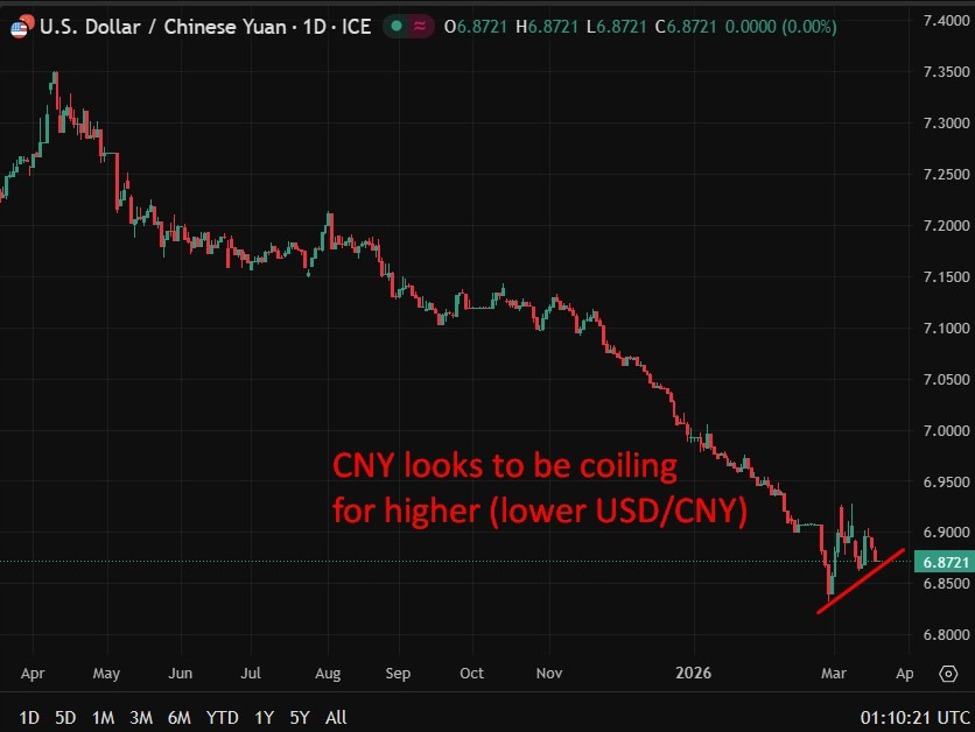
PBOC sets USD/ CNY reference rate for today at 6.8875 (vs. estimate at 6.8955)
The PBOC allows the yuan to fluctuate within a +/- 2% range, around this reference rate. more to come PBOC injects 13bn yuan in 7-day reverse repos at 1.4% (unchanged) in open market operations This article was written by Eamonn Sheridan at investinglive.com. 🔗 Source 💡 DMK Insight The PBOC’s recent actions signal a strategic approach to stabilize the yuan amidst global volatility. Injecting 13 billion yuan through reverse repos at a steady 1.4% indicates the central bank’s commitment to liquidity while maintaining control over currency fluctuations. For traders, this means the yuan’s +/- 2% fluctuation range is crucial to monitor, especially as it may affect forex pairs like USD/CNY. If the yuan approaches either extreme of this range, expect heightened volatility and potential trading opportunities. Keep an eye on the broader economic indicators, as any shifts in China’s economic outlook could lead to significant moves in the yuan and related assets. However, there’s a flip side: if the PBOC continues to intervene heavily, it could signal underlying weaknesses in the economy that might not be immediately apparent. Traders should watch for any changes in the PBOC’s stance or economic data releases that could impact the yuan’s stability in the coming weeks. 📮 Takeaway Watch the yuan’s movement within its +/- 2% range; significant fluctuations could present trading opportunities, especially against USD/CNY.
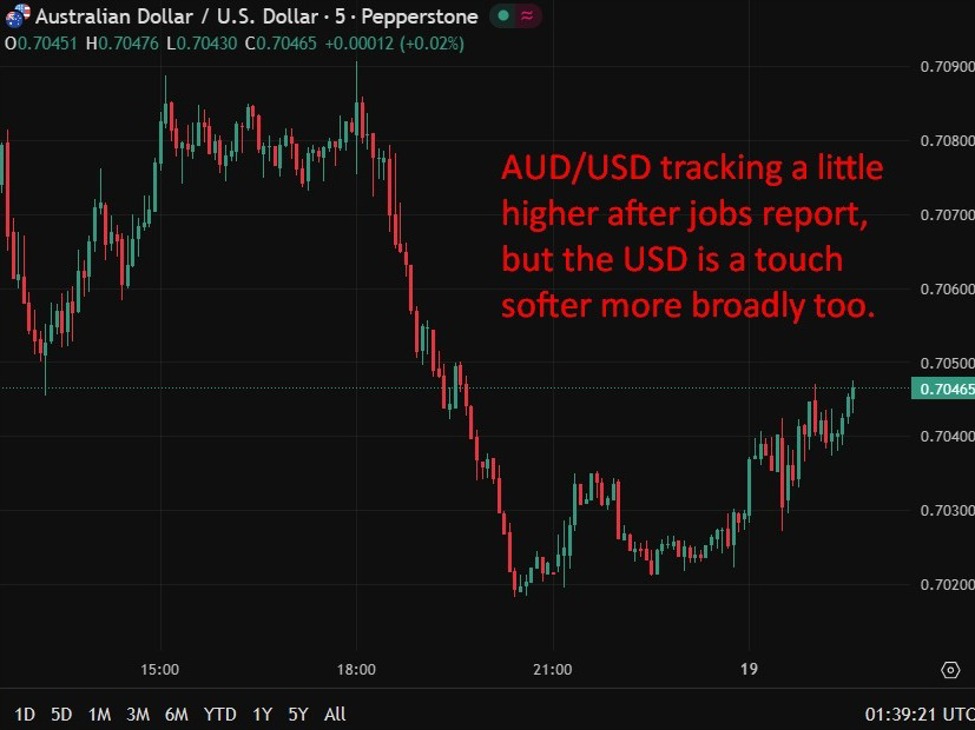
Australia jobs surge masks softening as RBA tightening path stays intact
Australia February jobs beat expectations but unemployment rises to 4.3%Summary:Employment rises strongly: +48.9K vs +20.3K expectedUnemployment rate jumps to 4.3% vs 4.1% expectedParticipation lifts to 66.9%, driving labour supply higherPart-time jobs surge (+79.4K), while full-time falls (-30.5K)Third straight upside surprise in headline jobs growthReport signals labour market loosening beneath strong headlineRBA unlikely deterred from further tightening after Feb–Mar hikesAustralia’s February labour market report delivered a mixed but policy-relevant signal, showing strong headline job creation alongside signs of softening underlying conditions, as the Reserve Bank of Australia navigates a tightening cycle following back-to-back rate hikes in February and March.Employment rose by a robust 48,900 in February, well above expectations for a 20,300 increase and marking a third consecutive upside surprise. However, the strength in the headline figure masked a notable shift in composition. Part-time employment surged by 79,400, while full-time roles declined by 30,500, pointing to a potential cooling in labour demand quality.The unemployment rate climbed to 4.3%, above the 4.1% consensus and prior reading, as the participation rate increased to 66.9% from 66.7%. The rise in labour supply suggests more workers are entering or re-entering the workforce, contributing to the uptick in unemployment despite solid hiring.Taken together, the data points to a labour market that remains resilient but is beginning to show signs of loosening at the margins. The shift toward part-time employment and rising unemployment rate indicate that tightness is easing, even as overall job creation remains firm.For the RBA, the report is unlikely to materially alter the policy trajectory in the near term. The central bank has already delivered consecutive rate hikes in February and March, reflecting concern that inflation pressures, particularly those linked to energy and global developments, remain persistent. While the softer elements of the labour report may offer some reassurance, they are unlikely to outweigh broader inflation risks.Indeed, the current environment suggests the RBA’s policy path will be driven more by inflation dynamics than labour market fluctuations alone. With geopolitical uncertainty, particularly in the Middle East, adding to the inflation outlook, markets continue to price a meaningful chance of further tightening as early as May. This article was written by Eamonn Sheridan at investinglive.com. 🔗 Source 💡 DMK Insight Australia’s job market just sent mixed signals, and here’s why that matters: The unexpected rise in employment by 48.9K, far exceeding the 20.3K forecast, is overshadowed by the uptick in the unemployment rate to 4.3%. This suggests that while more people are finding jobs, the labor market is becoming less tight, which could influence the Reserve Bank of Australia’s (RBA) monetary policy decisions. A higher unemployment rate, despite job growth, indicates a potential shift in economic conditions that traders need to monitor closely. The increase in part-time jobs (+79.4K) alongside a decline in full-time positions (-30.5K) raises questions about the quality of employment. This could lead to a more cautious approach from the RBA, impacting AUD/USD trading strategies. If the RBA perceives a loosening labor market, it might delay interest rate hikes, which could weaken the Australian dollar against major currencies. Keep an eye on the 4.3% unemployment level; if it continues to rise, it may signal a broader economic slowdown, prompting traders to reassess their positions in AUD-related assets. 📮 Takeaway Watch the 4.3% unemployment rate closely; further increases could signal a shift in RBA policy and impact AUD trading strategies.
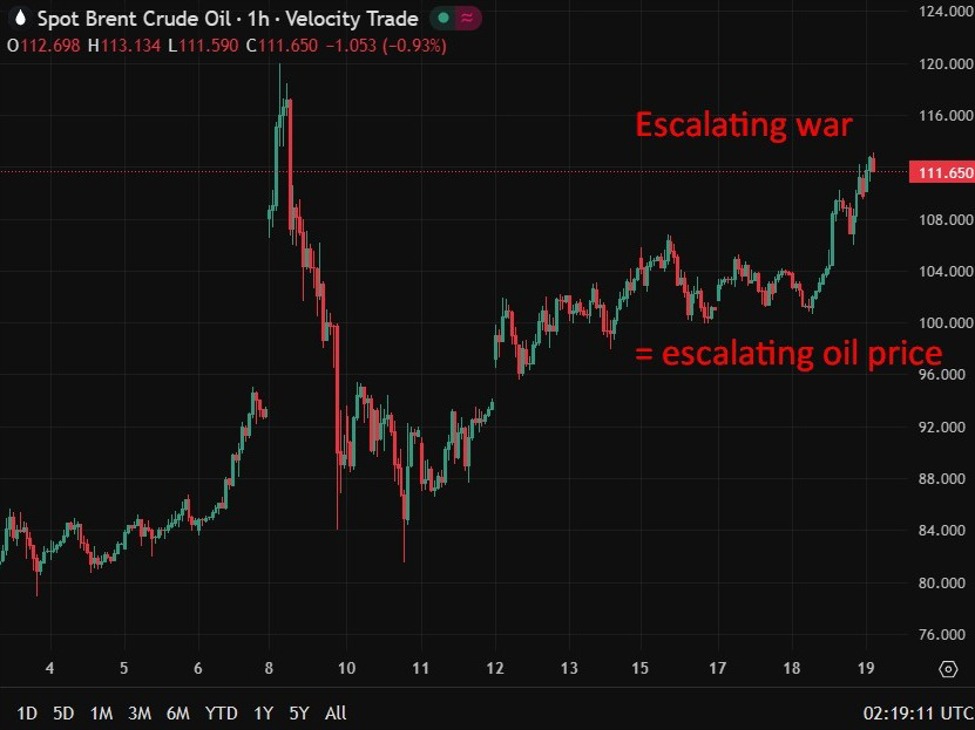
Trump warns of massive retaliation tied to South Pars as energy risks escalate
Summary:Trump says U.S. had no prior knowledge of Israeli strike on Iran’s South Pars fieldClaims Israel will halt further attacks on the critical gas assetIssues stark warning: U.S. could destroy South Pars if Qatar is attackedSeeks to de-escalate while signalling extreme retaliation riskContradictory reports suggest U.S. may have known or approved strikeSouth Pars central to global LNG supply, raising market sensitivityEscalation risk shifts toward energy infrastructure targetingU.S. President Donald Trump has issued a dramatic statement on the escalating Middle East conflict, combining an attempt at de-escalation with a stark warning of potential large-scale retaliation tied to energy infrastructure.In remarks posted on social media, Trump said the United States had no prior knowledge of Israel’s reported strike on Iran’s South Pars gas field, a critical component of global LNG supply. He described the attack as a forceful Israeli response to developments in the region, while emphasising that only a limited portion of the facility had been affected.Trump also sought to distance Qatar from the incident, stating that Doha had no involvement in the strike and was unaware it would occur. The clarification comes amid heightened tensions after Iran reportedly retaliated by targeting Qatari-linked gas infrastructure, raising fears of a broader energy conflict.In a notable shift toward de-escalation, Trump said no further Israeli attacks would target the South Pars field, framing the site as strategically important and too valuable for continued strikes. However, this was coupled with a highly escalatory warning: should Iran attack Qatar again, particularly its LNG infrastructure, the United States would respond with overwhelming force, including the potential destruction of the entire South Pars complex.The statement underscores the increasingly central role of energy infrastructure in the conflict. South Pars, one of the world’s largest gas fields, is vital not only to Iran’s economy but also to global LNG supply chains. Any sustained disruption could have significant implications for energy markets, particularly at a time when geopolitical tensions are already driving volatility in oil and gas prices.Adding complexity to the narrative, separate reports citing U.S. and Israeli officials suggest Washington may have had prior awareness of the strike, and potentially supported it as part of broader strategic pressure on Iran. If accurate, this would mark a notable divergence from Trump’s public positioning and highlight the fluid and opaque nature of decision-making in the current environment.For markets, the episode reinforces a key theme: energy infrastructure is now a primary battleground, and the risk of further escalation, whether through direct strikes or retaliatory cycles, remains elevated. This article was written by Eamonn Sheridan at investinglive.com. 🔗 Source 💡 DMK Insight Trump’s comments on the Israeli strike and U.S. involvement are shaking up energy markets right now. The South Pars field is crucial for gas supply, and any disruption could spike prices. Traders should keep an eye on geopolitical tensions, especially with Iran and Qatar, as these could lead to volatility in energy assets. If the U.S. truly has the capability to target South Pars, we might see a significant reaction in oil and gas markets, particularly if tensions escalate further. Watch for any changes in sentiment around major oil benchmarks like Brent and WTI, as they could be influenced by these developments. The situation is fluid, and traders should be prepared for rapid shifts in market dynamics, especially if new information emerges about U.S. intelligence on the strike. On the flip side, if the situation de-escalates, we might see a temporary relief rally in energy prices. But with the potential for retaliation looming, the risk of sudden spikes remains high. Keep an eye on key resistance levels in oil prices, and monitor any updates from the region closely. 📮 Takeaway Watch for volatility in energy markets as geopolitical tensions around South Pars escalate; key resistance levels in Brent and WTI could be tested.
The Bank of Japan held its short-term policy rate at 0.75%, as widely expected
The Bank of Japan left policy unchanged, with the decision passed by an 8–1 majority, though dissent highlighted a more hawkish undercurrent within the board.Board member Takata called for a rate hike to 1.0% from 0.75%, arguing that Japan had effectively achieved its price stability target and that inflation risks were now skewed to the upside, particularly from second-round effects linked to overseas price pressures. His proposal was rejected by the majority. Takata also opposed the Bank’s assessment of the inflation outlook, maintaining that underlying price growth was already broadly consistent with the 2% target. Fellow board member Tamura echoed this view, signalling confidence that underlying inflation would align with target levels from early fiscal 2026.The BoJ maintained its baseline view that Japan’s economy is recovering moderately and is likely to continue expanding at a measured pace. Inflation expectations have also edged higher, with the Bank reiterating that it will continue to adjust policy as needed to sustainably achieve its 2% target.Importantly, the Bank kept its tightening bias intact, stating it will raise rates further if economic and price developments evolve in line with its forecasts. However, policymakers flagged rising uncertainty stemming from global developments, particularly the Middle East conflict.The BoJ noted that financial markets have become more volatile and that crude oil prices are rising sharply, warning that these developments warrant close monitoring. While core inflation may temporarily dip below 2%, the Bank expects it to reaccelerate, driven in part by higher energy costs.Overall, the statement reinforces a cautious but tightening-leaning stance, with policymakers balancing improving domestic conditions against elevated external risks, including oil price shocks, FX volatility, and geopolitical developments. This article was written by Eamonn Sheridan at investinglive.com. 🔗 Source 💡 DMK Insight The Bank of Japan’s unchanged policy signals stability, but dissent hints at potential rate hikes ahead. With an 8-1 majority, the board’s decision reflects a cautious approach, yet Takata’s call for a hike to 1.0% suggests growing concern over inflation. Traders should note that this dissent could lead to shifts in market sentiment, particularly in the yen and Japanese equities. If inflation continues to rise, the BOJ might be forced to act sooner than expected, impacting forex pairs like USD/JPY. Keep an eye on inflation data and any upcoming economic indicators that could sway the BOJ’s stance. A break above key resistance levels in USD/JPY could signal a stronger dollar if the BOJ shifts towards tightening. Watch for the next inflation report; if it shows sustained upward pressure, we could see increased volatility in the yen and related assets. 📮 Takeaway Monitor inflation data closely; a significant rise could push the BOJ to hike rates, impacting USD/JPY and Japanese equities.
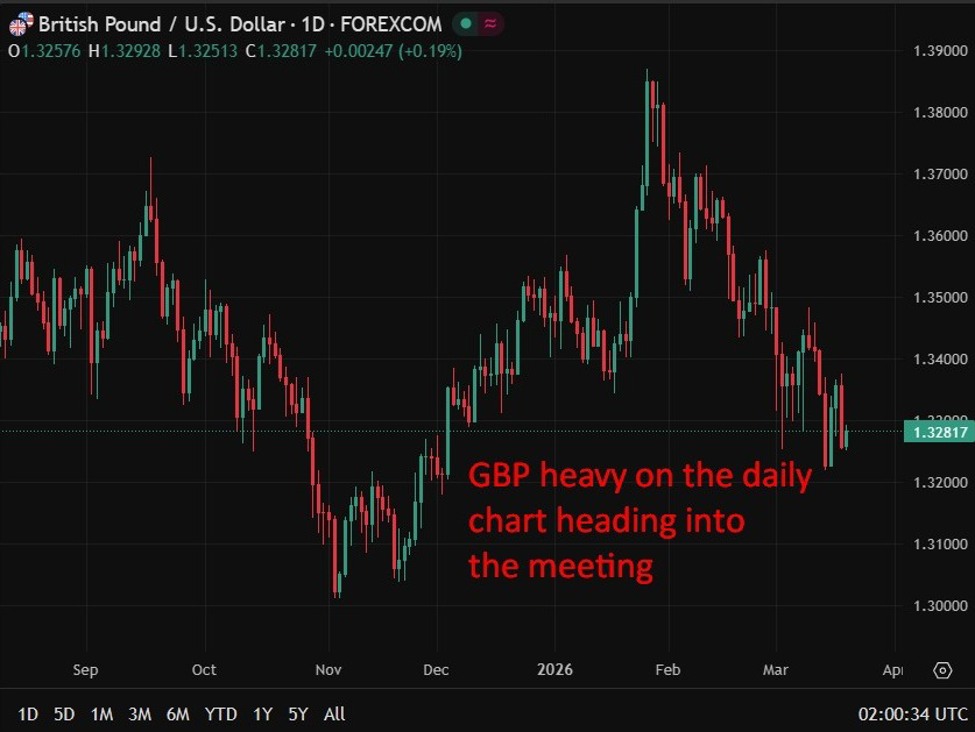
Preview – Bank of England to hold rates as Middle East conflict lifts inflation risks
Summary:Bank of England expected to hold Bank Rate at 3.75%Middle East conflict-driven energy shock complicates outlookInflation risks rising again, potentially above 3%Markets shift from rate cuts to pricing possible hikesUK economy remains fragile with elevated unemploymentBoE likely to deliver cautious, non-committal guidanceFocus turns to timing of next move amid uncertaintyThe Bank of England is widely expected to keep interest rates unchanged at 3.75%, as policymakers grapple with a renewed inflation threat stemming from the escalation in the Middle East and its impact on global energy prices.Prior to the conflict, financial markets had been leaning toward further rate cuts in 2026, with expectations building that easing could resume as inflation moved sustainably toward the BoE’s 2% target. However, the sharp rise in oil and gas prices has altered that outlook, raising the risk that inflation could rebound toward or above 3% in the near term.While this remains well below the double-digit inflation seen in 2022 following Russia’s invasion of Ukraine, the shift is nonetheless significant for policymakers already wary of persistent domestic price pressures. The BoE has moved more cautiously than peers such as the European Central Bank (who also meet today, as do the SNB!)in easing policy, reflecting concerns about stronger underlying inflation dynamics in the UK economy.Market pricing has adjusted rapidly in response. Investors have scaled back expectations for rate cuts this year, with some now assigning a meaningful probability to the next move being a hike by late 2026. Even so, most economists expect the Monetary Policy Committee to pause rather than reverse course outright, given the fragile state of economic activity.The UK labour market presents a mixed picture. Unemployment has risen to around 5.2%, its highest level in several years, pointing to softening demand. However, wage growth remains relatively firm at 4.2%, suggesting that domestic inflationary pressures have not fully subsided.Against this backdrop, the BoE is likely to adopt a deliberately cautious tone. With no updated forecasts or press conference accompanying the decision, policymakers are expected to avoid strong forward guidance, instead emphasising data dependence and flexibility as they assess the evolving impact of the energy shock.A Reuters poll suggests a 7–2 vote in favour of holding rates steady, reinforcing expectations of a wait-and-see approach. Attention will shift to the voting split and accompanying statement for clues on how the balance of risks within the committee is evolving. This article was written by Eamonn Sheridan at investinglive.com. 🔗 Source 💡 DMK Insight The Bank of England’s decision to hold the Bank Rate at 3.75% signals a cautious approach amid rising inflation risks and geopolitical tensions. With inflation potentially creeping above 3%, traders need to reassess their positions, especially in the GBP/USD pair. The shift from anticipated rate cuts to possible hikes reflects a market grappling with uncertainty. Elevated unemployment adds another layer of complexity, suggesting that while the BoE is wary of inflation, it also recognizes the fragility of the UK economy. This could lead to volatility in the forex market, particularly for GBP, as traders react to any hints of future rate changes. Keep an eye on the upcoming economic data releases and central bank communications, as they will be crucial in shaping market sentiment. Here’s the thing: if inflation continues to rise, the BoE might have no choice but to pivot towards a more hawkish stance sooner than expected. Watch for key resistance levels in GBP/USD around recent highs, as a break could signal a shift in sentiment. The next few weeks will be pivotal for positioning ahead of any potential rate adjustments. 📮 Takeaway Monitor GBP/USD closely; a break above recent highs could indicate a shift towards a more hawkish BoE stance amid rising inflation risks.
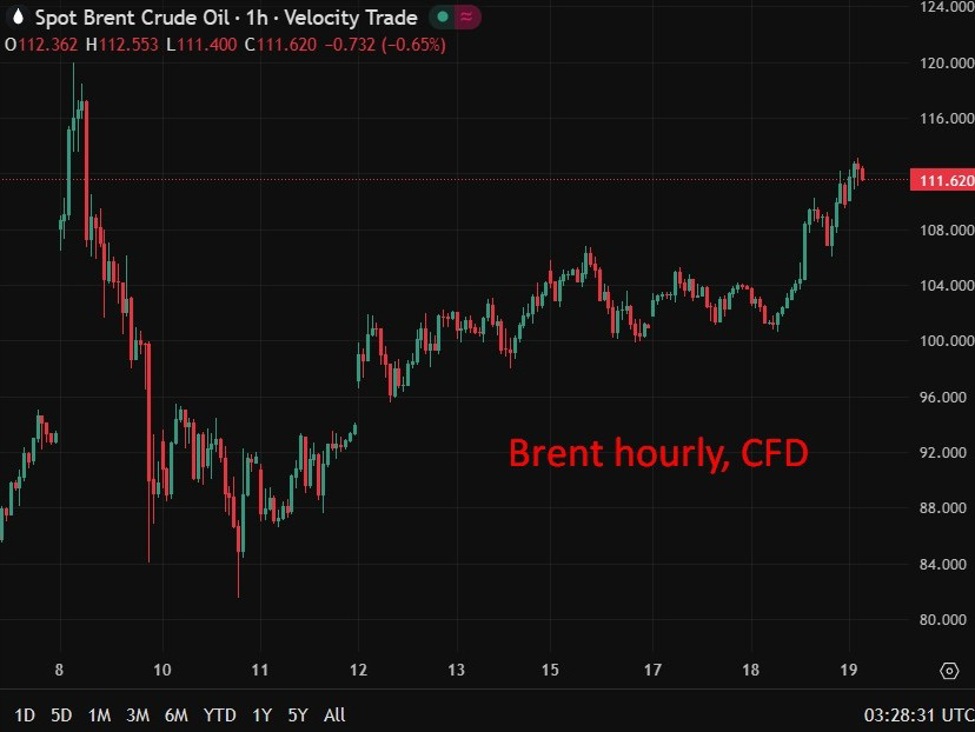
investingLive Asia-Pacific FX news wrap: Trump considering sending troops into Iran
Preview – Bank of England to hold rates as Middle East conflict lifts inflation risksThe Bank of Japan held its short-term policy rate at 0.75%, as widely expectedTrump warns of massive retaliation tied to South Pars as energy risks escalateAustralia jobs surge masks softening as RBA tightening path stays intactPBOC sets USD/ CNY reference rate for today at 6.8875 (vs. estimate at 6.8955)Japan warns on speculative FX moves, keeps intervention option in focusRBA warns Middle East conflict could trigger global shock and market repricingAustralian February 2026 unemployment rate 4.3% (expected 4.1%, prior 4.1%)U.S. weighs troop deployment to secure Hormuz in major escalation stepVessel hit off UAE coast as maritime risks escalate in GulfS&P flags global growth risks from Middle East war and oil disruptionECB to hold rates at 2% but signal hikes if Iran war fuels inflation – previewUAE suspends Habshan gas operations after missile interception incidentNew Zealand growth undershoots as domestic demand softensIran warns of total destruction of energy infrastructure in escalation threatTrump says does not want more strikes on Iran energy facilities, then says “but”Reports that Trump is gearing up his military to take control of the Strait of HormuzinvestingLive Americas FX news wrap 18 Mar; Powell more hawkish on inflation.USD/yields upAt a glance:Oil surges as strikes hit major Middle East energy infrastructureSouth Pars and Ras Laffan targeted, escalating LNG supply risksIran launches multi-country retaliation across Gulf and US-linked assetsQatar LNG facilities hit twice, fires and extensive damage reportedTrump signals de-escalation on South Pars but issues extreme retaliation threatUS weighing troop deployment, including Hormuz security optionsSaudi rhetoric hardens, signalling regional escalation riskAsia equities fall, USD trims gains amid risk volatilityOil markets dominated the session as escalating attacks on energy infrastructure across the Middle East drove sharp gains, before prices pared much of the advance following de-escalatory signals from U.S. President Donald Trump.Crude had surged after Israel struck Iran’s South Pars gas field and the Asaluyeh oil facility on Wednesday, marking a major escalation into critical energy assets. Iran responded with a broad retaliation, including a strike on Qatar’s Ras Laffan complex, the world’s largest LNG hub, accounting for around 20% of global supply. Qatari authorities later confirmed further attacks on LNG facilities, with fires and extensive damage reported.The conflict widened materially, with Iran launching strikes across multiple countries targeting Gulf states, U.S. assets, and key infrastructure, underscoring the risk of a broader regional confrontation.Energy security concerns intensified after Iran warned it could escalate to the “complete destruction” of energy infrastructure if attacks continue, while unconfirmed reports pointed to a potential strike on Saudi Arabia’s Yanbu refinery, an important alternative export route that bypasses the Strait of Hormuz.From Washington, Trump struck a mixed tone, seeking to calm markets by signalling no further Israeli attacks on South Pars, while warning the U.S. could “massively” destroy the field if Qatar’s LNG infrastructure is hit again. The comments helped cap oil’s upside into the latter part of the session.Separately, Reuters reported the U.S. is considering deploying thousands of additional troops to the region, including options to secure the Strait of Hormuz and potentially position forces along Iran’s coastline, moves that would mark a significant escalation.Regional tensions were further amplified by a deterioration in diplomacy, with Qatar expelling Iranian diplomatic staff and Saudi Arabia issuing unusually direct warnings, signalling the collapse of a fragile detente.—In other developments, Australia’s February labour market report painted a mixed picture. Employment rose strongly for a third consecutive upside surprise, but the details were softer, with a sharp drop in full-time jobs and a rise in the unemployment rate as participation increased. The data is unlikely to derail the Reserve Bank of Australia’s tightening bias following back-to-back rate hikes, with markets still focused on inflation risks, particularly those tied to the Middle East-driven energy shock.The RBA reinforced those concerns in its Financial Stability Review, warning the conflict could trigger a severe global shock, including disorderly asset repricing and renewed inflation pressures, even as it noted domestic financial resilience.In Japan, the Bank of Japan left policy unchanged in an 8–1 decision, though dissent from board member Takata highlighted a more hawkish tilt, with calls for a rate hike on the view that inflation dynamics are already consistent with the 2% target.Across markets, Asia-Pacific equities declined following losses on Wall Street (Japan’s Nikkei is down more than 2.5%), while the U.S. dollar partially retraced recent gains as volatility remained elevated. This article was written by Eamonn Sheridan at investinglive.com. 🔗 Source

The central bank bonanza rolls on with Europe in focus next
We got the BOC and Fed yesterday, with the latter being the more heavily watched one of the two. The balance of the scales at the Fed leaned more hawkishly even as they held interest rates steady. The median dot plots now shows just one rate cut for the remainder of 2026 with Fed chair Powell also emphasising on two-sided risks to the inflation outlook.The equities market certainly didn’t like that and Treasury yields surged higher as a result. The S&P 500 index closed down 1.4% while 2-year Treasury yields have now soared to 3.80%, its highest since August last year.The escalating tensions in the Middle East yesterday certainly didn’t help with the backdrop for the Fed decision. That as Iran continues to cause chaos across the region while the Strait of Hormuz remains in de facto closure.Then earlier today, we got the BOJ decision – which saw a 8-1 vote in favour of keeping the policy rate unchanged. Takata was the sole dissenter this time around, which isn’t much of a surprise given his more hawkish leanings. It’s steady as she goes for the BOJ as policymakers are sidelined awaiting the spring wage negotiations outcome and further developments in the Middle East.Coming up later, we’ll have more key central bank decisions to deal with as the focus turns to Europe.First up on the agenda is the SNB, which is expected to keep the policy rate at 0%. A move towards unconventional monetary policy is what the central bank wants to avoid. However, they are slowly being pushed to the limit amid deflationary pressures and a stronger Swiss franc currency.For now, they will be sticking with FX interventions to manage the latter in hopes of trying to buy time for price pressures to rebound.After that, we will have the BOE next with no change expected to the bank rate either. The bank rate vote will be closely watched though as it could swing around between a likely outcome of 6-3 to 7-2. Dhingra and Ramsden are the two major doves likely to keep siding with a more dovish view despite the US-Iran conflict. The additional swing vote could come from either Taylor or Breeden, but both could fall back and not break ranks this time around.Markets are not expecting anything major with ~99% odds priced in for the bank rate to be kept at 3.75%.And lastly, we’ll have the ECB decision to round things off this week. The conversation at the ECB has shifted quite dramatically in the past few weeks and this meeting now looks to be a bit more important.Before this, the central bank was firmly stuck in neutral mode as stickier price pressures prevented policymakers from pursuing more rate cuts. But with the inflation outlook now heating up amid the Middle East conflict, suddenly rate hikes appear to be back on the table again. Or at least that is what markets are looking forward to by the ECB next.As things stand, a rate hike in April is even priced at ~33% with those odds quickly rising to near ~80% by the summer.If anything, I would expect the ECB to play things down and reaffirm that it would be too hasty to rush any decision at the moment. They want optionality, so they definitely won’t rule out needing to respond in the future. However, I wouldn’t put it past policymakers to repeat the script that we saw back in 2021-22 in trying to play this down as “transitory” again – at least for this week. This article was written by Justin Low at investinglive.com. 🔗 Source 💡 DMK Insight The Fed’s hawkish stance, despite holding rates steady, is a game changer for traders: With the median dot plot signaling only one rate cut ahead, traders need to reassess their strategies, especially in interest-sensitive sectors. This could strengthen the dollar and weigh on assets like cryptocurrencies, including DOT, currently at $1.53. If the Fed maintains this cautious approach, expect volatility in crypto markets as traders react to potential tightening. Look for DOT to test support around $1.50; a break below could trigger further selling pressure. Conversely, if it holds, it might attract buyers looking for a bounce. Keep an eye on the broader market sentiment, as any shifts in risk appetite could impact DOT and similar assets. The real story is how the Fed’s decisions ripple through to investor behavior, especially with the looming uncertainty in global markets. 📮 Takeaway Watch DOT closely; if it breaks below $1.50, it could signal further downside, while a hold may attract buyers.