
 Bitcoin
  Ethereum
  Tether
  XRP
XRP  BNB
BNB  USDC
USDC  Solana
  TRON
TRON  Lido Staked Ether
  Figure Heloc
Global demand for the US dollar is “massive,” and stablecoin yields will only bring more interest to the currency, argued the White House crypto chief. 🔗 Source 💡 DMK Insight The White House crypto chief’s comments on massive US dollar demand signal a potential shift in market dynamics. With stablecoin yields attracting more interest, traders should consider how this could impact dollar-denominated assets. If stablecoins gain traction, we might see increased volatility in forex pairs, especially those involving the euro and yen, as investors flock to the perceived safety of the dollar. Keep an eye on the DXY index; if it breaks above recent resistance levels, it could trigger a stronger bullish trend. The real story is how this demand could lead to a tightening of liquidity in crypto markets, affecting altcoins and potentially leading to a flight to quality. Watch for any shifts in stablecoin issuance and yields, as these could provide early signals of changing investor sentiment. The next few weeks will be crucial as traders assess the implications of these developments on their positions. 📮 Takeaway Monitor the DXY index closely; a breakout above key resistance could signal a stronger dollar and impact forex and crypto markets significantly.

Kalshi preemptively sues Iowa, claiming risk of enforcement action
Kalshi claims in a preemptive lawsuit that there is “a substantial risk” that Iowa will take action against it after a meeting it had with state regulators. 🔗 Source 💡 DMK Insight Kalshi’s preemptive lawsuit signals a brewing regulatory storm, and here’s why traders should care: The mention of a ‘substantial risk’ from Iowa regulators could set a precedent for how prediction markets are treated across the U.S. If Iowa moves against Kalshi, it might embolden other states to follow suit, potentially stifling innovation in this space. Traders in related sectors, especially those involved in derivatives or alternative investments, should keep a close eye on this situation. Regulatory actions can lead to increased volatility, impacting not just Kalshi but also broader market sentiment around prediction markets and their legitimacy. Watch for any announcements from Iowa or other states that could signal a shift in regulatory stance, as this could affect trading strategies and positions in related assets. On the flip side, if Kalshi successfully navigates this challenge, it could reinforce confidence in prediction markets, attracting more institutional interest. For now, traders should monitor developments closely, especially any news from Iowa, as it could impact market dynamics significantly in the coming weeks. 📮 Takeaway Keep an eye on Iowa’s regulatory actions against Kalshi; any negative developments could ripple through prediction markets and related assets in the near term.

US prosecutors urge judge to deny Sam Bankman-Fried retrial bid: Report
Prosecutors say testimony from two former FTX executives cited by the defense does not qualify as newly discovered evidence, Bloomberg reported. 🔗 Source 💡 DMK Insight The FTX trial’s developments are crucial for traders watching crypto regulations and market sentiment. With prosecutors dismissing defense claims about new evidence from former executives, it highlights the ongoing scrutiny of FTX’s operations and the potential ripple effects on market confidence. Traders should keep an eye on how this trial unfolds, as it could influence regulatory actions and investor sentiment in the broader crypto market. If the trial leads to unfavorable outcomes for FTX, we might see increased volatility in related assets like Bitcoin and Ethereum, especially if they break key support levels. Watch for any significant price movements in these assets as the trial progresses, particularly over the next few weeks, as market participants react to the news cycle surrounding the trial. 📮 Takeaway Monitor Bitcoin and Ethereum closely for volatility as the FTX trial progresses, especially if they approach critical support levels in the coming weeks.

Utah set to block prediction markets as state-federal tensions rise
CFTC Chair Michael Selig has said that the agency has authority over prediction markets like Kalshi and Polymarket and warned it will defend that jurisdiction in court if challenged. 🔗 Source 💡 DMK Insight CFTC’s stance on prediction markets is a game changer for traders involved in Kalshi and Polymarket. With the CFTC asserting its authority, traders need to brace for potential regulatory shifts that could impact liquidity and market dynamics. If the CFTC moves to enforce stricter regulations, it could lead to increased compliance costs for these platforms, affecting how they operate and the types of contracts they offer. This could also deter retail participation, which has been a significant driver of volume in these markets. Keep an eye on how these platforms respond and whether they adjust their offerings to align with regulatory expectations. On the flip side, this could create opportunities for traders who can navigate the evolving landscape. If the CFTC’s actions lead to a temporary dip in trading activity, savvy traders might find undervalued contracts or mispriced predictions. Watch for any legal challenges that could arise, as they might create volatility in the short term. The next few weeks will be crucial as the CFTC’s intentions become clearer, so stay alert for updates on this front. 📮 Takeaway Monitor CFTC developments closely; any regulatory changes could impact Kalshi and Polymarket’s trading volumes and liquidity significantly.
UK housing market cools as RICS price gauge falls to -12
UK housing demand weakened in February as geopolitical tensions and higher energy prices raised fears mortgage rates could remain elevated.Summary:The RICS house price balance fell to -12 in February, weaker than January’s -10 and the -9 expected by economists.The survey indicates more respondents reporting falling prices than rising ones.New buyer enquiries dropped sharply to -26 from -15, the lowest level since December.The survey period overlapped with the start of the U.S.–Israel war with Iran.Higher energy prices have raised concerns that mortgage rates could stay elevated for longer.Near-term sales expectations slipped to -2, the weakest since November.House price expectations fell sharply to -18 from -6.Tenant demand remained steady while new landlord instructions stayed deeply negative.Britain’s housing market lost momentum in February as buyer demand weakened amid rising geopolitical uncertainty and growing concerns that mortgage rates could remain elevated due to higher energy prices.A survey by the Royal Institution of Chartered Surveyors (RICS) showed its house price balance slipped to -12 in February, down from -10 in January and weaker than economists’ expectations of -9 in a Reuters poll. The negative reading indicates that more survey respondents reported falling prices than rising ones.The deterioration in housing sentiment comes as geopolitical tensions intensified following the outbreak of the U.S.–Israel war with Iran on February 28, which pushed global energy prices higher and heightened economic uncertainty.The RICS survey, conducted between February 23 and March 9, captured the early impact of those developments on the housing market. Surveyors reported a sharp drop in new buyer enquiries, which fell to a net balance of -26 in February from -15 in January. That marked the lowest level since December and suggests prospective buyers have become more cautious.According to RICS head of market research and analytics Tarrant Parsons, the worsening geopolitical backdrop has dented confidence among buyers. Rising oil and energy prices have also raised the possibility that mortgage rates could remain higher for longer, adding further pressure to affordability in the housing market.Forward-looking indicators also softened. Near-term sales expectations slipped to a net balance of -2, the weakest reading since November, pointing to subdued transaction activity in the coming months.Expectations for house prices over the near term deteriorated sharply as well, with the net balance dropping to -18 from -6 previously. The shift suggests surveyors anticipate continued downward pressure on property values if borrowing costs remain elevated.Rental market dynamics showed little change during the period. Tenant demand remained broadly stable over the three months to February, while the supply of rental properties continued to be constrained. New landlord instructions remained deeply negative, indicating a persistent shortage of rental stock.The survey highlights the sensitivity of the UK housing market to interest rate expectations and economic uncertainty. With borrowing costs still elevated and geopolitical risks feeding into energy prices, analysts say the housing sector could face further headwinds in the months ahead. This article was written by Eamonn Sheridan at investinglive.com. 🔗 Source 💡 DMK Insight UK housing demand is slipping, and here’s why that matters for traders: The RICS house price balance dropping to -12 in February signals a growing concern among buyers, with more reporting price declines than increases. This trend, exacerbated by geopolitical tensions and rising energy costs, suggests that mortgage rates could stay high, further dampening demand. For traders, this could mean a slowdown in related sectors like construction and home improvement, impacting stocks tied to these industries. Keep an eye on the broader economic indicators, as sustained weakness in housing could lead to a ripple effect across consumer spending and financial markets. On the flip side, if mortgage rates stabilize or even decrease, we might see a rebound in buyer sentiment. Watch for any shifts in the Bank of England’s monetary policy, as that could influence mortgage rates and, subsequently, housing demand. For now, traders should monitor the housing market closely, especially around key economic releases that could affect interest rates and consumer confidence. 📮 Takeaway Watch the UK housing market closely; a continued decline in the RICS balance could signal broader economic weakness, impacting related sectors and assets.
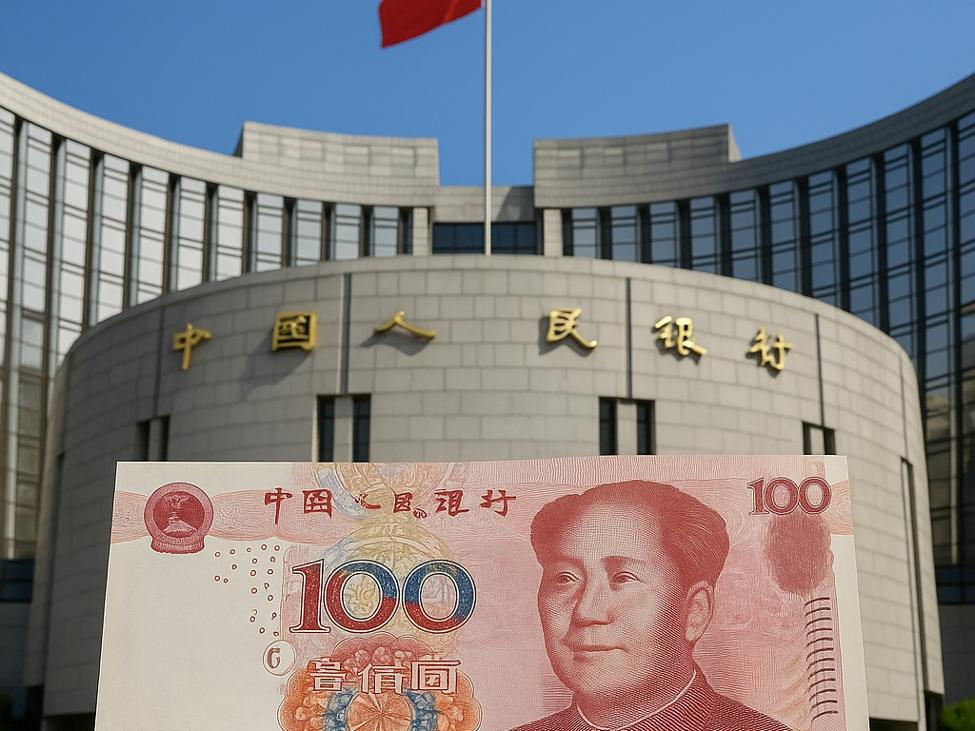
PBOC is expected to set the USD/CNY reference rate at 6.8853 – Reuters estimate
The People’s Bank of China is due to set the daily USD/CNY reference rate at around 0115 GMT (2115 US Eastern time), a fixing that remains one of the most closely watched signals in Asian foreign exchange markets. China operates a managed floating exchange rate system, under which the renminbi (yuan) is allowed to trade within a prescribed band around a central reference rate, or midpoint, set each trading day by the PBOC. The current trading band permits the currency to move plus or minus 2% from the official midpoint during onshore trading hours. Each morning, the PBOC determines the midpoint based on a range of inputs. These include the previous day’s closing price, movements in major currencies, particularly the US dollar, broader international FX conditions, and domestic economic considerations such as capital flows, growth momentum and financial stability objectives. The midpoint is not a purely mechanical calculation, allowing policymakers discretion to guide market expectations. Once the midpoint is announced, onshore USD/CNY is free to trade within the allowable band. If market pressures push the yuan toward either edge of that range, the central bank may step in to smooth volatility. Intervention can take the form of direct buying or selling of yuan, adjustments to liquidity conditions, or guidance through state-owned banks. As a result, the daily fixing is often interpreted as a policy signal rather than just a technical reference point. A stronger-than-expected CNY midpoint is typically read as a sign the PBOC is leaning against depreciation pressure, while a weaker fixing for the CNY can indicate tolerance for a softer currency, often in response to dollar strength or domestic economic headwinds.In periods of heightened global volatility, such as shifts in US rate expectations, trade tensions or capital flow pressures, the fixing takes on added significance. For investors, it provides insight into Beijing’s currency priorities, balancing competitiveness, capital stability and financial market confidence. This article was written by Eamonn Sheridan at investinglive.com. 🔗 Source 💡 DMK Insight The upcoming USD/CNY reference rate setting is crucial for traders, especially with recent volatility in the forex markets. China’s managed floating exchange rate system means that any significant adjustments can impact not just the CNY but also broader market sentiment. If the PBOC sets a stronger reference rate, it could signal confidence in the economy, potentially leading to a bullish sentiment in Asian markets. Conversely, a weaker rate might suggest economic concerns, triggering sell-offs in related assets like commodities or emerging market currencies. Traders should keep an eye on the 0115 GMT fixing as it could set the tone for the rest of the trading day, especially for those holding positions in USD/CNY or related pairs. Watch for any unexpected shifts that could create trading opportunities or risks, particularly if the fixing deviates from market expectations. 📮 Takeaway Monitor the USD/CNY reference rate setting at 0115 GMT for potential market-moving implications, especially if it deviates from expectations.

Oracle layoffs could reach 45000 as AI replace database, engineering roles. Job loss flood
Summary:Oracle is reportedly preparing layoffs that could reach as many as 45,000 employees, above the confirmed 20,000–30,000 range.Much of the restructuring is tied to AI automation within Oracle Cloud Infrastructure.AI agents have reportedly been managing database administration tasks for several months.One internal example saw 47 database administrators replaced by three senior architects supervising automated systems.Internal metrics suggest the AI tools can detect around 94% of database issues automatically.Entire solution engineering teams that customise enterprise deployments may also be eliminated.Some implementation workflows reportedly fall from six weeks to roughly six hours using AI tools.Oracle is reportedly planning sweeping job cuts that could affect as many as 45,000 employees, far exceeding the company’s publicly confirmed reduction of 20,000 to 30,000 roles, according to people familiar with the situation.While the layoffs come amid heavy investment in artificial intelligence infrastructure and cloud computing, insiders say the reductions are not solely driven by the cost of building large-scale AI data centers. Instead, much of the restructuring appears tied to the company’s increasing use of AI systems to automate technical and operational work previously performed by large engineering teams.Sources inside the company say Oracle has spent roughly eight months running internal pilot programs that deploy AI agents to manage database administration tasks within its Oracle Cloud Infrastructure environment. The automated systems are now reportedly capable of performing many routine functions once handled by database administrators, including system maintenance, performance optimisation and backup verification.One example cited by a source involved a team of 47 database administrators in Austin whose responsibilities were largely replaced by automated management tools overseen by a small group of senior architects. In that case, the work previously performed by dozens of engineers was reduced to three senior specialists supervising AI-driven processes.Internal metrics cited by employees suggest the AI systems can detect and address roughly 94% of database issues before human intervention becomes necessary. If accurate, that level of automation could significantly reduce the need for large support teams that historically maintained enterprise database environments.The restructuring is also said to extend beyond technical operations. Sources indicate that some solution engineering teams, specialists responsible for designing customised deployments for enterprise clients, are also being eliminated.According to employees familiar with the transition, new AI-driven development tools are capable of generating customised database architectures and migration plans in a matter of hours rather than weeks. Tasks that once required large implementation teams are increasingly being automated through software-driven workflows.One insider described watching a 12-person enterprise solutions team responsible for implementing systems for Fortune 500 clients learn that their roles were being eliminated almost immediately.Oracle is reportedly offering generous severance packages, with some employees receiving up to 18 months of salary along with accelerated equity vesting. However, workers say the packages reflect a broader concern that similar roles may be disappearing across the enterprise software industry as companies adopt comparable automation strategies.If confirmed, a workforce reduction approaching 45,000 employees would rank among the largest technology layoffs in recent years and signal a dramatic shift toward AI-driven operational models across the sector. This article was written by Eamonn Sheridan at investinglive.com. 🔗 Source 💡 DMK Insight Oracle’s potential layoffs of up to 45,000 employees signal a major shift in their operational strategy, and here’s why that’s crucial for traders right now: The integration of AI into Oracle’s Cloud Infrastructure isn’t just a cost-cutting measure; it’s a strategic pivot that could redefine their competitive landscape. By replacing 47 database administrators with just three AI agents, Oracle is not only streamlining operations but also setting a precedent for efficiency that could ripple through the tech sector. Traders should keep an eye on how this affects Oracle’s stock performance, especially if these layoffs lead to improved margins and profitability in the coming quarters. Look for key technical levels around recent support and resistance points, as a significant move could trigger reactions from institutional investors. However, there’s a flip side to consider. While automation can drive efficiency, it may also lead to public backlash or regulatory scrutiny, especially in a labor market that’s still recovering. The real story is whether Oracle can balance these layoffs with maintaining morale and innovation within its workforce. Watch for any upcoming earnings reports or guidance updates that could provide further clarity on this transition. 📮 Takeaway Monitor Oracle’s stock closely for reactions around key support levels as they navigate these layoffs and AI integration, especially leading into their next earnings report.
ANZ joins banks expecting March 17 RBA rate hike as oil shock lifts inflation risks
Expectations for an RBA rate hike on March 17 are strengthening as oil-driven inflation risks grow and major banks including ANZ join forecasts for tighter policy.Summary:RBA Deputy Governor Andrew Hauser warned that oil price shocks tied to the Iran conflict pose upside risks to inflation.He said there will be “genuine policy debate” at the March 17 RBA meeting.Markets now price around a 70% probability of a 25bp rate hike next week.Westpac, NAB, Citi, Deutsche Bank and ANZ now expect a March rate increase.Bank of America, UBS and Capital Economics also forecast a hike at the upcoming meeting.Westpac expects two hikes, March and May, lifting the cash rate to around 4.35%.Higher oil prices and limited spare capacity in the economy are key drivers of tightening expectations.Expectations of a near-term interest rate hike from the Reserve Bank of Australia have strengthened after fresh comments from Deputy Governor Andrew Hauser and a growing wave of forecasts from major banks predicting tighter policy as soon as next week.Speaking earlier this week, Hauser warned that the recent surge in oil prices tied to geopolitical tensions involving Iran presents clear upside risks to inflation. He emphasised that the central bank’s policy response will depend on how persistent the shock proves to be, but signalled that the upcoming March 17 policy meeting could involve a “genuine policy debate”.“Our response depends on the size and persistence of the price shock,” Hauser said, highlighting the uncertainty created by rapidly evolving geopolitical developments.Despite the uncertain outlook, Hauser stressed the importance of preventing inflation expectations from becoming entrenched. Allowing inflation to remain elevated for too long, he warned, risks repeating the damaging experience of the recent inflation surge.“If we fail to act decisively enough to prevent inflation staying high or even rising and expectations of inflation disanchor… it will be bad for everyone,” he said, describing inflation as “toxic” for the broader economy.Hauser also noted that Australia’s economy continues to operate close to its capacity limits. Recent data show annual GDP growth running around 2.6%, above the central bank’s estimate of roughly 2% sustainable growth, suggesting demand may still be exceeding the economy’s underlying supply potential.Financial markets have reacted quickly to the remarks. Interest-rate futures now imply roughly a 70% probability that the RBA will raise the cash rate by 25 basis points at its March 17 meeting, a sharp shift from expectations earlier in the year when many analysts anticipated the central bank would remain on hold.Several major banks have moved to forecast a hike next week. Westpac, National Australia Bank, Citi, Deutsche Bank and now ANZ expect the RBA to raise the cash rate in March, reflecting concerns that higher oil prices could push inflation higher again.Westpac has gone further, revising its outlook to expect two rate hikes — in March and May — which would lift the cash rate to a peak of around 4.35%. The bank said policymakers may act pre-emptively to prevent inflation expectations from drifting upward even if the energy-driven shock proves temporary.Other institutions including Bank of America, UBS and Capital Economics have also shifted toward expecting a rate increase at the upcoming meeting.The rapid shift in forecasts highlights how the Middle East conflict has complicated the RBA’s policy outlook. While Australia’s status as a net energy exporter may provide some support to national income, rising global oil prices still pose a risk to domestic inflation and borrowing costs.With the March decision approaching, policymakers now face a delicate balancing act between responding to geopolitical inflation risks and ensuring monetary policy remains aligned with domestic economic conditions. This article was written by Eamonn Sheridan at investinglive.com. 🔗 Source 💡 DMK Insight RBA’s potential rate hike on March 17 could shake up the forex market significantly. With inflation risks rising due to oil price shocks, traders should keep a close eye on AUD/USD movements. The RBA’s tightening policy could strengthen the Aussie dollar, especially if major banks like ANZ are aligning their forecasts. If inflation continues to climb, we might see the RBA acting more aggressively, which could lead to a bullish trend for the AUD. However, there’s a flip side: if the global economy reacts negatively to higher oil prices, risk sentiment could shift, leading to a sell-off in the AUD. So, watch for key levels around 0.6700 and 0.6800 in AUD/USD; a break above could signal a stronger bullish trend, while a drop below 0.6600 might indicate bearish sentiment. Keep an eye on oil prices and geopolitical developments, as they could influence the RBA’s decisions and market reactions in the coming weeks. 📮 Takeaway Monitor AUD/USD closely; a break above 0.6800 could signal a bullish trend if RBA hikes rates.
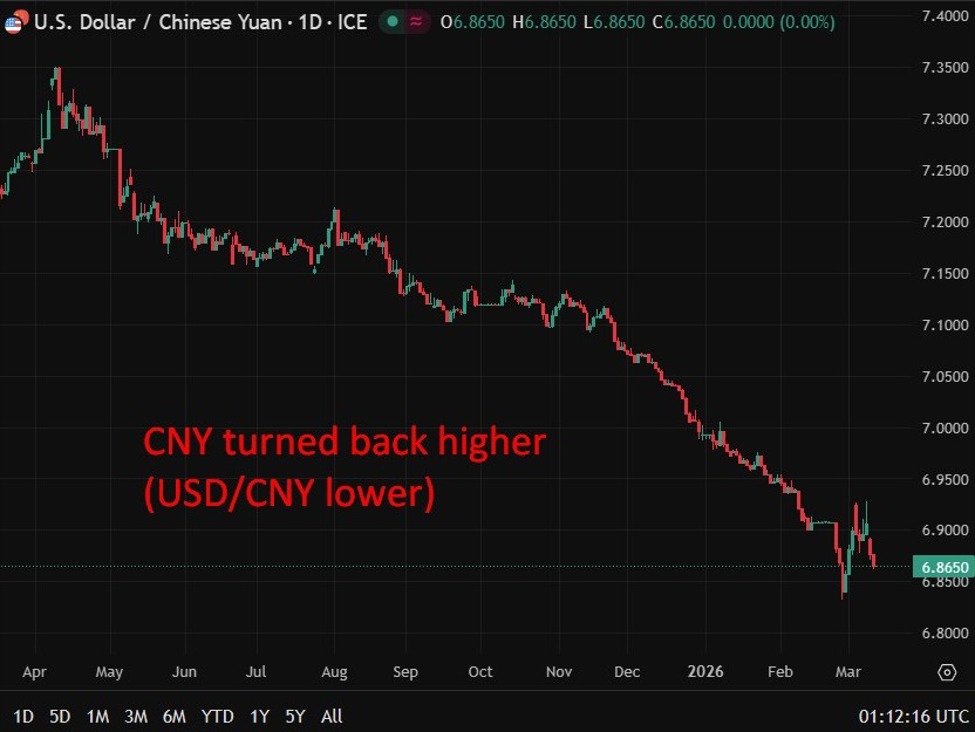
PBOC sets USD/ CNY mid-point today at 6.8959 (vs. estimate at 6.8853)
The PBOC allows the yuan to fluctuate within a +/- 2% range, around this reference rate.Injects 24.5bn yuan in 7-day reverse repos at 1.4% (unchanged) in open market operations This article was written by Eamonn Sheridan at investinglive.com. 🔗 Source 💡 DMK Insight The PBOC’s recent move to inject 24.5 billion yuan into the market signals a proactive stance amid economic pressures. By maintaining the 1.4% rate on reverse repos, they’re trying to stabilize the yuan while allowing it to fluctuate within a 2% range. This could be a response to rising inflation concerns or slowing growth, which traders need to watch closely. If the yuan weakens significantly, it could impact commodities priced in dollars, making them more expensive for Chinese buyers and potentially affecting global demand. Keep an eye on how this plays out in the forex market, especially against the dollar, as any significant moves could trigger volatility in related assets like gold or oil. Traders should monitor the yuan’s performance closely, especially if it approaches the upper or lower bounds of its fluctuation range, as this could lead to increased volatility in the forex market and impact trading strategies around commodities and equities tied to Chinese economic health. 📮 Takeaway Watch the yuan’s movement within its 2% fluctuation range; significant shifts could impact global commodities and forex strategies.
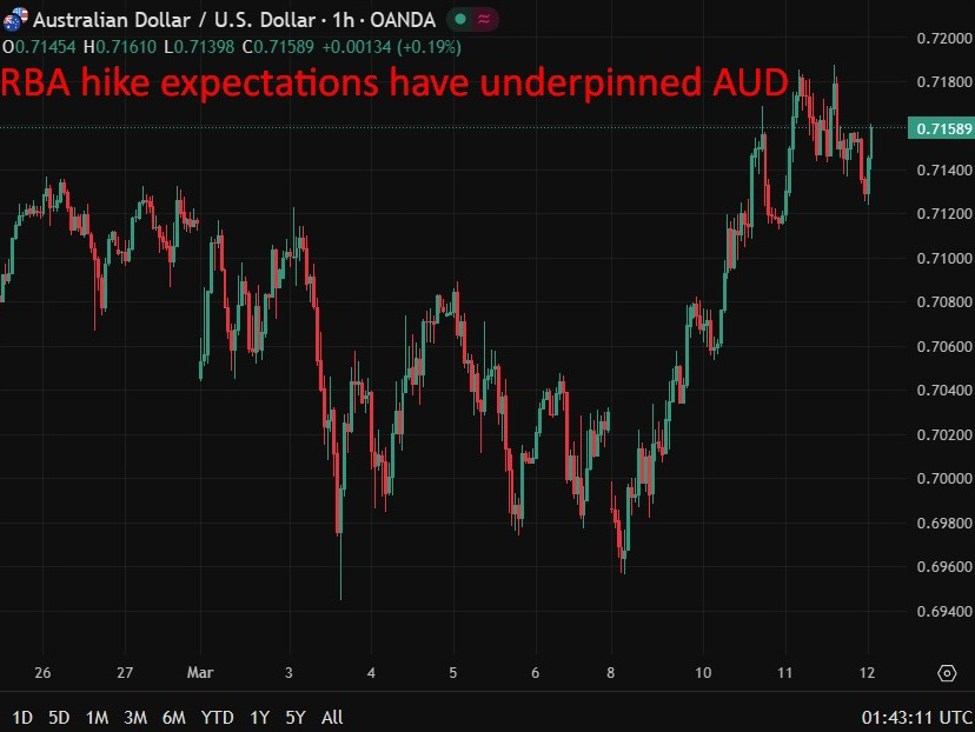
CBA expects RBA to hike rates in March and May as inflation risks rise
Commonwealth Bank expects the RBA to raise rates in March and May as rising energy prices and strong domestic data keep inflation risks elevated.Earlier:ANZ joins banks expecting March 17 RBA rate hike as oil shock lifts inflation risksWestpac lifts RBA peak rate forecast to 4.35%, sees RBA hiking rates in March and MayAustralian bank analysts are piling on to forecast an RBA rate hike next weekSummary:CBA expects the RBA to raise the cash rate in March and May, taking the rate to 4.35%.The outlook has shifted due to higher oil prices linked to the Middle East conflict.Inflation is already above target and expected to rise further due to energy costs.The Australian economy is running above capacity, with GDP growth around 2.6%.The unemployment rate remains low at 4.1%, indicating a tight labour market.CBA expects trimmed-mean inflation around 0.9% in Q1 and 0.8% in Q2.Some domestic data have softened, including household spending and card activity.Despite the uncertainties, the bank believes the inflation outlook will drive the RBA to tighten policy.Commonwealth Bank of Australia (CBA) expects the Reserve Bank of Australia to raise the cash rate at both its March and May policy meetings as policymakers respond to mounting inflation risks and a domestic economy operating above capacity.In a research note, CBA economists said the policy outlook has shifted significantly in recent weeks, largely due to the inflationary implications of the escalating conflict in the Middle East. Rising energy prices linked to the war have introduced a new layer of uncertainty for the global economy while increasing the risk that inflation could move further away from the RBA’s target range.The March policy meeting now takes place in a very different environment than was expected only a few weeks ago, according to the bank. While geopolitical developments have complicated the outlook for global growth, they have simultaneously strengthened the near-term inflation pressures facing Australia.CBA argues that domestic economic conditions already point toward the need for tighter monetary policy. Inflation remains above target, the labour market continues to operate at historically tight levels, and the broader economy appears to be running beyond its sustainable capacity.Recent economic data have reinforced that assessment. Annual GDP growth of 2.6% remains above the RBA’s estimated long-term “speed limit” of roughly 2.1%, indicating demand is still exceeding the economy’s productive capacity. At the same time, the unemployment rate has held at 4.1% for two consecutive months, remaining below estimates of the non-accelerating inflation rate of unemployment (NAIRU).Price pressures also remain persistent. January inflation data pointed to ongoing underlying inflation momentum, and CBA’s modelling suggests trimmed-mean inflation could reach around 0.9% in the first quarter and 0.8% in the second quarter — consistent with the RBA’s latest forecasts and above the bank’s previous expectations.Against this backdrop, CBA said recent commentary from RBA officials has reinforced the central bank’s hawkish stance. Both Governor Michele Bullock and Deputy Governor Andrew Hauser have emphasised the importance of preventing inflation expectations from becoming entrenched after the sharp rise in prices in recent years.Still, the bank acknowledges that the decision facing policymakers at the March meeting is finely balanced. Global uncertainty tied to the Middle East conflict presents downside risks to growth, and some domestic indicators have softened. Household spending was weaker than expected in late 2025, and CBA’s own card spending data showed a pullback in February before a modest recovery in March.Unit labour costs have also moderated somewhat and wage growth has not shown signs of reaccelerating.Nevertheless, CBA believes the balance of risks now favours action. With inflation already elevated, energy prices rising and inflation expectations showing signs of drifting higher, the bank expects the RBA to lift the cash rate by 25 basis points in both March and May, taking the policy rate to 4.35%. This article was written by Eamonn Sheridan at investinglive.com. 🔗 Source 💡 DMK Insight RBA rate hikes are on the horizon, and here’s why that matters for traders: With Commonwealth Bank and ANZ predicting rate increases in March and May, traders need to brace for volatility in the AUD and related assets. Rising energy prices are fueling inflation concerns, which could lead to a stronger Australian dollar as higher rates typically attract foreign investment. Westpac’s forecast of a peak rate at 4.35% indicates a tightening cycle that could impact consumer spending and economic growth. For forex traders, monitoring the AUD/USD pair will be crucial, especially around the March 17 date when the RBA is expected to act. If inflation data continues to surprise to the upside, we might see even more aggressive positioning from the RBA, which could send the AUD soaring. But here’s the flip side: if the rate hikes dampen economic activity more than expected, we could see a reversal in AUD strength. Traders should keep an eye on key support levels in the AUD/USD and adjust their positions accordingly. Watch for any shifts in market sentiment leading up to the RBA meetings, as these could provide actionable insights for both short and long-term strategies. 📮 Takeaway Keep an eye on the AUD/USD as March 17 approaches; a rate hike could drive the dollar higher, but watch for economic slowdown signs that might reverse gains.