
 Bitcoin
  Ethereum
  Tether
  XRP
XRP  BNB
BNB  USDC
USDC  Solana
  TRON
TRON  Lido Staked Ether
  Figure Heloc
Live Update Now at the Bitcoin Futures (10:36, Tuesday, 3 March 2026, Coordinated Universal Time (UTC)Bitcoin intraday update: rejection at upper range shifts bias back to bearish, score downgraded from +5 earier today to -4 now. Watch the next price level in bitcoin futuresBitcoin Market snapshotBitcoin futures are now trading near 66,695, after failing to hold the upper boundary of the current one-month range. Price was rejected near the upper distribution zone and subsequently slipped back below the 67K region.The broader context remains important: Bitcoin has been ranging for nearly a month, and the current auction continues to rotate between established upper and lower value zones.What underlying activity suggests1) Rejection at the upper boundaryPrice tested the upper range boundary and failed to gain sustained acceptance. Instead of building higher value above that area, the market rotated lower.When price probes a range extreme and is rejected rather than accepted, that often signals responsive supply rather than initiative buying.This was the first structural warning sign.2) Loss of the key equilibrium levelAfter rejection, buyers were unable to defend the central equilibrium area near 67,250, which acted as the session’s control zone.Failure to hold that reference shifted short-term control toward sellers. Instead of stabilizing above balance, the market began accepting lower prices.This transition is what moves the intraday bias from neutral-to-bullish back into bearish territory.3) Range dynamics remain intactDespite the bearish intraday shift, Bitcoin is still operating within a broader one-month range.That means this move does not automatically signal a trend reversal. It reflects rotation within distribution.The next structural tests now sit lower in the range.Key levels to watch for Bitcoin FuturesImmediate reference66,390 (high-volume consolidation area)Primary downside level65,670–65,680 (lower range boundary)If price continues to accept trade below 66,390, the probability increases that the lower boundary of the range will be tested next.If buyers step in aggressively above 66,390 and reclaim 67,250, the bearish intraday tone would weaken.Scenarios for Bitcoin TodayBearish continuation within the rangeIf price remains below 67,250 and selling pressure builds with follow-through, rotation toward 65,670 becomes increasingly likely.Acceptance below that lower boundary would be structurally significant.Failed breakdownIf Bitcoin reclaims 67,250 and begins holding above that level, the current move would resemble another rotational shakeout inside the broader range.At this stage, the rejection at the upper boundary gives sellers the short-term edge.Bitcoin Market bias scoreMarket bias score: -4 (bearish intraday).This reflects rejection at the range high and loss of the central equilibrium area. The score is not more negative because the broader one-month range structure remains intact.The score would turn more bearish on sustained acceptance below 65,670. It would move back toward neutral on sustained acceptance above 67,250.What would change the viewReclaim and hold above 67,250Strong buying absorption above 66,390Failure of sellers to produce follow-through toward the lower boundaryThis analysis is intended for educational and decision-support purposes only. It is not financial advice. Markets are inherently uncertain, and all trading and investing decisions carry risk.For real-time trade ideas, follow-ups, and market insights across stocks, indices, commodities, and crypto, check out the investingLive Stocks Telegram channel. Trade ideas are shared for educational purposes only and at your own risk.https://t.me/investingLiveStocksPreviously reported today:It’s been a challenge for traders and investors seeking a ‘back to risk-on sentiment’ vibe with all the action around. The market landscape remains highly sensitive to headlines, as evidenced by reports of disruptions in the Strait of Hormuz which once again sent oil prices climbing. This volatility initially pressured equities, yet the S&P and Nasdaq indices managed to erase their war-related declines to close the day higher. Safe-haven assets saw a similar tug-of-war, with gold and silver finding renewed bids in Asia before sellers quickly reappeared to cap the gains. Amid the military uncertainty, investor sentiment was bolstered by a more cautious diplomatic tone, particularly after Trump stated he does not believe “boots on the ground” will be necessary in Iran.Let’s see how price action of Bitcoin has been responding to all this action.Bitcoin’s Month-Long Tug-of-War: The Battle Between 67k and 70kTaking a look at the 1-hour Bitcoin futures (BTC1!) chart, the market is currently caught in a persistent, month-long consolidation phase. Traders are navigating a well-defined channel where bears are consistently stepping in to sell rallies as price approaches the 70k psychological resistance. Conversely, the bulls have a clear line in the sand: protecting the 67k support zone is absolutely critical to maintain market structure and prevent a deeper technical breakdown. Until we see a decisive surge in momentum to break these boundaries, range-bound trading remains the dominant theme.Educational Note for Crypto Traders and Investors: Understanding the Volume ProfileThe indicator displayed on the left side of your chart is the Volume Profile. Unlike standard volume bars at the bottom of a chart that show volume over time, the Volume Profile shows volume traded at specific price levels.Here is how to decode what it’s telling you:High Volume Nodes (HVNs): These are the peaks extending outward. They represent price zones where a high amount of volume was transacted, meaning the market sees this as an area of “fair value.” These zones often act as strong support or resistance because many buyers and sellers have vested interests there. Notice how the bulk of your profile sits right around that critical 67k-68k level you noted.Low Volume Nodes (LVNs): These are the valleys or dips in the profile. Prices tend to move quickly through these zones because there is little historical transaction interest to slow the market down.Point of Control (POC): The distinct red line cutting through the profile is the POC. This is the single price level within the given time period that saw the highest trading volume. It acts as a powerful magnet for price and a key pivot level for intraday and swing traders.BTC Market snapshotBitcoin futures are currently trading near 68,690 on the 1-hour structure, pulling back from the earlier spike toward 70,445 seen on the 4-hour breakout. The short-term tone has shifted from aggressive expansion to controlled digestion.This is not a structural breakdown, but it is the first meaningful pause after

SNB might have stepped in yesterday to limit Swiss franc advance – Credit Agricole
The firm argues that but for plausible intervention by the SNB yesterday, the Swiss franc would’ve recorded better gains in reaction to the US-Iran conflict thus far. The key line in the sand that they’re highlighting is the obvious one at 0.90 for EUR/CHF. That is one that has become quite evident after the break of the 0.92 level just before the events in the Middle East.A catch up to where we’re finding ourselves with the franc currency:US-Iran tensions most untimely for the SNBWe are more prepared to intervene in FX market in view of international situation – SNBSwiss franc tumbles after SNB warning earlierThe early reaction to the US-Iran conflict has been rather mixed I would say. The bond market is arguably the most curious one but we’re not quite seeing all out fear and panic in markets as one would think. It might still be early days but it is always best to remember that market players tend to work through the echo chamber much quicker than they have in the past. That especially as the social media revolution has desensitised humanity and emotions to a large extent. However, let’s leave that to a separate discourse.Circling back to the franc, we saw EUR/CHF fall to a low of 0.9025 yesterday before bouncing back in European trading to above 0.9100. And that’s where we are seeing price action settle now. Did the SNB step into the market to limit the franc’s advance? Credit Agricole notes that:”The CHF remains the safe haven of choice in G10 FX as the US-Iran conflict broke out. After already falling to decade lows just short of 0.9050 on Friday, EUR/CHF has extended its decline to around 0.9025 at this week’s open before reversing. This has triggered the largest spillover in CHF-implied volatilities since April 2025. The SNB is surely watching all that from up close, as the CHF would be at its strongest since 2011 on a real basis. While it is too early to know for sure whether the bank has had to intervene to rein in the CHF’s strength, preserving some big psychological level like 0.90 in EUR/CHF could carry extra signaling value for the SNB which has so far not particularly stepped up its jawboning against the CHF, perhaps to avoid any backlash from the US administration.” This article was written by Justin Low at investinglive.com. 🔗 Source 💡 DMK Insight The Swiss franc’s potential strength against the euro is being held back, and here’s why that matters: The recent US-Iran tensions have created a flight to safety, typically benefiting the Swiss franc. However, the Swiss National Bank (SNB) seems to have intervened to prevent the franc from appreciating too rapidly, particularly around the critical 0.90 level for EUR/CHF. This intervention suggests that the SNB is keen on maintaining a stable currency environment, which could limit upside potential for the franc in the short term. Traders should be aware that if EUR/CHF breaks below 0.90, it could signal a stronger franc and prompt a shift in market sentiment. On the flip side, if geopolitical tensions escalate further, the SNB might find it challenging to maintain this level, leading to increased volatility. Keep an eye on how the market reacts to any new developments in the US-Iran situation, as this could provide trading opportunities. Watch for any significant moves around the 0.90 mark, as a breach could lead to a cascade effect in the forex market, impacting other safe-haven currencies as well. 📮 Takeaway Monitor the EUR/CHF level at 0.90 closely; a break below could lead to a stronger Swiss franc and increased market volatility.

US Central Command confirms strikes on Iranian missile and drone launch sites
The latest update from the US Central Command:”US forces have destroyed Islamic Revolutionary Guard Corps command and control facilities, Iranian air defense capabilities, missile and drone launch sites, and military airfields during sustained operations. We will continue to take decisive action against imminent threats posed by the Iranian regime.”At first read, this should mean that Iran’s threats would be severely incapacitated. However, everyone likes to play up their victories in a time of war. So, we’ll see in time I guess.The conflict continues to rage on but barring any further major escalation, markets might already be eager to move on. The social media revolution has created such an echo chamber that the world becomes largely desensitised to everything and anything in just about a day or two.So unless there are real and prolonged economic consequences to deal with, simmering tensions might not be enough to keep market players from being fearful. US futures might be pointing lower but we saw yesterday how quickly Wall Street can turn things around. Elsewhere, WTI crude oil is also only up a little over 2% to $72.62 currently. This article was written by Justin Low at investinglive.com. 🔗 Source 💡 DMK Insight The US military’s recent operations against Iranian military assets could trigger significant volatility in oil and forex markets. With tensions escalating, traders should keep a close eye on crude oil prices, as any disruption in Middle Eastern supply chains could lead to a spike in prices. Historically, military actions in the region have resulted in immediate price surges; for example, similar operations in the past have led to oil prices climbing sharply within days. Additionally, the forex market might react to shifts in risk sentiment, particularly affecting the USD and currencies of oil-exporting nations. Here’s the thing: while some may view this as a short-term blip, the potential for extended conflict could have longer-term implications for energy prices and geopolitical stability. Traders should monitor key levels in oil, particularly if prices approach recent highs, and watch for any statements from OPEC regarding production adjustments. The next few days will be crucial as the market digests this news and assesses the potential for further military engagement. 📮 Takeaway Watch for crude oil prices; any spike above recent highs could signal increased volatility in both oil and forex markets.
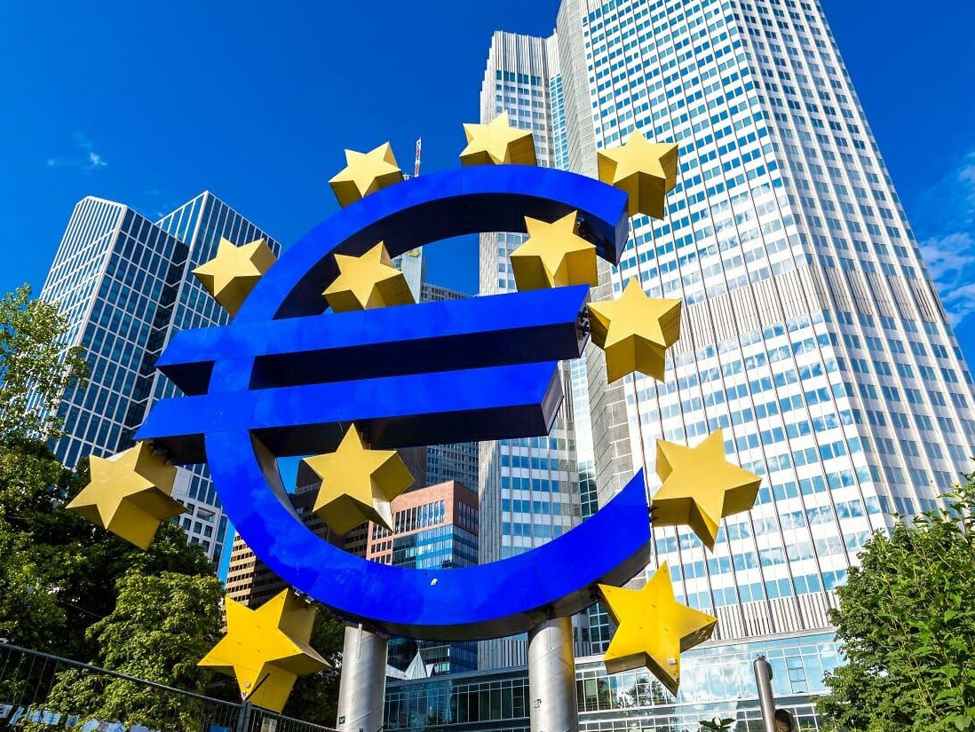
ECB chief economist Lane warns of inflation spike from US-Iran conflict
Prolonged conflict could lead to a “substantial spike” in inflationAt the same time, it could also cause a “sharp drop in output” in the euro areaDirectionally, a jump in energy prices puts upward pressure on inflation especially in the near-termThe magnitude of the shock heavily depends on “the breadth and duration of the conflict”But for the time being, “I think where we are now is OK” (when asked about policy stance)Barring any major shocks, euro area economy is “growing in the neighbourhood of its potential”Even when taking out any energy price volatility, inflation is still running above the 2% medium-term target”This is not an environment where I see an argument in favour of taking a bit of risk on inflation”Full transcript (may be gated)His comments aren’t anything new I would say. Even when taking into account his views on the US-Iran conflict, the bottom line is that the ECB is rather comfortable on the sidelines for the time being. And it would take a rather massive and prolonged shock impact to get them to think otherwise in terms of policy setting.As things stand, they are pausing on rate cuts and markets are concurring. Lane acknowledges that pricing and once again reaffirms that it is a fair assumption; all else being equal. And if there are short-term pressures to higher inflation as a result from the US-Iran conflict, one can also argue that the ECB will even more want to stick to where they are now. This article was written by Justin Low at investinglive.com. 🔗 Source 💡 DMK Insight Rising energy prices are a red flag for inflation and economic output in the euro area. Traders need to pay attention to how prolonged conflicts can disrupt supply chains and lead to increased costs. A substantial spike in inflation could shift central bank policies, impacting interest rates and currency valuations. If energy prices continue to rise, we might see a direct correlation with inflation metrics, which could lead to volatility in the euro and related assets. Watch for key inflation reports and energy price movements, as these will dictate market sentiment and trading strategies. On the flip side, if output drops sharply, it could trigger a flight to safety, benefiting assets like gold or the US dollar. Keep an eye on the euro’s performance against the dollar, especially if inflation data starts to surprise to the upside. The next few weeks will be critical, so monitor energy prices closely as they could dictate broader market movements. 📮 Takeaway Watch energy prices closely; a spike could lead to higher inflation and impact euro valuations significantly in the coming weeks.

US, China officials reportedly set to meet to lay the groundwork ahead of Trump-Xi summit
With all that is happening in the Middle East, let’s not forget that there is also an ongoing trade war between the US and the rest of the world. The Supreme Court shooting down Trump’s reciprocal tariffs has changed the landscape here dramatically. And that is making for a bit of an awkward setting ahead of Trump’s visit to Beijing at the end of this month.The latest news via Bloomberg is saying that US and China trade negotiators will be scheduling to meet some time in mid-March. That suggests that the Trump-Xi summit will be moving forward despite the situation in the Middle East.Of note, US Treasury secretary Scott Bessent and China vice premier He Lifeng are reported to meet in Paris at the end of next week. The two are expected to discuss potential business deals tied to the Trump-Xi summit. However, the report notes that the timing and location of the meeting could still change.The reported business deals that could be discussed may include possible Chinese purchases of Boeing aircrafts, buying of US soybeans, and the future of fentanyl tariffs that were taken down by the Supreme Court.The way that I’m interpreting this is that:Both sides will want to keep separate economic talks and geopolitical issuesTrump already agreed to visit Beijing before the Supreme Court decision, so he has to save face and still goChina is more than happy with the current predicament and will gladly put up a facade to appease TrumpAs has been the case before, China wants to play the long game and ride out Trump’s presidential termBeijing might agree to economic deals during the summit but may not deliver on them as has been the case beforeIn other words, it seems like we’re all lined up for another show of theatrics. Both sides will boast about taking wins but in the end, don’t expect any major changes to the status quo from now and after the Trump-Xi summit. This article was written by Justin Low at investinglive.com. 🔗 Source

FX option expiries for 3 March 10am New York cut
There is arguably just one to take note of on the day, as highlighted in bold below.That being for USD/JPY at the 157.00 level. However, the expiries don’t tie to any technical significance and may not have too much impact considering prevailing trading sentiment in broader markets. As traders digest the US-Iran conflict and higher oil prices, the dollar side of the equation is dominating and we’re once again seeing slight bids in the dollar today.It’s very much the resurgence of the petrodollar trade as outlined here yesterday.That being said, do keep in mind that in this day and age we tend to see markets move on from one major story to another rather quickly. The social media revolution has created an echo chamber of sorts that we tend to become desensitised by the same news and headlines in just a matter of days.As such, markets might be looking to move on quickly from the whole US-Iran conflict unless there is some actual prolonged economic damage. For now, all eyes will stay on the Strait of Hormuz still especially in sizing up how that will impact the oil market and any broader market influences.To stay on the post topic, don’t expect much impact from the option expiries on the board in a time like this.For more information on how to use this data, you may refer to this post here.Head on over to investingLive (formerly ForexLive) to get in on the know! This article was written by Justin Low at investinglive.com. 🔗 Source 💡 DMK Insight The USD/JPY at 157.00 is a key level to watch, but here’s why it might not matter much right now. With the broader market sentiment leaning towards caution, traders should be wary of overreacting to this expiry. The lack of technical significance at this level suggests that any moves could be more about market noise than genuine shifts in sentiment. If you’re trading USD/JPY, keep an eye on how it interacts with this level, but don’t expect fireworks unless there’s a significant catalyst. Also, consider the implications for correlated pairs like EUR/JPY or AUD/JPY, as they could reflect similar sentiment trends. Watch for any shifts in risk appetite that could impact these pairs, especially if the USD shows strength against other currencies in the coming sessions. 📮 Takeaway Monitor the USD/JPY at 157.00 for potential moves, but be cautious of the broader market sentiment that may limit volatility.

BOJ might have to put off March rate hike amid US-Iran conflict – report
The sources mentioned that the market volatility triggered by the US-Iran conflict has now raised the odds of the BOJ holding off on raising interest rates later this month. Adding that the only real factor that could see policymakers lean towards a rate hike would be to address the sharp decline in the Japanese yen currency.Of note, three of the sources said that “it’s become difficult for the BOJ to raise rates” as they also have to consider the implications of the US-Iran conflict on policy setting. Meanwhile, two other sources said that the central bank will likely need time in trying to weigh up the impact of the Middle East situation and how that may affect the economy and prices.As mentioned yesterday despite Himino’s bolder remarks here, the BOJ tends to want to play things on the safer side. As such, the report above definitely fits more with their behavioural actions in the past.One main issue amid the US-Iran conflict is that it will also stir up potential cost-push inflation in Japan. And that is something that the BOJ does not want as part of their inflation dynamics in the economy. In contrast, the central bank wants a more wage-driven dynamic in underpinning price pressures.Besides that, higher oil prices will also bite at Japan’s economy so there is also that to factor in. One of the sources in the report note that while underlying prices might go up because of the geopolitical environment, they could hurt the economy and justify a delay in further rate hikes – especially if the conflict persists.Looking to the policy meeting decision on 19 March, traders are pricing in ~91% odds of no change to interest rates. As for the 28 April meeting, they are attaching a ~56% probability of a 25 bps rate hike for now. This article was written by Justin Low at investinglive.com. 🔗 Source 💡 DMK Insight The US-Iran conflict is shaking up market expectations, particularly for the BOJ’s interest rate decisions. With rising volatility, traders should be cautious about how geopolitical tensions can influence central bank policies. If the BOJ decides to hold off on rate hikes, it could lead to a weaker yen, impacting forex pairs like USD/JPY. This scenario could also ripple through equities and commodities, as a stable or lower yen might boost exports but raise import costs. Keep an eye on the upcoming BOJ meeting for any hints on their stance, as this will be crucial for positioning in the forex market. Here’s the kicker: while the mainstream narrative focuses on the immediate effects of the conflict, the longer-term implications on inflation and economic stability in Japan could be overlooked. If inflation continues to rise, the BOJ may be forced into a corner, needing to act sooner than expected. Watch for any shifts in inflation data leading up to the BOJ meeting; those could be the real game-changers. 📮 Takeaway Monitor the BOJ’s upcoming meeting closely; a hold on rates could weaken the yen, impacting USD/JPY and broader market sentiment.

Silver slammed back down as bids from US-Iran conflict fade
The precious metal tends to move in tandem with gold prices when it comes to such situations but after the volatile selling at the end of January, the landscape has changed quite a lot. Despite the recovery momentum in recent weeks and also at the start of this week, the volatility bouts are still running in silver it would seem.At the open this week, silver prices jumped up to above $96 but are now dropping hard with the low earlier touching just under $83.It’s a quite a notable fall, adding to the sharp decline in US trading yester day as well. And this also comes as gold is losing added ground after having also peaked yesterday above $5,400. Gold prices have dropped to a low of $5,280 earlier and are now still down 0.4% on the day at around $5,303.The opening gap higher for the week in gold was briefly closed yesterday and price action is looking to revisit that again around the $5,278 level.Circling back to the silver chart above, the near-term momentum has clearly shifted now for the precious metal. The drop yesterday saw the more bullish near-term bias dissipate. And after that, buyers struggled to get price back above the 100-hour moving average (red line). That’s now leading to a further loss in altitude with silver dropping back under the 200-hour moving average (blue line). As such, the near-term bias is now more bearish once again.If anything, it continues to highlight that the recovery path for silver is going to be tough. And that major profit-taking and corrective move at the end of January does have some reverberations in terms of impacting trading sentiment. That being any recovery or dip buying will not be as smooth and one-sided as it was before, like last year.I would argue that the price action here suggests that the flush lower at the end of January has not quite run its course. And on any recovery path, we could see more triggers for volatile selling.For now though, the US-Iran conflict will be the main focus. But as a reminder, markets these days don’t take long to move on from one story to another. So, that might also impact the allure for precious metals unless the conflict escalates further in the coming days. This article was written by Justin Low at investinglive.com. 🔗 Source 💡 DMK Insight Gold’s recent volatility has shifted market dynamics, and silver’s price movements are closely tied to it. Traders should be aware that silver often mirrors gold’s trends, especially in uncertain economic climates. If gold continues its recovery, silver could see upward momentum, but if gold falters, silver might face renewed selling pressure. Look for key resistance levels around recent highs; a break above those could signal a strong bullish trend for silver. However, it’s worth noting that the correlation isn’t always perfect. If gold rallies but silver lags, it may indicate underlying weakness in silver demand or market sentiment. Keep an eye on macroeconomic indicators like inflation data or interest rate changes, as these can heavily influence both metals. For now, watch the $25 level for silver as a potential breakout point, and consider the implications of any shifts in gold prices on your trading strategy. 📮 Takeaway Monitor silver’s performance closely around the $25 level; a breakout could signal a bullish trend if gold maintains its recovery.

Another rough day beckons for major indices in Europe
It’s looking rough out there at the open again as equities are being hammered lower. Investors are seeking shelter amid the US-Iran conflict and the favoured play right now looks to be the dollar. The greenback is once again higher across the board with European currencies in particular struggling.In Europe, natural gas prices are soaring as Qatar remains closed for business and that’s going to have spillovers to energy prices in the region again. Think back to the impact of the Russia-Ukraine conflict but likely to be on a smaller scale. However, the aftermath is likely to be the same as households and businesses have to deal with the reverberations of a temporary spike – a massive one at that – in energy prices.In the equities space, we’re seeing European stocks struggle hard in digesting the latest developments. The lack of a tech carry anchor isn’t helping, which was what saved Wall Street yesterday. But even today, US futures are also having it rough in the early stages.Eurostoxx -2.0%Germany DAX -2.1%France CAC 40 -1.7%UK FTSE -1.4%Spain IBEX -1.9%Italy FTSE MIB -2.3%What is notable about the latest drop is that it has taken away a lot of the optimism in European stocks to start the new year.The drop this week has effectively wiped out the year-to-date gains for the DAX. Meanwhile, the rest of the CAC 40, IBEX, and FTSE MIB have seen year-to-date gains cancelled out to just barely 1% now. Pain.And the bleeding could get worse if we see Wall Street fold over later in the day. US stocks recovered well in trading yesterday, with the S&P 500 once again defending its 100-day moving average. But if that gives way, expect stops to be triggered and the downside pressure to intensify in the short-term.We might be set for more pain before things become better in the equities space, with the US-Iran conflict being a timely trigger for a corrective move to last year’s stirring momentum. This article was written by Justin Low at investinglive.com. 🔗 Source 💡 DMK Insight With equities under pressure, the dollar’s strength is a clear signal for traders: risk-off sentiment is dominating. The ongoing US-Iran conflict is pushing investors to seek safety in the greenback, causing European currencies to falter. This trend suggests a potential shift in trading strategies, especially for those holding positions in EUR/USD or GBP/USD. If the dollar continues to gain, it could break through key resistance levels, prompting further selling in risk assets. Keep an eye on the 1.05 level for EUR/USD; a sustained move below could trigger a wave of stop-loss orders. On the flip side, while the dollar’s rise seems inevitable in the short term, it’s worth questioning how long this risk-off sentiment will last. If geopolitical tensions ease, we might see a swift reversal, so traders should be ready to pivot quickly. Watch for any news that could shift the narrative, as that could lead to volatility in both equities and currencies. 📮 Takeaway Monitor the 1.05 level in EUR/USD; a break below could signal further dollar strength and equity weakness.

USDJPY on track to revisit the "intervention" level as Japanese yen lacks bullish drivers
FUNDAMENTAL OVERVIEWUSD:The US dollar rallied across the board yesterday on safe haven demand as US-Iran conflict erupted over the weekend. The main driver though was the market’s realisation that rate cuts might not come as soon as expected. In fact, higher oil prices will eventually put upward pressure on inflation and yesterday’s ISM Manufacturing PMI showed how wrong the market has been in being so dovish on the economy. The data was hot for the second consecutive month, so the one-off narrative was put to rest. Moreover, the prices index jumped to the highest level since 2022, in another sign that inflationary pressures remain high. Traders pared back their rate cut bets with the total easing by year-end now seen around 49 bps vs 58 bps on Friday. JPY:On the JPY side, nothing has changed as PM Takaichi’s opposition and, more importantly the data, haven’t been supporting a rate hike any time soon. The latest Japanese CPI fell below the BoJ’s 2% target, dealing another blow to the central bank’s efforts to further raise interest rates. The market is still pricing a rate hike in June at the earliest with a total of two rate hikes by year-end. This looks very optimistic right now. The Japanese yen will continue to weaken as rate hike expectations get pushed further out. USDJPY TECHNICAL ANALYSIS – DAILY TIMEFRAMEOn the daily chart, we can see that USDJPY retested the broken trendline and eventually extended the gains into the key swing level at 157.65. This is where we can expect the sellers to step in with a defined risk above the swing level to position for a drop back into the major upward trendline. The buyers, on the other hand, will look for a break higher to increase the bullish bets into the 159.00 handle next.USDJPY TECHNICAL ANALYSIS – 4 HOUR TIMEFRAMEOn the 4 hour chart, we can see that we have an upward trendline defining the bullish momentum. If we get a pullback, we can expect the buyers to lean on the trendline with a defined risk below it to keep pushing into new highs. The sellers, on the other hand, will look for a break lower to increase the bearish bets into the 153.00 handle next.USDJPY TECHNICAL ANALYSIS – 1 HOUR TIMEFRAMEOn the 1 hour chart, there’s not much we can add here as the buyers will likely pile in on the break of the 157.65 resistance or around the trendline, while the sellers will keep on stepping in around these levels to target a pullback into the trendline. The red lines define the average daily range for today. UPCOMING CATALYSTSTomorrow we have the US ADP and the US ISM Services PMI. On Thursday, we get the latest US Jobless Claims figures. On Friday, we conclude the week with the US NFP report. The data might not matter much this week amid the US-Iran conflict. This article was written by Giuseppe Dellamotta at investinglive.com. 🔗 Source 💡 DMK Insight The US dollar’s recent rally signals a shift in trader sentiment amid geopolitical tensions and inflation concerns. With the US-Iran conflict escalating, safe haven assets like the dollar are gaining traction. This demand is compounded by the realization that rate cuts may be delayed, which could keep the dollar strong in the near term. Higher oil prices are likely to exacerbate inflation, forcing the Fed to reconsider its monetary policy stance. Traders should keep an eye on the DXY index, as a break above recent resistance levels could indicate further strength in the dollar. Conversely, if geopolitical tensions ease, we might see a pullback in the dollar as risk appetite returns. It’s worth noting that while the dollar is benefiting now, commodities and emerging market currencies could face pressure if inflation continues to rise. Monitoring oil prices and inflation indicators will be crucial in the coming weeks, especially as we approach key economic reports. Watch for any shifts in sentiment that could signal a reversal in dollar strength. 📮 Takeaway Keep an eye on the DXY index; a break above key resistance could signal further dollar strength amid rising inflation and geopolitical tensions.