
 Bitcoin
  Ethereum
  Tether
  XRP
XRP  BNB
BNB  USDC
USDC  Solana
  TRON
TRON  Lido Staked Ether
  Figure Heloc
Under the proposed law, Turkey’s president would be allowed to change the income tax rate on digital assets from zero to up to 20%. 🔗 Source 💡 DMK Insight Turkey’s potential tax shift on digital assets could shake up local trading dynamics significantly. If the president can adjust the income tax rate from zero to 20%, it might deter retail investors who’ve been flocking to crypto markets for tax-free gains. This change could lead to a sell-off as traders rush to realize profits before any new tax regime kicks in. Keep an eye on how this affects trading volumes and price action in Turkish crypto exchanges, especially for assets like Bitcoin and Ethereum that are popular among local investors. If the tax change is enacted, we might see a short-term dip in prices as traders react, but it could also lead to a more regulated and potentially stable market in the long run. On the flip side, this could create opportunities for savvy traders who can navigate the volatility. Watch for key support levels in major cryptocurrencies that might be tested as traders adjust their positions. Monitoring sentiment on social media and trading forums could provide insights into how the market is reacting to this news. 📮 Takeaway Watch for potential sell-offs in Turkish crypto markets if the tax rate shifts; key support levels could be tested as traders react.

Can US lawmakers pass crypto market structure before the midterms?
While the White House has hosted three meetings to discuss how to address stablecoin yield in the Senate’s market structure bill, there are no signs of a solution. 🔗 Source 💡 DMK Insight Stablecoin yield discussions are stalling, and here’s why that matters for traders: With SOL currently at $83.94, the uncertainty around stablecoin regulations could impact the broader crypto market, especially altcoins like Solana. Traders should be wary of potential volatility as regulatory clarity remains elusive. If the Senate’s market structure bill doesn’t progress, we might see a ripple effect on liquidity and investor sentiment across the crypto space. This could lead to increased selling pressure on SOL and similar assets, particularly if traders perceive regulatory risks as rising. Keep an eye on the $80 support level for SOL; a breach could trigger further downside. On the flip side, if any positive news emerges from these discussions, it could provide a much-needed boost to market confidence. So, watch for any announcements or shifts in sentiment that could signal a change in the regulatory landscape. The next few weeks are crucial, and traders should be prepared for rapid shifts in market dynamics. 📮 Takeaway Monitor SOL closely around the $80 support level; regulatory clarity could trigger significant price movements in the coming weeks.

US authorities seek to recover $327K USDt from romance fraud scheme
A February report claimed that Tether had frozen about $4.2 billion worth of its USDt stablecoin allegedly connected to illicit activities since 2023. 🔗 Source 💡 DMK Insight Tether’s freeze of $4.2 billion in USDt raises serious questions about liquidity and market trust. For traders, this news isn’t just a headline; it could impact ETH and other crypto assets significantly. With ETH currently at $1,960.18, any perceived instability in stablecoins like USDt could lead to increased volatility in the broader market. Traders should be wary of potential sell-offs, especially if liquidity tightens as a result of this freeze. Keep an eye on how this situation develops, as it could trigger a broader risk-off sentiment among investors. On the flip side, if Tether manages to clarify the situation and restore confidence, we could see a rebound in ETH and other altcoins. Watch for key support levels around $1,900 for ETH; a break below that could signal deeper corrections. Overall, monitor Tether’s next moves closely, as they could dictate market sentiment in the coming weeks. 📮 Takeaway Watch for ETH to hold above $1,900; a drop below could signal increased volatility as Tether’s situation unfolds.

Senate housing bill amendment proposes to block US CBDC until 2030
The amendment appears in a broader housing bill and revives language from earlier standalone efforts to block a Fed-issued digital dollar. 🔗 Source 💡 DMK Insight The revival of efforts to block a Fed-issued digital dollar is a big deal for crypto traders. This amendment, embedded in a housing bill, signals ongoing regulatory scrutiny that could impact the broader market. If passed, it could stifle innovation in the digital currency space, leading to increased volatility in cryptocurrencies as traders react to potential restrictions. The uncertainty surrounding the Fed’s digital dollar could also affect related assets, particularly stablecoins, which might face heightened scrutiny or regulatory challenges. Keep an eye on how this plays out in the coming weeks, especially as we approach key legislative deadlines. On the flip side, if the amendment fails, it might boost confidence in digital currencies, leading to a short-term rally. Traders should monitor sentiment closely, especially around any upcoming congressional sessions that could influence this narrative. 📮 Takeaway Watch for developments on the Fed’s digital dollar amendment; a failure could lead to a crypto rally, while passage may spark volatility.

New Zealand January building consents +1.9% vs -4.6% prior
New Zealand building consents rose 1.9% on a seasonally adjusted basis in January, clawing back some of December’s 4.5% decline. The monthly number is fine but the real story here is in the annual figures — and for the first time in a while, there’s something constructive to talk about.In the year ended January 2026, 36,944 new homes were consented, up 9.3% from a year earlier. That’s a meaningful turn after two years of relentless declines that took the pipeline from nearly 50,000 consents down to the mid-33,000s. We’re not back to boom-era levels but the bleeding has clearly stopped and the recovery is gaining traction.Multi-unit homes are doing the heavy lifting. Townhouses and flats rose 14% on the year to 16,175 consents while apartments surged 26% to 2,436. Stand-alone houses were up a more modest 5%. The one soft spot was retirement village units, down 7.7% — a niche category but worth flagging given New Zealand’s aging demographics.Regionally, Auckland is driving this. The city accounted for nearly 60% of the national increase with 15,779 consents, up 13%. Canterbury added 7,398 (up 12%) and Wellington posted one of the stronger gains at 16%. The recovery isn’t evenly spread but it’s hitting the centres that matter most for overall supply.The January month itself saw 2,528 new homes consented, up 15% from a very weak January 2025. Apartments and retirement village units more than doubled month-over-month but that’s the lumpiness of large projects rather than a sustained surge.On the value side, total building work consented in the year ended January came to $28.4 billion, up 4.3% — with residential values rising 7.7% but non-residential essentially flat.The trend series tells a cleaner story and it’s encouraging: the all-dwellings trend hit 3,285 in January, up from its trough of around 2,750 a year ago. That’s a housing sector that’s turned a corner, even if it still has a long way to climb.For NZD, this feeds into the broader narrative of a New Zealand economy finding a floor. NZD/USD finished Monday down 52 pips to 0.5944. This article was written by Adam Button at investinglive.com. 🔗 Source 💡 DMK Insight New Zealand’s building consents are showing a slight recovery, and here’s why it matters for traders: The 1.9% rise in January, following December’s decline, indicates a potential stabilization in the construction sector, which could influence economic sentiment. For traders, this uptick could signal a shift in the broader economic landscape, impacting the New Zealand dollar and related assets. If this trend continues, we might see increased confidence in the NZD, particularly against currencies like the AUD or USD. Keep an eye on how this affects commodity prices, especially if construction demand drives up raw material costs. But don’t overlook the risks—this recovery is still fragile, and any negative data in the coming months could quickly reverse sentiment. Watch for the next monthly reports and consider how they align with other economic indicators, like inflation and employment data. A sustained increase in building consents could push the NZD higher, so traders should monitor the $1,960 level in ETH for potential correlations with shifts in risk appetite. 📮 Takeaway Watch for further building consent reports; a sustained increase could strengthen the NZD and impact ETH around the $1,960 level.
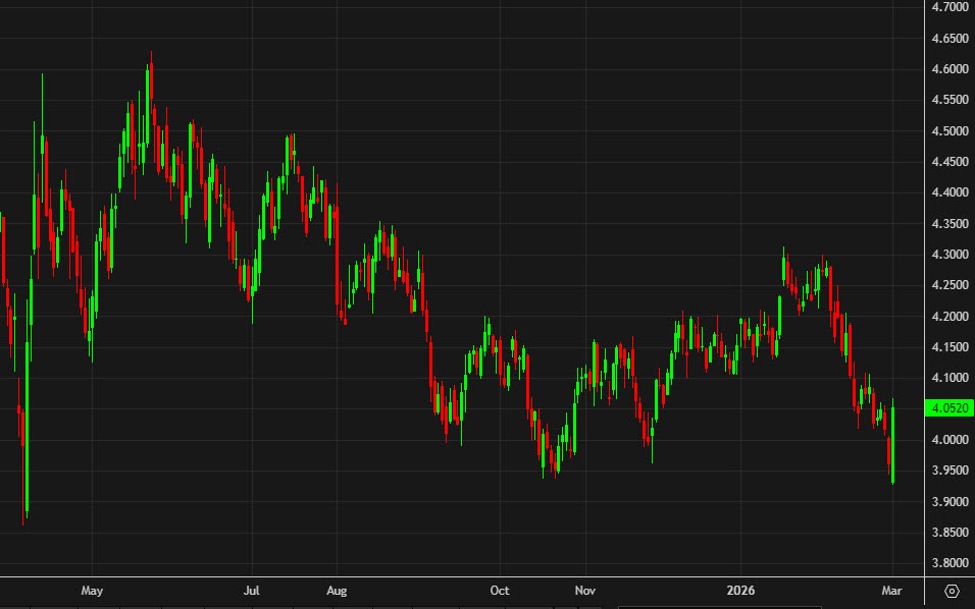
After the first day of trading the Iran war, bonds are the big surprise
When I survey the scene in markets after one day of post-Iran war trading, there isn’t much surprising given the news.Naturally, oil rallied and the 8% climb is about what I would have expected given the broad attack and retaliation. A critical detail shortly after the war yesterday was Trump touting a 4-5 week war, which helped everyone to put it into perspective. Now that’s not exactly written in stone so you have to qualify the chance that it escalates (as war often does).Given that, the strength of the US dollar rally was tempered. Yes, we saw some weakness in the euro given the oil and natural gas risks but the overall moves were moderate. I would have expected more yen strength but it lagged on energy worries and that’s a worrisome signal for the yen in general as it loses the traditional safe haven bid.AUD and CAD quickly rebounded on higher commodity prices, which I also didn’t find surprising. Gold rallied hard at first but profit taking hit and it fell back to unchanged. I would tend to think that gold will continue to be bid as long as the conflict continues but we’re past the seasonal tailwinds and there are downside risks if/when the war ends.The surprise for me was bonds. US 10-year yields finished 8 bps higher on the day to 4.04% after falling below the big figure late last week. Some of that is profit taking as the war doesn’t look too crazy but I’m surprised by the quick turnaround.Technically, the bounced back above 4% is modestly bullish. It’s a big outside day and it has backing with oil prices likely to cause inflation worries (if crude stays higher). I will be watching carefully in the days ahead to see if it can test and break 4.10%. If so, that could confirm a bottom in yields and (at least) indicate a range trade going forward, until the outlook for the economy clears.Update: Goldman Sachs also weighed in on rising yields.”Yields higher is a head scratcher and equities taking comfort in the move… Reasons we’ve heard: 1) inflationary read through from Crude higher; 2) rates saw large month end buying on Friday where 10yr closed <4% for the first time since Nov; 3) credit worries + layoff headlines all feeding into Fed cut expectations.” This article was written by Adam Button at investinglive.com. 🔗 Source 💡 DMK Insight Oil’s 8% rally post-Iran conflict isn’t just noise—it’s a signal for traders to watch. The geopolitical tensions have historically led to spikes in oil prices, and this time is no different. Traders should be aware that such moves can create ripple effects across related markets, including energy stocks and currencies tied to oil exports. If oil continues to rise, expect correlated assets like the Canadian dollar and energy sector ETFs to react. Keep an eye on key resistance levels in oil; if it breaks through recent highs, it could trigger further bullish sentiment. On the flip side, while the immediate reaction is bullish, consider the potential for a pullback if tensions ease or if there’s a significant diplomatic response. Traders should monitor the news closely for any developments that could shift sentiment quickly. Watch for oil prices to stabilize around key levels over the next few days, as this will indicate whether the rally has legs or if it’s just a knee-jerk reaction. 📮 Takeaway Watch for oil prices to hold above recent highs; a sustained rally could impact energy stocks and related currencies significantly.
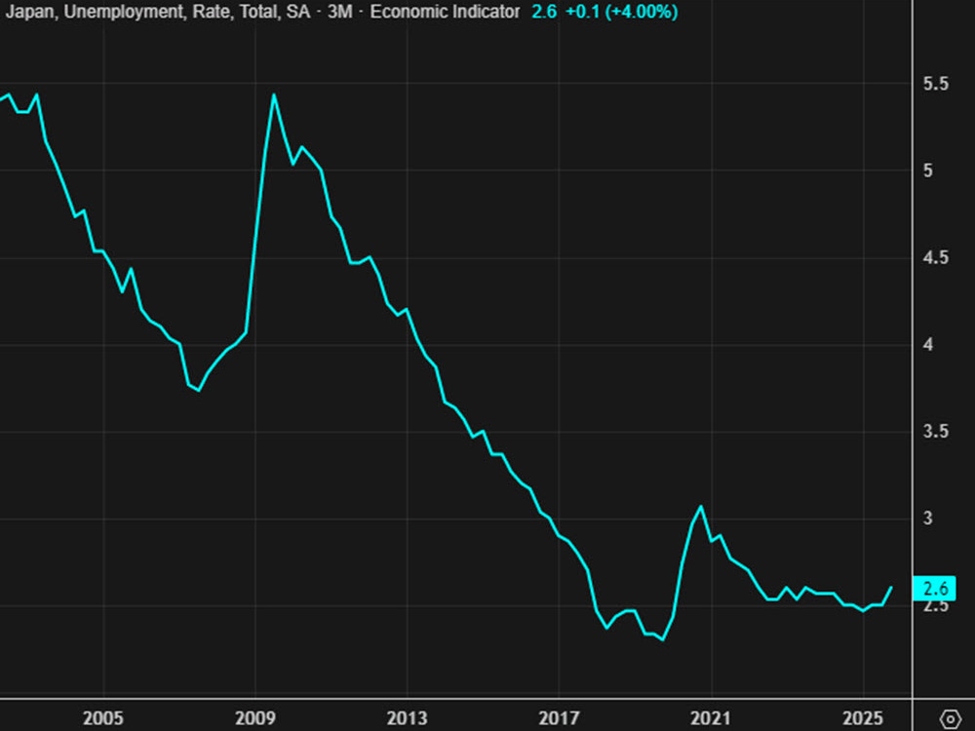
Japan January unemployment rate 2.7% vs 2.6% prior
Prior was 2.6%Jobs-to-applicants ratio 1.18 vs 1.19 expectedPrior ratio 1.19Japan’s unemployment rate held at 2.6% for four consecutive months through December, up from 2.4% in June and a cycle low of 2.2% in mid-2024. While 2.6% remains low by international standards, the gradual upward drift represents a notable shift in a labour market that had been tightening steadily since the pandemic and that continued in January with a 2.7% reading.The jobs-to-applicants ratio reinforces the picture of modest cooling. The December reading edged up to 1.19 from 1.18 in October and November — the lowest level since January 2022. The ratio peaked above 1.30 in late 2023 and has declined steadily as employers grow more cautious amid elevated input costs, even as structural labour shortages persist.That tension between cyclical softening and structural tightness defines the current labour market. Japan’s working-age population has fallen 16% from its 1995 peak and the Bank of Japan’s Tankan employment diffusion index reached -35 in mid-2025, indicating shortages near three-decade extremes. Yet new job openings have contracted on a year-over-year basis for several months, suggesting firms are managing headcount more conservatively despite difficulty filling existing roles.Wages remain the critical variable for monetary policy. The 2025 spring negotiations (shunto) delivered headline increases of 5.46%, the strongest outcome since the early 1990s, and nominal wage growth has been positive for more than two consecutive years. However, persistent inflation — driven largely by food prices — has eroded most of those gains, with real wages only recently returning to flat on a year-over-year basis. This dynamic sits at the centre of the BOJ’s policy deliberations: durable real wage growth is a precondition for further rate normalisation. The January employment data will be closely watched for signs of whether the labour market’s gradual loosening is stabilising or accelerating.In terms of markets, the Japanese jobs numbers are ones that rarely move the market.That’s unusual in the FX world but Japan has had ultra-low unemployment forever. This article was written by Adam Button at investinglive.com. 🔗 Source 💡 DMK Insight Japan’s unemployment rate holding at 2.6% might seem stable, but here’s why it matters now: The labor market’s stagnation could signal underlying economic issues, especially as the ratio of jobs to applicants dips slightly to 1.18 from an expected 1.19. This shift indicates that while jobs are still available, the demand may not be keeping pace with supply, which could lead to wage pressures or reduced consumer spending. For traders, this is a critical moment to watch how the Bank of Japan might react in terms of monetary policy. If they perceive this as a sign of weakening economic momentum, it could lead to shifts in interest rates or even stimulus measures, impacting the yen and related assets. Keep an eye on the USD/JPY pair, especially if it approaches key support or resistance levels in the coming weeks. The real story is how this could ripple through the forex market, affecting not just the yen but also broader risk sentiment. Watch for any comments from the Bank of Japan in the upcoming weeks, as they could provide clues on future policy adjustments that might impact trading strategies significantly. 📮 Takeaway Monitor the USD/JPY pair closely for potential volatility as Japan’s unemployment rate holds steady; any shifts in BOJ policy could create trading opportunities.

Australian January building approvals -7.2% m/m vs +5.0% expected
Expected was +5.0% (some at 5.5%)Prior was -14.9%Private house approvals +1.1% vs +0.4% priorBuilding approvals +8.7% y/y vs +13.3% priorThis is a sharp two-month drop in construction activity but think of it more as a normalization. Australian dwelling approvals were characterised by significant monthly volatility through 2025, driven almost entirely by the multi-unit segment. The headline seasonally adjusted series swung from +12.0% in September to -6.4% in October, then surged 15.2% in November — reaching a near four-year high of 18,406 dwellings — before reversing sharply with a 14.9% decline in December to 15,542 units.The pattern reflects the lumpy nature of apartment and higher-density project approvals, which can swing 25-35% in a single month. Private sector house approvals, by contrast, have been comparatively stable, posting modest gains of less than 2% in most recent months and supported by a gently rising trend through the second half of the year.Despite the monthly noise, the broader trajectory through 2025 was constructive. Approximately 195,500 new homes were approved in the year to November, the highest annualised pace since early 2022 and a meaningful improvement on 2024. Multi-unit approvals accounted for the bulk of the recovery, with November’s apartment figures reaching their highest monthly level since June 2018. Rate cuts delivered earlier in 2025 provided a tailwind for demand, and government density initiatives have supported the medium-rise pipeline.However, approvals remain well below the roughly 240,000 annual pace required under the National Housing Accord, and converting approvals into completions continues to face headwinds from labour shortages, elevated construction costs, and financing constraints. The trend estimate for total dwellings dipped 0.2% in December after a brief uptick, suggesting the underlying recovery has plateaued rather than accelerated. The January data, with market expectations of a 5.7% monthly rebound, will indicate whether the second half improvement has enduring momentum or remains hostage to apartment-driven volatility.Current account data for Q4 was released at the same time and showed -21.8B vs -16.5B expectedNet exports contribution -0.1% vs -0.3% expected This article was written by Adam Button at investinglive.com. 🔗 Source 💡 DMK Insight The recent drop in Australian dwelling approvals signals a shift in the construction landscape, and here’s why that matters for traders: With private house approvals up 1.1%, slightly beating expectations, it indicates a potential stabilization after a volatile period. However, the year-over-year decline in building approvals, now at 8.7% compared to 13.3% prior, suggests that while we might be seeing a normalization, the overall trend remains concerning. For traders, this could mean adjusting positions in related sectors, especially if you’re holding stocks tied to construction or real estate. Watch for how these approvals influence broader economic indicators, particularly if they lead to shifts in interest rates or housing market sentiment. Here’s the flip side: while some may see this as a sign of recovery, the ongoing volatility could lead to further surprises. Keep an eye on the upcoming monthly data releases; any significant deviations could trigger market reactions. For now, monitor the 5% approval rate as a key level—if it holds or improves, it could signal a more robust recovery in the housing sector. 📮 Takeaway Watch the 5% approval rate closely; a sustained improvement could indicate a recovery in the housing sector, impacting related stocks and market sentiment.
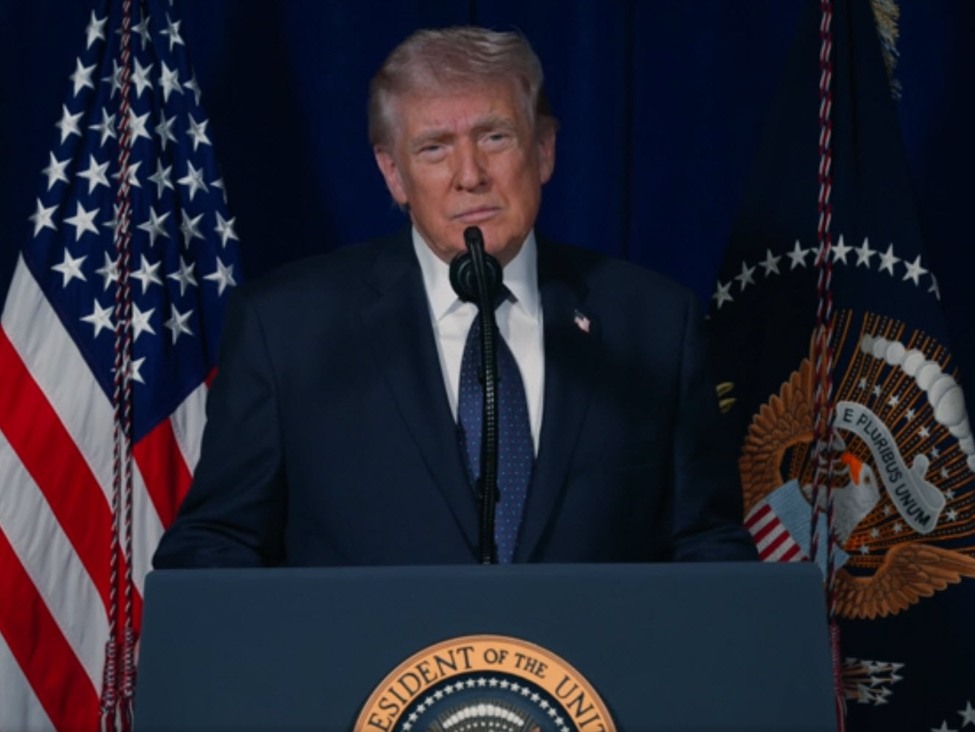
Trump says he doesn't think boots on the ground will be necessary in Iran
The market is trying to suss out what the plan is for Iran.Yesterday there was an interview with John Bolton that emphasized that Trump is impulsive and likes to improvise. Trump himself also outlined a 4-5 week timeline, which suggests there is a plan.What’s less clear are the goals of the mission, which might be as simple as wrecking Iran’s military infrastructure. But what if Iran keeps on firing drones and missiles? What if it continues to threaten or attack its neighbours?War can always go sideways, much like it has for Russia in Ukraine. So far Iran doesn’t appear to have much support for foreign powers so maybe this turns out differently but it’s also hard to see any regime change in Iran without changing anything on the ground. It also doesn’t look like there is any kind of organized opposition and certainly not a military opposition within the country.In addition, the idea of ‘boots on the ground’ is deeply unpopular in the US after Iraq and Afghanistan. This attack is already polling poorly so there is little appetite to keep the fight going.The nuance is Trump’s comment is that he “doesn’t think” there will be ground forces but that’s not nearly as equivocal as J.D. Vance previously who entirely ruled it out.In any case, crude is ticking higher in Asia once again with WTI crude up 69 cents to $71.92. Gold is also nicely bid, up $41 to $5369. This article was written by Adam Button at investinglive.com. 🔗 Source 💡 DMK Insight The uncertainty surrounding U.S.-Iran relations is creating ripples in the forex market, particularly for traders focused on oil and related currencies. With Trump hinting at a 4-5 week timeline for potential actions, traders need to brace for volatility as geopolitical tensions can lead to sharp price movements. Look at the Iranian Rial and currencies of oil-exporting nations; any escalation could lead to a spike in oil prices, which often correlates with the strength of the Canadian Dollar and the Russian Ruble. If traders are holding positions in these currencies, they should monitor for any sudden shifts in sentiment or news that could impact oil prices. Additionally, keep an eye on technical levels in oil futures; a break above recent highs could trigger further bullish sentiment across these correlated assets. On the flip side, if the situation de-escalates, we might see a reversal in oil prices, impacting these currencies negatively. So, watch for key news updates and be ready to adjust your positions accordingly. 📮 Takeaway Monitor oil prices closely over the next month; a breakout could impact the Canadian Dollar and Russian Ruble significantly.

Gold and silver find renewed bids in Asia but sellers quickly arrive
Gold jumped at the weekly open due to uncertainty around the Iran war but that quickly gave way to profit taking and it sagged down to $5300. Then a second and third wave of bids arrived in Europe and the US leading to a session high of $5419 before selling into the US close and a drop to $5260.In Asian trading today, bids returned but in the past few minutes, that’s been met by aggressive sellers. Like everyone, the gold market is trying to figure out where the Iran war leads. For US adversaries, there is already one lesson: it’s not safe to be a leader. We saw strong bids in gold after the capture of Venezuela’s Maduro and the post-war price action mirrors that. At the same time, here are macro effects in play with higher oil prices potentially leading to inflation. That has boosted Treasury yields in a move that’s been attracting USD bids.In truth, no one knows how it will play out in Iran in both the long and short term. It’s more chaotic at the moment but there’s such a wide range of plausible outcomes that reflect what we’ve seen in American wars before: Iraq, Venezuela, Libya, Afghanistan. If Iran descends into chaos it’s not necessarily bad for regional stability so there’s a scenario where it’s ‘so bad that it’s good’ which isn’t really positive for gold.There are also scenarios where the US gets dragged (now or later) into another endless and costly war.On the margin, war always creates tail risks and those are generally gold positive so I lean in that direction. I’d expect high volatility to continue. Gold was last up $13 to $5340 and silver is back negative at $88.40 after touching a high of $91.33 and hour ago. This article was written by Adam Button at investinglive.com. 🔗 Source 💡 DMK Insight Gold’s recent volatility highlights trader sentiment amid geopolitical tensions—here’s what to watch next. The initial spike to $5419 reflects a knee-jerk reaction to the Iran war uncertainty, but the subsequent profit-taking shows that traders are cautious. This kind of price action often indicates a tug-of-war between fear and profit motives. If gold can hold above $5300, it might signal a stronger bullish trend, but a drop below that level could trigger further selling. Keep an eye on the $5419 resistance; a breakout could attract more buyers, especially if geopolitical tensions escalate further. Also, consider how this impacts correlated assets like oil and the US dollar. If gold continues to rise, it could put pressure on the dollar, affecting forex pairs like EUR/USD. Watch for any news updates from the region that could shift sentiment quickly—traders should be ready to react as the situation evolves. 📮 Takeaway Monitor gold’s ability to hold above $5300; a breakout above $5419 could signal further upside, while a drop below $5300 may invite selling pressure.