
 Bitcoin
  Ethereum
  Tether
  XRP
XRP  BNB
BNB  USDC
USDC  Solana
  TRON
TRON  Lido Staked Ether
  Figure Heloc
A person familiar with the project reportedly said the stablecoin under preliminary discussion by the board would be established as “a means to allow Gazans to transact digitally.” 🔗 Source 💡 DMK Insight The potential introduction of a stablecoin for Gazans could reshape local digital transactions significantly. This move reflects a growing trend towards digital currencies in regions with limited access to traditional banking. For traders, this could mean increased volatility in related assets, particularly those tied to the broader Middle Eastern markets. If this stablecoin gains traction, it might not only impact local economies but also influence the demand for cryptocurrencies that are perceived as alternatives to fiat currencies in unstable regions. Keep an eye on how this develops, as it could create ripple effects in the crypto markets, especially for stablecoins like USDT or USDC, which might see increased interest as benchmarks for stability. Watch for any announcements regarding partnerships or pilot programs, as these could serve as key indicators of the stablecoin’s adoption and market acceptance. 📮 Takeaway Monitor developments around the Gazan stablecoin; its launch could impact crypto volatility and demand for stablecoins like USDT and USDC.

Fed seeks feedback on proposal critics say could end Operation Chokepoint 2.0
The US Federal Reserve is seeking feedback over the next 60 days on a proposal that could address concerns about crypto-related debanking. 🔗 Source 💡 DMK Insight The Fed’s proposal to tackle crypto debanking is a game changer for traders. This move comes at a time when regulatory scrutiny is intensifying, and it could significantly impact liquidity in the crypto markets. If the Fed addresses these concerns effectively, we might see a resurgence in institutional interest, which has been tepid due to fears of sudden account closures. Traders should keep an eye on how this feedback period unfolds over the next 60 days, as it could lead to clearer guidelines that stabilize the market. On the flip side, if the feedback reveals deep divisions or resistance, it could exacerbate volatility in crypto assets as uncertainty lingers. Watch for price reactions in major cryptocurrencies like Bitcoin and Ethereum, especially around key support and resistance levels. The next few weeks will be critical, so stay tuned for any updates from the Fed that could shift market sentiment dramatically. 📮 Takeaway Monitor the Fed’s feedback on crypto debanking closely; it could reshape institutional interest and market stability over the next 60 days.
Trump considers new Section 232 tariffs after Supreme Court ruling
After the Supreme Court curtailed key second-term tariffs, the Trump administration is turning to Section 232 to pursue new national security levies.Summary:Administration considering new Section 232 tariffs on six industriesFollows 6–3 Supreme Court ruling striking down many leviesNew 232 tariffs separate from recently announced global 15% levySteel and aluminium 232 tariffs to be revampedCompanies could face higher effective payments under revised rulesThe Trump administration is considering a fresh round of national security tariffs under Section 232 of the Trade Expansion Act of 1962, following a Supreme Court ruling that struck down many of President Trump’s tariffs.According to The Wall Street Journal (gated), the administration is weighing new investigations covering roughly half a dozen industries, including large-scale batteries, cast iron and iron fittings, plastic piping, industrial chemicals, and power grid and telecom equipment. These levies would be imposed under Section 232, which allows the president to restrict imports deemed a threat to national security.The move comes after the Supreme Court voted 6–3 to invalidate most of Trump’s tariffs issued under the International Emergency Economic Powers Act (IEEPA). The court ruled the president overstepped his authority in imposing so-called reciprocal tariffs on virtually all U.S. trading partners. Those measures accounted for more than half of the revenue generated by his second-term tariff regime.In response, Trump announced a new global 15% tariff that can remain in place for five months, alongside additional levies planned under Section 301 of the Trade Act. The prospective Section 232 tariffs would be issued separately from these measures.Importantly, the Supreme Court decision did not affect existing Section 232 tariffs, which have not faced serious legal challenges. During his second term, Trump expanded the scope of 232 measures beyond raw materials such as steel, aluminium and copper to include a broader range of consumer products incorporating those inputs. Exemptions have been limited, with only modest relief offered to U.S. automakers.It remains unclear when the Commerce Department will formally announce new investigations or when tariffs could ultimately be imposed. Section 232 requires a formal investigative process before duties are enacted, though once in place the president retains broad authority to modify them.The administration is also moving to revamp existing Section 232 tariffs on steel and aluminium. While nominal tariff rates on some goods may fall, the changes would apply tariffs to a product’s full value rather than only the steel or aluminium content. That shift could result in higher overall tariff payments for many companies.U.S. Trade Representative Jamieson Greer said last week the administration may “adjust the way some of the tariffs are applied for compliance purposes,” signalling further technical changes ahead.Separately, the administration had already been reviewing tariffs under Section 232 for nine additional industries, including semiconductors, pharmaceuticals, drones, industrial robots and polysilicon used in solar panels. Some of those investigations were opened nearly a year ago and could be accelerated following the Supreme Court decision.A White House spokesman said safeguarding national and economic security remains a priority and that the administration is committed to using all lawful authorities available. This article was written by Eamonn Sheridan at investinglive.com. 🔗 Source 💡 DMK Insight The Trump administration’s pivot to Section 232 tariffs could shake up multiple sectors, and here’s why that’s crucial for traders right now: With the Supreme Court’s recent ruling limiting second-term tariffs, the focus shifts to these new national security levies, potentially impacting industries like steel and aluminum. Traders should be aware that these tariffs could lead to increased costs for manufacturers, which might ripple through supply chains and affect related sectors, including construction and automotive. If these tariffs are implemented, we could see volatility in commodity prices, especially if steel and aluminum producers react by adjusting their output or pricing strategies. Keep an eye on how these developments influence broader market sentiment, particularly in sectors sensitive to raw material costs. But here’s the flip side: while tariffs can protect domestic industries, they often lead to retaliatory measures from trading partners, which could escalate tensions and create uncertainty in the markets. Watch for any announcements regarding specific industries targeted by these tariffs and monitor commodity price movements closely. Key levels to watch would be the price action in steel and aluminum futures over the coming weeks, as traders react to these policy shifts. 📮 Takeaway Monitor the impact of potential Section 232 tariffs on steel and aluminum prices, especially if they breach key support levels in the coming weeks.
Goldman Sachs forecasts $5,400 gold on central bank demand and Fed cuts
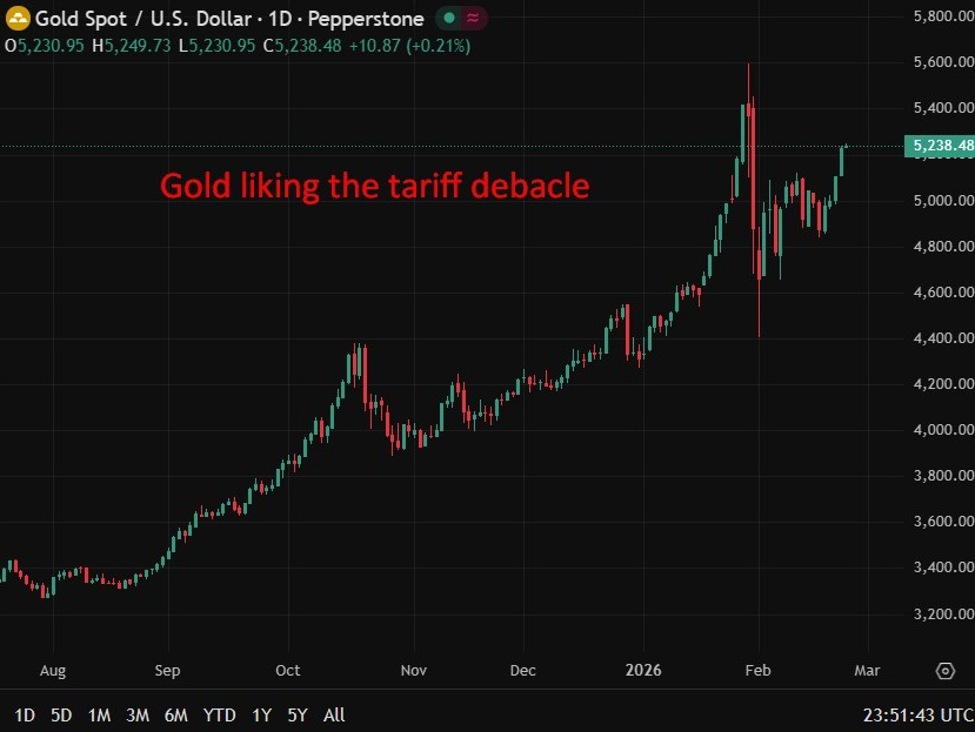
Goldman Sachs targets $5,400 gold by year-end, citing central bank buying and Fed cuts, while warning of higher volatility.Summary:Goldman Sachs forecasts gold at $5,400 by end-2026Central bank buying a key structural driverFed rate cuts expected to spur investor allocationsAdditional private diversification flows pose upside riskGreater volatility likely as options activity risesGold prices are set for further gains in 2026, according to a new note from Goldman Sachs, which sees bullion climbing to $5,400 by year-end.Lina Thomas, senior commodities analyst at Goldman Sachs Research, attributes the constructive outlook to two primary forces: sustained central bank purchases and rising investor allocations as U.S. interest rates fall.Official sector buying remains a cornerstone of the bullish thesis. Central banks continue to diversify foreign-exchange reserves away from traditional assets and into bullion, providing steady structural demand. That trend, Thomas argues, should remain intact through 2026.The second pillar is monetary policy. Goldman expects the Federal Reserve to deliver rate cuts this year, lowering the opportunity cost of holding non-yielding assets such as gold. Historically, declining real yields and easing financial conditions have supported investor flows into precious metals.Thomas also highlights what she describes as “significant upside” risk to the $5,400 forecast. The bank’s base case does not fully incorporate the potential for further private-sector diversification into gold. Given the relatively small size of the gold market compared with global bond and equity markets, even modest reallocation flows could have an outsized price impact.However, that dynamic cuts both ways. Much of the diversification demand is expressed via call options, which can amplify price swings. As a result, while Goldman expects the broader uptrend to persist, it cautions that volatility is likely to increase.In short, the bank sees gold’s rally extending into year-end—driven by structural reserve diversification and cyclical rate relief—but with sharper price action along the way. This article was written by Eamonn Sheridan at investinglive.com. 🔗 Source 💡 DMK Insight Goldman Sachs’ $5,400 gold target is ambitious, but here’s why it matters now: Central bank buying is a major driver, and with the Fed expected to cut rates, we could see a surge in investor interest. This aligns with historical trends where lower rates typically boost gold prices as investors seek safe havens. However, the warning about increased volatility is crucial—options activity could lead to sharp price swings, making timing essential for traders. If you’re considering gold positions, keep an eye on key support levels around $1,900 and resistance near $2,100. These levels will be critical as we approach year-end. But don’t overlook the flip side: if central banks slow their purchases or if inflation fears subside, we might see a pullback. The market’s reaction to upcoming economic data will be pivotal. Watch for the next Fed meeting and any shifts in policy that could impact gold’s trajectory. The real story is how these dynamics could create both opportunities and risks in the gold market. 📮 Takeaway Watch for gold’s support at $1,900 and resistance at $2,100 as volatility increases; timing your entries will be key.
Bessent led yen rate check amid Japan election volatility – Nikkei
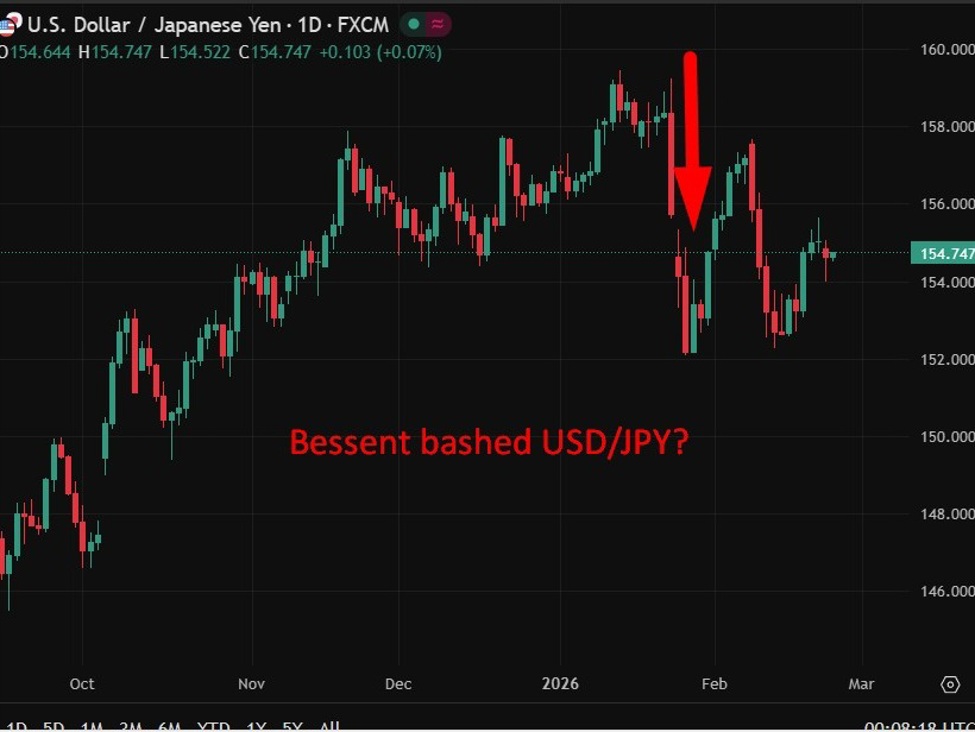
U.S. Treasury led January yen rate check to steady markets during Japan’s election turmoil, Nikkei reports.Summary:U.S. Treasury Secretary Scott Bessent led January yen “rate check”Action not requested by Japan, according to senior U.S. officialsMove aimed at calming instability ahead of Japan’s lower house electionYen rebounded from ~158 to ~155 per dollar after Jan. 23 checkU.S. open to coordinated intervention if formally requestedU.S. Treasury Secretary Scott Bessent personally led a January “rate check” on the yen during its sharp slide against the dollar, according to senior U.S. officials cited by Nikkei, in a move designed to stabilise markets rather than respond to a formal Japanese request.The check, conducted on Jan. 23 by the Federal Reserve Bank of New York at the Treasury’s direction, came as the yen weakened toward the 158 per dollar level amid political uncertainty ahead of Japan’s Feb. 8 lower house election. Officials said Bessent was concerned about broader market instability during what he described as a “political vacuum,” as well as the potential for spillovers into global bond markets.Rate checks are typically viewed as a precursor to possible currency intervention, involving authorities sounding out financial institutions on pricing were official action to occur. Following the move, the yen strengthened sharply to around 155 per dollar.According to U.S. officials, Japan’s Ministry of Finance had not requested either a rate check or coordinated intervention at the time. However, Washington would have considered joint action had Tokyo asked.The backdrop included rising long-term Japanese government bond yields, with newly issued 40-year debt touching 4% for the first time. Selling pressure spilled into U.S. Treasuries, pushing 10-year yields toward 4.3%, before retreating toward 4.0% after the rate check.Officials said Bessent believed markets were misreading signals from Japan’s bond market and feared that higher global yields could undermine broader financial stability. The action was described as consistent with a broader U.S. principle of using its economic strength to help stabilise allies.Following the landslide election victory of Prime Minister Sanae Takaichi, U.S. authorities assess that political uncertainty has receded. They have also expressed confidence in Finance Minister Satsuki Katayama and Bank of Japan Governor Kazuo Ueda.While no specific measures are currently planned, U.S. officials indicated close coordination with Japan will continue. This article was written by Eamonn Sheridan at investinglive.com. 🔗 Source 💡 DMK Insight The U.S. Treasury’s intervention to stabilize the yen is a significant move amid Japan’s election chaos. With the yen rebounding from around 158 to 155, traders should note that this action wasn’t requested by Japan, suggesting a proactive approach by the U.S. to mitigate volatility. This could indicate underlying concerns about Japan’s economic stability and the potential impact on global markets. The upcoming lower house election adds another layer of uncertainty, making it crucial for traders to monitor how political outcomes might influence the yen’s trajectory. If the yen continues to strengthen, it could pressure export-driven stocks and related currencies, particularly if the market perceives a shift in Japan’s economic policy. Look for key resistance levels around 155.5 and support near 158. The immediate focus should be on how the yen reacts in the coming days, especially as election results unfold. Traders should also keep an eye on U.S. Treasury yields, as any shifts there could amplify or dampen the yen’s movements. 📮 Takeaway Watch for the yen’s reaction around 155.5 and 158 as Japan’s election results unfold; volatility could impact related markets significantly.
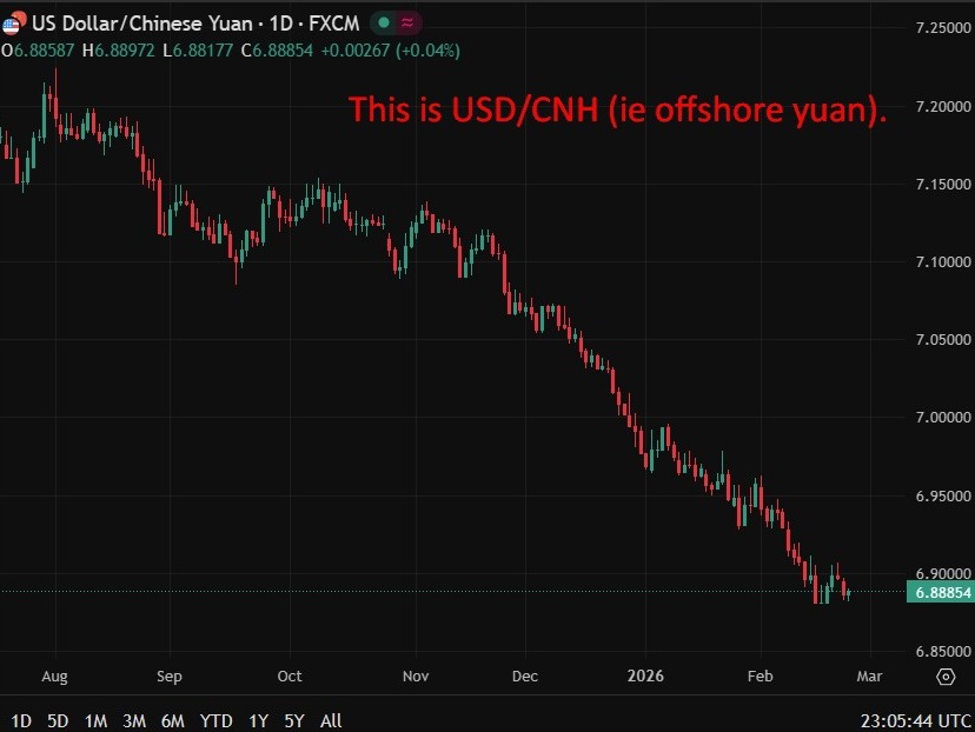
PBOC is expected to set the USD/CNY reference rate at 6.9249 – Reuters estimate
The People’s Bank of China is due to set the daily USD/CNY reference rate at around 0115 GMT (2115 US Eastern time), a fixing that remains one of the most closely watched signals in Asian foreign exchange markets. China operates a managed floating exchange rate system, under which the renminbi (yuan) is allowed to trade within a prescribed band around a central reference rate, or midpoint, set each trading day by the PBOC. The current trading band permits the currency to move plus or minus 2% from the official midpoint during onshore trading hours. Each morning, the PBOC determines the midpoint based on a range of inputs. These include the previous day’s closing price, movements in major currencies, particularly the US dollar, broader international FX conditions, and domestic economic considerations such as capital flows, growth momentum and financial stability objectives. The midpoint is not a purely mechanical calculation, allowing policymakers discretion to guide market expectations. Once the midpoint is announced, onshore USD/CNY is free to trade within the allowable band. If market pressures push the yuan toward either edge of that range, the central bank may step in to smooth volatility. Intervention can take the form of direct buying or selling of yuan, adjustments to liquidity conditions, or guidance through state-owned banks. As a result, the daily fixing is often interpreted as a policy signal rather than just a technical reference point. A stronger-than-expected CNY midpoint is typically read as a sign the PBOC is leaning against depreciation pressure, while a weaker fixing for the CNY can indicate tolerance for a softer currency, often in response to dollar strength or domestic economic headwinds.In periods of heightened global volatility, such as shifts in US rate expectations, trade tensions or capital flow pressures, the fixing takes on added significance. For investors, it provides insight into Beijing’s currency priorities, balancing competitiveness, capital stability and financial market confidence. This article was written by Eamonn Sheridan at investinglive.com. 🔗 Source 💡 DMK Insight The upcoming USD/CNY reference rate fixing is crucial for traders, especially with ongoing global economic uncertainties. China’s managed floating exchange rate system means this rate can influence not just the yuan but also broader market sentiment. If the PBOC sets a weaker reference rate, it could signal a more aggressive stance on economic support, potentially impacting commodity prices and emerging market currencies. Traders should keep an eye on how this rate aligns with recent trends, as any deviation could lead to volatility in the forex market. Additionally, watch for reactions from major players like institutions and retail traders, as they often adjust positions based on these signals. As the fixing approaches, consider monitoring the 7.0 level for USD/CNY, which has been a psychological barrier. A breach above could trigger further selling of the yuan, while a stronger fix might bolster it against the dollar. 📮 Takeaway Watch the USD/CNY reference rate closely; a fix above 7.0 could lead to increased yuan selling pressure.
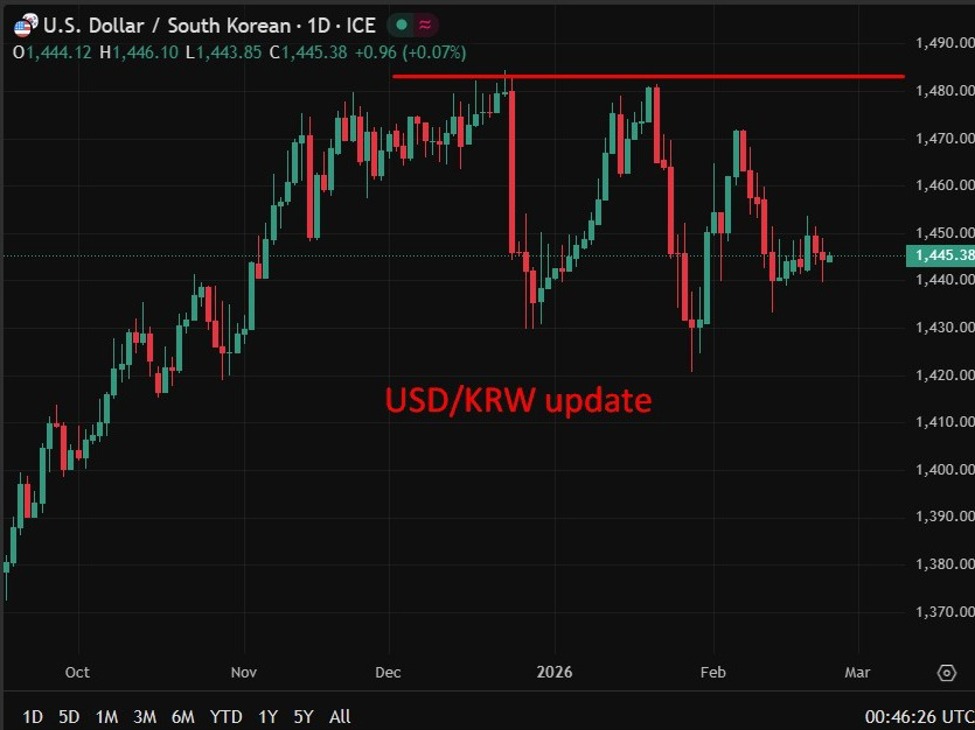
Bank of Korea meet Feb 26 – preview: To hold rates at 2.50% through 2026 (Reuters poll)
The Bank of Korea is set to hold rates at 2.50% this week and through 2026 as FX and housing risks outweigh easing pressures.Summary:All 34 economists see BOK holding at 2.50% on February 26Rates forecast to remain unchanged through 2026Won weakness and housing risks curb easing appetiteInflation at 2.0% in January, in line with targetShift from January poll that had pencilled in further cutsSouth Korea’s central bank is expected to keep its base rate steady at 2.50% at its February 26 meeting and maintain that level through 2026, according to a Reuters poll of economists.All 34 respondents surveyed between February 19–23 forecast the Bank of Korea will leave rates unchanged this week. All 30 economists who provided end-2026 projections also expect policy to remain at 2.50% throughout the year, marking a notable shift from January when a sizeable minority still anticipated at least one additional cut.The policy pause comes as authorities grapple with currency volatility and financial stability risks. The Korean won has remained under pressure, declining 5.2% since the last rate cut in May and drawing scrutiny from the U.S. Treasury. Policymakers have responded with measures aimed at curbing excessive FX volatility, including activation of a swap line between the Bank of Korea and the National Pension Service.At the same time, housing market momentum has raised red flags. Seoul apartment prices have risen for 55 consecutive weeks, climbing 0.15% in the latest week, heightening concerns about financial imbalances.Inflation, by contrast, appears contained. Consumer price growth eased to a five-month low of 2.0% in January, aligning with the BOK’s target and offering little immediate justification for policy tightening.Economists say the central bank has increasingly emphasised exchange rate stability and housing risks in recent meetings, reducing the likelihood of further easing this year. Some analysts suggest the possibility of rate hikes could re-emerge in 2027 if growth firms and asset prices continue to rise, though current market pricing for near-term tightening is seen as overly aggressive.For now, the BOK appears set on an extended hold as it balances modest economic recovery against currency and housing vulnerabilities. This article was written by Eamonn Sheridan at investinglive.com. 🔗 Source 💡 DMK Insight The Bank of Korea’s decision to maintain rates at 2.50% signals a cautious approach amid rising FX and housing risks. With inflation steady at 2.0%, the BOK is clearly prioritizing stability over aggressive easing, which could impact the South Korean won’s performance in the forex market. Traders should keep an eye on the won’s reaction, especially if external pressures from global markets intensify. A sustained weakness in the won could lead to increased volatility in related assets, particularly South Korean equities and bonds. Furthermore, if the BOK’s stance remains unchanged through 2026, it could set a precedent for other central banks in the region, influencing broader market sentiment. Here’s the flip side: while the BOK is holding firm, any unexpected shifts in inflation or economic data could force a rethink. Traders should monitor upcoming economic indicators closely, especially those related to housing and consumer spending, as these could provide early signals of a potential policy shift. Watch for any significant movement in the won around key economic releases, as this could present trading opportunities. 📮 Takeaway Keep an eye on the South Korean won’s performance; any significant weakness could signal trading opportunities, especially around upcoming economic data releases.

People's Bank of China sets 1 and 5 year Loan Prime Rates (LPRs) unchanged
The ninth consecutive month without a change. More on the LPRs, and why they don’t matter so much any more, here:Economic and event calendar in Asia Tuesday, February 24, 2026 – China and Japan return This article was written by Eamonn Sheridan at investinglive.com. 🔗 Source 💡 DMK Insight The ongoing stagnation in the Loan Prime Rates (LPRs) for nine months is raising eyebrows, especially as traders look for signals in a market that seems increasingly indifferent to these rates. With China and Japan returning to the economic scene, the lack of movement in LPRs suggests a broader trend of monetary policy inertia, which could impact currency pairs like USD/CNY and JPY/USD. Traders should be cautious; this stagnation might reflect underlying economic weaknesses that could lead to volatility in related markets. If the LPRs remain unchanged, it could signal that the People’s Bank of China is prioritizing stability over growth, potentially leading to a weaker yuan in the medium term. Watch for any shifts in economic indicators or geopolitical developments that could prompt a change in this trend. In the short term, keep an eye on the USD/CNY pair around key resistance levels, as any unexpected news could trigger rapid movements. The real story is whether this inaction will lead to a buildup of pressure that eventually forces a policy shift, so monitoring the economic calendar for upcoming data releases is crucial. 📮 Takeaway Watch the USD/CNY pair closely; any unexpected economic data could trigger significant volatility, especially if LPRs remain unchanged.
PBOC sets USD/ CNY reference rate for today at 6.9414 (vs. estimate at 6.9249)
PBOC CNY reference rate setting for the trading session ahead.The PBOC allows the yuan to fluctuate within a +/- 2% range, around this reference rate. PBOC injects 526bn yuan via 7-day reverse repos at 1.4% in open market operations today.after maturities net drain is 926.4bn yuan, largest in more than 4 months This article was written by Eamonn Sheridan at investinglive.com. 🔗 Source 💡 DMK Insight The PBOC’s recent actions signal a tightening liquidity environment, and here’s why that matters for traders: Injecting 526 billion yuan through reverse repos while facing a net drain of 926.4 billion yuan indicates a significant shift in monetary policy. This could lead to increased volatility in the forex market, particularly for the yuan, as traders react to the tightening liquidity. With the yuan allowed to fluctuate within a +/- 2% range around the reference rate, expect potential swings that could impact not just CNY pairs but also commodities priced in yuan, like gold and oil. Keep an eye on the USD/CNY pair, as a stronger dollar could exacerbate the yuan’s weakness if the PBOC continues this trend. On the flip side, while some may interpret this as a bearish signal for the yuan, it could also present buying opportunities if the market overreacts. Watch for key levels around the reference rate; a breach could trigger further selling pressure. Traders should monitor the PBOC’s next moves closely, especially any comments on future liquidity provisions, as these will be crucial in shaping market sentiment in the coming weeks. 📮 Takeaway Watch the USD/CNY pair closely; a breach of the reference rate could signal increased volatility and trading opportunities in the forex market.
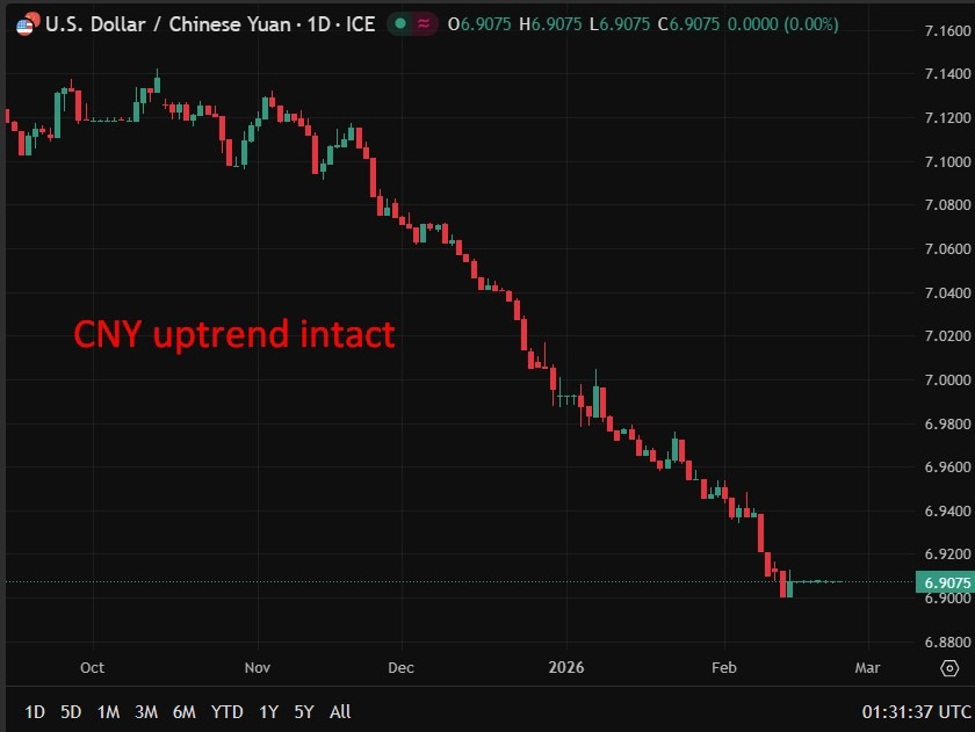
China holds loan prime rates steady as growth slows and yuan firms
China’s central bank kept benchmark rates unchanged for a ninth month, balancing growth support with yuan stability.Summary:PBOC keeps 1-year LPR at 3.0%, 5-year at 3.5%Ninth consecutive month of unchanged benchmark ratesGrowth slowed to 4.5% y/y in Q4, weakest since post-Covid reopeningYuan appreciation adds currency-stability considerationsPolicymakers balancing stimulus needs with FX and export risksChina’s central bank has left its benchmark lending rates unchanged for a ninth straight month, underscoring the delicate balance policymakers are attempting to strike between supporting a slowing economy and maintaining currency stability.The People’s Bank of China held its one-year loan prime rate (LPR) at 3.0% and the five-year LPR at 3.5%. The one-year rate serves as the reference for most new and outstanding corporate and household loans, while the five-year rate guides mortgage pricing.The decision comes against a backdrop of moderating economic momentum. China’s economy expanded 4.5% year-on-year in the fourth quarter, marking its slowest pace since authorities dismantled stringent Covid-era restrictions in late 2022. Domestic demand remains subdued as households rein in spending amid a prolonged property downturn, a soft labour market and uncertain income prospects.Beijing has attempted to stimulate activity through targeted measures, including efforts to promote services consumption in areas such as elderly care, tourism and leisure. Officials hope these segments can offset persistently weak demand for goods, particularly as the real estate sector continues to drag on broader sentiment.At the same time, currency dynamics have complicated the policy outlook. The yuan has strengthened in recent months, aided in part by a softer U.S. dollar. The central bank manages the currency within a daily trading band of 2% on either side of a reference midpoint (today’s is here), and officials have recently set that midpoint stronger, moving it below the symbolic 7-per-dollar level for the first time in nearly three years.While a firmer yuan helps contain imported inflation and capital outflow risks, it also poses challenges for exporters already grappling with U.S. tariffs and intense global competition. A stronger currency could erode price competitiveness at a sensitive juncture for China’s export engine.The steady hand on interest rates suggests policymakers are prioritising financial and currency stability over aggressive monetary easing, even as growth pressures linger. This article was written by Eamonn Sheridan at investinglive.com. 🔗 Source 💡 DMK Insight China’s central bank holding rates steady for the ninth month signals a cautious approach amid slowing growth and currency stability concerns. With the 1-year Loan Prime Rate (LPR) at 3.0% and the 5-year at 3.5%, traders should note that the PBOC is trying to balance economic stimulus with the need to stabilize the yuan. The recent growth slowdown to 4.5% year-over-year in Q4 is the weakest since the post-Covid reopening, which raises questions about the effectiveness of previous monetary policies. This scenario could lead to increased volatility in both the yuan and related markets, such as commodities and equities, as traders react to potential shifts in policy. On the flip side, if growth continues to falter, the PBOC might be forced to implement more aggressive measures, which could impact the yuan negatively. Watch for any comments from the PBOC in the coming weeks, as they could provide clues on future rate adjustments. Key levels to monitor for the yuan include recent support and resistance zones, which could dictate short-term trading strategies. 📮 Takeaway Keep an eye on PBOC signals and yuan levels; a shift in policy could create trading opportunities in forex and commodities.