 Bitcoin
  Ethereum
  Tether
  BNB
BNB  XRP
XRP  USDC
USDC  Solana
  TRON
TRON  Lido Staked Ether
  Figure Heloc
There are a couple to take note of on the board for the day, as highlighted in bold below.The first ones are for EUR/USD at the 1.1790-00 levels. The expiries don’t tie to any technical significance but could play a key role in terms of limiting price action on the day. The expiries are likely to act as magnets to pull price action during the session ahead, keeping a more confined range for traders to play with. That at least until they roll off later in the day.The same applies to the one for USD/JPY at the 155.00 level as well. The expiries could double up as a pull factor to keep price action more limited, even as the upside momentum starts to gain traction after the jump yesterday.That being said, I would attach more significance to the expiries in EUR/USD than the ones for USD/JPY in the day ahead.The magnetic pull towards 1.1800 and in keeping price action more muted is of more influence. That as opposed to USD/JPY, which is starting to break higher after a bit of consolidation since last week previously. Still, don’t discount the potential impact of the expiries.Barring any major headline risks in European morning trade, they are ones to possibly play a role in terms of influencing price action in the session ahead.For more information on how to use this data, you may refer to this post here.Head on over to investingLive (formerly ForexLive) to get in on the know! This article was written by Justin Low at investinglive.com. 🔗 Source 💡 DMK Insight EUR/USD is hovering around the 1.1790-1.1800 range, and here’s why that matters: With expiries in play, this level could act as a price barrier, limiting volatility. Traders often see these expiries as potential support or resistance, which means we could see a squeeze if the pair approaches these levels. If the price breaks above 1.1800, it might trigger further buying interest, while a drop below 1.1790 could lead to a quick sell-off. Keep an eye on the daily chart for any signs of momentum shifts, especially with the broader market sentiment leaning towards a stronger dollar. But don’t forget the flip side—if market participants are overly cautious, we could see a lack of movement, leading to a consolidation phase. This could create opportunities for scalpers looking to capitalize on tight ranges. Watch for any economic data releases or geopolitical news that might impact the euro or dollar, as these could shift the dynamics quickly. 📮 Takeaway Monitor the 1.1790-1.1800 range for EUR/USD; a break could signal a shift in momentum, especially with upcoming economic data.

Renewed US-Iran tensions lift gold prices as traders hedge into the weekend risk
FUNDAMENTAL OVERVIEWGold started to find some footing yesterday as risks of a US-Iran conflict increased. In fact, we got a report from Axios suggesting that a war between the U.S. and Iran now appears increasingly likely. According to the sources cited, there is currently no sign of a diplomatic breakthrough between Washington and Tehran.They also noted that, given Trump’s recent military build-up and escalated rhetoric, it may be difficult for him to de-escalate without Iran offering significant concessions on its nuclear program. The report added that any military operation in Iran would be massive, involving a weeks-long campaign that would resemble a full-fledged war.If a military conflict were to break out, we would see oil prices skyrocket due to the risk of disruption in the Strait of Hormuz, especially in light of the recent military drills. This would be a negative shock for the global economy and lead to stagflation risks.Stagflation is the best environment for gold, so we would highly likely see the price rallying into a new record high very quickly. This risk should keep the market supported in the short-term but if we get some clear de-escalation, like the US military withdrawing for example, traders will quickly turn their focus back to the data and the Fed’s interest rate path which is likely to continue to weigh on gold given the improvements.Another risk is tomorrow’s potential US Supreme Court decision on Trump’s tariffs. In fact, if the Supreme Court were to rule against the tariffs, gold could experience another selloff on positive growth expectations.GOLD TECHNICAL ANALYSIS – DAILY TIMEFRAMEOn the daily chart, we can see that gold is still consolidating right in the middle of the all-time high and the major trendline. From a risk management perspective, the buyers will have a better risk to reward setup around the trendline to target new all-time highs, while the sellers will look for a break lower to extend the drop into the 4000 level next.GOLD TECHNICAL ANALYSIS – 4 HOUR TIMEFRAMEOn the 4 hour chart, we can see that the price broke above the downward trendline and the buyers piled in to target the key resistance zone around the 5100 level. If the price gets there, we can expect the sellers to step in again with a defined risk above the resistance to position for a drop into new lows. The buyers, on the other hand, will look for a break higher to increase the bullish bets into new record highs.GOLD TECHNICAL ANALYSIS – 1 HOUR TIMEFRAMEOn the 1 hour chart, we have a minor upward trendline now defining the bullish momentum on this timeframe. We can expect the buyers to keep leaning on the trendline with a defined risk below it to keep targeting the key resistance zone around the 5100 level. The sellers, on the other hand, will look for a break lower to pile in for a drop into new lows. The swing low at 4960 will be the last line of defence for the buyers as a break below it should open the door for a fall into the 4878 level. The red lines define the average daily range for today. UPCOMING CATALYSTSToday we get the latest US Jobless Claims figures. Tomorrow, we conclude the week with the US Q4 GDP, the US PCE price index for December, the US Flash PMIs and a potential US Supreme Court decision on Trump’s tariffs. Watch out for US-Iran headlines as well. This article was written by Giuseppe Dellamotta at investinglive.com. 🔗 Source 💡 DMK Insight Gold’s recent uptick is directly tied to escalating US-Iran tensions, and here’s why that matters: As geopolitical risks rise, gold typically becomes a safe haven, attracting both retail and institutional investors. The Axios report indicating a heightened likelihood of conflict suggests that traders should be on alert for further price movements. If tensions escalate, we could see gold push through key resistance levels, potentially targeting recent highs. It’s worth noting that in similar past scenarios, gold has rallied significantly during periods of heightened geopolitical uncertainty. Traders should also keep an eye on the broader market context; if the conflict escalates, we might see a flight to safety that could impact equities and oil prices as well. On the flip side, if diplomatic efforts emerge unexpectedly, gold could face a sharp pullback. Watch for any developments in US-Iran relations and monitor gold’s price action closely. Key levels to watch would be the recent highs, as a break above could signal further bullish momentum. Immediate focus should be on news cycles and how they influence market sentiment. 📮 Takeaway Keep an eye on gold’s resistance levels; escalating US-Iran tensions could push prices higher, while any diplomatic breakthroughs might trigger a sell-off.

JBA chief says reasonable chance of BOJ rate hike to come in March or April
Hanzawa says that: “There is a reasonable possibility that the BOJ will raise interest rates as early as in March or April.”For now, markets are not really expecting one to come next month at least. That as the Japanese central bank will still have to wait on how the spring wage negotiations play out. The next policy meeting will take place on 19 March, and traders are pricing in ~89% of no change to interest rates.As for the 28 April meeting, the odds of that are skewed to the other side. Traders are instead pricing in a ~64% probability of a 25 bps rate hike to take the policy rate to 1.00%.Despite pressure from the Takaichi government, policymakers at the central bank continue to stick to their guns for the most part. So far though, they are not really wanting to get involved in interfering with the yen currency. And for the most part, they are just focusing on the inflation battle still.But amid plans by the government to increase fiscal spending, they are hoping the BOJ will play ball so as to not raise interest rates any time soon. That conflict is what is also in part driving much tension in market sentiment towards Japan, with the yen and Japanese government bonds being sold heavily.In looking to the March and April meetings, it will be important to look out for BOJ commentary once we get more details on how the spring wage negotiations develop in the weeks ahead. We’ll find out the numbers soon enough. However, I would argue that it is going to be a similar case to last year. That is if the BOJ wants to get on with rate hikes, they’d better not rest on their laurels and get a move on. The timing window will just continue to close in on them, that especially since wage hikes this year are not expected to be as strong as last year – even if they are going to be at a reasonably higher level historically.It is expected that wage talks will result in a 5% pay hike or higher once again. And that is keeping alive expectations for the BOJ to at least bring the policy rate to 1% by mid-year. This article was written by Justin Low at investinglive.com. 🔗 Source 💡 DMK Insight The potential for a BOJ rate hike in March or April is a game changer for forex traders. If the BOJ follows through, it could strengthen the yen significantly against the dollar, especially if the market remains unprepared for such a shift. Currently, traders are not pricing in an immediate hike, which means any sudden announcement could trigger volatility. Watch for key levels around USD/JPY; a break below recent support could signal a stronger yen. Additionally, this could ripple through other asset classes, particularly Japanese equities, which might react negatively to higher rates. On the flip side, if the BOJ delays, it could lead to a weaker yen and a potential rally in USD/JPY. Keep an eye on economic indicators coming out in the next few weeks, as they could provide clues about the BOJ’s decision-making process. The real story is how traders position themselves ahead of this potential shift—those who anticipate the move could capitalize on significant price movements. 📮 Takeaway Watch USD/JPY closely; a break below key support levels could signal a stronger yen if the BOJ raises rates in March or April.

US-Iran tensions most untimely for the SNB
The present situation catch up is that Switzerland is squaring off against deflationary pressures once again. While not quite yet reaching deflation territory, the worries are mounting as inflation pressures have fallen off dramatically in the second half of last year. Core prices are still hanging in there but it feels like only a matter of time before the issue becomes bigger than it is now.And for the SNB, the central bank just does not want to fall back into the rabbit hole of having to start using unconventional monetary policy measures once again. When that sticks, we’ve seen before how difficult it can be to get out of the rut. The Covid pandemic gave them a get out of jail free card but that has now expired as the deflation era looks set to return.To compound matters for the Swiss central bank, a stronger franc currency is making the situation even more difficult. That just adds to the deflationary impact and puts the SNB in a tough spot in trying to avoid a return to negative interest rates.The EUR/CHF is one that is less talked about in the past weeks but is one that is worth taking note of:The SNB looked to have drawn a line previously when the currency pair hit the 0.92 level but that has given way in late January. And we’re seeing the franc continue to nudge higher still with the pair inching towards 0.91 now.The big question is where does the SNB draw the line next in terms of intervening to limit the franc strength? And how much are they willing to go up against market sentiment?As such, escalating US-Iran tensions are coming at an unfortunate timing for the central bank. Amid the de-dollarisation narrative and the yen facing its own set of problems back home, the franc is the only game in town for currency traders seeking safe haven.And that will just put more downside pressure on EUR/CHF, which is already at record lows this week. That in turn will just add more woes to the SNB in trying to manage their inflation mandate. And eventually, having to possibly look to negative rates to also deter further strength in the franc currency alongside dealing with deflation pressures. This article was written by Justin Low at investinglive.com. 🔗 Source 💡 DMK Insight Switzerland’s struggle with deflationary pressures is a critical watchpoint for traders, especially as inflation rates have sharply declined. This situation could lead to a shift in monetary policy from the Swiss National Bank (SNB), which has been relatively hawkish in recent times. If deflation becomes a more pressing issue, the SNB might pivot to a more dovish stance, impacting the Swiss franc (CHF) and related forex pairs. Traders should keep an eye on core price movements and any statements from the SNB regarding their inflation outlook, as these could signal potential shifts in interest rates. Moreover, the broader implications of Switzerland’s economic health could ripple through European markets, particularly affecting the euro (EUR/CHF) and other regional currencies. If the SNB decides to act, we could see increased volatility in these pairs. Watch for any economic data releases that might indicate a trend toward deflation, as well as key technical levels in the CHF pairs that could signal entry or exit points. The next few weeks could be pivotal, so staying informed is essential. 📮 Takeaway Monitor Switzerland’s inflation data closely; a shift towards deflation could prompt the SNB to change its monetary policy, impacting the CHF significantly.

Oil prices surge amid US-Iran war risks: a conflict could trigger a massive spike
FUNDAMENTAL OVERVIEWOil prices recouped all last week’s losses as risks of a US-Iran conflict increased. In fact, we got a report from Axios suggesting that a war between the U.S. and Iran now appears increasingly likely. According to the sources cited, there is currently no sign of a diplomatic breakthrough between Washington and Tehran which is irritating Trump.They also noted that, given Trump’s recent military build-up and escalated rhetoric, it may be difficult for him to de-escalate without Iran offering significant concessions on its nuclear program. The report added that any military operation in Iran would be massive, involving a weeks-long campaign that would resemble a full-fledged war.If a military conflict were to break out, we would see oil prices skyrocket due to the risk of disruption in the Strait of Hormuz, especially in light of the recent military drills. Traders are piling in into oil longs given the weekend risk. In fact, the Axios report added at the end that U.S. officials said after Tuesday’s talks that Iran needs to come back with a detailed proposal in two weeks. But here’s the kicker: last June, the White House set a two-week window for Trump to decide between further talks or strikes. Three days later, he launched Operation Midnight Hammer.Another important event is tomorrow’s potential US Supreme Court decision on Trump’s tariffs. In fact, if the Supreme Court were to rule against the tariffs, we will likely see oil prices surging on positive growth expectations.CRUDE OIL TECHNICAL ANALYSIS – DAILY TIMEFRAMEOn the daily chart, we can see that crude oil bounced at the support zone around the 62.35 level and it’s now approaching the key 66.43 resistance. That’s where we can expect the sellers to step in with a defined risk above the resistance to position for a drop back into the support. The buyers, on the other hand, will look for a break higher to increase the bullish bets into the 70.50 level next. CRUDE OIL TECHNICAL ANALYSIS – 4 HOUR TIMEFRAMEOn the 4 hour chart, we can see more clearly the rangebound price action between the 62.35 support and the 66.43 resistance. Market participants will likely continue to play the range until we get a breakout on either side. CRUDE OIL TECHNICAL ANALYSIS – 1 HOUR TIMEFRAMEOn the 1 hour chart, there’s not much we can add here as the sellers will likely step in around the resistance to position for a drop back into the support, while the buyers will look for a breakout to extend the rally into the 70.50 level next. The red lines define the average daily range for today.UPCOMING CATALYSTSToday we get the latest US Jobless Claims figures. Tomorrow, we conclude the week with the US Q4 GDP, the US PCE price index for December, the US Flash PMIs and a potential US Supreme Court decision on Trump’s tariffs. Watch out for US-Iran headlines as well. This article was written by Giuseppe Dellamotta at investinglive.com. 🔗 Source 💡 DMK Insight Oil prices bouncing back signals heightened geopolitical tensions, and here’s why that matters: With the U.S.-Iran conflict looming, traders should brace for volatility in crude oil markets. The potential for military action can lead to supply disruptions, which historically sends prices soaring. If tensions escalate, watch for WTI crude to test resistance levels around recent highs, as traders react to news cycles. This situation could also impact related assets like energy stocks and ETFs, which often move in tandem with oil prices. So, if you’re holding positions in energy sectors, keep an eye on how these geopolitical developments unfold. On the flip side, if the situation de-escalates unexpectedly, we could see a sharp correction in oil prices. It’s crucial to monitor news for any signs of diplomatic efforts or peace talks, as that could shift market sentiment rapidly. For now, set alerts around key price levels and stay nimble, as the market could swing wildly based on news headlines. 📮 Takeaway Watch for WTI crude resistance levels; any escalation in U.S.-Iran tensions could push prices higher, while a de-escalation might lead to a sharp correction.
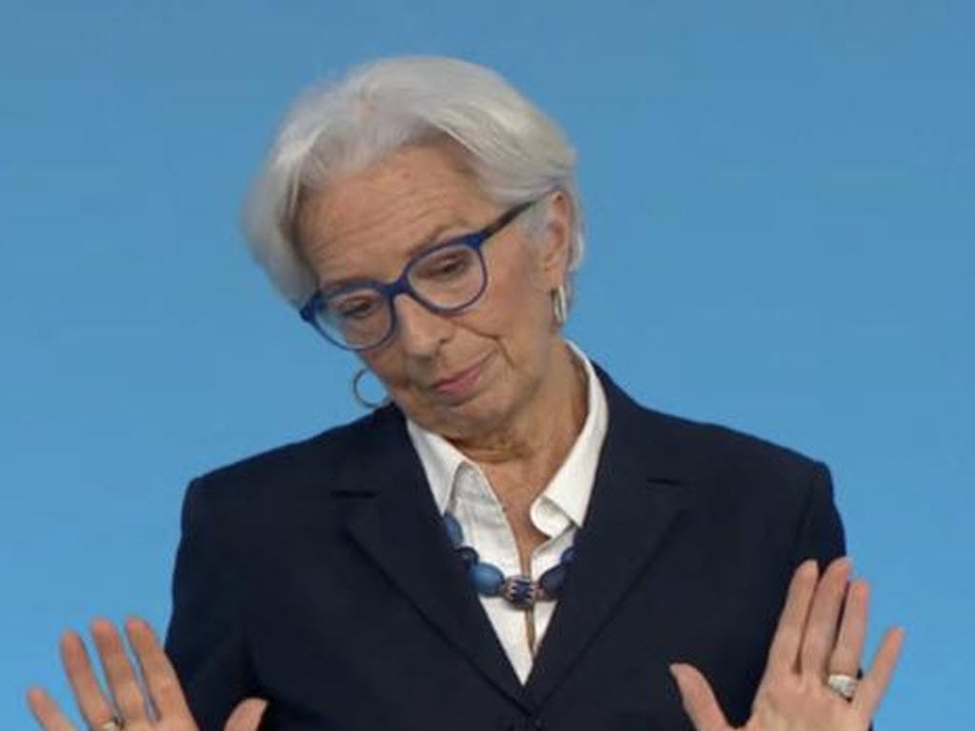
ECB Lagarde reportedly told colleagues that she remains focused on her job
This builds on the headlines from yesterday:ECB president Lagarde reportedly poised to leave the central bank before her term expiresECB says Lagarde remains committed to her role as presidentThe latest report here cites four sources in saying that Lagarde told colleagues in a private message that she remains focused on her job as ECB president for now. And that if she were about to step down, they will be the first to be informed about that decision.The recipients of the message took that to mean that she was not about to resign earlier than her term dictates. That after rampant speculation yesterday that she might do so before April next year, right before the French presidential elections.The report adds that Lagarde’s message was to reassure them that she was still concentrating on her role at the ECB and that they will hear from her directly, not the press, on her intentions to step down as president of the central bank.That said, some recipients said that this likely just means Lagarde will not depart the ECB in the immediate term but she also did not close the door to such a possibility.Well, the report here fits with what we saw in the previous episode in the summer last year. That was when Lagarde was heavily linked with taking up a role at the WEF and perhaps leaving her ECB post earlier than anticipated as well. So, this is very much a repeat of that in which she also goes out of her way to reassure members at the central bank that she is still committed to the job.In any case, it seems like she did not outright refute the report and is just mainly stating that she won’t be distracted from her current duties – at least for now. That says a lot as she could’ve just outright state that she will not be departing from the ECB earlier than her term dictates it to be. Instead, she’s sidestepping that with a blanket statement of commitment. I think we all can extrapolate from that. This article was written by Justin Low at investinglive.com. 🔗 Source 💡 DMK Insight Lagarde’s potential exit from the ECB could shake up the eurozone markets, and here’s why that matters right now: uncertainty around leadership can lead to volatility in the euro and related assets. If traders believe her departure is imminent, we might see a sell-off in the euro, especially if the market perceives a lack of continuity in monetary policy. This could also ripple through forex pairs like EUR/USD, impacting positions held by day and swing traders. Moreover, the broader context of rising inflation and interest rate decisions adds another layer of complexity. If Lagarde leaves, the ECB could shift its stance, which would affect bond yields and equity markets across Europe. Traders should keep an eye on key support and resistance levels in the euro, particularly around recent highs and lows, as these will be critical in gauging market sentiment. Here’s the flip side: if Lagarde stays and reaffirms her commitment, it could stabilize the euro and boost confidence in the ECB’s policies. Watch for any official statements or actions from the ECB in the coming days that could clarify her position and influence market direction. 📮 Takeaway Monitor the euro’s reaction to Lagarde’s potential exit; key levels to watch are recent highs and lows in EUR/USD for trading opportunities.

EUR/USD upside remains more likely amid weaker dollar, analysts say
Here are a couple of views from market analysts on the EUR/USD currency pair, with it hovering around the “sweet spot” for the ECB. As we know, the central bank is viewing it as being “complicated” if price does move towards the 1.20 level. So, keeping as it is now would be somewhat comfortable for policymakers – especially in that 1.16 to 1.18 range.Goldman Sachs notes that:”With EUR/USD hovering around our 3m 1.18 forecast, we still see further upside ahead in the coming months. While it is true that there is a much more limited valuation case to expect further euro appreciation, and it is far from a pro-cyclical currency, the euro still stands to benefit from many of the themes we expect to persist in FX markets this year. Most notably, currency markets have been remarkably correlated, and EUR/USD continues to trade tightly with the broad dollar. Rather than leading the way as it did in early 2025, we expect the euro to ride the tailwinds of broad dollar depreciation.”Their argument mostly ties to a continuation in the de-dollarisation narrative. And that seems likely to be the case in the first half of the year at the very least.Morgan Stanley also chimes in with a similar view on the currency pair in saying that:”Risks remain asymmetrically skewed toward USD downside. Robust US labour market data may support risk currencies versus USD but may make it more difficult for the DXY to fall as investors prefer other funders. EUR/USD risks remain clearly skewed to the upside, in our view, though we think current levels are less attractive for long positions to enter; a pullback to below 1.1750 would be an attractive entry level.” This article was written by Justin Low at investinglive.com. 🔗 Source
Trump reportedly mulls shaking up North American trade pact, leaving Canada on the outs
The report mostly highlights how the US has been pressuring Canada on multiple fronts to get what they want out of any deal. And the crux of it mostly underscores the notion that the US administration currently views that the USMCA pact is not one that is set in stone. That being it is a deal that they could easily walk away from and look to explore separate bilateral deals with Canada and Mexico instead.If so, that will make things more fractured in terms of economic and trade ties between the three countries. But as we know with Trump, he won’t ascribe to something if he is not totally on board with the idea. And he’s more than willing to inflict pain, no matter what the consequences might be. It’s a double-edged sword really.In this case, the US really wants to force trade concessions out of Canada. And if they can’t do that, then they are more than willing to pursue a route in leaving Canada on the outs in negotiating another deal with Mexico. That of course by leaving the USMCA agreement dead in the water.I think a lot of this is baked into market expectations already. That being there won’t be a renewal to the USMCA pact and that there will be another prolonged process of economic negotiations going back and forth.However, the actual economic impact of it all is still something that needs to be accounted for. That especially if more tariffs start to come into the picture. And knowing how much Trump loves his tariffs, that will certainly be a key risk event to watch out for.The full report by the NYT can be found here (may be gated). This article was written by Justin Low at investinglive.com. 🔗 Source 💡 DMK Insight The US’s pressure on Canada regarding the USMCA isn’t just political—it’s a potential market mover for ADA and other assets tied to trade dynamics. With ADA currently at $0.27, traders should keep an eye on how geopolitical tensions could affect market sentiment. If the US pushes for more favorable terms, it could lead to volatility in related sectors, including cryptocurrencies that are sensitive to economic indicators. A breakdown of support levels around $0.25 could signal further bearish sentiment, while a bounce back above $0.30 might indicate renewed bullish interest. The broader implications of trade negotiations can ripple across markets, affecting everything from forex pairs to commodity prices, so it’s crucial to stay alert to these developments. Here’s the thing: while mainstream narratives focus on the political side, the real story is how these negotiations impact investor confidence and market liquidity. Watch for any announcements or shifts in trade policy that could trigger immediate reactions in ADA and related assets. 📮 Takeaway Monitor ADA closely; a drop below $0.25 could signal bearish momentum, while a recovery above $0.30 may indicate renewed buying interest.

The potential US-Iran war is a major risk for the Nasdaq; weekend risk to cap gains
FUNDAMENTAL OVERVIEWThe Nasdaq failed to rally on the slightly soft US CPI report last Friday and continued to range. We now have another major risk for the market as a potential US-Iran war could trigger a big selloff. In fact, we got a report from Axios yesterday suggesting that a war between the U.S. and Iran now appears increasingly likely. According to the sources cited, there is currently no sign of a diplomatic breakthrough between Washington and Tehran, which is irritating Trump.They also noted that, given Trump’s recent military build-up and escalated rhetoric, it may be difficult for him to de-escalate without Iran offering significant concessions on its nuclear program. The report added that any military operation in Iran would be massive, involving a weeks-long campaign that would resemble a full-fledged war.If a military conflict were to break out, we would see oil prices skyrocket due to the risk of disruption in the Strait of Hormuz, especially in light of the recent military drills. This would be a negative shock for the global economy and lead to stagflation risks. The first reaction in the markets would be strong risk aversion. We would highly likely see a huge selloff in the stock market as future growth expectations would turn negative.Another important event is tomorrow’s potential US Supreme Court decision on Trump’s tariffs. In fact, if the Supreme Court were to rule against the tariffs, we will likely see the stock market rallying on positive growth expectations but the weekend risk around Iran could keep a lid on gains. Traders will likely err on the cautious side heading into the weekend. NASDAQ TECHNICAL ANALYSIS – DAILY TIMEFRAMEOn the daily chart, we can see the Nasdaq has been trading in a wide range since October of last year. Such long consolidations generally lead to big trending moves once the price breaks out. Until then, the market participants will continue to play the range. NASDAQ TECHNICAL ANALYSIS – 4 HOUR TIMEFRAMEOn the 4 hour chart, we can see a downward trendline defining the bearish momentum. The sellers continue to lean on the trendline with a defined risk above it to keep pushing into new lows. The buyers, on the other hand, will want to see the break higher to pile in for a rally into the 25,400 level next.NASDAQ TECHNICAL ANALYSIS – 1 HOUR TIMEFRAMEOn the 1 hour chart, there’s not much we can add here but the most recent higher low around the 24,750 level defines the bullish structure on this timeframe. If the price falls to that level, we can expect the dip-buyers to step in with a defined risk below the level to target a break above the downward trendline. The sellers, on the other hand, will look for a break lower to increase the bearish bets into the February lows next. The red lines define the average daily range for today. UPCOMING CATALYSTSToday we get the latest US Jobless Claims figures. Tomorrow, we conclude the week with the US Q4 GDP, the US PCE price index for December, the US Flash PMIs and a potential US Supreme Court decision on Trump’s tariffs. Watch out for US-Iran headlines as well. This article was written by Giuseppe Dellamotta at investinglive.com. 🔗 Source 💡 DMK Insight The Nasdaq’s inability to rally despite a soft CPI report signals underlying weakness in market sentiment. With geopolitical tensions rising, particularly regarding a potential US-Iran conflict, traders should brace for increased volatility. A selloff could be triggered if these tensions escalate, impacting not just equities but also correlated assets like oil and gold. Keep an eye on key support levels in the Nasdaq; a break below recent lows could accelerate selling pressure. Additionally, monitor the VIX for spikes in implied volatility, which often precede market downturns. The real story here is how external factors can quickly shift market dynamics, so staying alert to news developments is crucial. 📮 Takeaway Watch for Nasdaq support levels; a break could lead to a significant selloff amid rising geopolitical tensions.

Ripple Makes History With First Crypto Donation To Help Build GOSH’s New Children’s Cancer Centre
Ripple made history by delivering the first-ever crypto donation to Great Ormond Street Hospital (GOSH) Charity. The £60,000 XRP gift will help fund the construction … 🔗 Source 💡 DMK Insight Ripple’s £60,000 donation to GOSH is more than a charitable act—it’s a strategic move that could enhance XRP’s public perception. As XRP trades at $1.41, this donation might attract attention from both retail and institutional investors who value corporate social responsibility. Positive news like this can create a ripple effect, potentially driving demand for XRP as traders look to capitalize on a bullish sentiment. However, it’s crucial to consider the broader market context; if XRP can maintain momentum above key support levels, it could pave the way for further gains. Watch for any price action around $1.50, as a breakout could signal increased buying interest. On the flip side, while this donation is a positive narrative, it doesn’t change the underlying regulatory challenges XRP faces. Traders should remain cautious and monitor any developments regarding SEC litigation, as these could overshadow positive news and lead to volatility in the short term. 📮 Takeaway Keep an eye on XRP’s price action around $1.50; a breakout could signal bullish momentum, but watch for regulatory news that might impact sentiment.