
 Bitcoin
  Ethereum
  Tether
  BNB
BNB  XRP
XRP  USDC
USDC  Solana
  TRON
TRON  Lido Staked Ether
  Figure Heloc
The latest FT report says that Lagarde is expected to depart from the ECB well before her term as president expires, according to a person familiar with her thinking. It is said that ideally she wants to make an exit before the French presidential election in April next year. In doing so, it will allow outgoing French president Macron and German chancellor Merz to find a suitable replacement to put at the helm of the ECB.But for now, it is still unclear when Lagarde’s departure will happen. Well, this certainly coincides with the speculation last year already that she would leave her post earlier than what her term would dictate. For some context: Lagarde reportedly has discussed cutting short ECB stint to head WEFThe ECB tried to put down the linked report at the time, with Lagarde also coming out to say that “I regret to tell you that you’re not about to see the back of me”. But now, here we are again discussing all of this.The report above adds that French president Macron has for months wanted to at least have a say in deciding on who should be picked to succeed Lagarde as ECB president.As a reminder, Macron cannot run for a third term as French president. Hence, the timing in wanting to get this all wrapped up before the French presidential election in April next year. That especially since far-right leader Marine Le Pen is still in contention to be on the final presidential ballot.Circling back to Lagarde, she had already added fuel to the fire in her early departure last month already. When speaking to Bloomberg, she mentioned that she only accepted the ECB post under the impression that she would just serve a five-year term. So, there’s definitely some mixed messaging there to what she previously hinted in June last year.The full FT report can be found here (may be gated). This article was written by Justin Low at investinglive.com. 🔗 Source 💡 DMK Insight Lagarde’s potential early exit from the ECB could shake up the Eurozone markets significantly. If she leaves before the French presidential election in April, it might create uncertainty around the ECB’s future direction, especially in terms of interest rates and monetary policy. Traders should keep an eye on how this could affect the euro’s strength against the dollar and other currencies. A leadership change could lead to volatility in forex pairs like EUR/USD, particularly if the market perceives a shift in policy stance. Additionally, if Lagarde’s departure triggers a sell-off in European equities, it could create ripple effects in global markets, impacting commodities and crypto as well. Watch for key support and resistance levels in the euro, as well as any shifts in sentiment leading up to the election. Here’s the thing: while some might see this as a chance for a fresh start, others could view it as a sign of instability. The real story is how traders react to the uncertainty surrounding the ECB’s leadership and its implications for monetary policy. Keep an eye on the euro’s performance in the coming weeks as this situation unfolds. 📮 Takeaway Monitor the EUR/USD pair closely; Lagarde’s potential exit could lead to increased volatility and shifts in market sentiment ahead of the French elections.

ECB says Lagarde remains committed to her role as president
This relates to the earlier story here: ECB president Lagarde reportedly poised to leave the central bank before her term expiresThe central bank refuting the report isn’t surprising and with things like this, it will never be confirmed until it is officially announced. So, don’t expect any real confirmation by the ECB on this matter.In June last year, we saw a similar response by the central bank after Lagarde was linked with taking up a role at the World Economic Forum (WEF). The report at the time also speculated that she would be leaving the central bank in “early 2027”.The ECB did not confirm nor deny that, in a somewhat similar manner here, although Lagarde did come out to say that “I regret to tell you that you’re not about to see the back of me”. Yet, here we are now. This article was written by Justin Low at investinglive.com. 🔗 Source 💡 DMK Insight Lagarde’s potential departure from the ECB is stirring uncertainty, and here’s why that matters: it could shake the euro and impact interest rate expectations. With the ECB’s current stance on inflation and interest rates, any leadership change could lead to shifts in policy direction. Traders should be on high alert for volatility in the euro, especially if rumors persist or if a formal announcement is made. The market’s reaction could be swift, particularly if it aligns with upcoming economic data releases or central bank meetings. Watch for key support and resistance levels in EUR/USD; a break below recent lows could signal a bearish trend, while stability could indicate a buying opportunity. On the flip side, if Lagarde stays, it could reinforce the current policy framework, providing a sense of stability. However, the uncertainty surrounding her position could lead to increased speculative trading, so keep an eye on sentiment indicators and positioning from major players in the market. 📮 Takeaway Watch EUR/USD closely; any confirmation of Lagarde’s departure could trigger significant volatility, especially if it coincides with upcoming economic data.
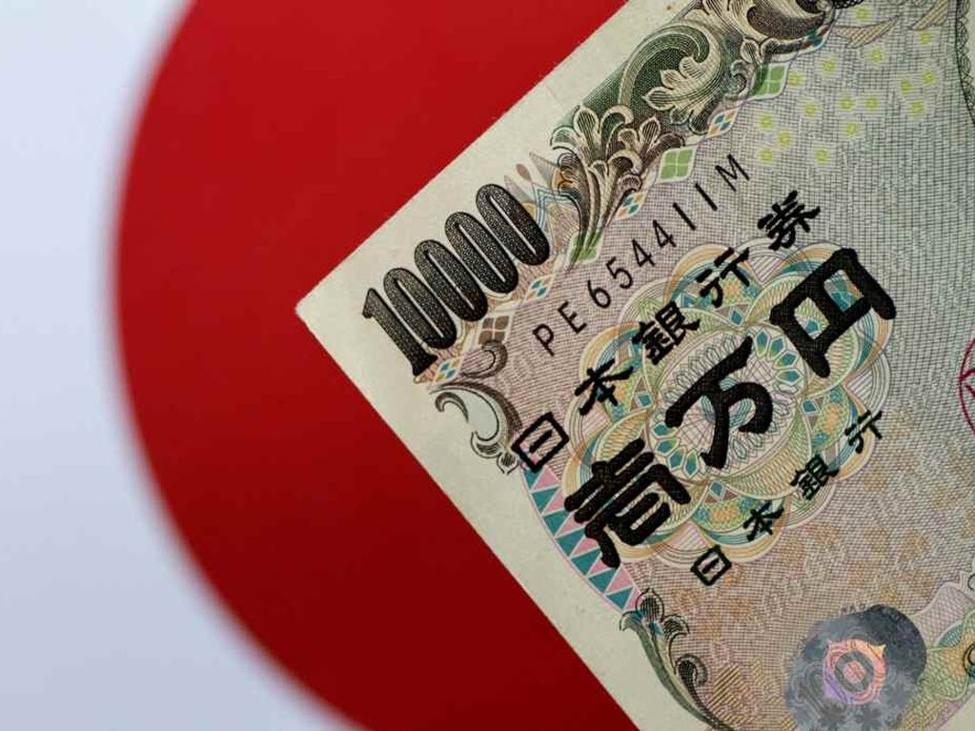
Where to now for USD/JPY?
After the fall since the Japan snap election result last week, the pair is caught in a bit of a tight spot with price action ranging in between 152.50 to 153.80 for the most part. While intervention risks remain heightened, there’s still no strong conviction to be turning bullish on the Japanese yen at this stage.As such, that’s leaving for some mixed feelings about USD/JPY in the short-term. That even as the dollar remains rather vulnerable overall in the major currencies space.So, what’s next for USD/JPY as we look to the second-half of February trading?BofA chimes in with a note saying that:”With the general election now out of the way, the market’s focus for USD/JPY shifts squarely to the prospect of FX intervention. Our intervention watch‑zone remains unchanged at 157-160. While intervention concerns are likely to cap upside in USD/JPY, structural yen‑selling flows mean such caution alone is unlikely to halt depreciation, and the probability of actual FX intervention remains high.”In looking at the more structural outlook, the firm notes that the yen remains unfavourable even if there are some supportive elements in the short-term:”Over the longer term, yen‑weakening risks remain firmly in place. But in the near term, the combination of potential intervention and scope for the market to further price in BOJ hikes at the March and April meetings skews the risk‑reward for USD/JPY to the downside. Ahead of the fiscal year‑end, current spot levels offer Japanese corporates a reasonably attractive opportunity to add to their yen‑buying hedge positions.”Similarly, ANZ also argues for dip-buying in USD/JPY on potential opportunities moving forward:”We view levels below 152 as a good entry point for new USD/JPY long positions. While OIS pricing indicates nearly 60 bps of hikes from the BOJ this year, measures such as energy subsidies and the consumption tax are expected to moderate inflation, reducing the need for aggressive tightening. As expectations for further hikes diminish, the yen will likely weaken.The carry for USD/JPY remains attractive, particularly as the USD is likely to stay firm in February on seasonal drivers and positive economic data.” This article was written by Justin Low at investinglive.com. 🔗 Source 💡 DMK Insight The USD/JPY is stuck in a tight range, and here’s why that matters: With price action oscillating between 152.50 and 153.80, traders should be cautious. The lack of strong bullish conviction suggests that any breakout could be met with significant resistance. The recent snap election in Japan has added to the uncertainty, and intervention risks are still looming. If the pair breaks below 152.50, it could signal a deeper bearish trend, while a move above 153.80 might invite fresh buying interest. Keep an eye on these levels as they could dictate short-term trading strategies. Moreover, the broader market context shows that the USD is facing mixed signals from economic indicators, which could further complicate the outlook for USD/JPY. If U.S. economic data continues to show strength, it might provide the necessary push for the dollar, but any signs of weakness could lead to a swift reversal. Watch for upcoming U.S. economic releases that could impact the dollar’s strength and, consequently, the USD/JPY pair. 📮 Takeaway Monitor the 152.50 and 153.80 levels closely; a breakout in either direction could set the tone for your trading strategy.

How Binance's ADGM Licensing Reshapes Institutional Crypto Access
Global digital asset markets saw a distinct change in capital behavior throughout 2025. While JPMorgan data tracks nearly $130 billion in inflows for the year, the capital allocation did not follow the pattern of previous bull cycles. Liquidity refused to trickle down into broader speculative markets. Instead, flows remained stubbornly concentrated in major caps like Bitcoin and Ethereum, a trend driven by institutional allocators for whom regulatory clarity is a mandate, not a preference.We see this maturity in the hard numbers. Binance recorded a 21% year-on-year jump in institutional trading volume in 2025, beating out retail growth trends. Large-scale market participants have moved past simply asking for regulation; they now treat it as a prerequisite for entry.The ADGM license secured by Binance acts as a bellwether for this environment, signaling that crypto exchanges are rapidly adopting the standards of traditional financial institutions.Operating Under a Gold Standard FrameworkOn January 5, 2026, Binance shifted its global operations to a modelfully authorized by the ADGM’s Financial Services Regulatory Authority (FSRA), becoming the first global exchange to operate under this international standard.The authorization mandated a specific division of operations. Nest Exchange Limited now manages all spot and derivatives trading, while Nest Clearing and Custody Limited focuses exclusively on clearing trades and securing assets. Finally, Nest Trading Limited steps in as the broker-dealer for off-exchange services.This separation is critical for institutional risk management. By isolating custody from the matching engine, the framework addresses one of the primary counterparty risks that kept large allocators on the sidelines in previous years.”The ADGM license crowns years of work to meet some of the world’s most demanding regulatory standards,” said Binance Co-CEO Richard Teng. He noted the timing of this regulatory achievement coincides with significant user growth. “Arriving within days of the moment wecrossed 300 million registered users shows that scale and trust need not be in tension.”The emphasis on compliance is supported by internal data regarding network security. The platform has reduced its direct exposure to major illicit funds categories by 96% since 2023, according to its 2025 Year in Review report. This drop serves as evidence that stricter oversight mechanisms are successfully managing risk without stifling the platform’s expansion.Binance Sets the Stage for Institutional AdoptionThis regulatory overhaul coincides with a market that values execution certainty over speculative risk. According to the Wintermute 2025 OTC Market Report, liquidity is “clustering” rather than flowing downstream. Speculative windows are closing faster as the reliable rotation of profits from large caps to smaller tokens has stalled. An altcoin rally’s median duration shrank to just 19 days in 2025, a significant drop from the 61-day average recorded in 2024.This contraction in speculative duration forces institutions to stick to major, liquid assets where compliance and execution are guaranteed. The data supports this flight to quality. While broad market volatility dampened some retail sectors, OTC fiat trading volume on Binance surged 210% year-on-year in 2025. This suggests that large-scale capital is entering the market via regulated, off-exchange rails rather than through public order books.The platform’s cumulative trading volume has now surpassed $125 trillion across its history providing the liquidity depth required to absorb these institutional flows without significant price slippage. Catherine Chen, Head of Binance VIP & Institutional, noted in the company’s year-end report that large clients are actively shaping the service model. “These touchpoints turn institutions from ‘clients’ into co-architects of our roadmap,” Chen said.She explained that institutional feedback is altering the product suite itself. “Their requirements on matters like capital management, operational resilience, risk, reporting, and governance shape how we design the next generation of products and standards.”This influence is visible in the rollout of specific institutional features, such as banking-style “prestige” services and segregated fund accounts, which allow asset managers to operate with the reporting standards required by their own limited partners.A New Infrastructure for Global FinanceThe convergence of strict regulatory oversight, illustrated by the ADGM license, and massive user participation creates a new baseline for the digital asset industry in 2026. With liquidity settling into regulated channels and Binance’s user base topping 300 million, the sector is shedding its experimental reputation. The infrastructure now resembles a modernized financial system rather than a tech sandbox.Analysts at JPMorgan see this dynamic strengthening. They project that as legal frameworks tighten globally, institutional capital will remain the primary market driver through 2026. The rails for this system are already seeing heavy traffic; the stablecoin market capitalizationexceeded $313 billion by January 2026, confirming that digital settlement is becoming standard practice.The ADGM authorization does more than permit operations; it validates a market structure where crypto assets are handled with the same rigor as traditional securities. As the distinction between “crypto exchange” and “financial institution” vanishes, the market is finally ready to accommodate the heavyweights of global finance. This article was written by IL Contributors at investinglive.com. 🔗 Source 💡 DMK Insight Capital flows in 2025 are telling a different story than previous bull cycles, and here’s why that’s crucial for traders: With JPMorgan reporting nearly $130 billion in inflows, the expectation might be for a surge in speculative trading. However, the lack of liquidity trickling down into broader markets suggests a more cautious approach from investors. This could indicate that institutional players are prioritizing stability over high-risk assets, which might lead to a prolonged consolidation phase in speculative markets. For day traders and swing traders, this means adjusting strategies to focus on more stable assets or sectors that are still attracting capital, rather than chasing high-volatility opportunities that may not materialize. It’s also worth noting that this behavior could have ripple effects on correlated assets, particularly those in the altcoin space, which often rely on the momentum generated by Bitcoin and Ethereum. If liquidity remains tight, altcoins might struggle to gain traction. Keep an eye on key support and resistance levels in Bitcoin and Ethereum, as their movements will likely dictate the broader market sentiment. Watch for any signs of liquidity shifts in the coming weeks, as that could signal a change in trading dynamics.

S&P 500 continues to bend but don't break for now
The showing yesterday was a bit of a mixed one but it continues to highlight some resilience in dip buying in US equities for now. That despite all the concerns on the AI trade and software stocks in the past two weeks. The S&P 500 was down as much as 1% overnight but rallied in the end to close marginally higher by 0.1%.This was the closing performance breakdown of the stocks in the index yesterday:Financials held up modestly while in tech, the rebound was mostly led by Apple with a modest recovery in Nvidia shares as well.But when you zoom out to the bigger picture, it seems to be a case of bend but don’t break for the S&P 500.Despite all the trials and tribulations in the past two weeks, we’re still just under 3% from a fresh record high in the index. And that is quite remarkable, if you really want to think about it. I mean it is clear that sentiment remains rather rocky and shaky at the moment, yet we’re just one or two good days from setting new highs in US stocks. Wild.The chart above highlights that the ceiling remains closer to 7,000 for now but the key detail is where the floor level is at.And that is the 100-day moving average (red line), seen around 6,814 currently. The drop early yesterday threatened to take out the key level, one that has held for nine months now. The last time the S&P 500 traded below either of its key daily moving averages was all the way back in early May last year.So, that speaks to the kind of upside and bullish momentum that we’ve been riding until today. We’ve had a couple of tests of the key level since November last year, but in both times dip buyers have managed to hold the line. And in trading this week, that seems to be the case as well in the first few attempts.That being said, it’s critical to continue to keep an eye out on the 100-day moving average level above. A firm break of that will mark a significant momentum shift in US equities, even if we already gotten such a break in the Nasdaq earlier this month. The one for the S&P 500 will be a key power shift in the price action battle, one that could start up some heavier selling as we look to the months ahead. That especially considering markets are also pondering a bigger shift in tech valuations and the AI outlook. This article was written by Justin Low at investinglive.com. 🔗 Source 💡 DMK Insight Despite recent volatility, dip buying in US equities shows resilience, signaling potential opportunities for savvy traders. The S&P 500’s recent downturn, despite being down significantly, suggests that buyers are still willing to step in at lower levels. This behavior is crucial for day traders and swing traders who thrive on short-term movements. The mixed performance indicates that while there are concerns—especially around AI and software stocks—there’s still a belief in the underlying strength of the market. Traders should keep an eye on key support levels in the S&P 500; if the index holds above these levels, it could set the stage for a rebound. Conversely, a break below could trigger further selling. Here’s the thing: while mainstream coverage might focus on the negatives, the resilience of dip buying could be a sign of underlying bullish sentiment. If institutions continue to buy on dips, it could lead to a more sustained recovery. Watch for the upcoming earnings reports from major tech firms, as they could either bolster or undermine this sentiment significantly. 📮 Takeaway Monitor the S&P 500’s support levels closely; a rebound could signal a buying opportunity, especially if dip buying persists.

UK January CPI +3.0% vs +3.0% y/y expected
Prior +3.4%Core CPI +3.1% vs +3.0% y/y expectedPrior +3.2%The inflation picture continues to point to some softening, but not to the degree to make the BOE feel comfortable enough. The drop in headline annual inflation is largely due to base effects, with energy prices being the main factor. Overall prices for motor fuel fell by 2.2% in the 12 months to January 2026, as compared with a rise of 0.9% in the 12 months to December 2025.The second-largest downward effect came from air fares, which ties to a seasonal effect mostly. ONS points out that prices tend to rise into December and fall into January historically, which matches up with holiday-boosted pricing.”In December 2024 and January 2025, this pattern was less pronounced than in previous years. The monthly rise in December 2024 was the third-lowest December rise since monthly price collection began in 2001. The weaker growth into December 2024 led to a smaller fall than normal into January 2025.The index this year followed a more conventional pattern, perhaps because the return flights in December did not fall on Christmas Eve and New Year’s Eve. The more pronounced rise into December 2025 and fall into January 2026 led to a large upward contribution to the change in the annual rate in December 2025 and a large downward contribution in January 2026.”As for core prices, it’s still all about services inflation for the most part. Even with a marginal decline in core annual inflation, it’s still keeping at just above 3% for now. And that’s still some ways off from the desired 2% target level for the BOE.Services inflation remains elevated at 4.4%, observing just a marginal drop from 4.5% in December. This article was written by Justin Low at investinglive.com. 🔗 Source 💡 DMK Insight Core CPI came in at 3.1%, slightly above expectations, and here’s why that matters: Inflation data is crucial for traders, especially with the Bank of England (BOE) still on edge. While the headline inflation drop is encouraging, it’s largely driven by base effects and energy prices, which could mask underlying inflationary pressures. This could keep the BOE from making aggressive cuts, impacting GBP pairs and related assets. If inflation remains stubborn, we might see volatility in the forex market, particularly for GBP/USD and EUR/GBP. Watch for any comments from BOE officials in the coming days, as they could signal future monetary policy shifts. On the flip side, if inflation continues to soften, it could lead to a more dovish stance from the BOE, which might weaken the pound. Traders should keep an eye on the 3% level in core CPI as a potential pivot point for market sentiment. The next few weeks will be critical for gauging how these inflation trends influence central bank decisions and market movements. 📮 Takeaway Monitor the 3% core CPI level closely; a sustained drop could shift BOE policy and impact GBP pairs significantly.

Interesting earnings this week
There are earnings weeks where volatility is isolated. And then there are weeks where positioning across multiple sectors is already stretched, and earnings become the release valve.This one feels like the latter.Walmart, DoorDash, Booking Holdings, Analog Devices, and Deere do not share business models. What they share right now is elevated options pricing and a seat inside active sector rotation flows. That combination matters more than the individual EPS lines.Start with the volatility backdrop.Implied moves across this group are running above typical ranges. DoorDash is carrying particularly wide expectations into the print, reflecting uncertainty around consumer behavior and margin durability. Booking’s implied move, while smaller in percentage terms, is still meaningful for a mega-cap travel name. Walmart, Analog Devices, and Deere are also pricing reactions that exceed routine quarterly adjustments.That tells you one thing clearly: markets are not positioned for a non-event.But volatility alone does not create opportunity. Positioning does.DoorDash is a growth-sensitive, sentiment-driven name. If results show improving unit economics or stronger-than-feared demand, and the stock breaks beyond the implied move range and holds, that would suggest dealers and short-term traders are forced to adjust. In that case, follow-through matters more than the headline beat. If the stock spikes and fades back inside its implied band within a day or two, the move was likely volatility premium unwinding rather than fresh conviction.Booking sits in a different lane. Travel demand has remained resilient, but it is not immune to macro pressure. Commentary around forward bookings, regional strength, and pricing power will likely drive the reaction more than the trailing numbers. If Booking can hold strength post-print, it supports the idea that discretionary travel remains durable. If it rolls over despite a solid report, that suggests positioning was already leaning long.Walmart is the defensive pivot.Capital has rotated toward staples and lower-beta exposure in recent months. Walmart often acts as a proxy for that flow. A strong report that sustains upside would validate defensive positioning. A disappointment, especially one tied to margin pressure or consumer strain, could unwind part of the staples trade. In that scenario, the reaction would likely extend beyond the stock itself.Analog Devices offers a read on the semiconductor and industrial demand cycle. The key question is inventory normalization. If management signals stabilization and improved visibility, the stock may benefit not just individually but through sympathy across the sector. If demand softness persists in guidance, semiconductors could see broader pressure.Deere provides insight into capital goods and agricultural spending. Its commentary touches financing conditions, equipment demand, and rural economic strength. A constructive outlook would support the industrial rotation thesis. A cautious tone tied to financing costs or commodity softness could reinforce defensive capital allocation.Underneath all of this sits the skew.Implied moves tell you magnitude. Skew tells you bias.If options markets are leaning toward downside hedging and results contradict that expectation, upside moves can extend beyond what the raw implied range suggests. The reverse is also true. Heavy upside positioning paired with cautious guidance can create abrupt downside air pockets.The more important observation is structural.If several of these names break beyond their implied ranges and sustain direction with sector ETF confirmation, that signals real capital movement. If reactions fade quickly across the board, it signals positioning reset rather than narrative shift.This cluster of earnings is less about five individual companies and more about testing current capital allocation themes:Is the consumer strong enough to justify discretionary risk?Are defensives too crowded?Is industrial demand stabilizing?Are semiconductors ready to reaccelerate?The answers will not be found in the first fifteen minutes after the release. They will show up in whether price holds, extends, or reverts once volatility collapses.That is where the signal lives, live it with investingLive.com Stocks This article was written by Itai Levitan at investinglive.com. 🔗 Source 💡 DMK Insight Earnings week is here, and SOL’s current price of $83.93 could be influenced by broader market volatility. With companies like Walmart and DoorDash reporting, traders should brace for potential price swings in SOL as earnings can act as a release valve for pent-up market sentiment. If earnings disappoint, we could see a risk-off approach, pushing SOL down, while positive surprises might lead to a rally. Keep an eye on SOL’s support around $80 and resistance near $90; these levels could dictate short-term trading strategies. Also, consider how correlated assets like Bitcoin might react, as they often move in tandem with market sentiment during earnings seasons. Here’s the thing: while the earnings reports are diverse, they could collectively impact investor sentiment across sectors, including crypto. If the market reacts negatively, SOL could face downward pressure, so watch for any shifts in trading volume or sentiment indicators leading into and after these earnings releases. 📮 Takeaway Watch SOL closely around the $80 support and $90 resistance levels this earnings week for potential volatility driven by broader market sentiment.

France January final CPI +0.3% vs +0.3% y/y prelim
Prior +0.8%HICP +0.4% vs +0.4% y/y prelimPrior +0.7%No changes to the initial estimates as French inflation continues to keep on the lower side, helping to somewhat balance out the higher price pressures in the German and Spanish economies especially.Core annual inflation is also continuing to moderate, dropping to 0.7% in January – down from 1.1% in December last year. That as services inflation falls further to 1.7%, down from 2.1% in the month before. However, food price inflation accelerated slightly to 1.9% – up from 1.7% in December. So, there is a bit of a mix there with the prices of manufactured products seeing a marked decline of 1.2%.The overall chart:All in all, this won’t offer much change to the ECB outlook for now. That unless we start to see a material shift in price pressures in Germany in the months ahead. Then, the softer French numbers here could be a push for a final set of rate cuts before the year is over and done with.For now, it’s all conjecture though. We can only wait and see to scrutinise the developments to come. This article was written by Justin Low at investinglive.com. 🔗 Source 💡 DMK Insight French inflation data shows moderation, and here’s why it matters for traders: With HICP at +0.4% y/y and core inflation dropping to 0.7%, this signals a potential easing of monetary policy in the Eurozone. Lower inflation in France could offset the higher pressures seen in Germany and Spain, creating a more balanced economic outlook. For traders, this could mean a shift in the ECB’s stance, especially if inflation trends continue downward. Watch for any comments from ECB officials regarding interest rates, as they could impact the euro’s strength against the dollar and other currencies. However, don’t overlook the flip side—if inflation in other major economies remains stubbornly high, it could lead to a divergence in monetary policy that favors the dollar. Keep an eye on the EUR/USD pair, particularly if it approaches key support levels. If it breaks below those, we might see increased selling pressure. Monitor the upcoming economic releases closely; they could provide further clarity on the inflation trajectory and influence market sentiment significantly. 📮 Takeaway Watch the EUR/USD pair closely; a break below key support levels could signal increased selling pressure amid diverging inflation trends.

BOJ now paying the price for not hiking rates in a timely manner, says ex-policymaker
It’s rather common to see former BOJ policymakers deliver bold remarks after they have left the central bank. And this time is no different, with Yamamoto offering up some comments in an interview with MNI. He is one to have spent 36 years at the BOJ, before leaving to head the Office KY Initiative.His remarks places blame on the BOJ in not being proactive enough on monetary policy, and is now suffering for that as markets punish Japan with selling in the yen currency and in the JGB market. He now urges the central bank to correct that and to raise interest rates at a quarterly pace. Yamamoto says that:”Looking ahead, it is appropriate for the bank to accelerate the pace of rate hikes. The BOJ did not raise the policy rate consistently or in a timely manner and consequently, it is now paying the price through yen and JGB selling.”Adding that the current policy rate remains a considerable distance away from what is perceived to be the neutral rate for Japan. Thus, he argues that quarterly rate hikes will be appropriate as opposed to moves that are spaced out every six months instead.At this point, Yamamoto says that the BOJ has little choice but to scrutinise the pace and terminal rate in trying to push forward with timing their rate hikes.He also warns that the central bank has to try and take action so as to not allow markets to keep pressuring Japanese assets, in particular the bond market. However, he did warn that taking the easy way out and intervening to curb rising yields may not be the best solution.”If the BOJ leaves rapid JGB moves alone, it could face criticism. But it will also face a difficult challenge in deciding how to cope with them.”Going back to inflation targeting and managing monetary policy, Yamamoto believes that the BOJ is now behind the curve so to speak. However, the response to high prices should be to tighten credit conditions and to have restrained fiscal spending. However, Takaichi implementing opposite measures to the BOJ is now making things rather difficult to find the right answer. This article was written by Justin Low at investinglive.com. 🔗 Source 💡 DMK Insight Yamamoto’s comments post-BOJ tenure could signal shifting market sentiment around Japanese monetary policy. Traders should pay close attention to how these remarks might influence the yen and related currency pairs. Former central bank officials often provide insights that can sway market expectations, especially regarding interest rates and inflation. If Yamamoto hints at a more hawkish stance or a shift in policy direction, it could lead to a stronger yen against currencies like the USD or EUR. This is particularly relevant as the market is already sensitive to any signs of tightening monetary policy, especially with the Fed’s recent decisions impacting global liquidity. On the flip side, if his comments are perceived as dovish, it could reinforce the current trend of yen weakness, especially if traders are already positioned for a continuation of the BOJ’s ultra-loose policies. Keep an eye on the USD/JPY pair; a break above recent resistance levels could signal further upside for the dollar against the yen. Watch for any upcoming economic data releases from Japan that could either support or contradict Yamamoto’s views, as these will be crucial in shaping market expectations. 📮 Takeaway Monitor the USD/JPY pair closely; any hawkish signals from Yamamoto could push the yen stronger, while dovish remarks may reinforce its weakness.

USDJPY remains stuck in a tight range as traders await new catalysts to pick a direction
FUNDAMENTAL OVERVIEWUSD:The US dollar has been trading mostly sideways after the hot US NFP report and the slightly soft US CPI data of last week. The market firmed up rate cut bets with 60 bps of easing seen by year-end but overall, the data didn’t really change anything in the bigger picture. The bearish positioning in the US dollar remains crowded, so it’s hard to see much more weakness unless the data deteriorates significantly or we get some kind of negative shock in the economy. This week, all the important stuff will be released on Friday as we get the US Flash PMIs and the US Q4 GDP. We might also get the US Supreme Court decision on Trump’s tariffs.JPY:On the JPY side, we’ve seen a big “sell the fact” trade following the widely expected Takaichi’s victory in the lower house elections, but other than that, nothing has changed. In fact, the data hasn’t been supporting urgent rate hikes, and we haven’t got anything new from the central bank either. As a reminder, the BoJ held interest rates steady as expected at the last policy meeting and upgraded slightly growth and inflation forecasts due to the expansionary fiscal policies. Governor Ueda didn’t offer anything new in terms of forward guidance as he just repeated that they will keep raising rates if the economic outlook is realised. He also added that April price behaviour will be a factor to mull over a rate hike. This suggests that April is when they expect to deliver another rate hike if the data supports such a move. USDJPY TECHNICAL ANALYSIS – DAILY TIMEFRAMEOn the daily chart, we can see that USDJPY continues to consolidate near the major trendline as traders await new catalysts to pick a direction. If we get a test of the trendline, we can expect the buyers to lean on the trendline with a defined risk below it to position for a rally into the 159.00 handle. The sellers, on the other hand, will want to see the price breaking lower to open the door for a drop into the 146.00 handle next.USDJPY TECHNICAL ANALYSIS – 4 HOUR TIMEFRAMEOn the 4 hour chart, we can see more clearly the rangebound price action near the trendline. There’s not much we can add here, so we need to zoom in to see some more details.USDJPY TECHNICAL ANALYSIS – 1 HOUR TIMEFRAMEOn the 1 hour chart, we can see two key swing levels defining the downtrend. The first one around the 153.70 level defines the consolidation. A break above it should see the buyers increasing the bullish bets into the next swing level at 154.65. The sellers, on the other hand, will likely continues to step in around the 153.70 resistance with a defined risk above it to keep targeting a break below the major trendline. The red lines define the average daily range for today. UPCOMING CATALYSTSToday we have the FOMC Meeting Minutes. Tomorrow, we get the latest US Jobless Claims figures. On Friday, we conclude the week with the Japanese CPI, the US Q4 GDP, the US PCE price index for December, the US Flash PMIs and the potential US Supreme Court decision on Trump’s tariffs. This article was written by Giuseppe Dellamotta at investinglive.com. 🔗 Source 💡 DMK Insight The US dollar’s sideways trading is a signal of market indecision amid mixed economic data. With the recent NFP report showing strength but CPI data coming in softer, traders are recalibrating their expectations for rate cuts. Currently, the market is pricing in about 60 basis points of easing by year-end, which indicates a growing belief that the Fed might pivot sooner than expected. This could lead to increased volatility in forex pairs, particularly those heavily correlated with the dollar, like EUR/USD and GBP/USD. If the dollar continues to trade sideways, watch for breakouts around key levels—if it breaks above recent highs, it could signal a bullish trend, while a drop below support levels might trigger further selling pressure. But here’s the flip side: if the Fed maintains its current stance despite the easing bets, we could see a sharp reversal in dollar strength. Keep an eye on upcoming economic indicators and Fed communications for clues on their next moves. 📮 Takeaway Watch for key breakout levels in the USD; a move above recent highs could signal a bullish trend, while a drop below support may trigger selling pressure.