
 Bitcoin
  Ethereum
  Tether
  XRP
XRP  BNB
BNB  USDC
USDC  Solana
  TRON
TRON  Lido Staked Ether
  Figure Heloc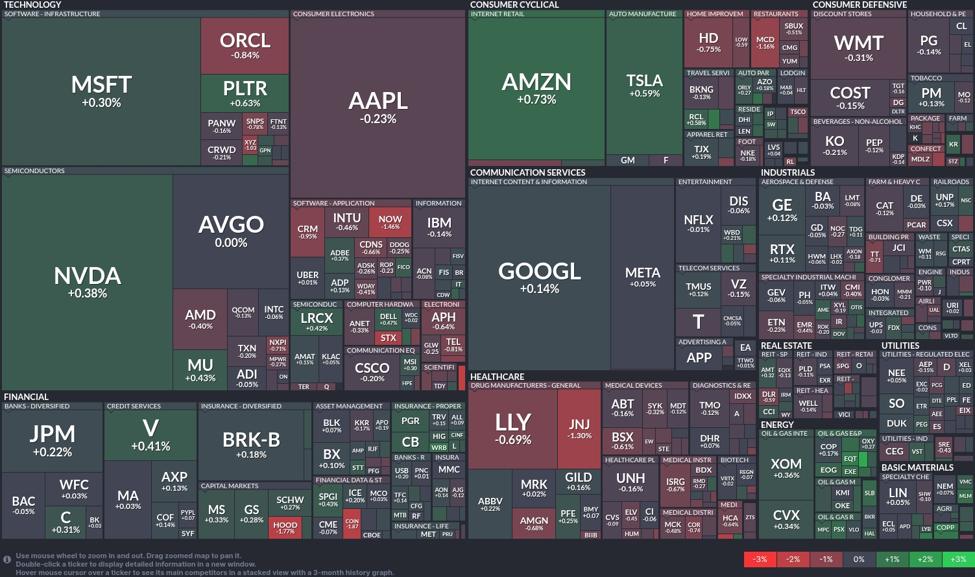
Tech stocks drive market gains, healthcare falters: A sector breakdownToday’s US stock market showcased a dynamic landscape with technology taking the lead, while healthcare sectors lagged. As investors navigate the fluctuations, let’s delve into the day’s sector performances, market trends, and strategic recommendations.📈 Technology Soars: A Leader in the MarketThe technology sector is making positive strides today. Nvidia (NVDA), a key player in the semiconductor industry, gained 0.38%, reflecting solid investor confidence. Similarly, Microsoft (MSFT) posted a 0.30% increase, contributing to the sector’s upswing.📉 Healthcare Takes a HitIn contrast, the healthcare sector is experiencing challenges. Eli Lilly (LLY) fell by 0.69%, while Johnson & Johnson (JNJ) faced a more significant decline of 1.30%. These setbacks highlight the sector’s current vulnerability and potential concerns over upcoming earnings reports or policy changes.📊 Consumer and Financial Sectors: Mixed SignalsAmong consumer cyclicals, Amazon (AMZN) continues to show resilience with a 0.73% gain, signaling strong investor sentiment. In the financial realm, JPMorgan Chase (JPM) inched up by 0.22%, and Visa (V) rose by 0.41%, indicating moderate positivity.🌐 Communication Services & Market TrendsThe communication services sector, led by Google (GOOGL)’s modest 0.14% increase, remains stable. The calm in this sector reflects investor confidence amidst broader technology developments.📚 Strategic Recommendations for InvestorsDiversify within Tech: As technology continues to lead, consider diversifying within the sector to capture gains while managing risk.Monitor Healthcare Closely: Given the current downturns, keep an eye on developments in healthcare that could signal a potential rebound.Explore Defensive Stocks: With mixed performances across various sectors, investing in stable, dividend-yielding stocks might offer a safety net.Overall, today’s market reflects divergent paths across sectors. While technology shines, healthcare presents challenges requiring close monitoring. Stay tuned to InvestingLive.com for insightful analyses and real-time market updates to guide your investment strategy effectively. This article was written by Itai Levitan at investinglive.com. 🔗 Source 💡 DMK Insight Tech stocks are on fire, and here’s why that matters for traders: With technology leading the charge, this sector’s performance could signal a broader market shift. Investors are clearly favoring growth over value, especially as earnings reports roll in. If tech continues to outperform, it could drag other sectors up with it, but the lag in healthcare raises red flags. Traders should watch for potential rotation—if funds start flowing out of tech, it could create volatility. Look at key levels in major tech indices; if the Nasdaq breaks above recent highs, it could trigger more buying. Conversely, if healthcare stocks continue to underperform, it might indicate sector-specific issues that could spill over into the broader market. Keep an eye on the S&P 500’s performance relative to tech; a divergence could signal a correction. Watch for earnings reports this week, as they could provide insight into whether this tech rally has legs or if it’s just a short-term spike. 📮 Takeaway Monitor the Nasdaq for breaks above recent highs and watch healthcare for signs of further weakness; earnings this week could shift market sentiment.

US consumer confidence report December 89.1 vs expected 91.0. Down from 92.9 last month
The Conference Board’s latest release confirms that US consumer confidence fell for the fifth consecutive month in December 2025. Despite a temporary reprieve following the end of the federal government shutdown, rising anxiety over jobs and a darkening business outlook have pushed a key recession indicator deeper into the danger zone.The Headline NumbersConsumer Confidence Index: Declined to 89.1 in December versus expectations of 91.0. The current month was down from a revised 92.9 in November (was previously reported at 88.7).Present Situation Index: Plummeted by 9.5 points to 116.8, the sharpest drop in current sentiment as views on business conditions turned negative for the first time since September 2024.Expectations Index: Held steady at 70.7. Crucially, this gauge has tracked under the 80.0 threshold for 11 consecutive months, a level that historically signals an impending recession.Details of the Consumer Confidence numbers for December from the Conference BoardPresent Situation: A Mildly Pessimistic TurnConsumers’ assessment of current conditions took a notable hit this month:Business Conditions: More consumers now view conditions as “bad” (19.1%) than “good” (18.7%).The Labor Market: The share of consumers saying jobs are “plentiful” fell to 26.7%, while those saying jobs are “hard to get” rose to 20.8%.Expectations: Income and Job Worries DeepenWhile the outlook for future business conditions improved slightly, the “human” side of the economy remains under pressure:Job Outlook: More consumers expect fewer jobs to be available (27.4%) compared to November.Income Stress: While 18.4% expect their income to increase, the percentage of those expecting a decrease also rose to 14.7%.Demographic and Political TrendsThe decline in confidence was nearly universal across the board:Generational Divide: Confidence dipped among all age groups. Only the Silent Generation showed increased hope, while Millennials and Gen Z remained the most optimistic despite trending downward.Income Brackets: Confidence fell for almost all brackets, with the exception of the lowest earners (under $15K) and highest earners (over $125K).Unity in Gloom: Confidence continued to fall among all political affiliations—Democrats, Republicans, and Independents alike.Expert Analysis“Despite an upward revision in November related to the end of the shutdown, consumer confidence fell again in December and remained well below this year’s January peak. Four of five components of the overall index fell, while one was at a level signaling notable weakness.”— Dana M. Peterson, Chief Economist, The Conference Board. This article was written by Greg Michalowski at investinglive.com. 🔗 Source 💡 DMK Insight Consumer confidence is slipping, and here’s why that matters for traders: A decline in consumer confidence, especially for five straight months, signals potential trouble ahead for the economy. This could lead to reduced consumer spending, which is a major driver of economic growth. Traders should keep an eye on related sectors, particularly retail and consumer discretionary stocks, as they might face downward pressure. If consumer sentiment continues to deteriorate, we could see a ripple effect across the broader market, potentially impacting indices like the S&P 500. Moreover, with job anxiety rising, the labor market could show signs of weakness, which might prompt the Federal Reserve to reconsider its interest rate strategy. If the Fed shifts towards a more dovish stance, it could lead to volatility in both equity and forex markets. Watch for key economic indicators in the coming weeks, particularly employment data and retail sales figures, as these will provide further insight into consumer behavior and market direction. 📮 Takeaway Monitor consumer sentiment and related economic indicators closely; a continued decline could signal broader market impacts, especially in retail and consumer stocks.

WH Hassett: Pres. Trump trade agenda is working
WH economic advisor Kevin Hassett Hassett:GDP is a great Christmas present for the American peopleTrump trade agenda is workingAI boom is being seen in the dataRegardless of job AI is impacting their job.Will see employment change back in the 100K -150K range if GDP stays in a 4% rangeConsumer sentiment is uncorrelated with the hard economic data.Prices are down and income is up that’s why we have such strong growth numbers.People are very optimistic about their income growth. The Fed is way behind the curve in lowering rates.We have reduced the deficit by 600 billion year-over-year.We will be finalizing a housing plan that will be announced sometime in the new yearKevin Hassett remains one of the leading contenders to become the next Fed chair, with betting markets continuing to tilt in his favor. On Polymarket, Hassett is currently priced at 62%, well ahead of Kevin Warsh at 22%. While Warsh briefly overtook Hassett on December 16, market pricing has since reversed, suggesting renewed confidence that Hassett is the frontrunner as investors reassess both the policy backdrop and recent commentary from Fed officials.Hassett’s appeal is rooted in his clear view that the Federal Reserve is well behind the curve in lowering interest rates. He has argued that restrictive policy risks overtightening the economy as inflation pressures ease, and that rates should be adjusted lower to better align with underlying economic conditions. If appointed chair, this philosophy would likely translate into a more openly dovish framing around policy decisions, even if the pace and timing of cuts remain conditional on incoming data.That said, Fed policy is not set by the chair alone. Decisions are ultimately made by the full voting committee, which includes the Board of Governors and four regional Fed presidents. At the most recent meeting, the rate decision passed by a 9–3 margin, highlighting the range of views within the committee. Stephen Miran dissented in favor of a 50 basis point cut, while Austan Goolsbee and Jeff Schmid voted for no change, preferring to wait for additional confirmation that inflation is sustainably moving lower.Since that meeting, the tone from at least one of those dissenters has begun to soften. Following the latest CPI release, which came in below expectations, Goolsbee has highlighted the encouraging disinflation signals in the data. While he has not walked back his prior vote, he has said that if the trend continues, it could support further rate cuts in 2026. Importantly, he continues to emphasize data dependence, underscoring that one report alone is not sufficient to justify an immediate shift in policy.Taken together, the evolving inflation data and shifting rhetoric underscore why markets continue to focus on leadership at the Fed. Hassett’s growing odds reflect expectations for a more forceful push toward easier policy at the top, but the recent CPI data also suggest that the broader committee may be gradually moving in that direction on its own—albeit cautiously and at a measured pace as the Fed heads into the new year This article was written by Greg Michalowski at investinglive.com. 🔗 Source 💡 DMK Insight The recent commentary from economic advisor Kevin Hassett highlights a crucial intersection of GDP growth and employment trends, and here’s why that matters for traders right now: With GDP projected to hover around 4%, it suggests a robust economic environment that could influence the Federal Reserve’s monetary policy. If employment numbers shift back to the 100K-150K range, it could signal a tightening labor market, which might lead to wage inflation. Traders should keep an eye on related sectors, particularly those sensitive to consumer sentiment and spending, as a strong GDP could bolster equities. However, the AI boom’s impact on jobs raises questions about long-term employment stability, which could create volatility in labor-intensive sectors. The real story here is how these dynamics could ripple through the forex and crypto markets, especially if the dollar strengthens on positive economic data. Watch for key employment reports and consumer sentiment indices in the coming weeks, as they could provide actionable insights into market movements. 📮 Takeaway Monitor upcoming employment reports closely; a shift to 100K-150K jobs could impact market sentiment and trading strategies significantly.
Bank of Canada Governing Council meeting minutes from the December 10, 2025 decision
Policy rate held at 2.25%, with Governing Council judging current settings as appropriate and at the lower end of neutral after 100 bp of cuts earlier in 2025Canadian economy showing resilience, supported by upward GDP revisions, though Q4 growth expected to soften and data volatility remains highLabour market improving but still mixed, with unemployment down to 6.5%, hiring concentrated in part-time jobs, and subdued business hiring intentionsInflation near target, with CPI at 2.2% and underlying inflation around 2.5%; near-term bumps expected from base effects but medium-term outlook unchangedHigh uncertainty persists, led by CUSMA trade risks and global trade reconfiguration; policy remains fully data-dependent with no clear bias on the next moveGlobal backdropGlobal growth remains resilient despite rising US protectionismUS economy: Consumer spending and AI investment continue to support growth, but government shutdown data gaps add uncertaintyUS inflation risks tilted slightly higher due to possible tariff pass-throughEurozone growth stronger than expected, led by services; defense spending could offset manufacturing pressureChina growth remains weak, with exports offsetting soft domestic demandFinancial conditions, oil prices, and CAD broadly unchanged vs October MPRCanadian growth outlookGDP revisions show Canada entered 2025 on firmer footing than previously estimatedQ3 GDP +2.6%, stronger than expected, driven mainly by lower imports, not domestic strengthFinal domestic demand flat, with weakness in business investment and consumptionQ4 growth expected to be soft, with housing, consumption, and government spending offsetting weak exports and capexData volatility remains high, with risk of further revisions due to missing US trade dataLabour marketNovember employment gains encouraging, pushing unemployment down to 6.5%Labour signals mixed:Job growth concentrated in part-time employmentTrade-exposed sectors stabilized, but at lower levelsVacancies low and business hiring intentions subduedInflation assessmentHeadline CPI eased to 2.2% (October), in line with expectationsCore inflation measures at 2.5%–3%, with underlying inflation seen near 2.5%Near-term CPI expected to tick higher due to base effects from last year’s GST/HST holidayMedium-term inflation outlook unchanged, with slack offsetting trade-related cost pressuresCore inflation expected to ease graduallyKey risks and structural issuesCUSMA review seen as a major downside risk for business investmentTrade uncertainty weighing heavily on corporate decision-makingStructural trade reconfiguration adds uncertainty across regions and sectorsFiscal and industrial policy seen as primary tools, as monetary policy cannot restore lost supplyLess slack than previously thought, but economy still in excess supplyPolicy decision and biasPolicy rate held at 2.25%, following 100 bp of cuts earlier in 2025Current rate judged appropriate, sitting at the lower end of neutralSupports growth while keeping inflation containedNo clear bias toward the next move—direction and timing remain data-dependentGoverning Council prepared to respond if incoming data materially diverges from the outlookBottom lineEconomy showing resilience, but uncertainty remains elevatedInflation broadly on track, with near-term noise but stable medium-term expectationsPolicy firmly on hold, with flexibility preserved as Canada navigates trade-driven structural change This article was written by Greg Michalowski at investinglive.com. 🔗 Source 💡 DMK Insight The Bank of Canada’s decision to hold the policy rate at 2.25% is a signal of cautious optimism amid economic resilience. With previous cuts totaling 100 basis points in 2025, the central bank seems to believe that the current rate is appropriate, albeit at the lower end of neutral. This suggests they’re balancing growth with inflation concerns. The upward revisions in GDP indicate that the economy is performing better than expected, but the anticipated softening in Q4 growth and high data volatility could create trading opportunities. Traders should keep an eye on the labor market improvements, as these could influence future rate decisions. However, there’s a flip side: if Q4 growth does indeed soften, it could lead to renewed speculation about further cuts, impacting the Canadian dollar and related assets. Watch for any shifts in economic indicators, particularly employment data and GDP revisions, as these could signal the next moves for the BoC and the broader market. 📮 Takeaway Monitor Canadian economic indicators closely, especially Q4 GDP and labor market data, as they could influence future rate decisions and market volatility.

Economic and event calendar in Asia Wednesday, December 24, 2025: BoJ minutes (preview)
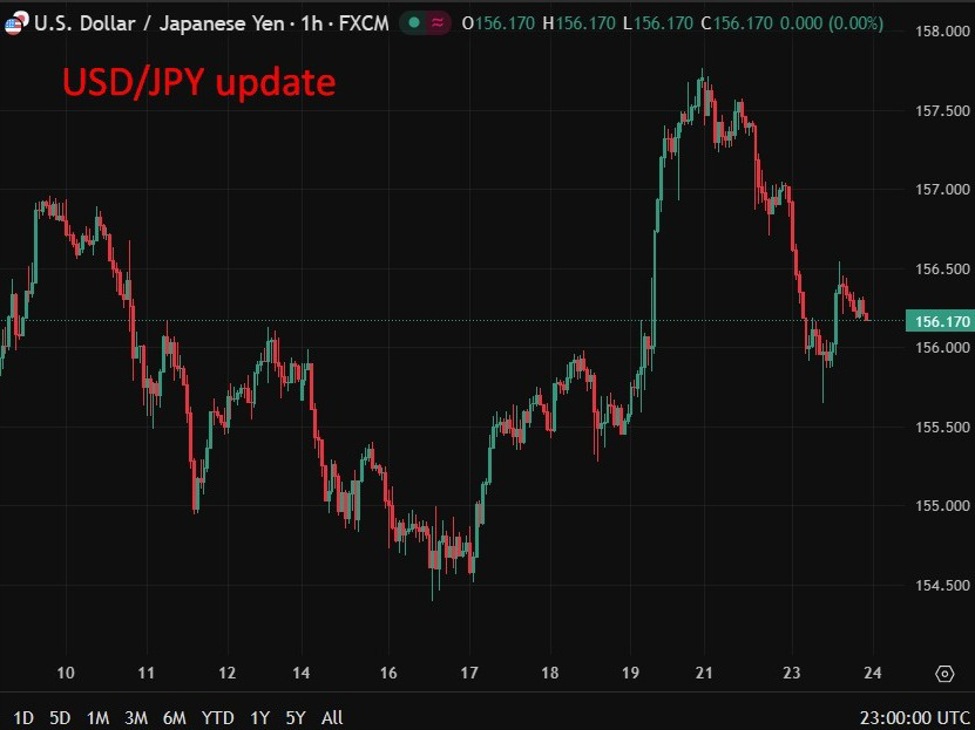
It’s a light calendar ahead for Asia, except for the Bank of Japan minutes. The caveat is, of course, that the minutes are those from the October 2025 meeting, which was a place holder at best. The other notable event is that its not Christmas Day. SummaryBOJ October minutes are due but pre-date December’s rate hikeOctober meeting offered little new guidance at the timeDecember hike marked a clearer step toward policy normalisationYen initially weakened post-hike, then rebounded on official rhetoricMarkets remain focused on follow-through, not backward-looking minutesMinutes from the Bank of Japan’s October policy meeting are due for release today, but are unlikely to provide meaningful direction for markets, given they pre-date December’s much more consequential rate hike and the subsequent swings in the yen.The October meeting was widely seen as a holding operation. Policymakers maintained an incremental approach to normalisation, reiterating the need to assess whether wage growth and inflation momentum would prove durable. Discussion at that stage centred on risks around household consumption, global growth uncertainty and the sustainability of domestically driven inflation — themes that were already well understood by markets at the time.Since then, however, the policy backdrop has shifted materially. At its December meeting, the Bank of Japan delivered a rate hike, reinforcing its gradual exit from ultra-easy monetary policy and signalling growing confidence in the inflation outlook. While the move itself was largely anticipated, it marked another clear step away from the extraordinary accommodation that defined Japan’s policy stance for decades. More detail on Bank of Japan decision to raise rates by 25bp to the highest in 30 yearsBOJ governor Ueda says rate hikes will continue if economy develops as per projectionsBOJ governor Ueda says the possibility of further rate hikes will be data-dependentThe yen’s reaction following that decision has been telling. Rather than strengthening, the currency initially weakened as investors questioned how far and how fast policy normalisation would ultimately proceed. That weakness, however, proved short-lived.Subsequent comments from Japan’s top currency officials helped to shift the tone. Remarks from Atsushi Mimura warning about excessive and one-sided currency moves prompted a reassessment of short-yen positions, reinforcing the sense that authorities are increasingly sensitive to renewed volatility. This message was later echoed by Finance Minister Satsuki Katayama, adding further weight to the view that sharp or disorderly moves would not be ignored.Japan officials’ warnings have continued to bolster the yen, USD/JPY under 156.50Against that backdrop, today’s October minutes are likely to be treated as backward-looking context rather than a source of fresh signal. Any market reaction is expected to be limited and short-lived.For now, the yen’s near-term direction appears more closely tied to expectations around further policy follow-through, wage dynamics and the consistency of official communication, rather than to historical deliberations from before the December shift. This article was written by Eamonn Sheridan at investinglive.com. 🔗 Source 💡 DMK Insight So the Bank of Japan’s October minutes are coming out, but here’s the catch: they’re from a meeting that didn’t really move the needle. For traders, this means you might want to temper your expectations. The minutes could provide some insight into the BOJ’s thinking, but since they’re from a placeholder meeting, the impact on the yen or Japanese equities is likely to be minimal. With a light calendar, market participants might be looking for any hints of future policy changes, especially as inflation and economic growth remain hot topics. Keep an eye on the USD/JPY pair—if the minutes hint at a more dovish stance, we could see a dip in the yen. On the flip side, if there’s any indication of tightening, it could spark a rally. Watch for volatility in the forex markets, especially around the release time. The real story is that without substantial news, traders might be better off focusing on technical levels and broader market sentiment rather than getting too caught up in these minutes. 📮 Takeaway Monitor the USD/JPY pair closely; any dovish hints from the BOJ minutes could trigger a significant move.
Oil: Private survey of inventory shows a headline crude oil build vs. draw expected
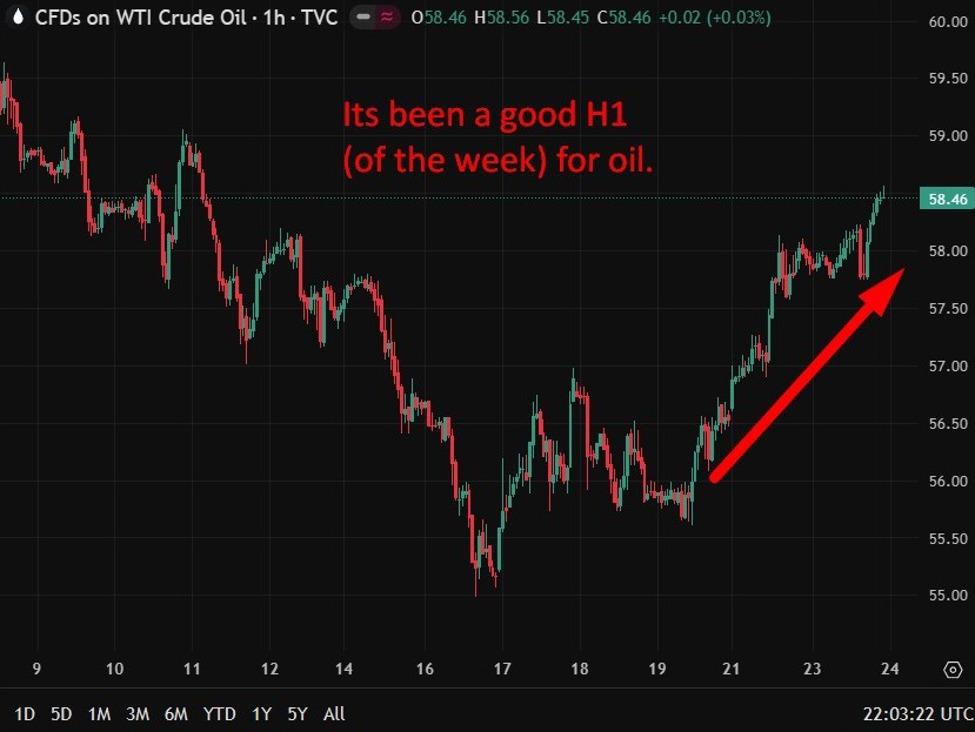
The oil folks seem to have packed it in for the year, this via a telegram channel:–Expectations I had seen centred on:Headline crude -2.4 mn barrelsDistillates +0.4 mn bblsGasoline +1.1 mn—This data point is from a privately-conducted survey by the American Petroleum Institute (API).It’s a survey of oil storage facilities and companiesThe official government inventory report is due Wednesday morning US time.The two reports are quite different.The official government data comes from the US Energy Information Administration (EIA)Its based on data from the Department of Energy and other government agenciesWhereas information on total crude oil storage levels and variations from the previous week’s levels are both provided by the API report, the EIA report also provides statistics on inputs and outputs from refineries, as well as other significant indicators of the status of the oil market, and storage levels for various grades of crude oil, such as light, medium, and heavy.the EIA report is held to be more accurate and comprehensive than the survey from the API—The oil price has climbed this week. Oil prices found early support on Monday as a renewed uptick in geopolitical risk helped rebuild a modest risk premium in crude markets. Over the weekend, the United States intercepted a Venezuelan oil tanker, underscoring Washington’s willingness to more actively enforce sanctions and adding to concerns around potential supply disruptions from the region. While the immediate impact on global supply remains limited, the episode served as a reminder of lingering geopolitical fault lines in key energy-producing areas.At the same time, tensions in the Middle East remained elevated, with the standoff between Israel and Iran continuing to simmer. Although no fresh escalation was reported, the persistence of regional uncertainty has been enough to keep traders cautious, particularly given the strategic importance of Middle Eastern supply routes and infrastructure.Together, these developments helped stabilise prices after recent declines, with markets modestly rebuilding a geopolitical risk premium. Gains have extended somewhat as the week has progressed. . This article was written by Eamonn Sheridan at investinglive.com. 🔗 Source 💡 DMK Insight Crude oil inventories are down, but gasoline and distillate stocks are rising—here’s why that matters: The API’s report shows a headline drop of 2.4 million barrels in crude oil, which could signal tightening supply and potentially higher prices in the short term. However, the increases in distillates and gasoline inventories suggest that demand might not be keeping pace, especially as we head into winter. Traders should watch for how these trends affect crude prices, particularly if they align with OPEC’s production decisions. If crude prices start to rally, it could impact correlated assets like energy stocks and ETFs, which often move in tandem with oil prices. On the flip side, if the gasoline and distillate builds continue, it could indicate weakening demand, which might pressure crude prices down. Keep an eye on the $120 level for SOL; a break below could signal a bearish trend, while a bounce could present a buying opportunity. Watch for the next EIA report for confirmation of these trends. 📮 Takeaway Monitor the $120 level for SOL; a break could indicate bearish momentum, while a bounce may present a buying opportunity.
ICYMI – Rising yields force Japan to budget for higher debt-servicing costs
SummaryJapan plans to assume a 3% interest rate on bond expenses in its FY26 budgetThe assumption reflects rising JGB yields and BOJ policy normalisationIt marks the highest budgeted rate in roughly two decadesHigher debt-servicing costs could constrain fiscal flexibilityThe move signals a more realistic acceptance of a higher-rate environment-Japan’s government is reportedly planning to budget for a ~3% interest rate assumption on its long-term government bond expenses in the FY2026 budget, the highest assumed rate in about two decades. The news dribbled out overnight and its getting a rerun in markets here in Asia. This rate assumption is used when the Ministry of Finance builds the budget to estimate how much it will cost to service Japan’s huge public debt, i.e., the interest payments the government expects to make on its outstanding bonds.There are a few key drivers behind this jump in assumed rates:1. Rising market yieldsMarket yields on Japanese government bonds (JGBs) have climbed sharply as bond markets repriced in anticipation of tighter monetary policy and reduced central-bank support. Longer-dated yields, including 30-year JGBs, have already exceeded 3% in the market, the highest since they were introduced. 2. BoJ normalisationWith the Bank of Japan raising policy rates to 0.75%, the highest in 30 years, and gradually shrinking yield-curve support, market pricing for longer-term rates has moved materially higher. 3. Fiscal pressures and spending plansJapan’s national debt is among the highest in the developed world, above 230% of GDP, and recent large fiscal packages under Prime Minister Sanae Takaichi have reinforced market concerns about debt sustainability. Fiscal impact Assuming higher interest costs in the budget means the government is preparing for greater debt-servicing expenses, even without issuing significantly more bonds. That can crowd out spending on other priorities and tighten fiscal flexibility.Market realism A 3% assumption signals that Tokyo is acknowledging higher global and domestic real yields, rather than clinging to artificially low cost forecasts. This can build investor confidence — or at least reduce the likelihood of surprise — but also reflects a harsher financing environment.Yields and the yen Higher assumed rates in the budget tend to correlate with higher real yields in markets. If markets truly price longer-term JGB yields around 3% or more, it can underpin flows into JGBs but also support a stronger yen, as higher real rates make yen assets more competitive. However, commentary suggests the FX impact has been uneven, in part because of expectations around BoJ’s future path and policy signalling.Debt sustainability narrative Budget assumptions rising to 3% underline a broader shift in Japan’s macro narrative: from decades of ultra-low rates and easy financing, toward a gradual repricing of risk and cost, both domestically and globally.Bottom lineThis isn’t just bookkeeping. It’s a visible marker that the market’s repricing of Japanese bond yields, driven by BoJ normalisation and fiscal realities, is now being baked into the government’s budget framework. That has implications for fiscal policy, JGB markets, and the broader narrative about Japan’s macroeconomic transition. 2026 is gonna be lit! This article was written by Eamonn Sheridan at investinglive.com. 🔗 Source
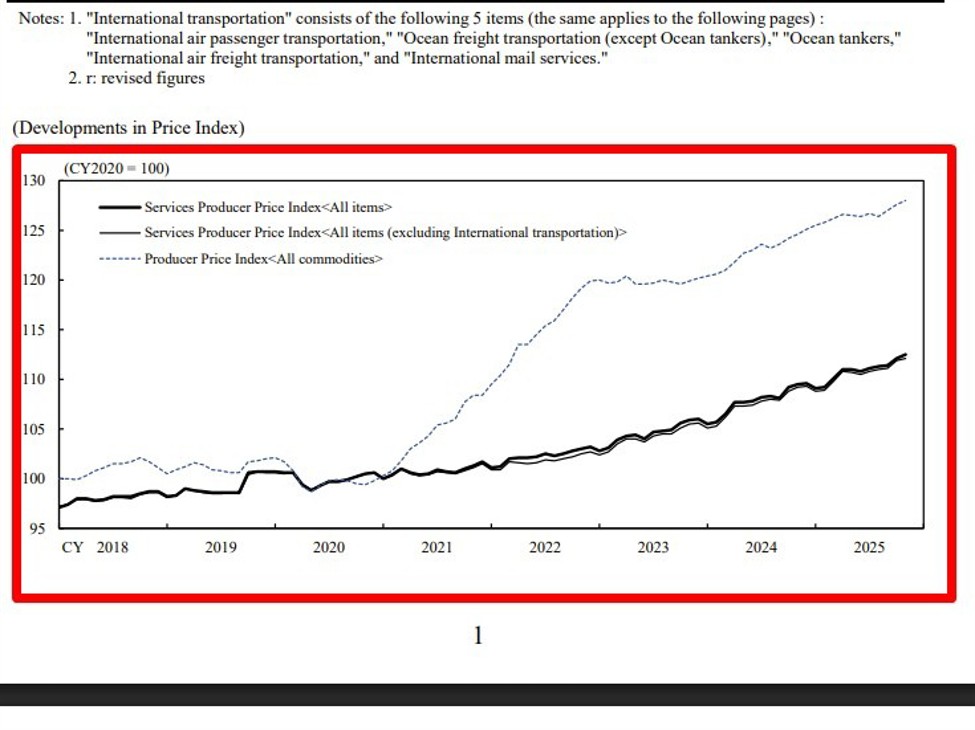
Bank of Japan Services Producer Price Index (November) +2.7% y/y (expected & prior 2.7%)
The Corporate Service Price Index (CSPI), more commonly referred to as Japan’s services producer price index, measures the change in prices charged between companies for services, such as transport, communications, advertising and other business-to-business services. Unlike traditional producer price indexes focused on goods, the CSPI captures service-sector price pressures that can be a leading signal for consumer inflation and broader cost dynamics in a service-driven economy. The CSPI is closely watched by economists and the Bank of Japan as it tends to feed through to consumer services inflation with a lag. Because many services are labour-intensive, upward price momentum here can reflect wage pressure and firms passing on costs, which is pertinent at a time when Japan is trying to cement inflation above its 2% target sustainably. In this November release, markets will dissect it looking for whether service price inflation remains firm or moderates, and how that fits into the broader inflation narrative that has seen Japan’s core CPI steady above target. For context, the latest available CSPI year-on-year figures (BOJ data) show a generally elevated but stabilising trend through 2025:CSPI YoY (total services)May: +3.1%June: +2.8%July: +2.7%August: +2.8%September: +3.0%October: +2.7% These readings indicate persistent service price pressures, albeit with some ebb and flow. The slight deceleration from September to October suggested that while inflation in services remains solid, the pace of increases isn’t uniformly accelerating. The November CSPI will therefore be interpreted not in isolation, but as part of the inflation story spanning goods prices, consumer services inflation and labour costs. A stronger-than-expected outcome could reinforce expectations of continued, and sooner than otherwise, monetary tightening by the BOJ, while a clear slowdown might bolster confidence that inflation is moderating without derailing the broader price trend.In sum, the CSPI is a leading gauge of underlying inflation pressures in services that matters for both CPI forecasts and the central bank’s policy calculus in a period of evolving price dynamics. This article was written by Eamonn Sheridan at investinglive.com. 🔗 Source 💡 DMK Insight Japan’s Corporate Service Price Index (CSPI) is a key indicator for traders to watch, as it reflects the underlying price pressures in the service sector. With the CSPI measuring price changes in essential services like transport and communications, any significant shifts can signal broader economic trends. If the index shows rising prices, it could indicate inflationary pressures that might prompt the Bank of Japan to adjust its monetary policy, impacting the yen and related assets. Traders should be particularly attentive to how the CSPI trends over the coming months, especially in relation to other economic indicators like consumer spending and wage growth. A sustained increase in the CSPI could lead to volatility in the forex markets, particularly for USD/JPY. Conversely, if the index remains flat or declines, it may reinforce the current accommodative stance of the Bank of Japan, potentially weakening the yen further. Keep an eye on key levels in USD/JPY, as a breakout above recent highs could signal a shift in sentiment driven by these economic indicators. 📮 Takeaway Monitor the CSPI closely; a rising trend could lead to yen volatility and impact USD/JPY trading strategies.
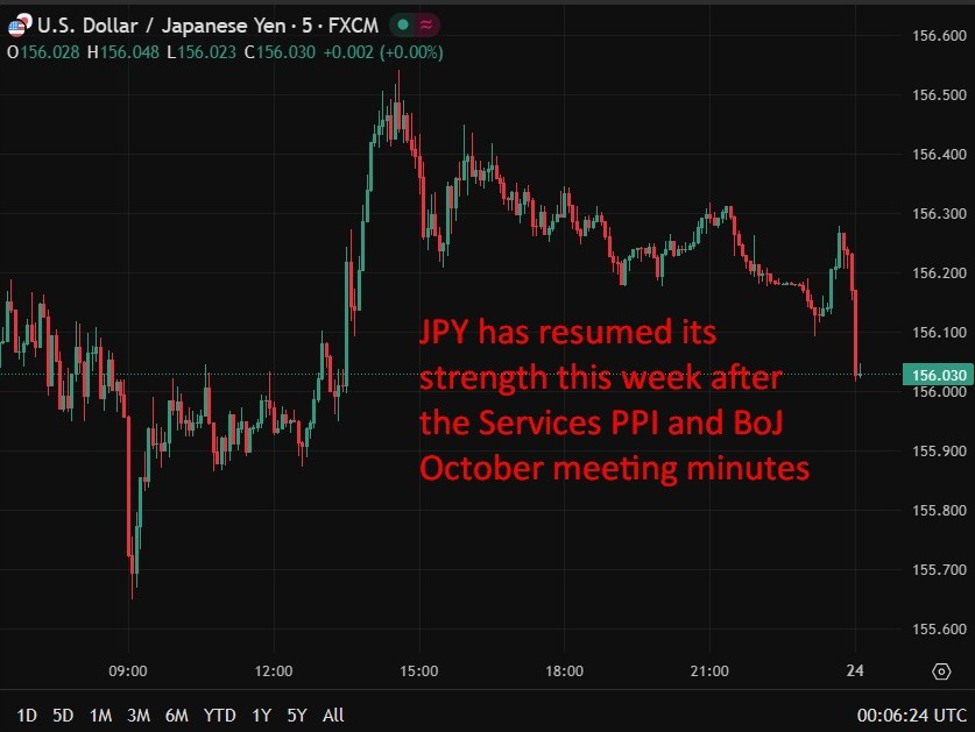
Japan policymakers flag inflation persistence and asset-price risks in October BoJ minutes
I posted earlier on why this doesn’t rally matter too much, the meeting pre-dates December’s much more consequential rate hike and the subsequent swings in the yen:Economic and event calendar in Asia Wednesday, December 24, 2025: BoJ minutes (preview)Anyway, for good order, here’s a summary article. SummaryBOJ October minutes reflect broadly stable global and domestic conditions at the timeU.S. growth seen as solid, supported by AI investment and resilient consumptionChina identified as a growing downside risk amid tariff pressures and property weaknessJapan’s financial conditions remained highly accommodative, with real estate risks notedCore inflation around 3%, driven largely by food prices and wage pass-throughMinutes from the Bank of Japan October policy meeting (full text is here if you are interested) show policymakers broadly comfortable with the prevailing economic and financial backdrop at the time, while remaining alert to risks stemming from global trade policy, inflation dynamics and asset-price developments.Board members judged global financial markets to be in a relatively constructive mood, noting that U.S. equity markets had continued to post record highs. This was attributed to easing uncertainty around the economic impact of tariff policies, alongside rising optimism surrounding artificial intelligence investment and potential productivity gains. At the same time, some members cautioned that equity markets could become vulnerable if AI-related revenue failed to meet elevated expectations.Overseas economic conditions were assessed as generally stable, though uneven. The U.S. economy was seen as maintaining solid growth, supported by resilient consumption and robust AI-driven capital spending, even as some weakness emerged in employment growth. Members noted growing divergence in consumption patterns across income groups, with higher asset prices supporting spending among wealthier households while price pressures weighed on consumption of necessities. While tariff-related cost pressures had so far been absorbed by firms, several members warned that these costs could eventually be passed on to consumers with a lag.Europe was described as relatively weak, partly reflecting a pullback following earlier export front-loading, while China’s economy was seen as decelerating amid higher tariffs, fading policy support and ongoing property-sector adjustment. Some members highlighted China as an increasingly important downside risk for the global outlook.Domestically, members agreed that Japan’s financial conditions remained highly accommodative, with signs of credit expansion, particularly in real estate and merger-and-acquisition activity. Several policymakers flagged rising urban property prices, attributing them partly to deeply negative real interest rates, yen depreciation and overseas capital inflows, as well as supply-side constraints.Japan’s economy was judged to be recovering moderately overall. While U.S. tariffs had weighed on corporate profits, members saw little evidence that these effects had spilled over meaningfully into investment, employment or wage trends. Business investment was viewed as on a moderate upward trajectory, supported by favourable sentiment and resilient corporate earnings. Private consumption was seen as holding up, aided by improving employment and income conditions, though rising prices were prompting greater consumer thrift, particularly for everyday goods.On prices, members agreed that core inflation had been running around 3% year-on-year, driven largely by food prices and ongoing pass-through of wage increases. Inflation expectations were seen as edging higher, though debate persisted over how much of the recent inflation reflected cost-push factors versus demand-driven pressures, and how durable these trends would prove. On policy:SummaryGradual normalisation bias: Policymakers agreed that real interest rates remained significantly low and that, if the economic and inflation outlook were realised, the BOJ would continue raising rates and reducing monetary accommodation over time.Hold for now, assess further: Most members supported keeping the policy rate around 0.5% at the October meeting, arguing more time was needed to confirm the durability of wage growth amid global and trade-policy uncertainty.Growing internal divide: A minority of members favoured an immediate hike toward 0.75%, citing upside inflation risks, yen depreciation and concerns that policy could remain too accommodative for too long.Wages as the key trigger: The board repeatedly stressed that sustained wage-setting behaviour — particularly ahead of the 2026 spring negotiations — would be central to decisions on further rate increases.Emphasis on communication and flexibility: Members highlighted the need for clear communication and a flexible reaction function to avoid market instability while continuing the gradual path toward policy normalisation.The minutes show a policy board increasingly confident that the conditions for further normalisation were falling into place, while still divided over the appropriate timing and pace of rate increases amid elevated global uncertainty.Members broadly agreed that real interest rates remained significantly low and that, if the outlook for economic activity and prices were realised, the Bank would continue to raise the policy interest rate and adjust the degree of monetary accommodation. At the same time, policymakers emphasised the need to proceed without preconceptions, given ongoing uncertainties around global trade policy, foreign economic conditions and financial market developments.For the intermeeting period, most members judged it appropriate to maintain the existing guideline targeting the uncollateralised overnight call rate at around 0.5%. While confidence in the baseline outlook was seen as gradually improving, many argued that more time was needed to confirm whether firms’ wage-setting behaviour would remain robust, particularly against the backdrop of lingering uncertainty over U.S. tariff policy and the direction of economic policy under Japan’s new administration.That said, the minutes reveal a clear debate within the board. A few members favoured raising the policy rate to around 0.75% at the October meeting, citing upside risks to prices, especially from yen depreciation and the possibility that inflation pressures could intensify if policy remained too accommodative for too long. Others acknowledged that conditions for further normalisation were close to being met but stressed the importance of confirming that underlying inflation had become sufficiently entrenched.Looking ahead, members placed particular emphasis on wage dynamics as the key determinant of future policy moves. Several highlighted the importance of monitoring firms’ profit projections, developments ahead of the 2026 spring wage negotiations, and anecdotal evidence on wage-setting behaviour. Policymakers also flagged the need to watch global trade developments, U.S. monetary policy, exchange-rate moves and domestic price trends.Overall, the discussion underscored a shared commitment to gradual normalisation, careful communication and flexibility, with the Bank
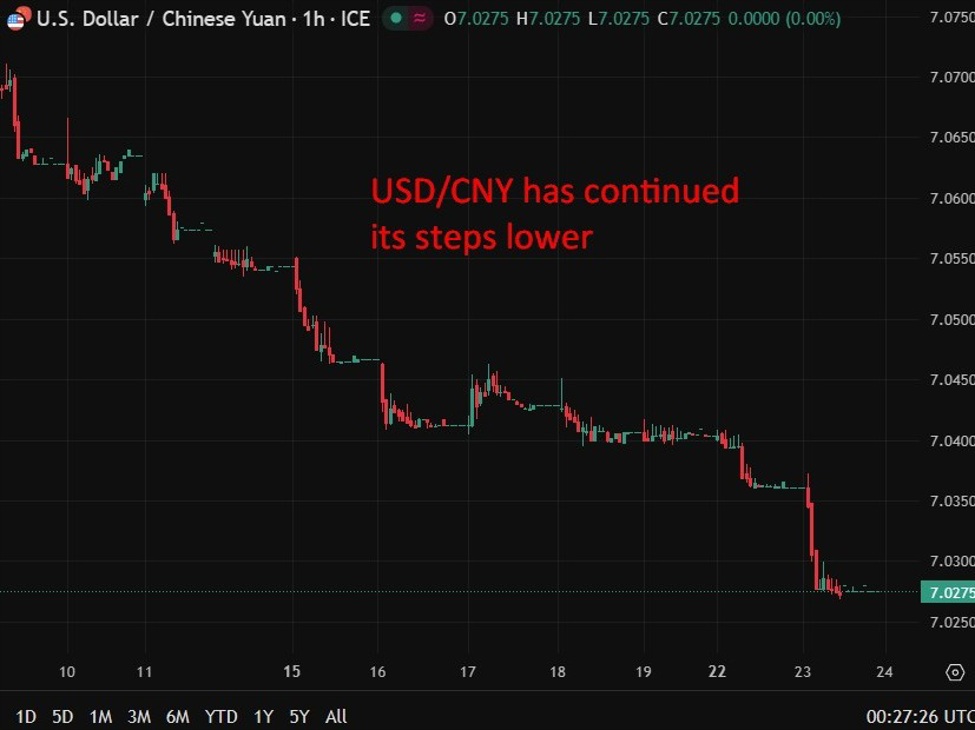
PBOC is expected to set the USD/CNY reference rate at 7.0240 – Reuters estimate
The People’s Bank of China is due to set the daily USD/CNY reference rate at around 0115 GMT (2115 US Eastern time), a fixing that remains one of the most closely watched signals in Asian foreign exchange markets. China operates a managed floating exchange rate system, under which the renminbi (yuan) is allowed to trade within a prescribed band around a central reference rate, or midpoint, set each trading day by the PBOC. The current trading band permits the currency to move plus or minus 2% from the official midpoint during onshore trading hours. Each morning, the PBOC determines the midpoint based on a range of inputs. These include the previous day’s closing price, movements in major currencies, particularly the US dollar, broader international FX conditions, and domestic economic considerations such as capital flows, growth momentum and financial stability objectives. The midpoint is not a purely mechanical calculation, allowing policymakers discretion to guide market expectations. Once the midpoint is announced, onshore USD/CNY is free to trade within the allowable band. If market pressures push the yuan toward either edge of that range, the central bank may step in to smooth volatility. Intervention can take the form of direct buying or selling of yuan, adjustments to liquidity conditions, or guidance through state-owned banks. As a result, the daily fixing is often interpreted as a policy signal rather than just a technical reference point. A stronger-than-expected CNY midpoint is typically read as a sign the PBOC is leaning against depreciation pressure, while a weaker fixing for the CNY can indicate tolerance for a softer currency, often in response to dollar strength or domestic economic headwinds.In periods of heightened global volatility, such as shifts in US rate expectations, trade tensions or capital flow pressures, the fixing takes on added significance. For investors, it provides insight into Beijing’s currency priorities, balancing competitiveness, capital stability and financial market confidence. This article was written by Eamonn Sheridan at investinglive.com. 🔗 Source 💡 DMK Insight The upcoming USD/CNY reference rate fixing is crucial for traders navigating the forex landscape. With the People’s Bank of China setting this rate, expect volatility in the yuan, especially if it deviates from market expectations. Traders should monitor the reference rate closely, as any significant adjustment could impact not just the yuan but also related currencies in the Asia-Pacific region. A stronger yuan could signal confidence in China’s economy, while a weaker rate might indicate underlying economic concerns. Keep an eye on the 6.9 level against the dollar; a breach could trigger further moves in both directions. Given the managed floating system, the PBOC’s decisions will likely influence sentiment across global markets, particularly in commodities and emerging market assets. Watch for reactions from institutional players who might adjust their positions based on the fixing outcome, as this could lead to cascading effects in forex pairs and equities alike. 📮 Takeaway Watch the USD/CNY reference rate closely; a significant deviation from expectations could trigger volatility in the yuan and related markets.