Bitcoin
  Ethereum
  Tether
  XRP
XRP  BNB
BNB  USDC
USDC  Solana
  TRON
TRON  Lido Staked Ether
  Dogecoin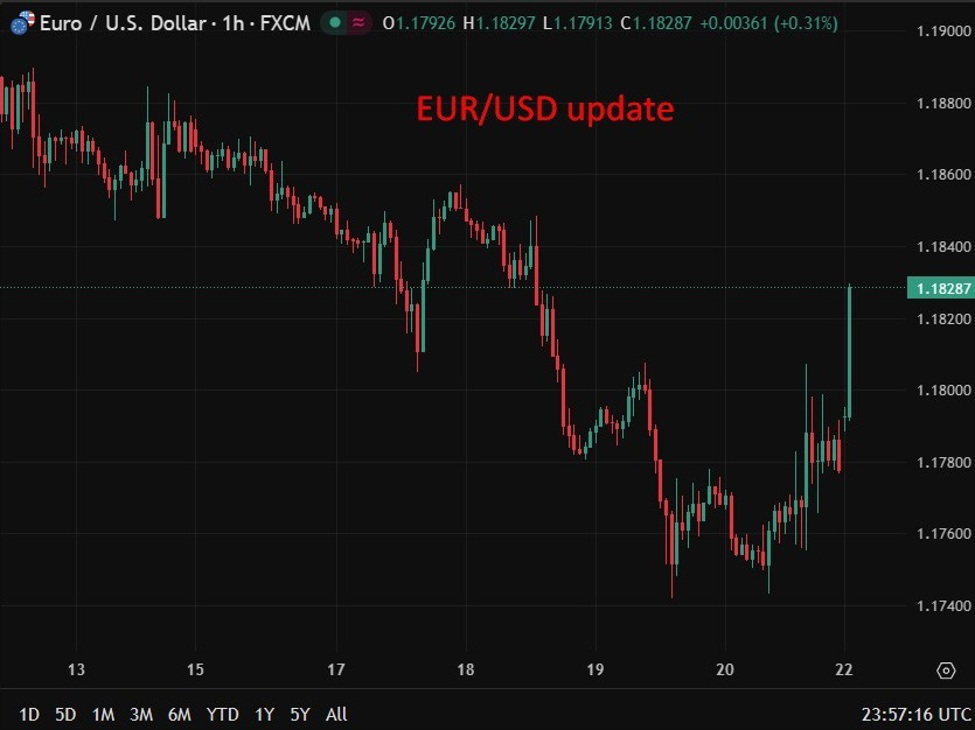
The USD is lower in early Asia trade. Its still VERY early, with thin liquidity, thinner than usual, due to the Japanese marekts being closed today for holiday. China is back, though, returning from their week-long Spring break / Lunar New Year holiday. My bad, nope. Not until tomorrow.USD down.-The Supreme Court ruling striking down much of President Donald Trump’s prior tariff regime marks a significant moment in the evolving battle over executive trade powers. The Court reportedly found that the administration had exceeded its statutory authority in imposing broad-based tariffs under emergency provisions, ruling that the legal justification used to implement sweeping duties did not align with congressional intent. The decision effectively invalidated large portions of last year’s tariff structure, creating immediate uncertainty for businesses that had already adjusted supply chains and pricing models around the levies.The ruling does not eliminate the president’s ability to impose tariffs altogether. Instead, it narrows the scope under which emergency or national-security justifications can be used without explicit congressional backing. Legal analysts note that the Court’s reasoning reinforces constitutional limits on executive authority in trade matters, potentially setting a precedent that constrains future administrations.In response, Trump moved quickly to announce a new 15% tariff framework, signalling that his trade agenda remains firmly intact despite the judicial setback. While details of the revised structure are still emerging, the administration is expected to rely on alternative statutory pathways that may be more narrowly tailored or procedurally robust. The 15% rate appears designed to maintain pressure on trading partners while attempting to withstand legal scrutiny.For markets, the episode underscores the volatility inherent in trade policy. Companies face renewed uncertainty over input costs, cross-border investment decisions, and supply-chain stability. Consumers may ultimately bear part of the burden through higher import prices, while policymakers must weigh the inflationary implications. The Supreme Court’s intervention clarifies legal boundaries, but the rapid reimposition of tariffs suggests that trade tensions, and their economic consequences, remain far from resolved.Tariff Karen.
This article was written by Eamonn Sheridan at investinglive.com.
💡 DMK Insight
The USD’s dip in early Asia trade signals potential volatility ahead, especially with Japan’s markets closed and liquidity thin. Traders should keep an eye on how this affects major pairs like USD/JPY and USD/CNY. With Japan out, any movement in the USD could lead to exaggerated price swings. The absence of Japanese trading could create an opportunity for day traders to capitalize on sudden shifts. Watch for any news from China as they return, which could further influence market sentiment. If the USD continues to weaken, it might test key support levels that could trigger stop-loss orders, leading to cascading effects across correlated assets like commodities and equities. So, while the USD is down now, the real story is how traders react once Japan returns to the market and liquidity normalizes.
📮 Takeaway
Monitor USD/JPY closely; if it breaks below key support levels, expect increased volatility and potential trading opportunities.