Bitcoin
  Ethereum
  Tether
  BNB
BNB  XRP
XRP  USDC
USDC  Solana
  TRON
TRON  Lido Staked Ether
  Figure Heloc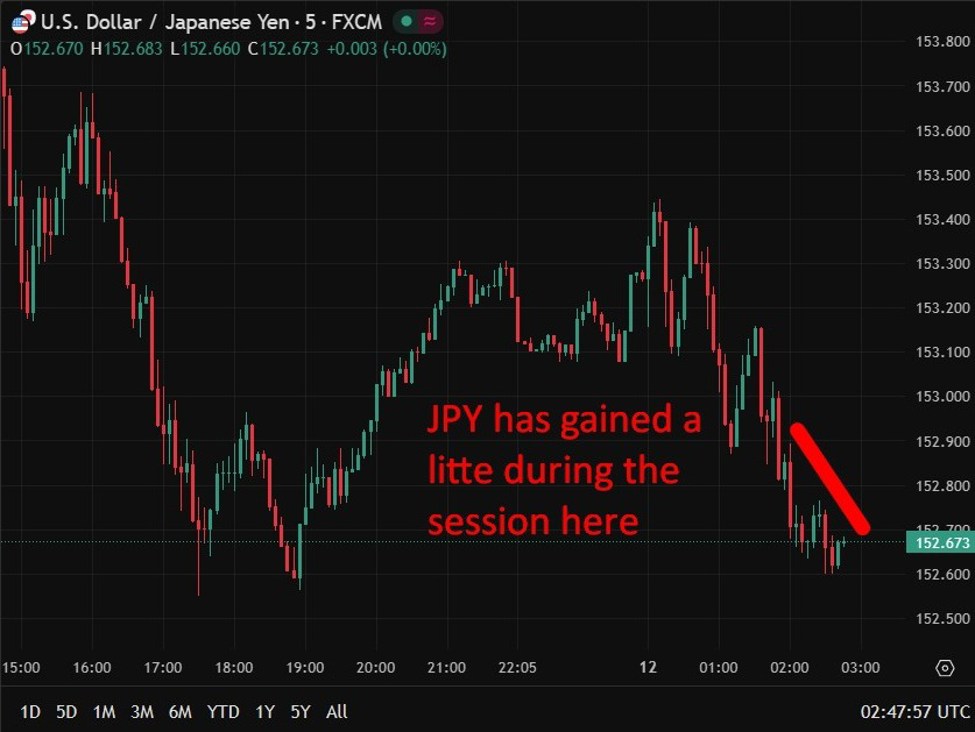
Summary:Japan says it has not lowered its guard against FX volatility.Atsushi Mimura reiterates high-urgency monitoring stance.Refuses to comment on speculation of rate checks.Yen rebounds sharply from near 160 per dollar.Close contact with US authorities emphasised.Japan’s top currency official reiterated that authorities remain on high alert over foreign exchange volatility, pushing back against speculation that Tokyo may have already stepped up activity behind the scenes as the yen staged a sharp rebound.Atsushi Mimura, Japan’s Vice Finance Minister for International Affairs, widely known in markets as the country’s “top currency diplomat”, spoke earlier. Recapping now. He said policymakers have “not lowered our guard at all” and will continue to monitor markets with a “high sense of urgency.”Mimura declined to comment on market chatter that officials may have conducted rate checks following the latest U.S. employment data, a step often viewed as a precursor to direct currency intervention. “Our policy remains unchanged,” he told reporters, adding that authorities would maintain close communication with markets and remain in contact with U.S. counterparts.The yen has gained nearly 3% since Prime Minister Sanae Takaichi’s election victory, as investors speculate her mandate could support fiscal discipline and policy clarity.For Japanese policymakers, currency moves carry inflation implications. A weaker yen raises import costs and feeds into domestic price pressures, complicating monetary policy calibration.While Mimura’s tone was measured and broadly consistent with past verbal interventions, the explicit emphasis on continued vigilance, and coordination with Washington, keeps intervention risk in the background should volatility re-intensify.Atsushi Mimura is Japan’s vice finance minister for international affairs, the country’s top currency diplomat, and the official with day-to-day responsibility for overseeing foreign-exchange policy. In practice, Mimura is the key decision-maker on whether Japan intervenes in the FX market, acting under the authority of the finance minister and in coordination with the Bank of Japan, which executes intervention operations on his instruction. He monitors market conditions closely, assesses whether yen moves are excessive, disorderly or driven by speculation, and delivers the government’s verbal warnings that often precede action. When intervention is authorised, Mimura formally directs the BOJ to enter the market, typically through yen-buying operations aimed at stabilising sharp or one-sided moves rather than targeting specific exchange-rate levels.
This article was written by Eamonn Sheridan at investinglive.com.
💡 DMK Insight
Japan’s vigilance on FX volatility is a crucial signal for traders right now. With the yen rebounding sharply from near 160 per dollar, this indicates a potential shift in market sentiment. Traders should note that Japan’s top currency official, Atsushi Mimura, has emphasized a high-urgency monitoring stance, which suggests that any sudden moves in the yen could prompt intervention. This is particularly relevant given the close contact with US authorities, hinting at coordinated efforts to stabilize the currency. For those trading USD/JPY, keep an eye on the 160 level; a sustained break below could trigger further yen strength. Conversely, if volatility spikes, it could lead to a quick reversal, impacting related assets like Japanese equities. Here’s the thing: while mainstream coverage might focus on the yen’s immediate rebound, the real story is the potential for intervention if volatility escalates. Traders should watch for any comments from Japanese officials and monitor the USD/JPY pair closely for signs of intervention or policy shifts.
📮 Takeaway
Watch the 160 level in USD/JPY; a sustained break below could signal further yen strength and potential intervention risks.