Bitcoin
  Ethereum
  Tether
  BNB
BNB  XRP
XRP  USDC
USDC  Solana
  TRON
TRON  Lido Staked Ether
  Figure Heloc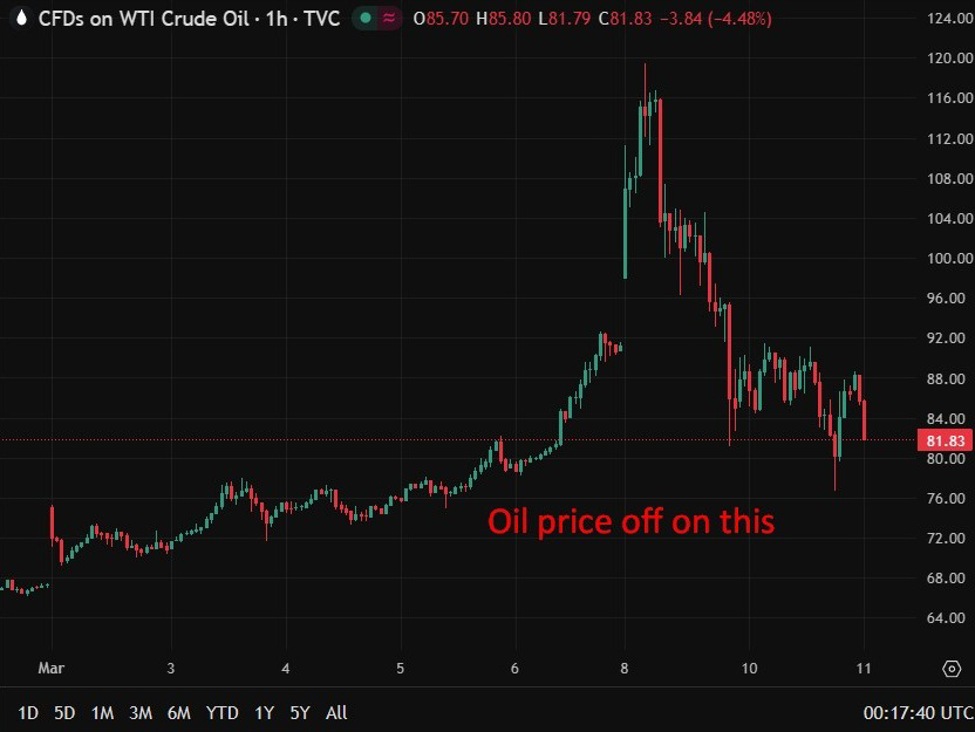
The IEA is weighing a record oil reserve release to calm markets after the Strait of Hormuz disruption sent crude prices sharply higher.Wall Street Journal (gated) reporting.ps. G7 discussion on oil scheduled for 1400 GMT on Wednesday, March 11, 2026:G7 to discuss energy coordination as Mid East tensions lift oil prices: 1400 GMT WednesdaySummary:The International Energy Agency (IEA) is considering its largest ever oil reserve release to stabilise markets.The proposed drawdown would exceed the 182 million barrels released in 2022 following Russia’s invasion of Ukraine.The move comes after near-total disruption of shipping through the Strait of Hormuz, a key route for global crude supplies.Oil prices surged as much as 40% since late February, briefly topping $100 per barrel before easing.IEA member states are expected to decide Wednesday whether to approve the emergency release.The International Energy Agency is considering the largest coordinated release of emergency oil reserves in its history as governments scramble to stabilise energy markets following severe disruptions to shipping through the Strait of Hormuz.Energy officials from the IEA’s 32 member countries discussed the proposal during an emergency meeting on Tuesday, according to officials familiar with the matter. The plan would release more crude than the 182 million barrels collectively put onto the market in 2022 when Russia’s invasion of Ukraine triggered a global energy crisis.Member states are expected to decide on the proposal on Wednesday. Under IEA procedures, the measure would proceed if no country objects, although a single dissenting member could delay implementation.The proposed release is aimed at offsetting supply disruptions stemming from the escalating conflict involving Iran, which has effectively brought tanker traffic through the Strait of Hormuz close to a halt. The narrow waterway linking the Persian Gulf to global shipping routes normally carries roughly one-fifth of the world’s oil supply, making it one of the most critical energy choke points in the global economy.According to officials, Iranian attacks on oil tankers have sharply curtailed shipments through the strait, triggering fears of a sustained supply shock in global crude markets.Since late February, when the United States and Israel first launched strikes against Iran, oil prices have surged by as much as 40%, briefly climbing above $100 per barrel before easing back this week. Prices settled below $84, though refined fuel markets such as diesel remain under significant pressure.The IEA was originally created in 1974 following the Arab oil embargo, precisely to coordinate emergency responses to supply disruptions. Member countries are required to hold strategic reserves equivalent to at least 90 days of net imports, allowing governments to release crude during major market shocks.IEA Executive Director Fatih Birol said member countries collectively hold roughly 1.2 billion barrels in government-controlled reserves, along with around 600 million barrels in mandatory commercial inventories.Historical experience with coordinated releases has produced mixed results. The twin releases following Russia’s invasion of Ukraine initially pushed prices higher as traders interpreted the move as confirmation of the severity of the supply shock, though analysts say the additional supply eventually helped stabilise markets.One of the most effective interventions occurred in 1991 during the Gulf War, when a coordinated release from strategic reserves coincided with the launch of Operation Desert Storm. Oil prices fell sharply as markets anticipated the additional supply entering the system.The current proposal reflects growing concern among governments that prolonged disruption to Gulf oil exports could trigger a renewed surge in inflation and place further strain on the global economy.
This article was written by Eamonn Sheridan at investinglive.com.
💡 DMK Insight
Oil prices are on the rise due to disruptions in the Strait of Hormuz, and here’s why that matters: The International Energy Agency (IEA) is considering a record release from oil reserves to stabilize the market. This move comes as tensions in the Middle East escalate, which historically leads to volatility in crude prices. Traders should keep an eye on the G7 meeting scheduled for March 11, 2026, where energy coordination will be a key topic. If the G7 decides to take action, it could significantly impact oil supply dynamics and influence price movements across related markets, including energy stocks and ETFs. But don’t overlook the potential for a counter-move. If the IEA’s release fails to calm the market, we could see a further spike in prices, especially if geopolitical tensions persist. Watch for key resistance levels in crude oil futures; a break above recent highs could trigger more aggressive buying. Keep an eye on the daily charts for any signs of reversal or continuation patterns as the situation develops.
📮 Takeaway
Monitor the G7 meeting on March 11 for potential oil supply decisions that could impact crude prices significantly.