Bitcoin
  Ethereum
  Tether
  BNB
BNB  XRP
XRP  USDC
USDC  Solana
  TRON
TRON  Lido Staked Ether
  Figure Heloc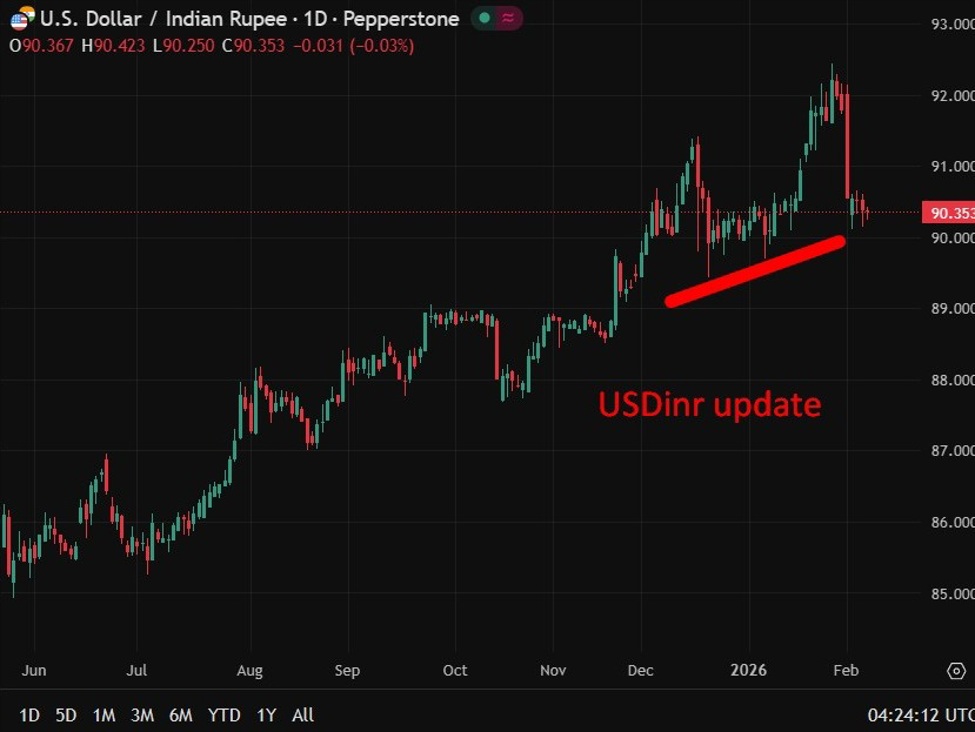
Summary:The RBI is expected to hold rates steady at its 10:00 a.m. IST decision, with inflation pressures contained and tariff risks easing.Recent budget measures to support manufacturing and exports, alongside a trade deal with the US, have improved the policy backdrop.Attention is shifting from rates to liquidity conditions, with banks pushing for looser LCR rules.State-owned banks face a credit–deposit mismatch, as loan growth outpaces deposits under pressure to lend.Analysts warn easing LCR requirements could flatten or pressure the yield curve, leaving the RBI in a policy bind.–The Reserve Bank of India is set to announce its policy decision at 10:00 a.m. IST, with expectations firmly centred on the central bank leaving interest rates unchanged. The outlook is supported by relatively benign inflation conditions and easing concerns around potential US tariffs, following recent budget measures aimed at boosting manufacturing and exports, as well as a trade deal with Washington.While a pause in rates is widely anticipated, pressure is building elsewhere in the system. Banks are increasingly lobbying for an easing of liquidity coverage ratio (LCR) requirements, according to analysts. Suresh Ganapathy, managing director and head of financial services research at Macquarie Capital, said state-owned banks face ongoing pressure to deliver stronger credit growth even as deposit growth lags, creating structural strain.Relaxing LCR rules could help ease that imbalance, but Ganapathy warned it would likely put pressure on the yield curve. As a result, the RBI finds itself in a difficult position, balancing financial stability concerns against the need to support bank lending and economic growth.Stay tuned for the policy announcement due on just a few minutes time.The rupee strengthened in the previous session, taking its weekly advance, sparked by the U.S.-India trade deal
This article was written by Eamonn Sheridan at investinglive.com.
💡 DMK Insight
The RBI’s decision to hold rates steady is a pivotal moment for traders, especially with inflation pressures easing. With recent budget measures aimed at bolstering manufacturing and exports, alongside a trade deal with the US, the economic landscape is shifting. This could lead to improved liquidity conditions, which might influence currency pairs and equities tied to these sectors. Traders should keep an eye on how this decision impacts the Indian Rupee against major currencies, particularly if liquidity improves. However, there’s a flip side: if the RBI signals a more hawkish stance in future meetings, it could lead to volatility in the forex market. Watch for any comments on liquidity management post-decision, as this could provide clues on the central bank’s future direction. Key levels to monitor include the USD/INR pair, especially if it approaches recent support or resistance zones.
📮 Takeaway
Watch the USD/INR pair closely for volatility as the RBI’s liquidity management signals unfold in the coming days.