Bitcoin
  Ethereum
  Tether
  XRP
XRP  BNB
BNB  USDC
USDC  Solana
  TRON
TRON  Lido Staked Ether
  Figure Heloc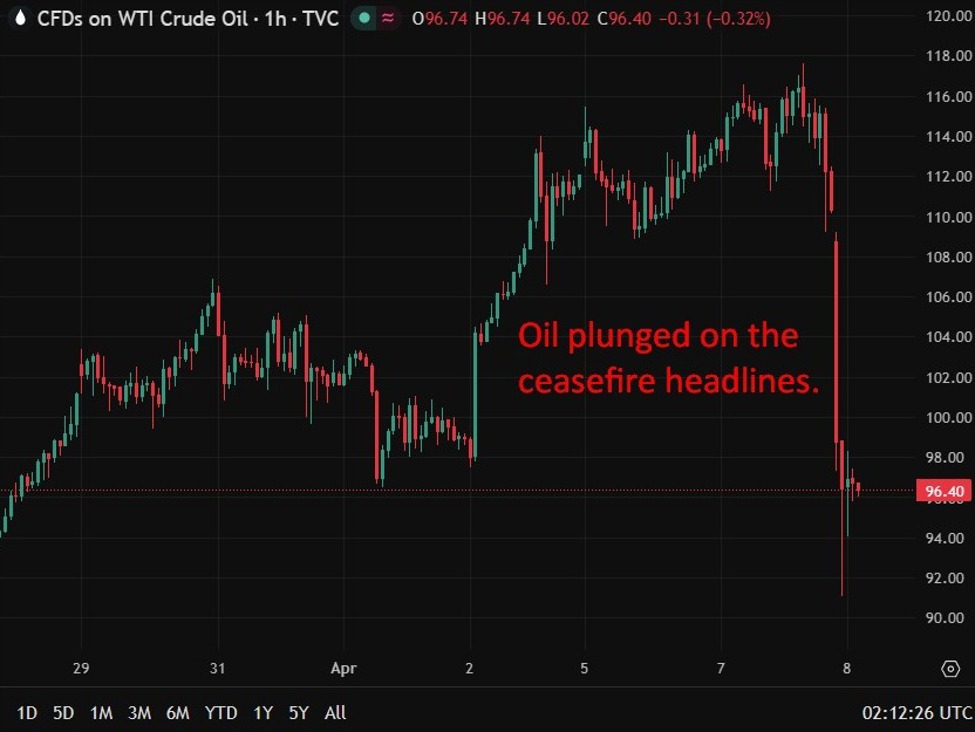
This via Twitter:”During the two-week ceasefire, only about 10 to 15 ships will be permitted to pass through the Strait of Hormuz with Iran’s approval, in coordination with the IRGC Navy and after payment of tolls, and the United States is committed to releasing all of Iran’s frozen assets. The Strait of Hormuz will in no way, even after a final agreement, be “open” as it was before. During this period, negotiations will be held based on Iran’s 10-point plan, the details of which are referenced in the text of the Supreme National Security Council’s statement. In the event of no agreement, the war will resume.”—These new details, if accurate, surrounding the proposed ceasefire between the United States and Iran suggest that any reopening of the Strait of Hormuz may be far more restrictive than initially understood, raising concerns that global energy flows could remain structurally constrained even during a pause in hostilities.According to emerging information tied to Iran’s negotiating position, vessel traffic through the Strait would be tightly controlled during the two-week ceasefire period. Only a limited number of ships, potentially as few as 10 to 15, would be permitted to transit daily, subject to approval from Iranian authorities and coordination with the Islamic Revolutionary Guard Corps (IRGC) Navy. Ships may also be required to pay transit fees, marking a significant shift from the Strait’s traditional status as an open international waterway.Critically, the proposal suggests that even under a final agreement, the Strait may not return to its previous state of unrestricted navigation. This introduces the possibility of a longer-term structural change to one of the world’s most important energy chokepoints, through which roughly a fifth of global oil supply typically flows.The restrictions appear to form part of Iran’s broader 10-point proposal, which is currently under negotiation with the United States and is expected to be discussed in upcoming talks in Islamabad. The framework reportedly includes provisions not only on shipping and security coordination, but also on financial elements such as the release of Iran’s frozen assets.While the ceasefire has been framed as a de-escalation, these conditions highlight that the agreement is highly conditional and operationally complex. The limited flow of vessels raises immediate questions about supply bottlenecks, logistical delays, and the potential for continued upward pressure on energy prices—even in the absence of active conflict.Moreover, the proposal explicitly states that hostilities would resume if negotiations fail to produce a final agreement within the ceasefire window. This creates a binary outcome for markets: either a negotiated framework that reshapes regional energy dynamics, or a rapid return to military escalation.From a broader perspective, the development underscores that the conflict’s economic impact may persist even if fighting pauses. Rather than a clean resolution, the current trajectory points toward a more controlled and politicised energy transit regime, with Iran seeking to exert greater influence over flows through the Strait.For global markets, this represents a shift from a pure “war risk premium” toward a more entrenched structural supply risk, with implications for oil pricing, inflation expectations, and geopolitical stability.
This article was written by Eamonn Sheridan at investinglive.com.
💡 DMK Insight
The limited passage of only 10 to 15 ships through the Strait of Hormuz under Iran’s approval signals potential volatility in oil markets. This development could lead to supply constraints, especially if geopolitical tensions escalate or if the U.S. follows through on releasing Iran’s frozen assets, which might empower Iran’s economic position. Traders should keep an eye on oil prices, as any disruption in this critical shipping lane could spike costs. Additionally, watch for reactions in related markets like currencies, particularly the Iranian rial and oil-linked currencies. The situation is fluid, and the next few weeks could see significant price movements, especially if the ceasefire is extended or tensions flare up again. Key levels to monitor include recent highs in crude oil prices, as a breach could trigger further buying pressure. Overall, this is a situation worth watching closely, as the implications could ripple through various asset classes, impacting everything from energy stocks to broader market sentiment.
📮 Takeaway
Monitor oil prices closely; any disruption in the Strait of Hormuz could trigger significant volatility, especially if tensions escalate.

![Stock markets soar as predicted [Video]](https://dmknewsbot.io/wp-content/uploads/2026/04/Equity-Index_SP500-1_Medium.jpg)