Bitcoin
  Ethereum
  Tether
  XRP
XRP  BNB
BNB  USDC
USDC  Solana
  TRON
TRON  Lido Staked Ether
  Figure Heloc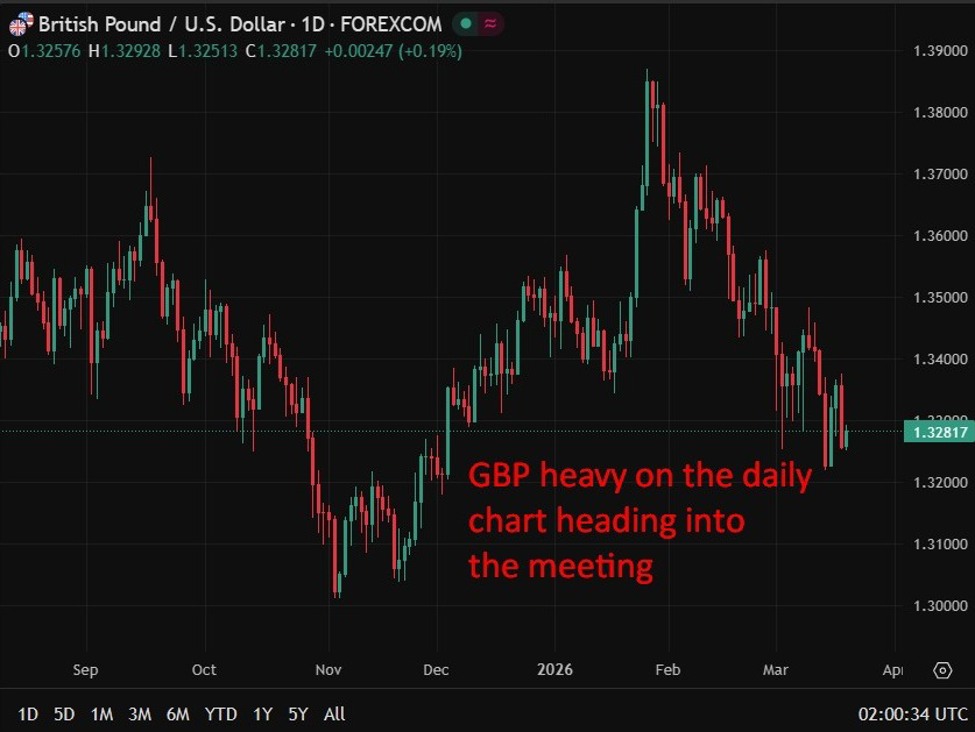
Summary:Bank of England expected to hold Bank Rate at 3.75%Middle East conflict-driven energy shock complicates outlookInflation risks rising again, potentially above 3%Markets shift from rate cuts to pricing possible hikesUK economy remains fragile with elevated unemploymentBoE likely to deliver cautious, non-committal guidanceFocus turns to timing of next move amid uncertaintyThe Bank of England is widely expected to keep interest rates unchanged at 3.75%, as policymakers grapple with a renewed inflation threat stemming from the escalation in the Middle East and its impact on global energy prices.Prior to the conflict, financial markets had been leaning toward further rate cuts in 2026, with expectations building that easing could resume as inflation moved sustainably toward the BoE’s 2% target. However, the sharp rise in oil and gas prices has altered that outlook, raising the risk that inflation could rebound toward or above 3% in the near term.While this remains well below the double-digit inflation seen in 2022 following Russia’s invasion of Ukraine, the shift is nonetheless significant for policymakers already wary of persistent domestic price pressures. The BoE has moved more cautiously than peers such as the European Central Bank (who also meet today, as do the SNB!)in easing policy, reflecting concerns about stronger underlying inflation dynamics in the UK economy.Market pricing has adjusted rapidly in response. Investors have scaled back expectations for rate cuts this year, with some now assigning a meaningful probability to the next move being a hike by late 2026. Even so, most economists expect the Monetary Policy Committee to pause rather than reverse course outright, given the fragile state of economic activity.The UK labour market presents a mixed picture. Unemployment has risen to around 5.2%, its highest level in several years, pointing to softening demand. However, wage growth remains relatively firm at 4.2%, suggesting that domestic inflationary pressures have not fully subsided.Against this backdrop, the BoE is likely to adopt a deliberately cautious tone. With no updated forecasts or press conference accompanying the decision, policymakers are expected to avoid strong forward guidance, instead emphasising data dependence and flexibility as they assess the evolving impact of the energy shock.A Reuters poll suggests a 7–2 vote in favour of holding rates steady, reinforcing expectations of a wait-and-see approach. Attention will shift to the voting split and accompanying statement for clues on how the balance of risks within the committee is evolving.
This article was written by Eamonn Sheridan at investinglive.com.
💡 DMK Insight
The Bank of England’s decision to hold the Bank Rate at 3.75% signals a cautious approach amid rising inflation risks and geopolitical tensions. With inflation potentially creeping above 3%, traders need to reassess their positions, especially in the GBP/USD pair. The shift from anticipated rate cuts to possible hikes reflects a market grappling with uncertainty. Elevated unemployment adds another layer of complexity, suggesting that while the BoE is wary of inflation, it also recognizes the fragility of the UK economy. This could lead to volatility in the forex market, particularly for GBP, as traders react to any hints of future rate changes. Keep an eye on the upcoming economic data releases and central bank communications, as they will be crucial in shaping market sentiment. Here’s the thing: if inflation continues to rise, the BoE might have no choice but to pivot towards a more hawkish stance sooner than expected. Watch for key resistance levels in GBP/USD around recent highs, as a break could signal a shift in sentiment. The next few weeks will be pivotal for positioning ahead of any potential rate adjustments.
📮 Takeaway
Monitor GBP/USD closely; a break above recent highs could indicate a shift towards a more hawkish BoE stance amid rising inflation risks.