Bitcoin
  Ethereum
  Tether
  BNB
BNB  XRP
XRP  USDC
USDC  Solana
  TRON
TRON  Lido Staked Ether
  Figure Heloc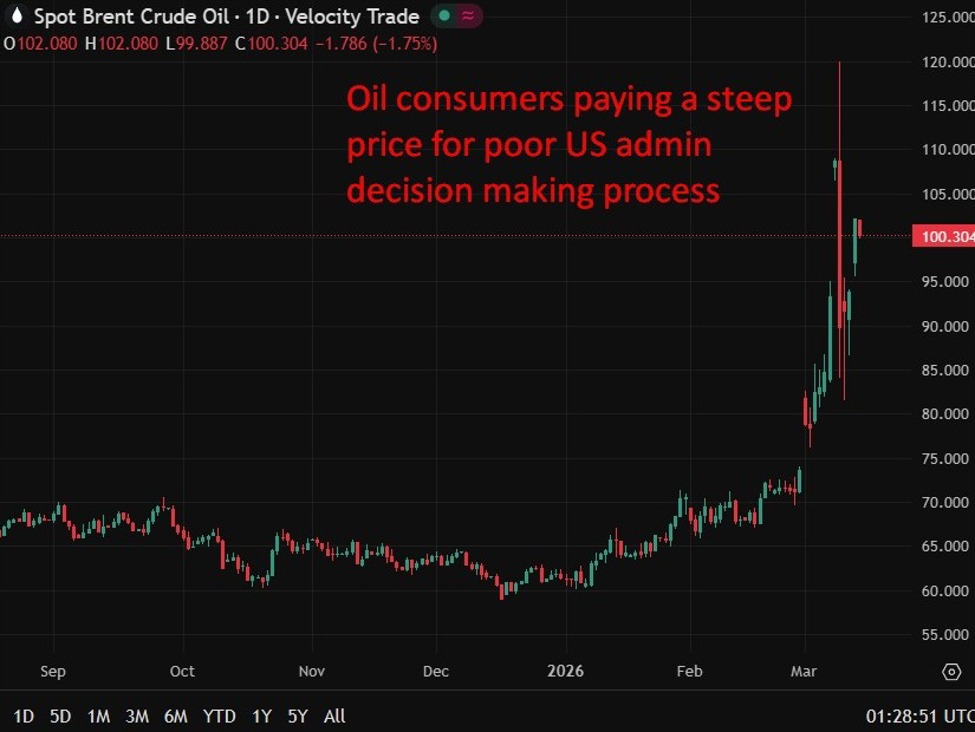
Officials say U.S. planning underestimated Iran’s willingness to disrupt the Strait of Hormuz, exposing weaknesses in the administration’s decision-making process. CNN with the info. Summary:Officials say the Trump administration underestimated the risk of Iran disrupting the Strait of Hormuz.Interagency economic and energy analysis was reportedly not central to planning discussions.Decision-making relied heavily on a smaller circle of yes-men advisers around the president.Disruptions to tanker traffic have triggered volatility in global oil markets.Naval escorts for tankers are being considered but are currently deemed too dangerous.The Trump administration significantly underestimated the potential consequences of military action against Iran, particularly the risk that Tehran would respond by disrupting traffic through the Strait of Hormuz, according to officials familiar with the planning process.Sources say officials involved in the operation did not fully account for the possibility that Iran might move to effectively shut down or severely disrupt the strategic waterway, despite the strait’s longstanding role as a critical chokepoint for global energy supplies.The Strait of Hormuz carries roughly one-fifth of global oil consumption, making it one of the most strategically important maritime routes in the world. Any disruption to tanker traffic can quickly ripple through global energy markets.Multiple sources said the administration’s planning process did not fully incorporate the kind of detailed economic and energy impact analysis that typically accompanies major national security decisions. While representatives from the Departments of Energy and Treasury attended some of the discussions leading up to the military operation, officials said their agencies’ modelling and forecasts were not central to the decision-making process.In past administrations, interagency planning for a potential conflict involving Iran would normally include extensive scenario analysis examining the economic, energy and shipping consequences of potential Iranian retaliation. Those processes often involve coordination across defence, intelligence, economic and energy agencies.However, several officials said the Trump administration’s decision-making relied heavily on a smaller circle of senior sycophantic advisers around the president, limiting broader interagency debate about the possible fallout if Iran were to target or disrupt oil shipping through Hormuz.Treasury Secretary Scott Bessent and Energy Secretary Chris Wright have played key roles in managing the economic and energy implications of the conflict since the operation began, sources said. However, critics argue that their input may have come too late to shape the initial strategic planning.The situation in the Strait of Hormuz has since evolved into what some officials describe as a worst-case scenario. Attacks on tankers and broader shipping disruptions have raised the risk of a sustained energy shock, sending volatility through global oil markets.Efforts are now underway to stabilise the situation, including discussions around organising naval escorts for oil tankers moving through the strait. But officials say those operations are currently considered too dangerous to implement immediately.Meanwhile, President Trump has publicly downplayed the turmoil in energy markets even as the administration works behind the scenes to mitigate the economic fallout.The developments have left some former officials and industry figures questioning the planning process that preceded the military operation. One former U.S. official who served in both Republican and Democratic administrations said preparing for a disruption in the Strait of Hormuz has long been a central principle of U.S. national security strategy.“Planning around preventing this exact scenario, impossible as it has long seemed, has been a bedrock principle of U.S. national security policy for decades,” the former official said.The current disruption has therefore surprised many observers who expected such risks to have been more thoroughly considered in the run-up to the conflict.
This article was written by Eamonn Sheridan at investinglive.com.
💡 DMK Insight
Look, the U.S. underestimating Iran’s potential to disrupt the Strait of Hormuz is a big deal for traders right now. This chokepoint is crucial for global oil supply, and any hint of instability can send crude prices soaring. With tensions rising, traders should keep a close eye on oil futures and related assets like energy stocks. If Iran does decide to flex its muscles, we could see a spike in volatility, especially in the Brent and WTI crude markets. Historically, disruptions in this region have led to price surges, so it’s worth monitoring key resistance levels in crude oil—like $90 for Brent and $85 for WTI. A breach above these could trigger a wave of buying. On the flip side, if the situation de-escalates, we might see a pullback, so having stop-loss orders in place is crucial. Keep an eye on geopolitical news and any military movements in the region. The next few weeks could be pivotal, especially with OPEC’s production decisions looming. Traders should be prepared for rapid shifts in sentiment and price action.
📮 Takeaway
Watch for crude oil prices around $90 for Brent and $85 for WTI; geopolitical developments in the Strait of Hormuz could trigger significant volatility.