Bitcoin
  Ethereum
  Tether
  BNB
BNB  XRP
XRP  USDC
USDC  Solana
  TRON
TRON  Lido Staked Ether
  Figure Heloc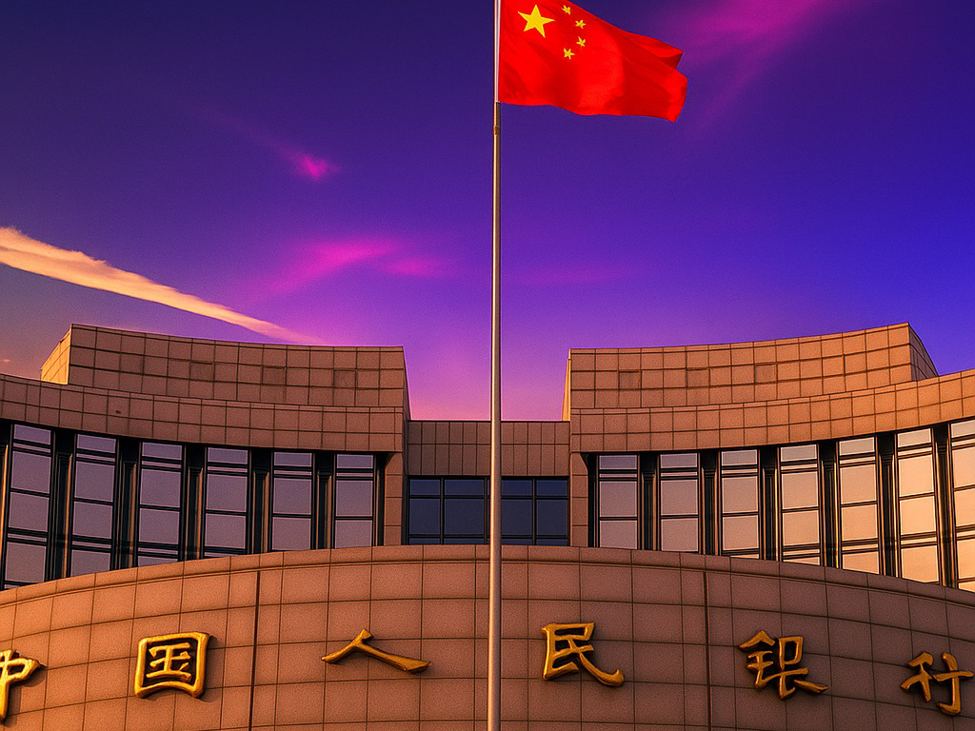
China’s central bank said it will inject 800 billion yuan via a three-month outright reverse repo, using a tool introduced in late 2024 to keep banking system liquidity ample without changing benchmark interest rates.Summary:PBOC announced a large three-month liquidity injectionOperation uses outright reverse repos introduced in late 2024Move aims to keep banking system liquidity ampleTool complements existing short-term liquidity operationsPolicy stance remains supportive but controlledChina’s central bank has stepped in to reinforce liquidity conditions, announcing a sizeable medium-term cash injection aimed at keeping funding conditions stable as the economy moves deeper into 2026. The People’s Bank of China said it will conduct an 800 billion yuan outright reverse repo operation on February 4, signalling a continued preference for proactive but measured liquidity management.The operation will be conducted via interest-rate bidding with a fixed total amount, with successful bids allocated across multiple price levels. The transaction carries a tenor of three months, or 91 days, providing funding support beyond the very short-term horizon typically associated with daily open market operations.The use of outright reverse repos reflects the PBOC’s evolving policy toolkit. Introduced in October 2024, outright reverse repos are designed as a monthly liquidity management instrument with maturities of up to one year. Unlike traditional short-term reverse repos, these operations allow the central bank to inject liquidity in a more durable and predictable way, helping smooth funding conditions across quarters rather than days.—
In an outright reverse repo, the central bank buys securities from banks with an agreement to sell them back at a later date. For banks, this effectively provides cash funding for the duration of the operation. Because the maturity is longer than standard repos, it helps anchor expectations around liquidity availability and reduces the need for frequent short-term interventions. By using interest-rate bidding, the PBOC also retains flexibility to gauge market demand and signal its policy stance without formally changing benchmark rates.The operation adds to a growing set of policy tools, which already includes temporary repos, temporary reverse repos, and outright purchases and sales of government bonds. Together, these instruments give policymakers greater precision in calibrating liquidity without resorting to broad-based easing measures such as reserve requirement cuts.Overall, the move underscores the central bank’s intention to maintain ample liquidity while preserving policy flexibility. It suggests support for growth and financial stability remains in place, even as authorities continue to avoid sending an overt signal of aggressive monetary easing.
This article was written by Eamonn Sheridan at investinglive.com.
💡 DMK Insight
China’s central bank just dropped 800 billion yuan into the market, and here’s why that matters: This liquidity injection via outright reverse repos is a clear signal that the People’s Bank of China (PBOC) is committed to maintaining ample liquidity in the banking system. For traders, this could mean a short-term boost in risk appetite, especially in equities and commodities, as banks have more cash to lend. Keep an eye on how this affects the yuan and related forex pairs—if liquidity flows increase, we might see a weaker dollar against the yuan in the coming weeks. But there’s a flip side: while this move aims to stabilize the banking sector, it could also indicate underlying economic concerns that the PBOC is trying to address. If traders perceive this as a sign of economic weakness, it might lead to volatility in Chinese stocks and commodities. Watch for key technical levels in the Shanghai Composite Index and the yuan’s performance against the dollar. If the index breaks below recent support levels, it could signal deeper issues ahead. Overall, monitor how this liquidity injection plays out over the next few weeks, especially in relation to upcoming economic data releases from China.
📮 Takeaway
Watch for the yuan’s reaction to the 800 billion yuan injection; a weaker yuan could impact forex pairs and commodities in the coming weeks.