Bitcoin
  Ethereum
  Tether
  XRP
XRP  BNB
BNB  USDC
USDC  Solana
  TRON
TRON  Lido Staked Ether
  Figure Heloc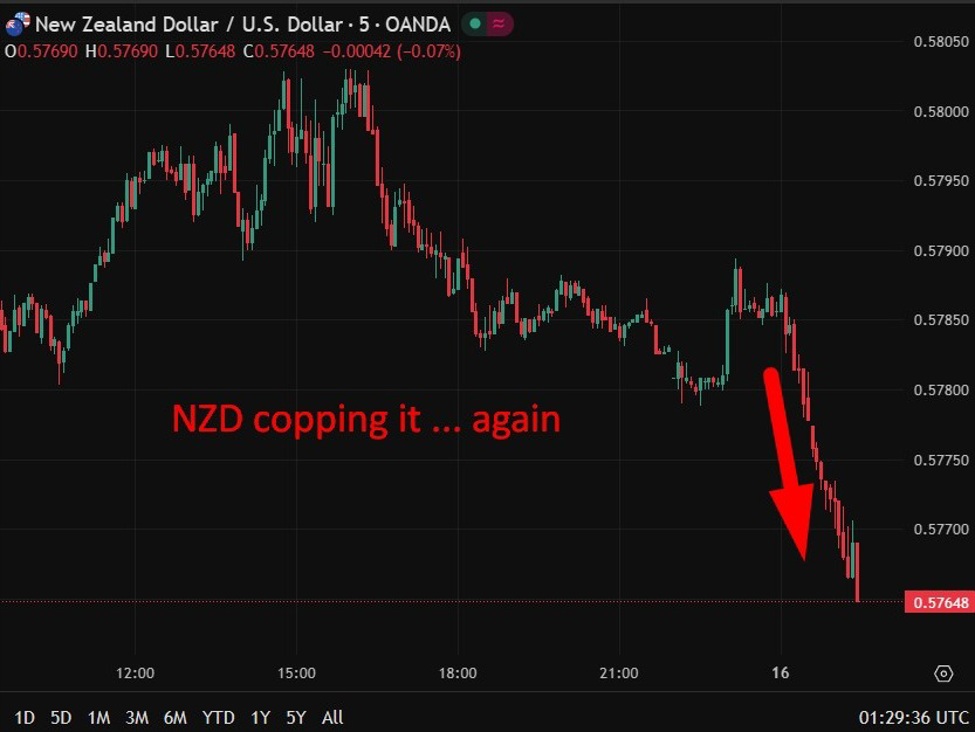
New Zealand’s government has signalled a prolonged period of fiscal strain, with updated forecasts showing no return to a budget surplus over the next five years, as Finance Minister Nicola Willis doubled down on spending restraint while acknowledging the economy’s fragile recovery.Speaking alongside the release of the half-year economic and fiscal update, Willis struck a cautiously optimistic tone on growth while reinforcing the government’s commitment to tight fiscal discipline. She argued that recent data point to an economy beginning to stabilise after a prolonged downturn, even as the broader outlook remains clouded by weak domestic demand and external uncertainty. The updated forecasts follow earlier guidance on government funding plans (see earlier bond issuance update), reinforcing the picture of near-term restraint alongside elevated medium-term borrowing needs.The government now expects the economy to grow modestly in the third quarter, following contractions in three of the past five quarters. Treasury forecasts suggest momentum should gradually improve over the next 18 months, though the near-term recovery remains uneven and vulnerable to global risks, including shifting U.S. trade policy and softer international growth.Despite signs of stabilisation, the fiscal outlook has deteriorated. The government now expects a wider deficit in the current financial year than projected at the May Budget, and does not anticipate returning to surplus within the five-year forecast horizon once the costs of the national accident insurance scheme are included. While the deficit narrows significantly toward the end of the forecast period, the outlook underscores the challenge of restoring balance while supporting growth.Willis emphasised that restraint will remain central to fiscal strategy. Any new spending at the May Budget will be tightly targeted, with health, education, defence and law and order identified as priority areas. The government’s approach reflects a view that credibility and discipline are essential to rebuilding confidence, even as critics argue that spending cuts risk weighing further on activity.The updated forecasts also show a slightly weaker growth profile than previously assumed and a marginally higher inflation outlook over the next year, complicating the policy mix. Net government debt is now expected to peak at just under 47% of GDP later in the decade, modestly higher than earlier projections, reinforcing the case for ongoing fiscal restraint.Overall, the update highlights a government attempting to balance an emerging economic recovery with a determination to keep a firm grip on the public finances, even as the path back to surplus remains distant. —A weaker fiscal outlook combined with continued spending restraint reinforces a cautious growth backdrop, supporting expectations of limited upward pressure on yields and keeping focus on RBNZ policy settings. The fiscal update is broadly neutral to mildly negative for the New Zealand dollar (see attached screenshot). While improved near-term GDP expectations offer some support, the absence of a surplus over the forecast horizon and a higher projected debt peak reinforce perceptions of constrained policy flexibility. With fiscal settings tight and growth still fragile, NZD is likely to remain driven by global rate differentials and risk sentiment rather than domestic fiscal signals, leaving the currency sensitive to shifts in U.S. yields and broader risk appetite.
This article was written by Eamonn Sheridan at investinglive.com.
💡 DMK Insight
New Zealand’s fiscal outlook just got a lot murkier, and here’s why that matters: With no expected return to budget surplus for five years, traders should brace for potential volatility in the NZD. The government’s commitment to spending restraint amid a fragile economic recovery signals a cautious approach that could impact consumer sentiment and investment flows. This could lead to a weaker New Zealand dollar, especially against stronger currencies like the USD or AUD. Keep an eye on key economic indicators, such as GDP growth and inflation rates, which could further influence the NZD’s trajectory. If the Reserve Bank of New Zealand decides to adjust interest rates in response to these fiscal pressures, it could create significant trading opportunities. On the flip side, if the government manages to stabilize the economy faster than expected, we might see a rally in the NZD. But for now, the focus should be on the downside risks. Watch for any shifts in economic data or central bank commentary that could signal a change in market sentiment. The next few months will be crucial for gauging how these fiscal policies play out in the currency markets.
📮 Takeaway
Monitor NZD closely; a prolonged budget deficit could weaken the currency, especially against the USD and AUD, impacting trading strategies.