Bitcoin
  Ethereum
  Tether
  BNB
BNB  XRP
XRP  USDC
USDC  Solana
  TRON
TRON  Lido Staked Ether
  Figure Heloc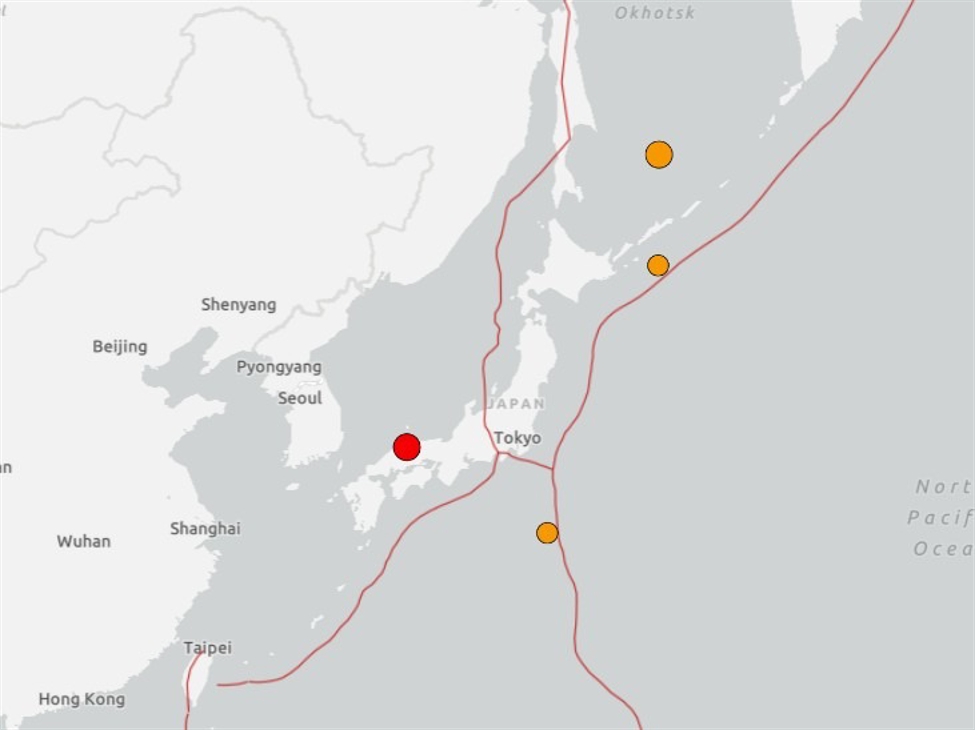
Summary:Magnitude ~6.2–6.3 quake hits Shimane PrefectureEpicentre located in eastern ShimaneIntensity recorded at upper-5 on Japan scaleNo tsunami warning issuedAuthorities monitoring for aftershocksDepth 10km A strong earthquake struck western Japan Tuesday, hitting Shimane Prefecture with a preliminary magnitude of around 6.2–6.3, according to Japanese authorities. The quake was centred in the eastern part of the prefecture and was felt widely across the region, though no tsunami warning was issued.The Japan Meteorological Agency said the earthquake occurred in the evening local time and registered an upper-5 intensity on Japan’s seismic intensity scale in parts of Shimane. National broadcaster NHK reported that while shaking was strong enough to disrupt daily activity, there were no immediate reports of major damage or casualties.Japan uses a unique seismic intensity system that measures how strongly the ground shakes at a specific location, rather than the total energy released by an earthquake. The scale runs from 1 to 7 and is designed to reflect the real-world impact on people, buildings and infrastructure. An intensity of upper-5 (known as “5-strong”) typically means it is difficult to move without holding onto something, unsecured furniture may topple, and minor structural damage is possible, particularly to older buildings.This differs from the magnitude scale, such as the moment magnitude used internationally, which measures the earthquake’s overall size. As a result, a single earthquake can have one magnitude but varying intensity readings depending on distance from the epicentre, depth and local ground conditions.The quake was initially reported with a preliminary magnitude of 6.3 by Japan’s National Research Institute for Earth Science and Disaster Resilience, later revised slightly lower. Authorities confirmed that the depth and offshore risk profile did not warrant a tsunami alert, easing concerns along coastal areas.Japan is one of the world’s most seismically active countries, sitting atop several major tectonic plates. Its early-warning systems and building standards are designed to mitigate the risks from frequent earthquakes, though events of this size still pose disruption risks to transport, utilities and local communities.Officials continue to assess the situation, urging residents to remain alert for possible aftershocks. Let’s hope there are no injuries.
This article was written by Eamonn Sheridan at investinglive.com.
💡 DMK Insight
So a strong earthquake just hit Shimane Prefecture in Japan, and here’s why that matters: natural disasters can disrupt local economies and supply chains, which might ripple through global markets. Traders should keep an eye on sectors like insurance, construction, and commodities that could feel the impact. While no tsunami warning has been issued, the intensity of the quake—recorded at upper-5 on the Japan scale—could lead to significant aftershocks. This might affect local businesses and infrastructure, potentially causing delays in production or transportation. If you’re trading Japanese equities or commodities, watch for volatility in the coming days as markets react to any emerging news about damage or economic impact. On the flip side, if the quake leads to increased demand for construction materials or rebuilding efforts, it could provide a boost to certain sectors. Keep an eye on key stocks in those areas. Overall, monitor the situation closely, especially any updates on aftershocks or government responses, as these could shift market sentiment quickly.
📮 Takeaway
Watch for potential volatility in Japanese markets and sectors like construction and insurance in the wake of the earthquake.