Bitcoin
  Ethereum
  Tether
  BNB
BNB  XRP
XRP  USDC
USDC  Solana
  TRON
TRON  Lido Staked Ether
  Figure Heloc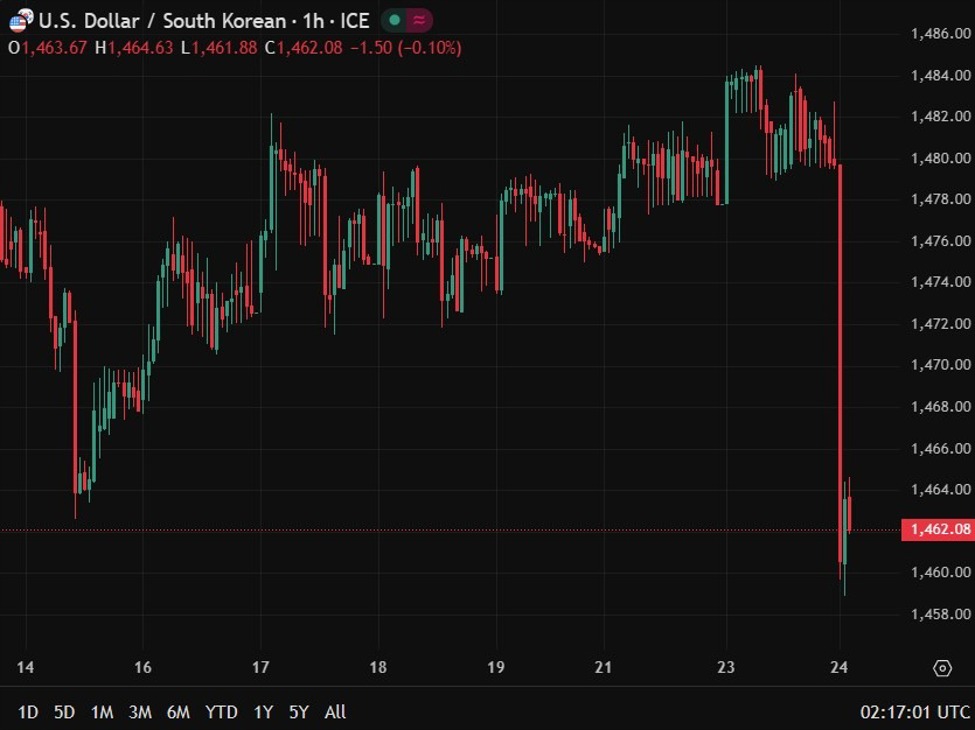
SummaryBank of Korea says NPS has activated strategic FX hedgingThe move aims to manage FX risk and curb won volatilityHedging could generate dollar selling and support the wonAuthorities frame it as risk management, not interventionSignals lower tolerance for prolonged currency weakness-South Korea’s central bank, the Bank of Korea, said the country’s National Pension Service (NPS) has activated a new framework for strategic foreign-exchange hedging, marking an important shift in how authorities are seeking to stabilise the won amid persistent currency volatility.The NPS, one of the world’s largest pension funds with extensive overseas investments, has traditionally run a relatively low level of currency hedging, allowing foreign-exchange moves to flow through to returns. Under the new approach, the fund can activate FX hedging in a more systematic and strategic manner, particularly during periods of heightened market stress or excessive exchange-rate swings.The move comes as the won has faced sustained depreciation pressure, driven by a strong U.S. dollar, global risk aversion and concerns over capital outflows. A weaker currency raises imported inflation risks and complicates monetary policy, increasing the sensitivity of authorities to sharp or disorderly FX moves. By activating strategic hedging, the NPS effectively becomes a source of dollar selling and won demand, helping to counter downward pressure on the currency.Crucially, the mechanism is designed to operate as a risk-management tool rather than a form of direct FX intervention. Hedging decisions are intended to be rules-based and aligned with portfolio management objectives, rather than day-to-day market targeting. Even so, given the sheer scale of the NPS’s overseas assets, its hedging activity has the potential to influence FX market dynamics in a meaningful way.The Bank of Korea has framed the initiative as part of a broader effort to strengthen financial stability without relying solely on interest-rate policy or overt market intervention. It also allows authorities to lean on domestic institutional flows to smooth volatility, while preserving foreign-exchange reserves and avoiding the political sensitivities associated with direct intervention.For markets, the activation of strategic hedging adds an important new layer to the won’s policy backdrop. While it does not imply a specific exchange-rate target, it signals a lower tolerance for persistent weakness and outsized volatility. It may also act as a deterrent to speculative positioning against the won, particularly during periods of global stress.Overall, the move underscores South Korea’s increasingly pragmatic approach to FX management, blending monetary policy, institutional balance-sheet tools and communication to contain volatility while maintaining policy flexibility. In other moves, South Korea unveiled a set of tax measures aimed at encouraging capital to flow back onshore and reducing currency-related risks for households. Authorities said retail investors will be exempt from capital gains taxes when selling overseas stocks if the proceeds are reinvested domestically. The government will also increase tax incentives for companies that repatriate earnings from abroad, while offering new tax benefits for retail investors who hedge foreign-exchange exposure. Together, the measures are designed to support domestic investment, ease pressure on the won by dampening outbound capital flows, and improve resilience to FX volatility without resorting to more direct market intervention.
This article was written by Eamonn Sheridan at investinglive.com.
💡 DMK Insight
The Bank of Korea’s activation of strategic FX hedging is a game-changer for the won’s stability. By managing FX risk and curbing volatility, this move could lead to increased dollar selling, which might support the won in the short term. Traders should note that this isn’t just a routine measure; it signals a lower tolerance for prolonged currency weakness. Given the current economic climate, where central banks globally are tightening, South Korea’s proactive stance could influence other Asian currencies as well. If the won strengthens, it could impact export competitiveness, so keep an eye on related assets like KOSPI and export-heavy stocks. Watch for any shifts in dollar-won levels, particularly if the won approaches significant support or resistance levels in the coming days. This could be a pivotal moment for traders looking to capitalize on currency fluctuations and related market movements.
📮 Takeaway
Monitor dollar-won levels closely; a strengthening won could impact export stocks and related markets significantly.