Bitcoin
  Ethereum
  Tether
  XRP
XRP  BNB
BNB  USDC
USDC  Solana
  TRON
TRON  Lido Staked Ether
  Figure Heloc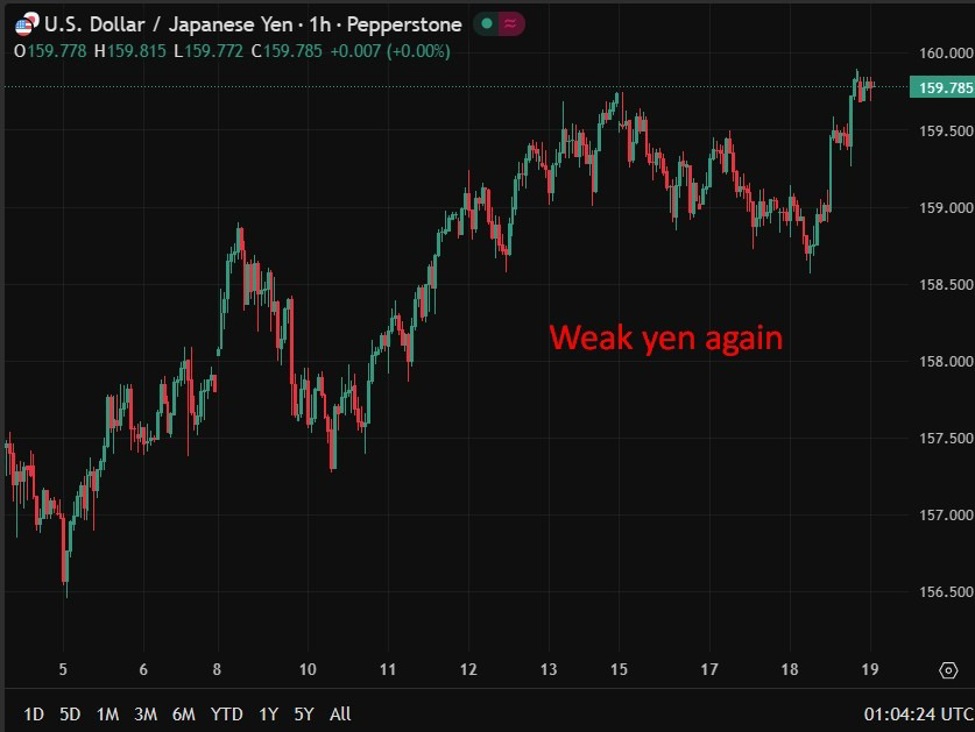
Summary:Japan flags speculative FX moves driving yen volatilityFinance Minister Katayama signals readiness to interveneAuthorities monitoring markets with “extremely high vigilance”Government reiterates BOJ independence despite geopolitical tensionsKihara stresses inflation should be wage-driven, not cost-pushComments come amid heightened global volatility and weaker yenReinforces intervention risk without signalling policy shiftJapanese officials have stepped up verbal intervention on currency markets, warning of speculative-driven moves in the yen while reaffirming the government’s readiness to act against excessive volatility.Finance Minister Katayama said foreign exchange fluctuations were being driven in part by speculative activity, adding that authorities were closely monitoring developments with an “extremely high level of vigilance.” She reiterated that Japan stands prepared to take “necessary actions at any time” to address disorderly market conditions, reinforcing a familiar policy stance aimed at stabilising the currency.The remarks come as the yen trades under renewed pressure amid heightened global uncertainty, including energy-driven inflation risks linked to the Middle East conflict. Japanese policymakers have historically been sensitive to sharp currency moves, particularly when weakness risks feeding into import costs and inflation.At the same time, Chief Cabinet Secretary Minoru Kihara emphasised that monetary policy decisions remain firmly within the remit of the Bank of Japan, underlining that the government’s stance on central bank independence remains unchanged, even in the current geopolitical environment. He declined to comment on how upcoming BOJ decisions, including those at the April meeting, could influence price dynamics.Kihara also reiterated the government’s broader policy preference for sustainable inflation driven by wage growth rather than cost-push factors such as higher energy prices, highlighting a key distinction shaping Japan’s policy framework.Together, the remarks suggest a coordinated but measured approach: authorities are signalling heightened sensitivity to currency volatility and maintaining intervention optionality, while avoiding any direct pressure on the BOJ to alter its policy path.—Still to come, BoJ meeting, previews:BOJ’s Ueda says inflation rising toward 2% ahead of policy meeting – recapJapan officials signal vigilance on yields, fiscal policy and FX as yen weakness persistsBoJ preview: no changes expected amid lack of inflation progress and geopolitical risk
This article was written by Eamonn Sheridan at investinglive.com.
💡 DMK Insight
Japan’s Finance Minister just hinted at potential FX intervention, and here’s why that’s crucial for traders: With the yen’s volatility spiking, especially against the dollar, this signals a heightened risk for speculative moves that could destabilize the market. The government’s commitment to monitoring these fluctuations closely suggests that any significant depreciation of the yen could trigger immediate action. Traders should be aware that while the Bank of Japan maintains its independence, the geopolitical tensions and inflation concerns could lead to a shift in sentiment. If the yen continues to weaken, especially below key psychological levels, expect swift intervention measures that could create sharp reversals in currency pairs. Keep an eye on the USD/JPY pair, particularly if it approaches recent highs. A breach of these levels could prompt aggressive positioning from both retail and institutional players. Watch for any comments from Japanese officials in the coming days, as they could provide further insight into intervention timing and strategy. The real story here is how traders react to these signals—are they going to position for a stronger yen, or will they continue to ride the wave of volatility?
📮 Takeaway
Monitor USD/JPY closely; intervention risks rise if the yen weakens significantly, especially below key levels, which could trigger sharp market reactions.