Bitcoin
  Ethereum
  Tether
  XRP
XRP  BNB
BNB  USDC
USDC  Solana
  TRON
TRON  Lido Staked Ether
  Figure Heloc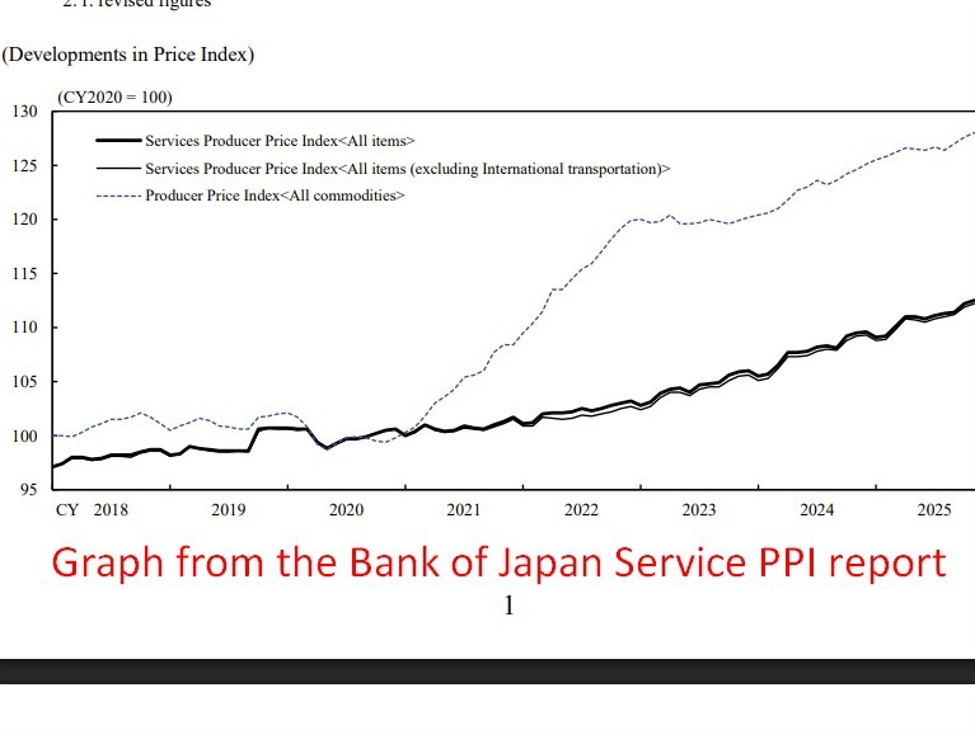
Japan’s service inflation signal stayed firm in December, underscoring wage-driven price pressure and keeping the BoJ alert to further tightening.Summary:Japan service price indicator rose 2.6% y/y in DecemberLabour-intensive sectors saw the strongest gainsTight job market continues to lift service inflationBoJ sees scope for further rate hikes if trends persistYen weakness adds second-round inflation pressureJapan’s leading indicator of service-sector inflation remained elevated in December, reinforcing the view that labour shortages and rising wages continue to generate underlying price pressure, according to data released on Tuesday.Figures from the Bank of Japan showed the services producer price index rose 2.6% year-on-year in December, following a 2.7% increase in November. The index tracks prices companies charge each other for services and is closely watched as an early signal of domestically driven inflation.Price increases were concentrated in labour-intensive industries such as hotels and construction, highlighting the impact of a tight labour market and supporting the BoJ’s assessment that wage growth is feeding through into service-sector prices.The data comes after the BoJ ended its decade-long stimulus programme in 2024 and raised short-term interest rates to 0.75% in December, judging that Japan was nearing a durable achievement of its 2% inflation target. Consumer inflation has now exceeded that threshold for nearly four years. BoJ Governor Kazuo Ueda said last week the central bank would closely monitor whether steady wage gains prompt broader cost pass-through, a key factor in assessing the timing of further rate hikes.In a separate analysis released Tuesday, the BoJ said yen weakness is increasingly influencing inflation not only through higher import costs but via second-round effects, including rising labour costs passed on through service prices. The findings strengthen the case that inflation pressures are becoming more domestically entrenched.
This article was written by Eamonn Sheridan at investinglive.com.
💡 DMK Insight
Japan’s service inflation hitting 2.6% y/y is a wake-up call for traders: This uptick signals persistent wage-driven price pressures, which could force the Bank of Japan (BoJ) to tighten monetary policy sooner than expected. With a tight job market fueling these service price increases, traders should keep an eye on the BoJ’s next moves, especially if inflation trends continue. If the BoJ raises rates, it could strengthen the yen, impacting forex pairs like USD/JPY. But here’s the flip side: if the yen weakens further due to global economic pressures, it could offset any tightening effects. Traders should monitor the 2.6% level closely; a sustained increase could lead to a shift in market sentiment. Watch for any comments from BoJ officials in the coming weeks, as they may hint at future policy adjustments. The immediate focus should be on the next inflation report and any signs of wage growth, which could be pivotal for positioning in both forex and equity markets.
📮 Takeaway
Keep an eye on Japan’s inflation trends and BoJ statements; a sustained rise above 2.6% could trigger rate hikes and impact USD/JPY significantly.