Bitcoin
  Ethereum
  Tether
  BNB
BNB  XRP
XRP  USDC
USDC  Solana
  TRON
TRON  Lido Staked Ether
  Figure Heloc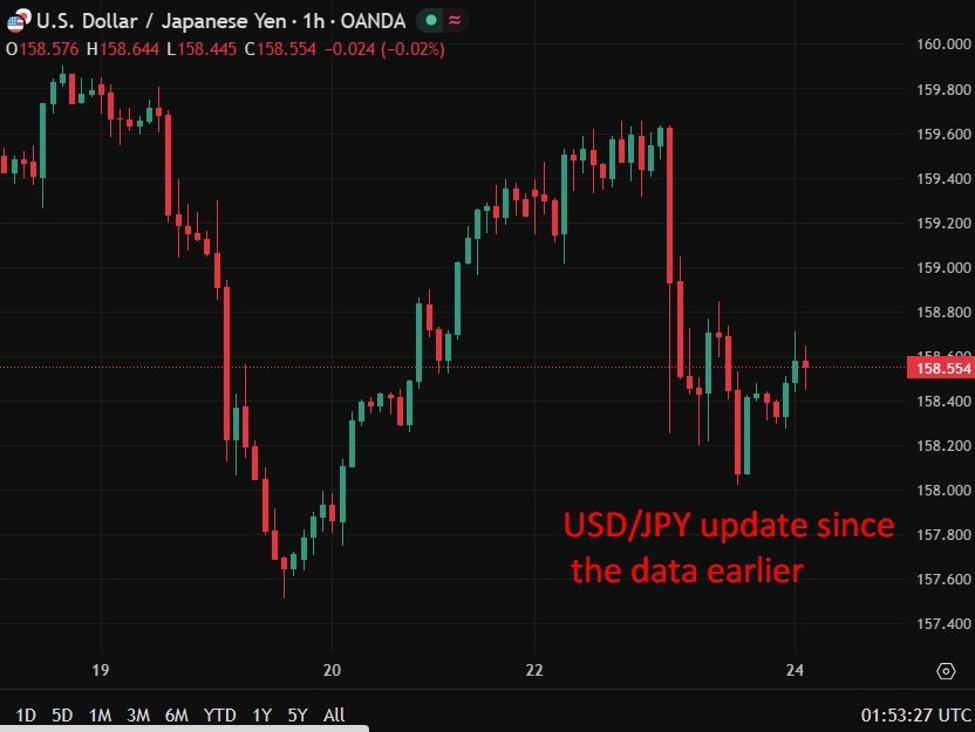
Japan inflation slowed on subsidies, but underlying price pressures remain firm, keeping the BoJ’s tightening path intact.Summary:Headline CPI slows to 1.3% y/y (prev 1.5%, est 1.3%)
Core CPI (ex fresh food) drops to 1.6% (prev 2.0%, est 1.7%), below BoJ target
Core-core CPI (ex food, energy) holds at 2.5% (prev 2.6%, est 2.4%)
Energy subsidies and tax cuts drive disinflation
Underlying inflation remains firmer despite headline softness
BoJ to introduce new inflation gauge stripping policy distortions
Policy outlook unchanged but communication more complex
Japan’s inflation slowed in February, with headline and core measures easing as government subsidies dampened energy costs, complicating the Bank of Japan’s assessment of underlying price pressures.Headline consumer price inflation came in at 1.3% year-on-year, down from 1.5% in January and in line with expectations. Core inflation, which excludes fresh food and is closely watched by the central bank, slowed to 1.6% from 2.0%, falling below the Bank of Japan’s 2% target for the first time since early 2022. The reading was slightly weaker than market expectations of 1.7%.However, a deeper look at the data suggests underlying inflation remains more resilient. A measure excluding both fresh food and energy—often used as a proxy for demand-driven inflation—rose 2.5% year-on-year, only marginally down from 2.6% previously and slightly above expectations. This indicates that domestic price pressures remain intact despite the headline slowdown.The moderation in inflation was largely driven by government intervention. A sharp decline in energy costs, including a 9.1% drop, reflected renewed subsidies on electricity and gas. Additional policy measures, including a gasoline tax cut and expanded education subsidies, also weighed on the headline figures. These effects are seen as temporary and are likely to reverse as policy support fades and energy prices remain elevated amid geopolitical tensions.Price pressures in other areas remained firm. Food prices excluding fresh items rose at a still-elevated pace, while services inflation held steady, pointing to ongoing underlying inflation momentum.For the Bank of Japan, the data presents a communication challenge rather than a policy shift. While headline inflation has softened, the central bank remains focused on underlying trends. To address distortions from policy measures, the BoJ has signalled it will introduce a new inflation indicator designed to strip out one-off effects, helping policymakers better assess the true inflation trajectory.The broader policy outlook remains unchanged, with the BoJ maintaining a gradual tightening bias. However, the combination of subsidy-driven disinflation and persistent underlying pressures underscores the complexity of the current environment, particularly as the Middle East conflict adds to both inflation risks and growth headwinds.
This article was written by Eamonn Sheridan at investinglive.com.
💡 DMK Insight
Japan’s inflation slowdown might seem like good news, but here’s why traders should be cautious: While the headline CPI dipped to 1.3% y/y, the core-core CPI holding at 2.5% signals persistent underlying price pressures. This suggests that the Bank of Japan (BoJ) may not pivot away from its tightening path just yet. Traders focusing on JPY pairs should keep an eye on how these inflation figures influence the BoJ’s next moves, especially with the core CPI dropping below expectations. If the BoJ maintains its stance, we could see further JPY strength against currencies like the USD, particularly if U.S. inflation data also comes in soft. Watch for key resistance levels around 150 for USD/JPY; a break below could trigger a stronger JPY rally. On the flip side, if inflation pressures unexpectedly rise, it could lead to a more aggressive tightening stance from the BoJ, which would shake up the forex markets significantly. Keep an eye on the upcoming economic indicators and any comments from BoJ officials for clues on future monetary policy shifts.
📮 Takeaway
Monitor USD/JPY around the 150 resistance level; a break could signal a stronger JPY if BoJ maintains tightening.