Bitcoin
  Ethereum
  Tether
  XRP
XRP  BNB
BNB  USDC
USDC  Solana
  TRON
TRON  Lido Staked Ether
  Dogecoin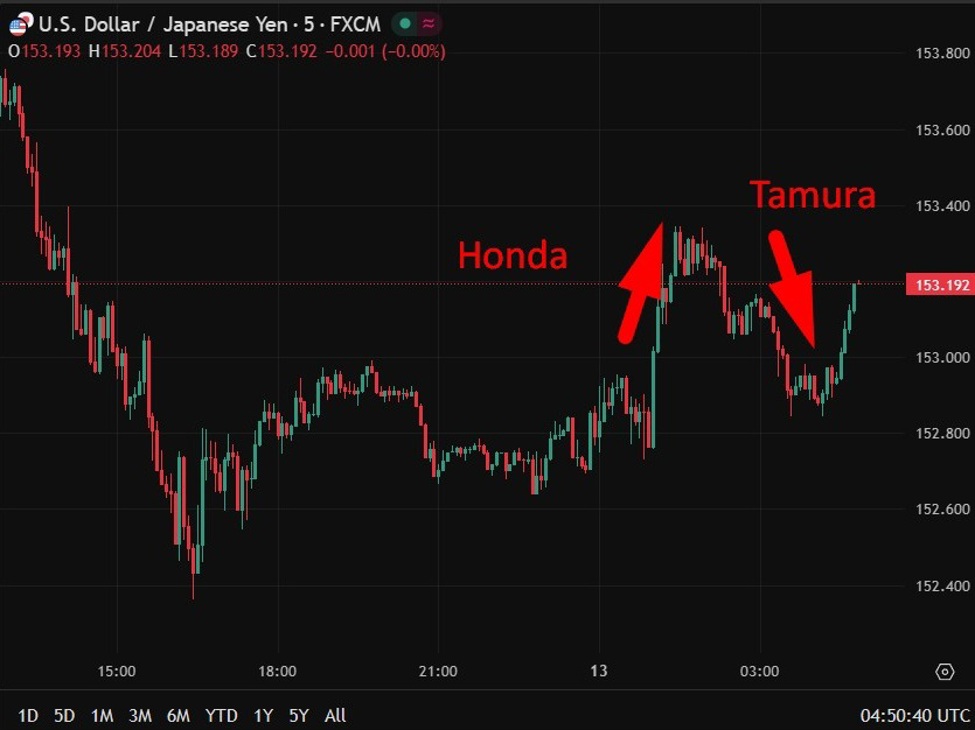
USS Ford strike group will join USS Lincoln carrier strike group in Persian GulfPBOC’s focus on overnight rate fuels speculation of policy shiftBOJ’s Tamura says inflation sticky, sees scope to judge target met by springChina housing market struggles despite “three red lines” removal. 62/70 cities price fallsNZ inflation expectations mixed ahead of likely RBNZ on hold decision February 18China house prices continue their death spiral: January -3.1% y/y and -0.4% m/mPBOC sets USD/ CNY reference rate for today at 6.9398 (vs. estimate at 6.9045)Bank of Japan (BOJ) likely to avoid March rate hike, Japan PM adviser saysJapan seizes Chinese fishing vessel in EEZ, arrests captain amid rising tensionsJapan advances U.S. investment package talks but negotiations remain toughNew Zealand manufacturing PMI eases to 55.2 but signals solid expansion (vs. January 56.1)US January CPI preview: Core seen easing, but sticky monthly keeps Fed cut timing in playUBS: SNB unlikely to fight franc rally, sees EUR/CHF at 0.95 in 12 monthsWeekend risk: Lagarde to speak at Munich Security Conference as ECB stays data-dependentWestpac sees lift in NZ inflation expectations ahead of February RBNZ meetingEconomic and event calendar in Asia Friday, February 13, 2026 – we hear from the RBNZAt a glance:Japan seizes Chinese vessel, adding geopolitical tensionBOJ adviser signals no rush for March hike; USD/JPY reboundsChina home prices deepen decline across 62 citiesFX mostly rangebound ahead of US CPIUSS Gerald R. Ford redeployed to Middle East; oil mutedEU aviation regulator extends Iran airspace warningGold and silver firmRBNZ decision next week; inflation expectations mixedJapanese equities ease after strong weekly gainsJapan seized a Chinese fishing vessel inside its exclusive economic zone off Nagasaki and arrested the skipper after the boat allegedly fled inspection. The move risks adding fresh strain to already tense Tokyo–Beijing relations, particularly against the backdrop of ongoing trade and security friction between the two countries.On the monetary front, an adviser to Prime Minister Sanae Takaichi said the government does not necessarily need to appoint reflationists to upcoming Bank of Japan board vacancies. He added the BOJ may see scope to raise rates later this year but is unlikely to move in March. The remarks were interpreted as reducing the probability of a near-term hike, providing a modest headwind for the yen. USD/JPY bounced toward 153.30 in response.Later more hawkish comments from BoJ Board member Tamura saw the yen gain back, USD/JPY down to circa 152.85.From China, new home prices fell 0.4% month-on-month and 3.1% year-on-year in January, marking the steepest annual drop in seven months. Price declines were recorded in 62 of 70 cities surveyed, highlighting persistent weakness in the property sector despite policy easing and the removal of developer debt caps.Major FX pairs against the US dollar traded largely sideways in subdued ranges as traders await US CPI data due at 8:30 a.m. US Eastern time on Friday.Geopolitically, the USS Gerald R. Ford carrier strike group will be redirected from the Caribbean to the Middle East, joining the USS Abraham Lincoln in the Persian Gulf as pressure on Iran intensifies. Crude oil showed little reaction, with expectations of a second carrier presence having built in recent weeks. Separately, the European Union Aviation Safety Agency extended its recommendation that airlines avoid Iranian airspace through March 31, citing elevated risks.Gold and silver edged higher.Japanese equities, including the Nikkei and Topix, pulled back slightly after solid gains earlier in the week, tracking Wall Street’s Thursday weakness.
Asia-Pac
stocks:
Japan
(Nikkei 225) -0.68%Hong
Kong (Hang Seng) -1.79%
Shanghai
Composite -0.70%Australia
(S&P/ASX 200) -1.37%Looking ahead, attention turns to the February 18 Reserve Bank of New Zealand policy decision, where a hold is widely expected. Inflation expectations data released today showed mixed signals.
This article was written by Eamonn Sheridan at investinglive.com.
💡 DMK Insight
Geopolitical tensions are rising with the USS Ford and Lincoln strike groups in the Persian Gulf, and here’s why that matters: Traders need to pay attention to how this military presence could impact oil prices and broader market sentiment. Increased military activity often leads to volatility in energy markets, particularly crude oil, which is already sensitive to geopolitical events. If tensions escalate, we could see a spike in oil prices, affecting not just energy stocks but also inflation expectations globally. On the flip side, the PBOC’s focus on overnight rates hints at a potential policy shift, which could influence the yuan and impact forex markets. Traders should monitor key levels in oil and the yuan, especially if the situation escalates. With the Bank of Japan’s comments on inflation being ‘sticky,’ there’s a chance that global markets might react to any shifts in monetary policy. Keep an eye on the 62/70 cities in China where housing prices are falling; this could signal broader economic issues that might ripple through commodities and equities. Watch for oil prices around key resistance levels and any shifts in forex pairs involving the yuan and yen.
📮 Takeaway
Monitor oil prices closely for potential spikes due to geopolitical tensions, especially if they breach key resistance levels in the coming days.