Bitcoin
  Ethereum
  Tether
  BNB
BNB  XRP
XRP  USDC
USDC  Solana
  TRON
TRON  Lido Staked Ether
  Figure Heloc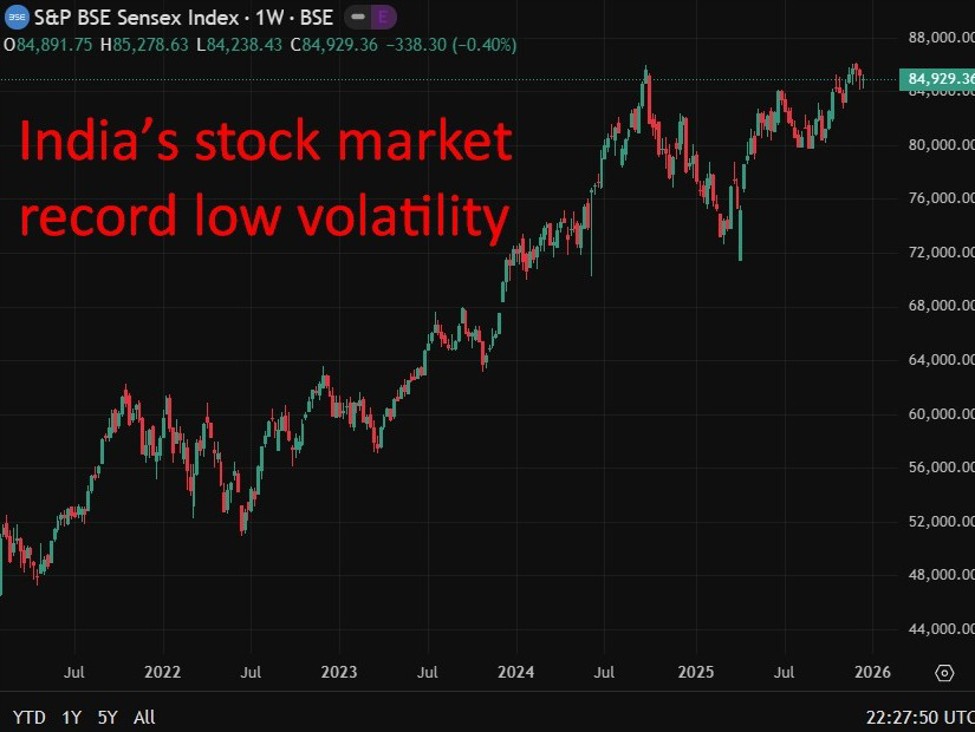
SummaryIndian equities have entered an unusually low-volatility phaseRegulatory curbs have reduced derivatives activity and intraday swingsDomestic institutions now dominate ownership as foreign funds exitEquity returns lag global peers despite market stabilityOptions traders are being forced to rethink volatility-selling strategiesInfo via a Bloomberg (gated) piece. India’s equity market has entered an unusually tranquil phase, forcing traders in the country’s vast derivatives ecosystem to rethink long-standing strategies. Despite geopolitical flare-ups and bouts of global risk aversion, the NSE Nifty 50 Index has barely moved for months, weighed down by regulatory changes and reshaped capital flows that have drained volatility from the system.The calm is stark. India’s volatility gauge has dropped to record lows, underscoring how domestic institutional demand has overwhelmed foreign flows while tighter derivatives rules have choked off intraday swings. For participants in the world’s largest options market by volume, this matters deeply: volatility is the lifeblood of derivatives trading. When markets swing, hedging demand rises and option premiums expand. When prices barely move, returns shrink — particularly for strategies built around selling volatility.India’s regulator delivered a decisive turning point last year. The Securities and Exchange Board of India rolled out a broad crackdown aimed at curbing speculative retail trading after mounting losses among individual investors. Several popular weekly options contracts were scrapped, removing instruments that had amplified short-term price swings and sustained heavy intraday turnover.The impact has been material. Average daily notional derivatives turnover has fallen sharply this year, marking the first annual decline since records began in 2017. That slowdown has fed back into the cash market: the Nifty 50 has now traded within a 1.5% range for more than 150 consecutive sessions, while realised three-month volatility has slipped toward levels below those seen in any other major global equity market.At the same time, the investor base has shifted. Foreign investors have withdrawn roughly $17bn this year, pressured by trade frictions with the US and India’s limited exposure to the global artificial-intelligence boom. Local institutions, by contrast, have stepped in aggressively, investing more than $80bn since January and overtaking foreign investors as the market’s dominant owners for the first time in over a decade.That stability, however, has not translated into standout returns. The Nifty 50 is up less than 10% this year, lagging both the MSCI Emerging Markets Index and the MSCI All-Country World Index. Elevated valuations — with India trading well above broader emerging-market multiples — remain a key constraint.
This article was written by Eamonn Sheridan at investinglive.com.
💡 DMK Insight
India’s equity market is in a low-volatility phase, and here’s why that matters: With ETH at $3,040.26 and ADA at $0.37, traders should note that the reduced derivatives activity is reshaping the landscape. Domestic institutions are stepping in as foreign funds pull back, which could lead to a more stable but less dynamic market. This shift might push traders to rethink their strategies, especially those relying on volatility. If you’re in options trading, the current environment could mean tighter spreads and less opportunity for profit from volatility-selling strategies. But here’s the flip side: while low volatility might seem dull, it can also create opportunities for those looking to capitalize on price stability. Watch for any signs of foreign fund re-entry or shifts in institutional sentiment, as these could signal a change in the current trend. Keep an eye on key levels in the equity market and related assets like ETH and ADA, as movements there could influence overall market sentiment and volatility expectations.
📮 Takeaway
Monitor shifts in institutional ownership and foreign fund activity, as these could signal changes in market dynamics and impact volatility strategies.