Bitcoin
  Ethereum
  Tether
  BNB
BNB  XRP
XRP  USDC
USDC  Solana
  TRON
TRON  Lido Staked Ether
  Figure Heloc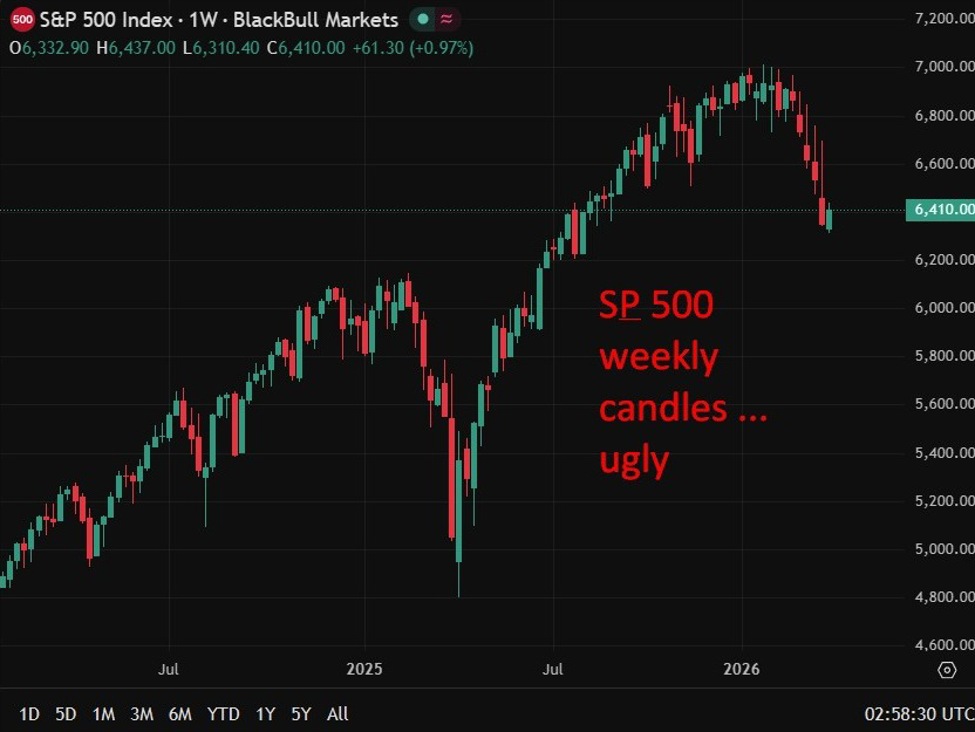
Summary:Global equities saw largest net selling since April 2025
Marks sixth consecutive week of equity outflows
Selling heavily skewed toward short positions (5.6:1 vs longs)
North America and Europe led selling in dollar terms
Tech, industrials and healthcare hardest hit
Asia saw sharp divergence between EM and DM flows
European short exposure hits 10-year highGlobal equity markets experienced their largest wave of net selling in nearly a year last week, as hedge funds extended a sustained run of outflows amid rising macro uncertainty, according to Goldman Sachs Prime Services data.The bank’s weekly positioning report showed that global equities recorded their biggest net selling since April 2025, marking the sixth consecutive week of outflows. The move was driven predominantly by short selling, which outpaced long buying by a ratio of 5.6 to 1, highlighting a decisive shift toward defensive and bearish positioning.Selling was broad-based across regions, with North America and Europe leading in dollar terms. In sectoral terms, seven of the eleven major sectors saw net selling, with information technology, industrials and healthcare experiencing the heaviest pressure. In contrast, consumer staples, energy and materials attracted relative buying interest, suggesting a rotation toward more defensive and commodity-linked exposures.Asia also saw notable selling, recording its largest percentage net outflow since April 2025. However, flows diverged sharply within the region. In emerging Asia, selling was driven by long liquidation, while in developed Asia it was driven by increased short positioning. The shift was particularly pronounced in Korea, where a large portion of year-to-date buying was unwound during March.European equities remained a focal point for bearish positioning, with hedge funds extending their selling streak to six consecutive weeks. Short exposure in European macro products has risen to 11% of total exposure, the highest level in a decade, with the UK, Ireland and Germany seeing the most significant selling.Despite the broad-based selling, allocations to Asia remain elevated, indicating that while sentiment has deteriorated, investors have not fully exited positions, leaving scope for further adjustment depending on how macro risks evolve.
This article was written by Eamonn Sheridan at investinglive.com.
💡 DMK Insight
Equity markets are facing a significant shift, with the largest net selling since April 2025, and here’s why that matters: The skew towards short positions at a ratio of 5.6:1 indicates a bearish sentiment among traders, particularly in North America and Europe, where tech, industrials, and healthcare sectors are feeling the heat. This trend suggests that many investors are bracing for further declines, which could lead to increased volatility in these markets. If this selling pressure continues, we might see a cascading effect on related assets, including commodities and currencies, particularly those tied to economic performance in these regions. But it’s worth noting that Asia is showing a divergence, with emerging markets (EM) behaving differently than developed markets (DM). This could present hidden opportunities for traders who can identify which sectors or regions might be undervalued amidst the broader sell-off. Keep an eye on key technical levels in the S&P 500 and NASDAQ, as breaking below recent support could trigger further selling. Watch for any shifts in institutional buying patterns, as they could signal a potential reversal or continuation of this trend.
📮 Takeaway
Monitor the S&P 500 and NASDAQ for key support levels; a break could lead to intensified selling pressure in tech and industrials.