Bitcoin
  Ethereum
  Tether
  XRP
XRP  BNB
BNB  USDC
USDC  Solana
  TRON
TRON  Lido Staked Ether
  Dogecoin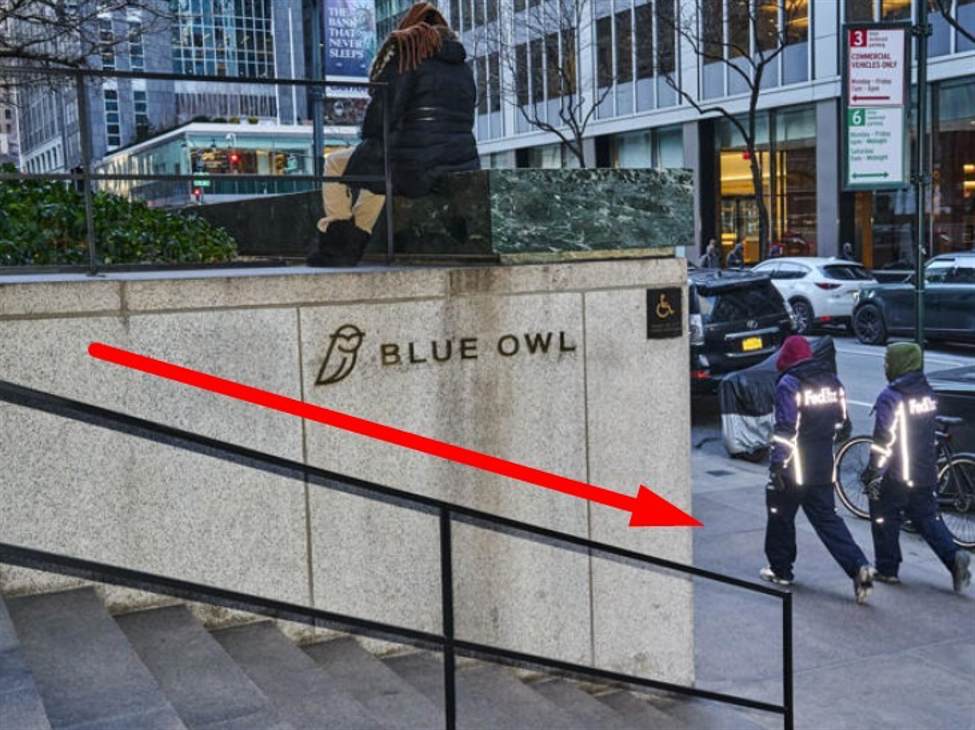
Blue Owl permanently restricted withdrawals from its $1.6bn private-debt fund, selling $1.4bn of loans at 99.7% of par and planning a 30% NAV distribution in Q1. El-Erian questioned whether it’s an early warning sign for private credit, though not a 2008-scale threat.Summary:$1.6bn Blue Owl Capital Corp. II fund permanently restricts investor withdrawals.Blue Owl sold $1.4bn of loans, including $600m from the restricted fund.Loans sold at 99.7% of par, signalling pricing resilience.Firm plans to return 30% of NAV of the frozen fund in Q1 via capital distributions.Public BDCs sold $400m each in loans as part of the transaction.Shares of Blue Owl Capital fell about 10%, down over 25% YTD.BDC discounts: OBDC at 81% of NAV, OTF at 73% of NAV.Mohamed El-Erian calls it a potential “canary-in-the-coal-mine” moment, though not 2008-scale systemic risk.A $1.6 billion private-debt fund managed by Blue Owl is permanently restricting redemptions, escalating investor scrutiny of liquidity risks in the fast-growing private credit sector and sending shares of its investment manager sharply lower.Blue Owl Capital Corp. II, a non-listed retail-focused business development company (BDC) that lends to middle-market firms, will no longer allow investors to withdraw funds. Instead, it plans to distribute capital quarterly, beginning with a 30% return of net asset value in Q1, the firm said Wednesday.The move follows the sale of $1.4 billion in loans to four large public pension and insurance investors. Of that amount, approximately $600 million came from the restricted Blue Owl Capital Corp. II fund. The loans were sold at 99.7% of par value, which Blue Owl highlighted as evidence of strong buyer confidence in its direct lending platform.Barclays analysts described the transaction as “not a forced sale,” adding that disposing of private credit assets effectively at par is positive for the credit profile of its BDCs.Still, markets reacted sharply. Shares of Blue Owl Capital (OWL) dropped roughly 10% on Thursday, deepening losses to more than 25% year to date, according to FactSet data.Blue Owl’s publicly traded vehicles were also involved in the asset sales. The $16.5bn Blue Owl Capital Corp. (OBDC) and the $6.2bn Blue Owl Technology Finance (OTF) each sold $400m in loans as part of the broader $1.4bn transaction.Valuation pressure has been building. OBDC was recently trading at 81% of NAV, while Blue Owl Technology Finance traded at 73% of NAV, reflecting investor scepticism toward private credit valuations—particularly in the software sector, where AI-driven disruption has clouded growth outlooks.The redemption halt also revives comparisons to past liquidity stress events. Former Pimco CEO Mohamed El-Erian asked whether the episode represents a “canary-in-the-coalmine” moment akin to the collapse of two Bear Stearns hedge funds in August 2007.El-Erian wrote that the private credit boom in advanced economies may have “gone too far overall,” while noting substantial differences across firms. He also referenced the risk of a “market for lemons” dynamic, where information asymmetry can undermine investor confidence in asset quality.However, he tempered concerns by emphasising that systemic risk today is nowhere near the magnitude of 2008, though he warned that a “significant, and necessary, valuation hit” could be looming for specific assets.The episode underscores a structural tension in private credit: offering retail-style liquidity in vehicles holding inherently illiquid middle-market loans. With rates higher and growth uneven, investor scrutiny of pricing, liquidity management and valuation marks appears to be intensifying.
This article was written by Eamonn Sheridan at investinglive.com.
💡 DMK Insight
Blue Owl’s withdrawal restrictions could signal deeper issues in private credit markets, and here’s why that matters right now: With ETH currently at $1,954.24, the implications of this fund’s actions extend beyond private debt. If liquidity issues are brewing in private credit, it could lead to broader market volatility, impacting risk assets like cryptocurrencies. Traders should keep an eye on ETH’s support levels around $1,900; a break below could trigger further selling pressure. El-Erian’s comments suggest caution, but the lack of a 2008-scale threat means we might not see panic selling—yet. Still, this situation could affect institutional sentiment towards crypto, especially if they start reallocating funds away from riskier assets. On the flip side, if the market perceives this as an isolated incident, ETH could stabilize and even rally if it holds above key support. Watch for any shifts in trading volume or sentiment in the coming days, as these could provide clues on how traders are positioning themselves in response to this news.
📮 Takeaway
Monitor ETH’s support at $1,900 closely; a drop below could signal increased volatility in crypto markets.