Bitcoin
  Ethereum
  Tether
  BNB
BNB  XRP
XRP  USDC
USDC  Solana
  TRON
TRON  Lido Staked Ether
  Figure Heloc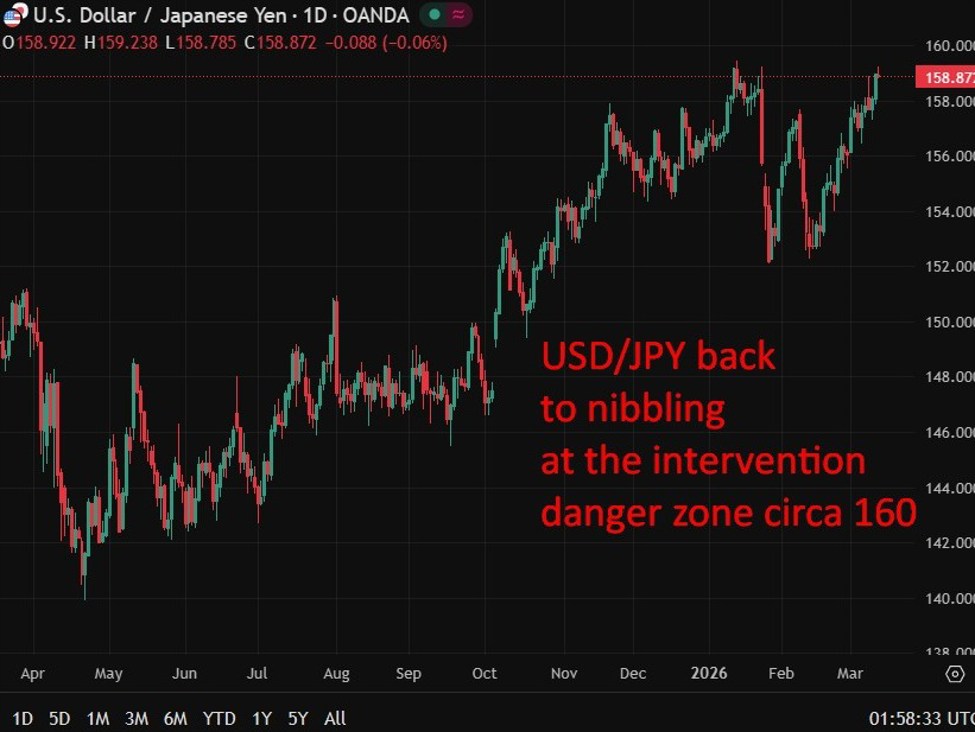
BoJ Governor Ueda warns currency weakness could intensify inflation risks as higher oil prices and a weaker yen threaten to fuel cost-push inflation in Japan.Summary:Bank of Japan Governor Kazuo Ueda warned that foreign exchange movements are increasingly influencing inflation.He said the yen’s impact on prices is larger than in the past, potentially affecting inflation expectations.Brent crude has risen to around $87 from $72 before the Iran conflict, lifting import costs for Japan.The yen has weakened toward ¥158 per dollar, amplifying imported inflation.Economists warn of cost-push inflation and stagflation risks if energy prices remain elevated.Higher import costs could squeeze real wages and weaken household consumption.The BoJ may face pressure to accelerate policy normalisation to stabilise the yen.Bank of Japan Governor Kazuo Ueda has warned that exchange rate movements are becoming an increasingly important driver of Japan’s inflation outlook, highlighting the growing influence of the weaker yen as rising energy prices threaten to reignite cost-push inflation.Speaking in remarks on foreign exchange dynamics, Ueda said currency movements are a key factor shaping the outlook for both economic activity and prices. He noted that the impact of exchange rates on inflation appears to be larger than in the past, meaning policymakers must carefully monitor currency developments when assessing monetary policy decisions.“Foreign exchange is one important factor affecting the economy and prices,” Ueda said, adding that policymakers must remain mindful that currency swings can influence inflation expectations.The comments come as Japan faces renewed inflation pressure following the outbreak of the U.S.–Israel war with Iran in late February. Global energy markets have tightened sharply since the conflict began, pushing Brent crude prices higher. For Japan, which relies heavily on imported energy, the rise in oil prices threatens to feed directly into higher import costs.At the same time, the yen has weakened further, falling toward the ¥159 per dollar area. The currency’s depreciation amplifies the inflationary impact of higher commodity prices by increasing the cost of imported fuel and raw materials.Economists warn that the combination of rising energy prices and a weaker currency could create a new wave of cost-driven inflation in Japan. While such inflation lifts headline price growth, it risks eroding household purchasing power and weighing on consumption.Analysts say the development raises the risk of a stagflation-like environment in which inflation rises while economic growth slows. Higher import costs could squeeze real wages, reducing household spending, while the traditional benefits of yen depreciation for exporters may prove weaker amid global economic uncertainty.Against this backdrop, the Bank of Japan may face increasing pressure to accelerate the normalization of its ultra-loose monetary policy to stabilise the currency and contain imported inflation.Ueda said the central bank will conduct appropriate monetary policy while carefully assessing how exchange rate movements affect the likelihood of achieving its economic and inflation forecasts.For policymakers, the challenge will be balancing the need to contain currency-driven inflation pressures with the risk that tighter policy could further slow domestic demand. ***BoJ meet next week, 18 and 19 March.
This article was written by Eamonn Sheridan at investinglive.com.
💡 DMK Insight
The BoJ’s warning on yen weakness is a big deal for traders: inflation risks are rising. Governor Ueda’s comments highlight how a weaker yen, coupled with higher oil prices, could lead to significant cost-push inflation in Japan. This situation is critical for forex traders, especially those holding positions in JPY pairs. If the yen continues to weaken, we might see increased volatility in USD/JPY and EUR/JPY, potentially pushing these pairs to new highs. Traders should keep an eye on the 150 level for USD/JPY as a psychological barrier. But here’s the flip side: if the BoJ intervenes or changes its monetary policy stance to combat inflation, we could see a rapid reversal in yen strength. This could create a short-term trading opportunity for those positioned correctly. Watch for any statements from the BoJ in the coming weeks, as they could provide clues on future policy adjustments. Overall, monitor inflation metrics closely, as they will dictate market sentiment and trading strategies in the forex space.
📮 Takeaway
Keep an eye on USD/JPY around the 150 level; any BoJ intervention could shift market dynamics quickly.