Bitcoin
  Ethereum
  Tether
  XRP
XRP  BNB
BNB  USDC
USDC  Solana
  TRON
TRON  Lido Staked Ether
  Figure Heloc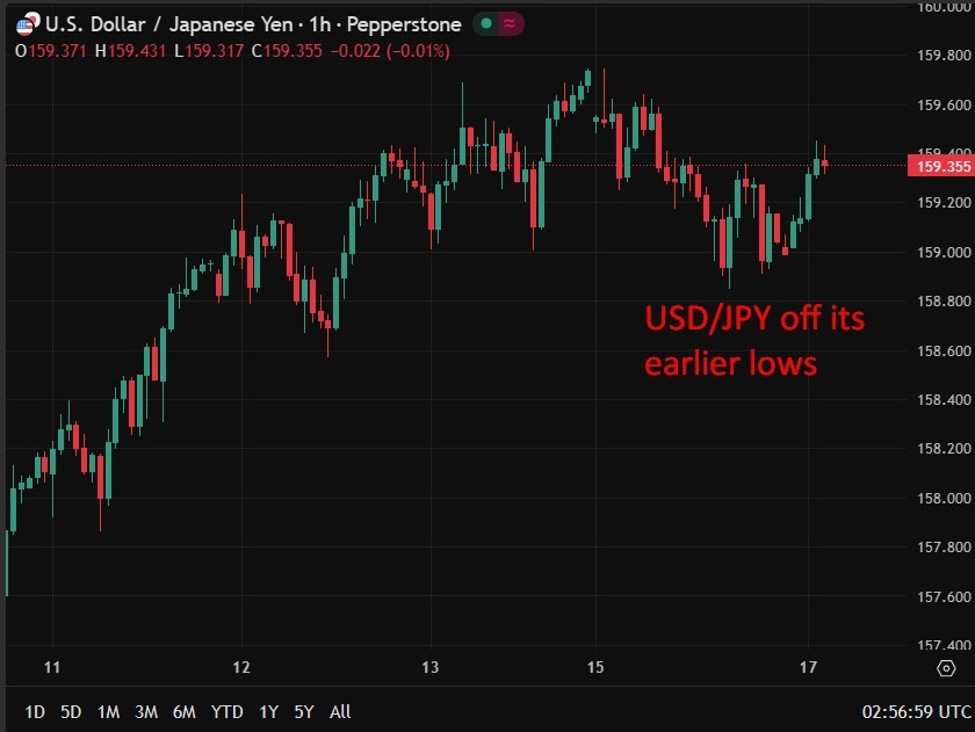
BOJ Governor Ueda reiterates inflation progress and wage growth focus ahead of policy meeting.Summary:Bank of Japan Governor Kazuo Ueda reiterated that underlying inflation is gradually accelerating toward the 2% target.He stressed that sustainable inflation must be supported by wage growth, reinforcing the BOJ’s long-standing policy condition.The comments came ahead of the BOJ’s two-day policy meeting ending Thursday, where rates are widely expected to remain unchanged at 0.75%.Ueda said wages and prices are rising moderately together, as companies become more willing to pass on higher input and labour costs.The BOJ expects underlying inflation to converge toward the 2% target between the second half of fiscal 2026 and fiscal 2027.Ueda also reiterated the BOJ’s readiness to act if government bond yields rise sharply, maintaining flexibility in the JGB market.Bank of Japan Governor Kazuo Ueda has reiterated that underlying inflation in Japan is gradually strengthening toward the central bank’s 2% target, reinforcing the message policymakers have been delivering ahead of this week’s monetary policy decision.Speaking in parliament, Ueda said the current inflation trend reflects a gradual alignment between wages and prices as companies become more willing to pass on higher raw material and labour costs to consumers. The development marks a notable shift in Japan’s inflation dynamics, where persistent price increases historically proved difficult to sustain without corresponding wage growth.Ueda emphasised that the central bank’s objective is not simply to reach the 2% inflation target temporarily but to achieve it in a durable and stable manner supported by rising wages. According to the BOJ’s current outlook, underlying inflation is expected to move closer to the target level between the second half of fiscal 2026 and fiscal 2027.The remarks largely reinforce the policy outlook that markets have been anticipating ahead of the Bank of Japan’s two-day policy meeting, which concludes on Thursday. Investors widely expect the central bank to keep its policy rate unchanged at 0.75%, following the rate increase delivered in December that lifted borrowing costs to their highest level in roughly three decades.While the BOJ has begun normalising policy after years of ultra-loose settings, officials remain cautious about tightening too quickly until they are confident that wage-driven inflation can be sustained.Ueda also addressed developments in Japan’s government bond market, reiterating that long-term interest rates are primarily determined by market forces reflecting expectations about the economic outlook, inflation and policy direction.At the same time, he reaffirmed that the central bank stands ready to act in exceptional circumstances if yields rise abruptly in a way that threatens financial stability.The comments underscore the BOJ’s careful balancing act as it gradually exits ultra-easy policy while monitoring inflation dynamics, wage growth and bond market stability.
This article was written by Eamonn Sheridan at investinglive.com.
💡 DMK Insight
Ueda’s comments signal a potential shift in BOJ policy, and here’s why that matters: With inflation inching closer to the 2% target, traders should keep a close eye on how wage growth evolves in the coming months. If wage increases start to materialize, it could prompt the BOJ to reconsider its ultra-loose monetary policy sooner than expected. This is particularly relevant as the market has been pricing in a prolonged period of low interest rates. A shift in BOJ policy could lead to a stronger yen and impact related assets, including Japanese equities and global commodities. Watch for any signs of wage growth in upcoming economic reports, as this could be a key indicator of the BOJ’s next moves. The immediate focus should be on the next policy meeting, where any hints of a tightening stance could trigger volatility across forex pairs, especially USD/JPY. On the flip side, if wage growth remains stagnant, the BOJ may maintain its current course, which could keep the yen under pressure. Traders should monitor the 2% inflation threshold closely, as breaking through it could lead to significant market shifts. Keep an eye on the daily charts for USD/JPY, particularly around key resistance levels, as any hawkish signals from the BOJ could spark a rally.
📮 Takeaway
Watch for wage growth indicators ahead of the BOJ’s next policy meeting; a shift could strengthen the yen and impact USD/JPY significantly.