Bitcoin
  Ethereum
  Tether
  XRP
XRP  BNB
BNB  USDC
USDC  Solana
  TRON
TRON  Lido Staked Ether
  Dogecoin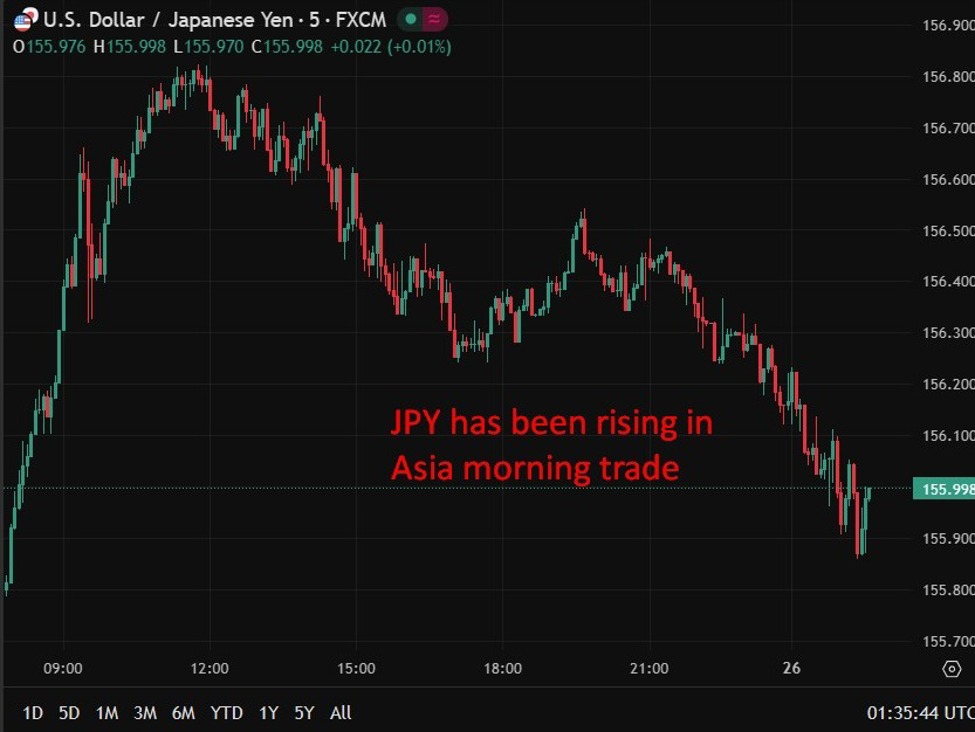
Takata says Japan is near 2% inflation “mission accomplished,” backing further gradual BoJ normalisation.—In summary, BoJ Policy Board member Hajime Takata argues Japan is close to meeting the 2% price-stability goal, with the deflationary “norm” largely broken. He sees the global backdrop shifting in 2026 toward stronger growth as monetary and fiscal settings turn more expansionary alongside an AI-investment boom. On tariffs: he says fears of Japan sliding back toward deflation have faded, with limited evidence so far of major damage to capex, exports, profits or FX. Policy: the BoJ lifted the policy rate to ~0.75% in Dec-2025; Takata says real rates remain deeply negative and conditions accommodative. He favours another “gear shift,” and notes he proposed raising the policy rate to 1.0% at the Jan-2026 meeting. He flags the neutral-rate debate as uncertain (“rainbow” / “mountain” analogy) and warns Japan could fall behind the curve if global hikes resume. Balance-sheet exit focus: he stresses JGB-market normalisation and lays out the ongoing reduction path for BoJ JGB purchases—Bank of Japan Policy Board member Hajime Takata struck a more assertive tone on Japan’s inflation regime shift, arguing the economy is now “almost” at the Bank’s 2% price-stability destination and that the policy debate should increasingly assume that achievement. Takata frames 2026 as a global “shifting phase” in which recovery momentum strengthens as economies lean simultaneously on easier monetary and fiscal settings, with the added impulse from heavy AI-related investment. He notes the IMF’s January 2026 WEO update revised global growth higher relative to the tariff-shock downgrade incorporated in April 2025, and he sees policy synchronisation as a powerful cyclical force, similar in direction, if not circumstances, to 2020’s global stimulus mix. On Japan, he argues the expected drag from U.S. reciprocal tariffs announced in April 2025 has so far proved smaller than feared. He lists four channels he has monitored; capex weakness from uncertainty, export softness via a global slowdown, profit compression undermining wage momentum, and yen appreciation tightening financial conditions, and concludes the risk of Japan reverting to deflation has diminished. That conclusion supports a call for continued normalisation. Takata points to the BoJ’s December 2025 rate increase to around 0.75%, but stresses real short-term rates remain “significantly negative,” keeping overall conditions accommodative. He also reveals he proposed lifting the policy rate to 1.0% at the January 2026 meeting, arguing the wage/price “norm” has been dispelled and headline inflation dynamics now matter more than in the deflation era. Finally, he highlights the exit mechanics: a steady reduction in JGB purchases and vigilance around term premia and market functioning as supply to the market rises and investor demand patterns shift, especially at the super-long end.
This article was written by Eamonn Sheridan at investinglive.com.
💡 DMK Insight
Japan’s inflation nearing 2% is a game-changer for traders: it signals a shift in BoJ policy. With Takata’s comments, the market’s been buzzing about the potential for the Bank of Japan to normalize its ultra-loose monetary policy. If inflation holds, we could see interest rates rise, impacting the yen and related assets. Traders should keep an eye on USD/JPY; a break above recent resistance levels could trigger a stronger bullish trend. Conversely, if inflation falters, expect volatility as traders reassess their positions. Here’s the kicker: while mainstream coverage focuses on the inflation target, the real story is the potential ripple effects on global markets. A stronger yen could pressure commodities priced in dollars, like oil and gold. Watch for any shifts in the BoJ’s tone in upcoming meetings, as that could provide critical clues for positioning in both forex and equities. The next few months will be pivotal, so stay alert for data releases and central bank communications.
📮 Takeaway
Monitor USD/JPY closely; a breakout above resistance could signal a bullish trend as BoJ normalization gains traction.