Bitcoin
  Ethereum
  Tether
  XRP
XRP  BNB
BNB  USDC
USDC  Solana
  TRON
TRON  Lido Staked Ether
  Figure Heloc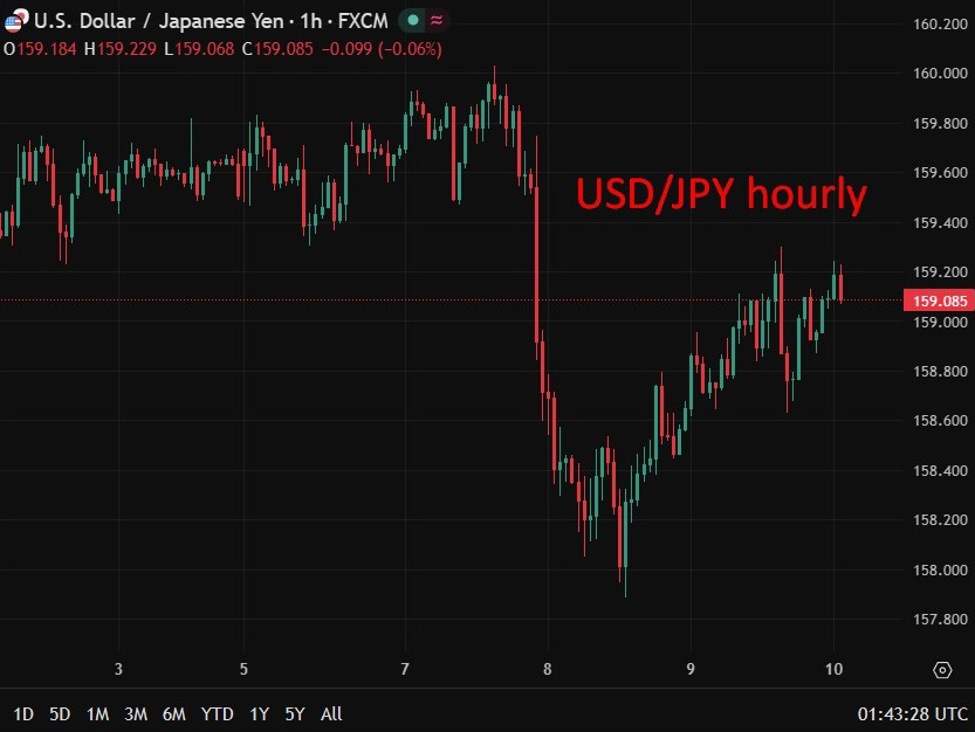
Summary:BoJ’s Himino says Japan not currently in stagflation
Warns prolonged Middle East conflict could create stagflation-like conditions
Highlights policy dilemma: weaker growth vs rising inflation
BoJ to assess scale and duration of shock before adjusting policy
Reaffirms data-dependent approach at each meeting
Signals flexibility, but no shift away from inflation target
Bank of Japan Deputy Governor Ryozo Himino signalled a cautious but flexible policy stance, warning that a prolonged Middle East conflict could create difficult trade-offs for policymakers, even as he downplayed the risk of stagflation in Japan for now.Speaking in parliament, Himino emphasised that there is no strict definition of stagflation, but made clear that Japan’s current economic conditions do not fit that description. Inflation remains around the central bank’s 2% target, while economic growth is still running above potential, suggesting that the economy remains on relatively stable footing despite rising global risks.However, the outlook is becoming more uncertain. Himino warned that if the conflict in the Middle East persists, it could simultaneously weaken growth and push inflation higher—creating a policy dilemma for the central bank. Such a scenario would complicate decision-making, as traditional policy responses to inflation and growth shocks can pull in opposite directions.The key variable, according to Himino, is the scale and duration of the external shock. A short-lived disruption may have limited impact, but a prolonged period of elevated energy prices and supply uncertainty could materially alter Japan’s economic trajectory. Given Japan’s heavy reliance on imported energy, sustained price increases would feed directly into inflation while weighing on household consumption and corporate margins.Despite these risks, Himino reaffirmed that the BoJ will remain focused on achieving its inflation target in a stable and sustainable manner. Rather than pre-emptively adjusting policy, the central bank will continue to assess incoming data at each meeting, updating its forecasts and risk assessments as conditions evolve.This underscores a data-dependent approach at a time when the global environment remains highly fluid. The BoJ appears to be positioning itself to respond flexibly, balancing the need to support growth against the risk of inflation overshooting due to external shocks.In essence, while Japan is not currently facing stagflation, the risk is no longer theoretical. The trajectory of the Middle East conflict—and its impact on energy markets—will be critical in shaping the BoJ’s policy path in the months ahead.—The comments reinforce a cautious BoJ stance, with flexibility preserved. The acknowledgment of a potential stagflation dilemma may limit aggressive tightening expectations while keeping focus on energy-driven inflation risks and yen sensitivity.
This article was written by Eamonn Sheridan at investinglive.com.
💡 DMK Insight
The BoJ’s stance on stagflation is crucial right now, especially with rising inflation pressures globally. Himino’s comments highlight a delicate balancing act for the BoJ: maintaining growth while addressing inflation. Traders should note that if the Middle East conflict escalates, it could exacerbate supply chain issues, leading to higher prices. This scenario might force the BoJ to reconsider its current policy stance, which has been heavily data-dependent. If inflation continues to rise without corresponding growth, we could see a shift in market sentiment towards risk-off assets. Keep an eye on the USD/JPY pair, as any signs of policy shifts could lead to volatility. A break above key resistance levels might indicate a stronger dollar, while a failure to address inflation could weaken the yen further. Watch for upcoming economic data releases that could influence the BoJ’s decisions, particularly inflation metrics and growth indicators in Japan and abroad.
📮 Takeaway
Monitor the USD/JPY for potential volatility; a shift in BoJ policy could trigger significant market movements.