Bitcoin
  Ethereum
  Tether
  XRP
XRP  BNB
BNB  USDC
USDC  Solana
  TRON
TRON  Lido Staked Ether
  Dogecoin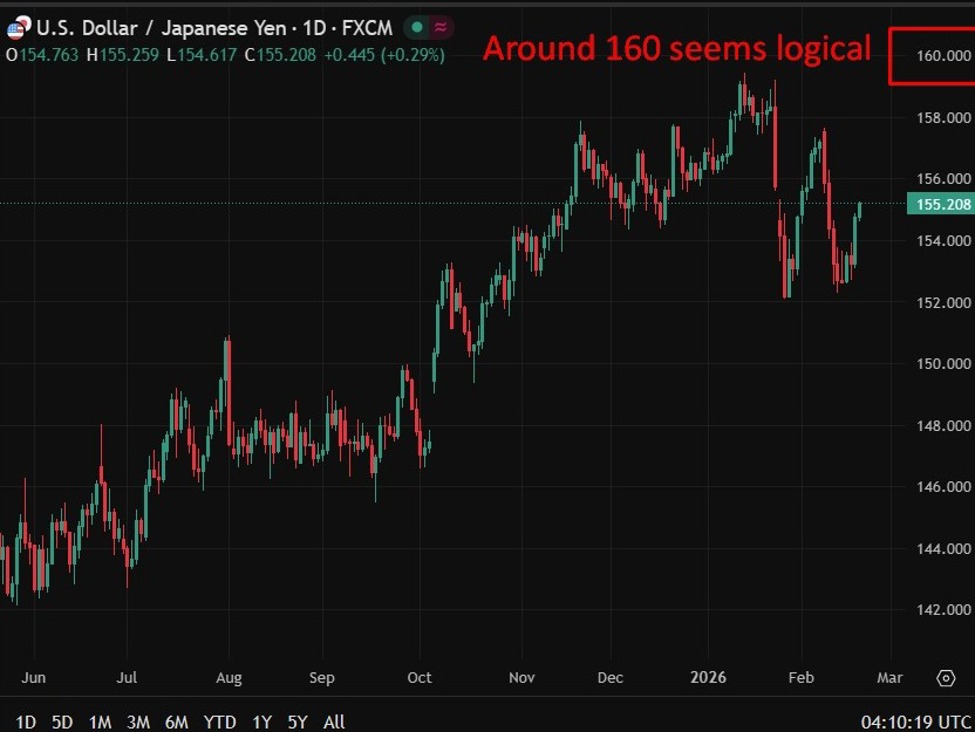
Economists bring forward BOJ hike expectations and see yen intervention risk near 160.Summary:All 76 economists expect the BOJ to hold rates steady in MarchMajority now see policy rate at 1% by end-June, earlier than pre-election viewGrowing concern about fiscal expansion and yen weakness69% expect currency intervention if USD/JPY nears 160Inflation risks and wage growth keep tightening bias intactExpectations for the Bank of Japan have shifted meaningfully in the wake of Prime Minister Sanae Takaichi’s election victory, with economists bringing forward forecasts for the next rate hike and increasing bets on potential currency intervention.According to a Reuters poll conducted February 10–18, all 76 economists expect the BOJ to leave its policy rate unchanged at its March meeting. However, beyond March, the outlook has turned more hawkish. A majority, 58%, now see the policy rate reaching 1% by the end of June, compared with just 36% in the January survey. Among those specifying timing, June was the most popular call, though a notable minority see April as a live possibility, while others expect July.The shift reflects mounting concern over upside inflation risks, a still-weak yen and the implications of expansionary fiscal policy. The BOJ raised rates to 0.75% in December, the highest level in three decades, and signalled readiness to continue tightening, diverging from many global peers nearing the end of their rate-cutting cycles.Currency dynamics remain central to the policy outlook. After briefly approaching the psychologically important 160 per dollar level in January, the yen rebounded sharply, but volatility has kept markets on alert. In the poll, 69% of economists said they expect Japanese authorities to intervene again in currency markets if the yen weakens materially. Among those, 40% identified the 160 per dollar level as the most likely trigger for action.Fiscal policy is also influencing expectations. More than half of respondents expressed concern that a proposed two-year suspension of the consumption tax on food could strain public finances, potentially complicating the BOJ’s inflation outlook and bond market stability.Wage growth remains a key variable. While economists expect solid increases in this year’s wage negotiations, expectations have moderated slightly compared with late last year, though still consistent with inflation running above target.Overall, the consensus is clear: March is likely a pause, but tightening toward 1% by mid-year is now the base case, with intervention risks rising should yen weakness re-emerge.”Bid 160? Go ahead, make my day!”
This article was written by Eamonn Sheridan at investinglive.com.
💡 DMK Insight
Yen intervention fears are rising as economists shift BOJ rate hike expectations, and here’s why that matters: With all 76 economists predicting the BOJ will maintain current rates in March, the majority now anticipate a policy shift to a 1% rate by the end of June. This accelerated timeline reflects growing concerns over fiscal expansion and the yen’s persistent weakness. If USD/JPY approaches the 160 mark, 69% of these economists foresee intervention, which could trigger significant volatility in forex markets. Traders should keep a close eye on this pair, as the psychological barrier of 160 could prompt swift action from the BOJ, impacting not just the yen but also related assets like Japanese equities and commodities priced in yen. Here’s the flip side: while many are focused on the potential for intervention, the market could react differently if the BOJ signals a more dovish stance. If the yen weakens further without intervention, it may lead to increased inflationary pressures, complicating the BOJ’s policy decisions. Watch for USD/JPY movements around key levels, particularly 160, and monitor any statements from BOJ officials for clues on their next moves.
📮 Takeaway
Keep an eye on USD/JPY approaching 160; intervention risks are high, which could lead to significant market volatility.