Bitcoin
  Ethereum
  Tether
  BNB
BNB  XRP
XRP  USDC
USDC  Solana
  TRON
TRON  Lido Staked Ether
  Figure Heloc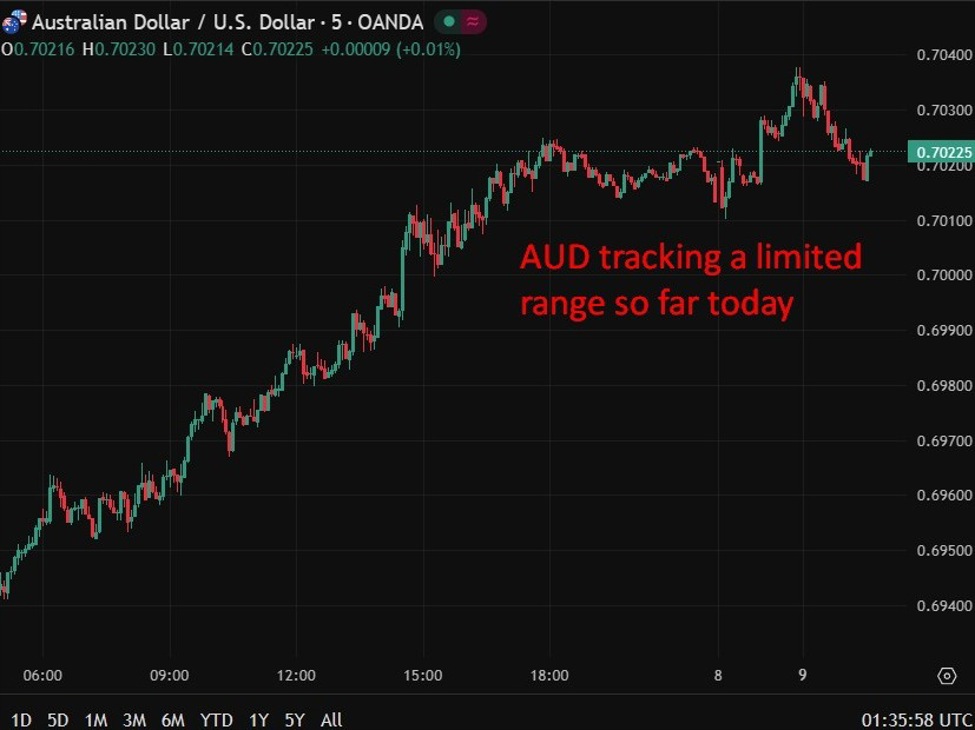
Australian household spending eased in December after strong sales-driven gains, but solid quarterly volumes underline why the RBA has turned hawkish on inflation.Summary:Australian household spending fell 0.4% m/m in December, after strong gains in October–NovemberAnnual spending growth slowed to 5.0%, from 6.3% previouslyQuarterly sales volumes rose 0.9%, adding an estimated 0.3ppt to GDPData supports the Reserve Bank of Australia’s decision to hike rates last weekMarkets now price a 74% chance of another RBA hike in MayAustralian household spending eased in December as consumers pulled back after heavy outlays during major year-end sales events, though underlying volumes remained firm, reinforcing the Reserve Bank of Australia’s decision to tighten policy last week.Data released Monday by the Australian Bureau of Statistics showed its monthly household spending indicator fell 0.4% in December to A$78.86 billion, following a 1.0% rise in November and a 1.4% increase in October. The annual pace of spending growth slowed to 5.0%, down from 6.3% previously.The ABS said the December pullback reflected a timing effect rather than a sharp deterioration in demand. via ABS:saw high spending in October and November, which had major sales and cultural events boost spendingfall in December indicates that households brought forward purchases during sales events in October and NovemberDespite the softer monthly outcome, the broader picture remained resilient. Sales volumes rose 0.9% over the December quarter, a solid gain that is estimated to add around 0.3 percentage points to GDP, highlighting that consumer demand remains a meaningful driver of growth.The data lands just days after the RBA lifted the cash rate by 25 basis points to 3.85%, its first rate hike in more than two years, citing renewed inflation pressures. Headline inflation stood at 3.6% last quarter and is forecast to climb to 4.2% by June, well above the central bank’s 2–3% target band.Robust consumer spending, record-high house prices and relatively easy credit conditions have all fed into concerns that financial conditions may not be sufficiently restrictive. Markets have responded by pushing rate expectations higher, with interest-rate swaps now implying a 74% probability of another hike in May and roughly 37bp of additional tightening priced for 2026.A breakdown of December spending showed goods purchases fell 0.5%, led by weaker demand for clothing, footwear, appliances and tools. Services spending slipped 0.3%, reflecting lower transport and health outlays.Looking ahead, economists expect higher borrowing costs to weigh on activity, but not derail consumption entirely. “The RBA’s rate hike last week will weigh on spending growth in 2026,” said Ben Udy, lead economist at Oxford Economics Australia, cited by Reuters. However, he added that easing inflation and solid wage growth should help prevent a sharper pullback in household demand.
This article was written by Eamonn Sheridan at investinglive.com.
💡 DMK Insight
Household spending in Australia dipped 0.4% in December, and here’s why that matters for traders: This decline, following robust gains in the previous months, signals a potential shift in consumer sentiment that could impact the Australian dollar and related assets. The Reserve Bank of Australia (RBA) is likely to remain hawkish on inflation, which could lead to tighter monetary policy. For traders, this means keeping an eye on the AUD/USD pair, especially if the RBA’s stance influences interest rate expectations. The recent quarterly sales volume increase of 0.9% suggests some resilience, but the slowdown in annual spending growth from 6.3% to 5.0% raises concerns about sustainability. If this trend continues, we might see increased volatility in the forex markets, particularly for AUD. Look for key technical levels around AUD/USD 0.6800 and 0.6750, as these could act as support or resistance. Also, watch for any comments from RBA officials that might hint at future policy moves, as these could trigger significant market reactions.
📮 Takeaway
Monitor AUD/USD closely, especially around 0.6800 and 0.6750, as shifts in RBA policy could create trading opportunities.