Bitcoin
  Ethereum
  Tether
  XRP
XRP  BNB
BNB  USDC
USDC  Solana
  TRON
TRON  Lido Staked Ether
  Figure Heloc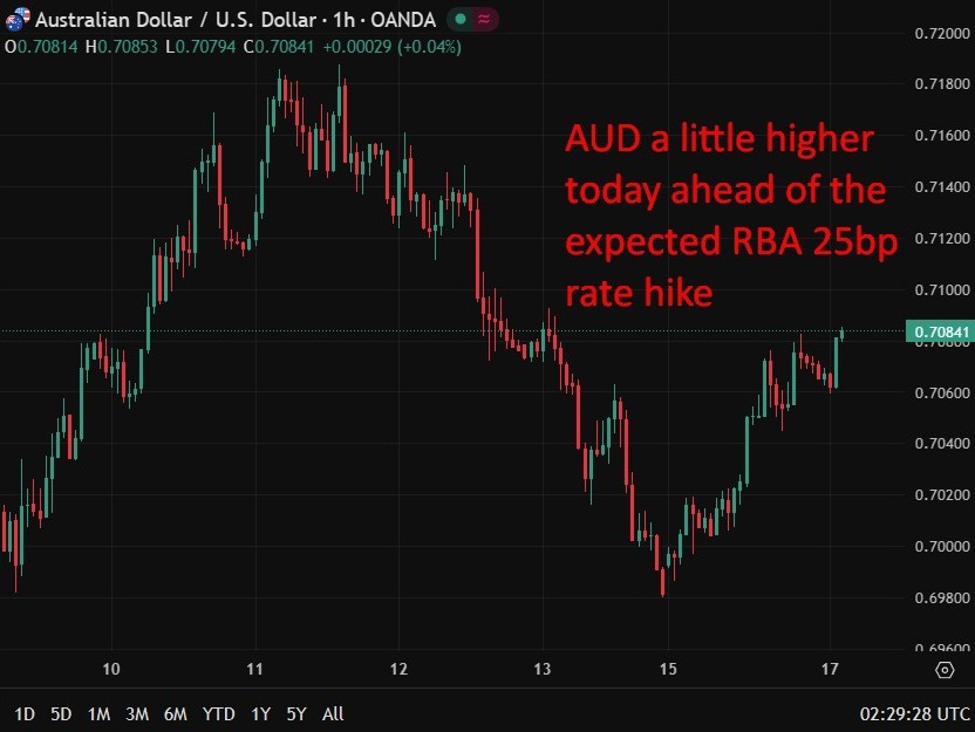
Australian consumer confidence hits pandemic-era lows while inflation expectations surge ahead of an expected RBA rate hike:Australian dollar supported as markets bet on RBA rate hikes – preview of today’s decisionEconomic & event calendar Asia 17 March 2026, Reserve Bank of Australia rate hike expectedSummary:ANZ–Roy Morgan Australian Consumer Confidence fell to 68.5, the lowest level since March 2020 when pandemic lockdowns began.Households are becoming increasingly pessimistic about both the one-year and five-year outlook for the economy.The deterioration in sentiment appears linked to geopolitical uncertainty and shifting expectations around inflation and interest rates.Inflation expectations remain elevated, reaching their highest level since November 2022, partly driven by a sharp rise in petrol prices.The weak sentiment data arrives just hours before the Reserve Bank of Australia’s policy decision, where markets expect a 25bp rate hike to 4.1%.With inflation still above target and the labour market tight, policymakers may show limited tolerance for energy-driven inflation shocks.Australian consumer sentiment has fallen to its weakest level since the early stages of the COVID-19 pandemic, underscoring growing anxiety among households as the country faces rising energy costs and renewed inflation risks.The ANZ–Roy Morgan consumer confidence index dropped to 68.5 points, its lowest reading since March 2020 when the first nationwide lockdowns were announced. The decline highlights a sharp deterioration in household sentiment as Australians grapple with a more uncertain economic environment.Survey results indicate households are increasingly pessimistic about both the short-term and longer-term outlook for the economy. Confidence in the economic outlook over the next year and the next five years has weakened notably, reflecting heightened geopolitical uncertainty and concerns that inflation may remain higher for longer than previously expected.A key driver of those concerns appears to be the renewed rise in inflation expectations. The survey showed that expectations for future inflation remain at their highest level since November 2022. The increase is partly linked to the recent surge in petrol prices, which tends to have an outsized impact on household perceptions of inflation because fuel costs are highly visible and affect everyday spending.The data arrives just ahead of the Reserve Bank of Australia’s policy decision, where markets widely expect the central bank to raise the cash rate by 25 basis points to 4.1%.Policymakers are balancing several competing forces. While consumer confidence has weakened significantly, inflation remains above the RBA’s 2–3% target range and the labour market continues to be viewed as tight. In that environment, central bank officials may be less willing to tolerate additional inflationary pressure from external shocks such as rising oil prices.Higher energy prices tied to geopolitical tensions have already begun to filter through to inflation expectations, potentially complicating the central bank’s task.For the RBA, maintaining credibility on inflation control may take priority even as household sentiment deteriorates, particularly if policymakers judge that inflation risks remain skewed to the upside.The combination of record-low consumer confidence and elevated inflation expectations highlights the difficult environment facing policymakers as they attempt to bring inflation back to target without triggering a deeper slowdown in economic activity.
This article was written by Eamonn Sheridan at investinglive.com.
💡 DMK Insight
Consumer confidence in Australia is plummeting, and that’s a big deal for traders right now. With the ANZ-Roy Morgan index hitting pandemic-era lows, it signals a potential shift in consumer spending patterns, which could impact economic growth. Coupled with rising inflation expectations, the Reserve Bank of Australia (RBA) is likely to respond with rate hikes, making the Australian dollar more attractive for traders looking to capitalize on interest rate differentials. If the RBA raises rates, expect volatility in AUD pairs, particularly against the USD and NZD. Watch for key support and resistance levels around recent highs and lows in these pairs, as traders react to the RBA’s decision. On the flip side, if consumer confidence continues to deteriorate despite rate hikes, it could lead to a slowdown in economic activity, which might weaken the AUD in the longer term. Keep an eye on the upcoming economic data releases and market sentiment to gauge how these factors interplay. The immediate focus should be on the RBA’s announcement and subsequent market reactions, especially if the rate hike is more aggressive than anticipated.
📮 Takeaway
Watch for the RBA’s rate decision today; a hike could strengthen the AUD, but declining consumer confidence may pose longer-term risks.