Bitcoin
  Ethereum
  Tether
  BNB
BNB  USDC
USDC  XRP
XRP  Solana
  TRON
TRON  Lido Staked Ether
  Figure Heloc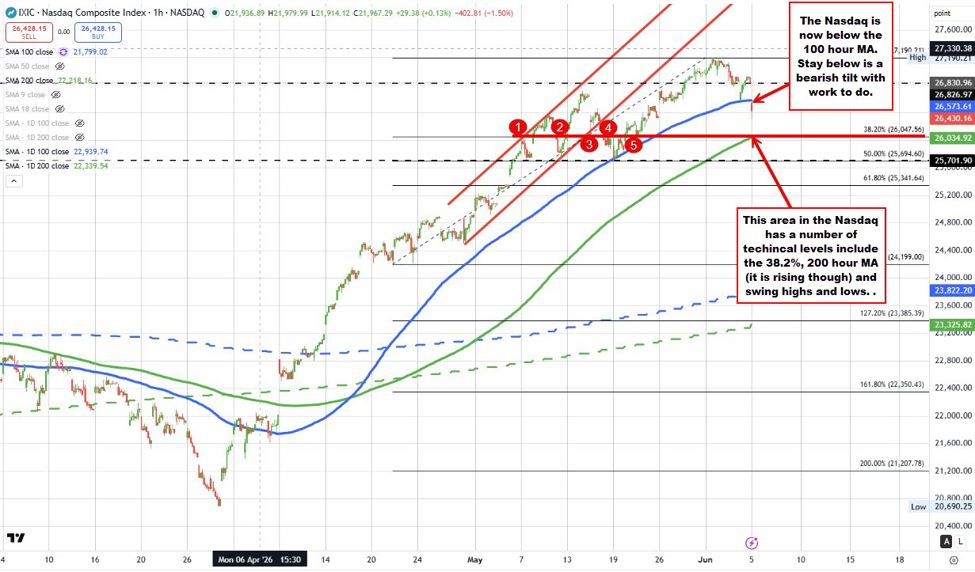
I want With the stronger-than-expected U.S. jobs report pushing Treasury yields sharply higher, the major U.S. stock indices are under pressure, with the NASDAQ leading the decline. The employment report showed nonfarm payrolls rising by 172K versus 85K expected, while upward revisions added a net 93K jobs to the prior two months. The unemployment rate held steady at 4.3%, and wage growth matched expectations at 0.3% month-over-month and 3.4% year-over-year. The data reinforced the view that the labor market remains resilient and reduced expectations for near-term Fed rate cuts.The bond market reacted swiftly. The 2-year Treasury yield is up about 10 basis points to 4.15%, while the 10-year yield has climbed 6.7 basis points to 4.542%. Rising yields are creating a headwind for equities, particularly the growth-oriented technology sector, helping to explain the NASDAQ’s underperformance.From a technical perspective, however, the picture is somewhat mixed. The S&P 500 is attempting to hold support against its 100-hour moving average, keeping buyers in the game for now. In contrast, the NASDAQ gapped below its 100-hour moving average following the jobs report and has continued to extend lower, giving sellers more control in that index.That divergence creates a dilemma for equity traders. The fundamental backdrop of stronger growth and higher yields is weighing on stocks, but key technical support levels have not yet broken across the board. As a result, traders will continue to focus on the major moving averages as both risk-defining and bias-defining levels in the major indices. Whether those supports hold or give way should provide important clues for the direction of the market into the close and in the trading days ahead..The video above outlines the traders dilemma and also the key levels in play for both the S&P and NASDAQ indices.
This article was written by Greg Michalowski at investinglive.com.
💡 DMK Insight
The unexpected surge in U.S. nonfarm payrolls is shaking up markets, and here’s why traders need to pay attention: With the jobs report showing 172K new jobs against an expectation of 85K, Treasury yields are spiking, which typically signals a tightening monetary policy. Higher yields often lead to a sell-off in equities, particularly in growth sectors like tech, which is why the NASDAQ is taking a hit. Traders should watch for key resistance levels on the NASDAQ; if it breaks below recent lows, it could trigger further selling pressure. This jobs data also raises questions about the Federal Reserve’s next moves—will they continue to hike rates to combat inflation? The ripple effects could extend to the forex market, particularly impacting USD pairs as traders adjust their positions based on anticipated Fed actions. But here’s the flip side: if the market overreacts to this data, there could be a buying opportunity in oversold stocks. Keep an eye on the 10-year Treasury yield; if it stabilizes, it might indicate that the market is digesting the news. Watch for volatility in the coming days as traders reassess their strategies based on this employment data.
📮 Takeaway
Monitor the NASDAQ for potential breakdowns below recent lows and watch the 10-year Treasury yield for signs of market stabilization.