
 Bitcoin
  Ethereum
  Tether
  BNB
BNB  USDC
USDC  XRP
XRP  Solana
  TRON
TRON  Lido Staked Ether
  Figure Heloc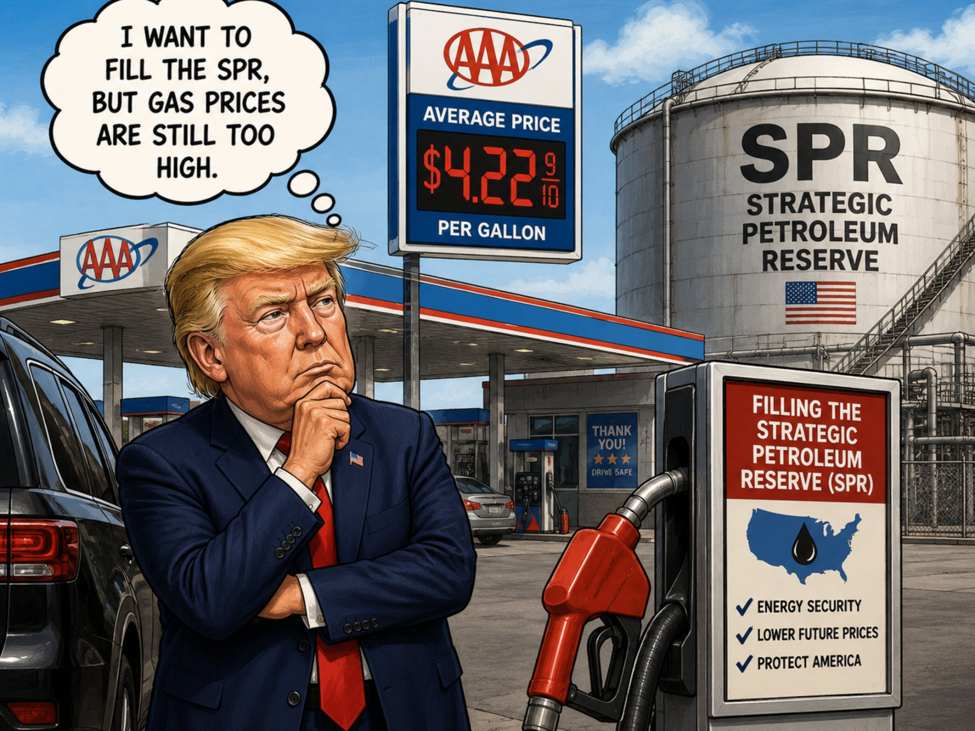
US Energy Secretary Wright is saying that the US will add 40M barrels after the Iran conflict is over. Here’s the full picture:Current level: As of the week ending May 29, 2026, the SPR recorded a release of 8 million barrels, bringing the total down to 357.1 million barrels — the lowest level since January 2024. Trump came into office with the SPR at around 392 million barrels and promptly pledged to fill it back up. In his January 2025 inaugural address, Trump indicated his administration intended to fill the SPR to capacity, and a February 2025 DOE Secretarial Order listed “Refill the Strategic Petroleum Reserve” as a department-level priority.For much of 2025, that refill actually happened — the SPR steadily climbed to around 411–415 million barrels by early 2026. But then the door closed with the Iran War start on February 28. The U.S. is in the process of releasing 172 million barrels from the SPR as part of a coordinated effort with the International Energy Agency (IEA) to release 400 million barrels of crude oil and refined products globally to address oil supply disruptions stemming from conflict in the Middle EastThe reserve posted back-to-back record drawdowns in mid-May, with 9.92 million barrels released in the week ending May 15 and 8.6 million the week before — bringing the stockpile to 365.1 million barrels at that point. At 365M (now 357M), the reserve sits at roughly half of its all-time high of 726.6 million barrels. Looking further back in timeThe longer view tells a much richer story:Trump’s first term (2017–2021): The SPR started around 660 million barrels and slowly drifted down through congressionally mandated sales, ending at about 638M when Biden took over — a gradual, managed decline.Biden era (2021–2025): The massive story. Starting in early 2022, the Biden administration released an unprecedented amount of oil — first in response to Russia’s Ukraine invasion, then as a broader energy price management tool. The SPR plummeted from ~638M to a 40-year low of roughly 347M barrels by late 2022, shedding nearly 300 million barrels in under two years. A slow refill then brought it back to ~392M by the time Biden left.Trump’s second term (2025–present): Came in promising to refill to capacity, and the SPR did tick up to about 415M by early 2026. Then the Strait of Hormuz crisis hit — a coordinated IEA emergency release has driven it back down to ~357M, erasing all the refill progress and then some.The big takeaway: the Biden drawdown of 2022 was historically enormous by any measure, and while Trump’s refill made a dent, the new 2026 crisis means the SPR is now heading in the wrong direction again.The bottom line: Trump promised to fill the SPR; it did rise modestly through 2025, but still not to levels that had existed in the past. With the price near $60 before the start of the conflict, the opportunity was there, but missed. The Strait of Hormuz crisis at the end of February triggered an emergency IEA-coordinated release that has now more than erased those gains, putting the reserve well below where it was on Inauguration Day. Pres. Trump would love to fill the SPR up as it was another campaign promice andcriticism of the Biden administration who depleted reserves due to the Russia/Ukraine war, but with AAA gas price at $4.22 currently (down from $4.55 or so, it is still too expensive.
This article was written by Greg Michalowski at investinglive.com.
💡 DMK Insight
The US plans to add 40M barrels to the SPR post-Iran conflict, and here’s why that matters: With the SPR currently at 357.1 million barrels after an 8 million barrel release, this move could significantly impact oil prices. Traders should keep an eye on how this announcement interacts with ongoing geopolitical tensions and supply-demand dynamics. If the market perceives this as a stabilizing factor, we might see a short-term dip in crude prices, especially if the conflict eases. However, if tensions escalate, the opposite could happen, leading to a spike in prices as traders flock to safe havens. It’s also worth noting that adding barrels to the SPR could be a strategic play to buffer against future supply shocks. Watch for technical levels around $70-$75 per barrel for WTI; a break below could signal bearish sentiment, while a bounce could indicate a bullish reversal. Keep an eye on the weekly inventory reports for any shifts in sentiment or unexpected draws that could affect market dynamics.
📮 Takeaway
Monitor WTI crude oil around the $70-$75 level; geopolitical developments could trigger significant price movements in the near term.