
 Bitcoin
  Ethereum
  Tether
  BNB
BNB  USDC
USDC  XRP
XRP  Solana
  TRON
TRON  Lido Staked Ether
  Figure Heloc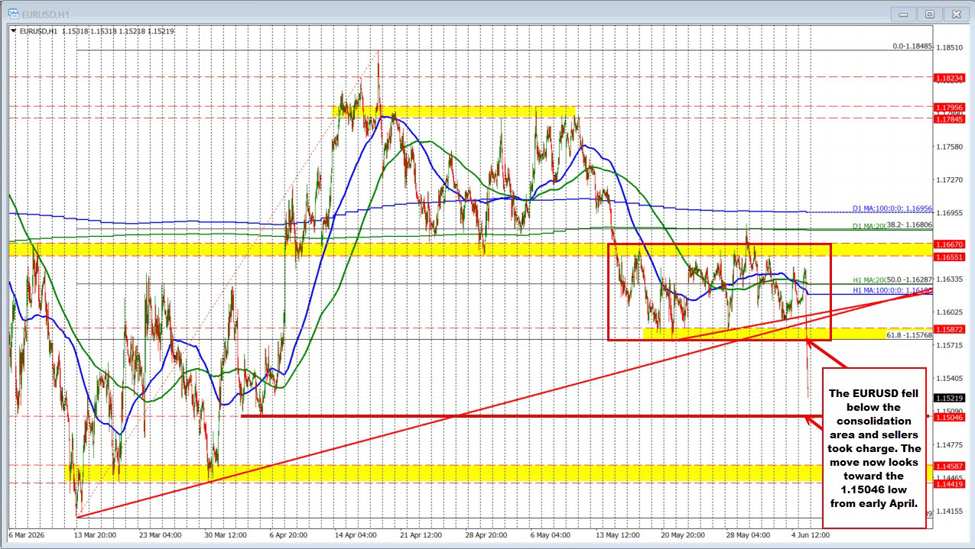
The EURUSD continues to slide lower after breaking below a key support zone between 1.15768 and 1.15872. That floor had held firm since May 20, with the pair finding support within the area on four separate trading days between May 20 and May 28. The decisive break below that zone shifted the technical bias more firmly in favor of the sellers.The move lower began earlier today when the pair broke beneath several important technical levels in quick succession, including the 200-hour moving average at 1.1628, the 100-hour moving average at 1.1620, and an upward-sloping trendline near 1.1600. Those breaks opened the door for increased downside momentum.Looking lower, the next key target comes in at the April 6 low of 1.15046. A move below that level would have traders focusing on the 1.1450 area, with the 2026 low at 1.14089 representing a more significant downside objective.Fundamentally, the move is being fueled by a sharp rise in U.S. Treasury yields following the stronger-than-expected U.S. jobs report. The 10-year yield is up 6.3 basis points, while the 2-year yield has surged 11.7 basis points, helping to underpin the U.S. dollar. The employment data has also added a new layer of intrigue ahead of Fed Chair Kevin Warsh’s first FOMC meeting on June 16-17. Recall that three policymakers dissented at the last meeting, favoring the removal of the easing bias. With labor market strength persisting and higher oil prices beginning to influence inflation expectations, the debate may increasingly shift toward whether policy should move to neutral—or even hint at a more hawkish stance—rather than maintain an easing bias.
This article was written by Greg Michalowski at investinglive.com.
💡 DMK Insight
The EURUSD’s drop below 1.15768-1.15872 is a game changer for traders. This support zone had been a reliable floor since May, and its breach signals a potential shift in market sentiment. Traders should be wary of further downside, especially if the pair tests the next support level around 1.1500. A sustained move below this could trigger stop-loss orders and accelerate selling pressure. Look for volatility in related markets, particularly the DXY index, which could see strength as the euro weakens. The broader context includes ongoing concerns about Eurozone economic stability, which could weigh on the euro further. On the flip side, if the EURUSD manages to reclaim the broken support zone, it could indicate a false breakdown, leading to a potential short squeeze. Keep an eye on economic data releases from both the Eurozone and the U.S. in the coming days, as these could provide additional catalysts for price movement.
📮 Takeaway
Watch for EURUSD’s behavior around 1.1500; a break below could lead to increased selling pressure.