
 Bitcoin
  Ethereum
  Tether
  BNB
BNB  USDC
USDC  XRP
XRP  Solana
  TRON
TRON  Lido Staked Ether
  Figure Heloc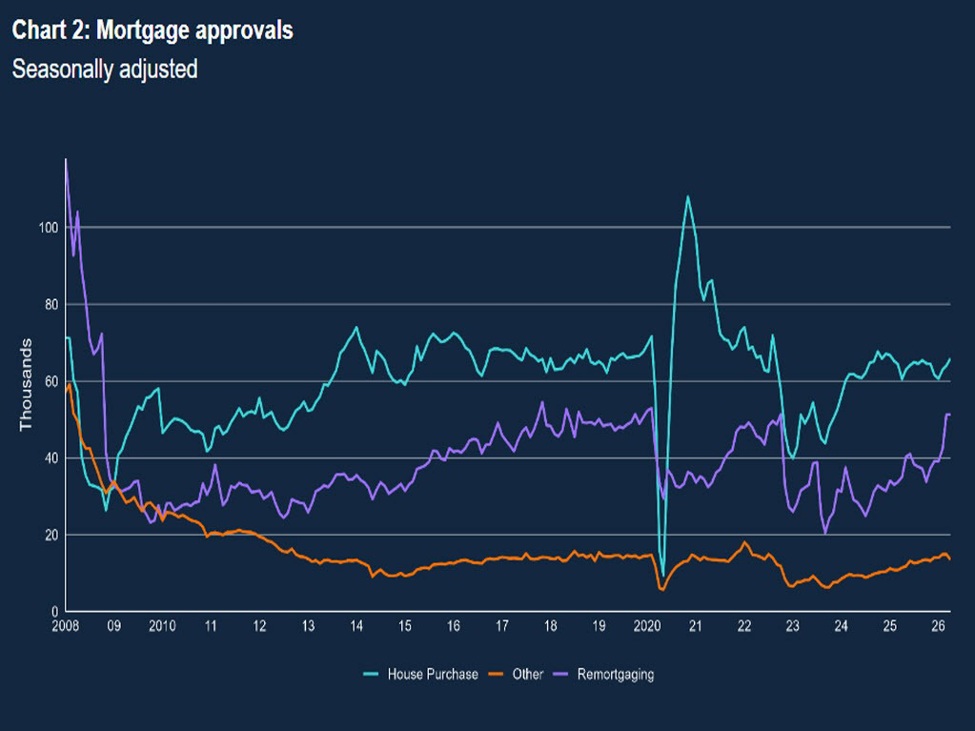
The latest money and credit data from the BOE shows that net borrowing of mortgage debt by individuals decreased to £4.4 billion in April. That follows from the £6.8 billion recorded in March. As for net mortgage approvals, that is seen increasing to 65,900 as compared to 64,000 in the month before. The figure is holding above an average of around 63,100 over the previous six months.Overall, that continues to indicate a solid benchmark for future borrowing. And if anything, it continues to suggest some added resilience in the housing market so far this year.And that comes despite the ‘effective’ interest rate – the actual interest paid – on newly drawn mortgages having increased to 4.08%.Looking to net consumer credit, that is seen mostly unchanged at £1.9 billion and keeping with the six-month average. The annual growth rate did slow to 8.8% in April, suggesting some tapering in overall economic momentum. Of note, the annual growth rate for credit card borrowing decreased to 11.8% (down from 12.3%) while the annual growth rate for other forms of consumer credit remained unchanged at 7.4%.
This article was written by Justin Low at investinglive.com.
💡 DMK Insight
Mortgage borrowing’s drop to £4.4 billion is a red flag for the housing market’s health. This decline signals tightening credit conditions, which could lead to reduced consumer spending and impact economic growth. With net mortgage approvals rising slightly to 65,900, it suggests that while some buyers are still entering the market, the overall trend is concerning. Traders should keep an eye on how this affects related sectors, particularly real estate stocks and consumer goods. If borrowing continues to decline, expect potential ripple effects in the housing market and broader economy, possibly leading to increased volatility in related assets. Watch for key support levels in housing-related ETFs and stocks, as a sustained downturn could trigger sell-offs. The next BOE meeting will be crucial; any hints at further tightening could exacerbate these trends.
📮 Takeaway
Monitor the housing market closely; a continued decline in mortgage borrowing could signal broader economic issues, affecting related assets and sectors.