 Bitcoin
  Ethereum
  Tether
  BNB
BNB  XRP
XRP  USDC
USDC  Solana
  TRON
TRON  Lido Staked Ether
  Figure Heloc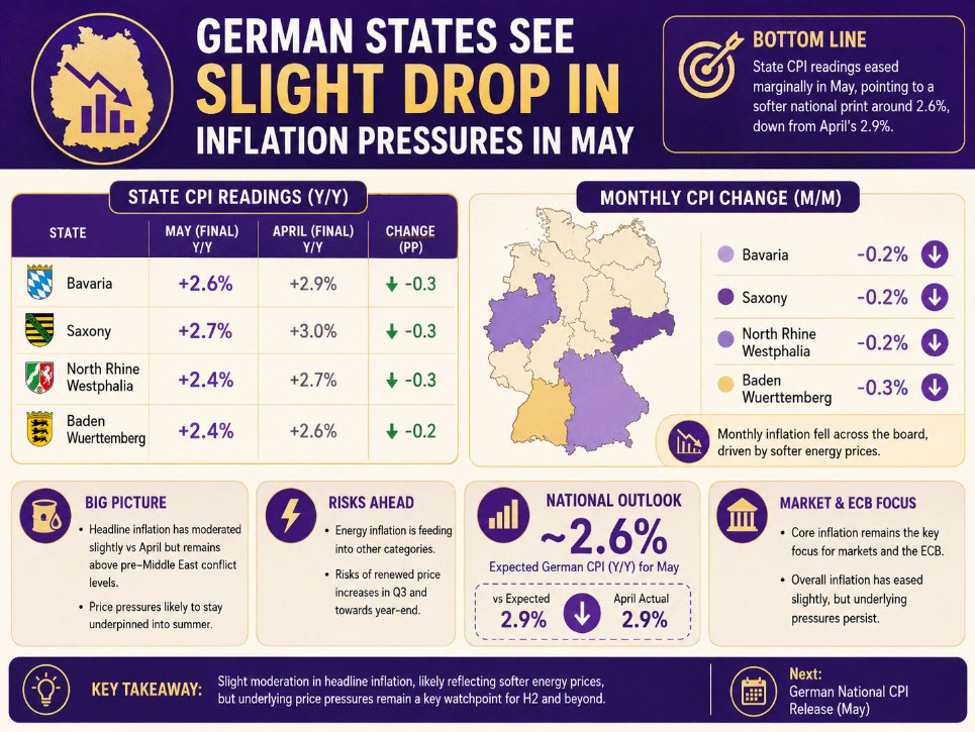
Here are all the state readings released around the same time:Bavaria CPI +2.6% vs +2.9% y/y priorSaxony CPI +2.7% vs +3.0% y/y priorNorth Rhine Westphalia CPI +2.4% vs +2.7% y/y priorBaden Wuerttemberg CPI +2.4% vs +2.6% y/y priorIt’s a bit of a change up compared to the preliminary readings for France and Spain earlier in the day. Even the monthly estimates here point to a marginal drop across the board. The breakdown shows monthly inflation falling in Bavaria (-0.2%), Saxony (-0.2%), North Rhine Westphalia (-0.2%), and Baden Wuerttemberg (-0.3%).Overall, that points to slightly softer headline annual inflation estimates when compared to April. That being said, they still represent a modest jump since the Middle East conflict began. And given the state of things, we are likely to see price pressures continue to stay underpinned going into the summer months.And as energy price inflation becomes more embedded into other categories, that will risk seeing a further increase in prices in Q3 and even in the months after towards the end of this year. So, just be wary of that.Circling back to the numbers here, this likely points to the national reading later coming in around 2.6% at the balance. And that will be off the expected 2.9% reading, which was also the April estimate.If anything, this points to some moderation in energy prices since last month. But in the overall picture, core inflation/prices will still be the main focus for markets and the ECB.
This article was written by Justin Low at investinglive.com.
💡 DMK Insight
Germany’s CPI readings are cooling down, and here’s why that matters for traders: The latest inflation figures from key German states show a downward trend, with Bavaria at +2.6%, Saxony at +2.7%, and North Rhine Westphalia at +2.4%. This is a shift from previous readings and could signal a broader easing of inflationary pressures. For traders, this is crucial as it may influence the European Central Bank’s (ECB) monetary policy decisions. If inflation continues to decline, the ECB might reconsider its interest rate hikes, which could lead to a weaker euro against the dollar and other currencies. Keep an eye on the euro’s response in the forex market, particularly if it approaches key support levels. But there’s a flip side: while lower inflation might seem positive, it could also indicate slowing economic growth, which could dampen market sentiment. Traders should watch for any shifts in economic indicators that could suggest a recessionary trend. The immediate focus should be on the euro’s performance against the dollar, especially if it tests the 1.05 level. If it breaks below that, it could trigger further selling pressure. Watch for upcoming economic reports that could provide more clarity on this situation.
📮 Takeaway
Monitor the euro closely, especially around the 1.05 level, as declining CPI could shift ECB policy and impact forex trading strategies.