
 Bitcoin
  Ethereum
  Tether
  BNB
BNB  XRP
XRP  USDC
USDC  Solana
  TRON
TRON  Lido Staked Ether
  Figure Heloc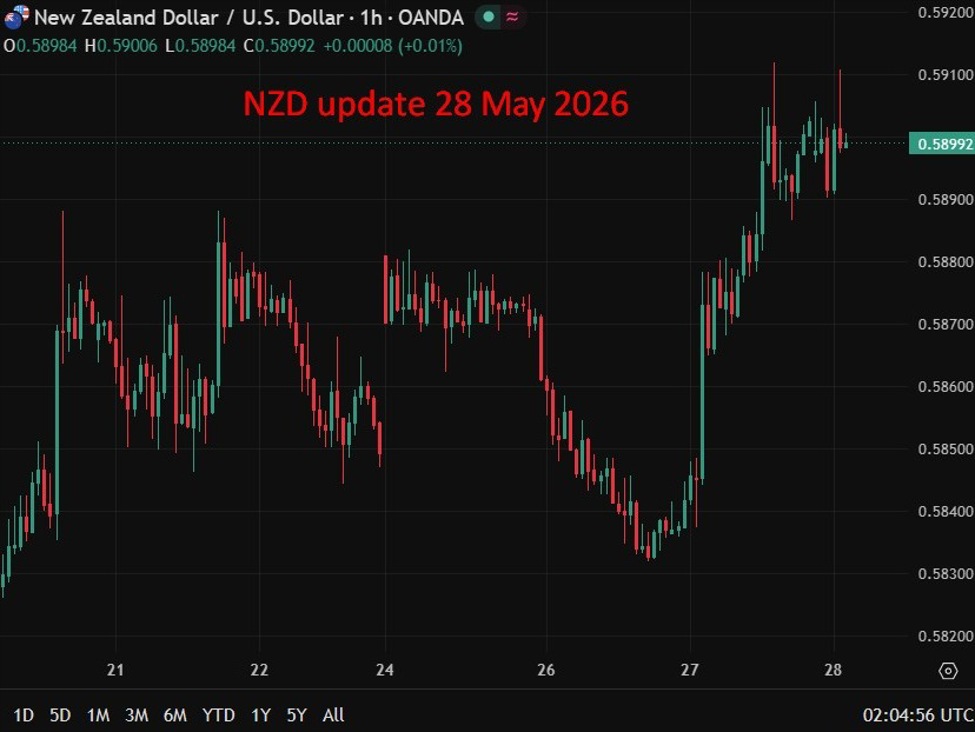
New Zealand forecast a narrower 2025/26 budget deficit of NZ$15.06 billion but cut its 2026/27 GDP growth forecast to 2.3% and projected inflation peaking at 4.0% in Q2 2026. Summary:
Source: New Zealand Budget 2026, released 28 May 2026; New Zealand Debt Management Office; Finance MinisterThe 2025/26 OBEGAL deficit is forecast at NZ$15.06 billion, narrower than the NZ$16.93 billion projected in December’s half-year fiscal updateThe 2026/27 OBEGAL deficit is forecast at NZ$14.09 billion, wider than the NZ$12.99 billion forecast in DecemberNet debt is forecast to peak at 46.1% of GDP in 2027/28, down from a prior peak forecast of 46.9%; the 2025/26 net debt estimate is 42.4% of GDP against a December forecast of 43.3%GDP growth for 2026/27 is forecast at 2.3%, well below the December estimate of 3.4%New Zealand Treasury sees inflation peaking at 4.0% in Q2 2026Gross bond issuance for 2026/27 is unchanged at NZ$34 billion; four-year gross issuance to June 2030 was trimmed to NZ$124 billion from NZ$130 billionThe Finance Minister announced a new prudential levy on banks, non-bank deposit takers, insurers, and other financial market participants, expected to recover around NZ$209 million over four yearsThe government expects to return to an OBEGAL surplus in 2029/30New Zealand delivered a budget on Thursday that showed a modestly improved near-term fiscal position relative to December forecasts, but paired it with a significant downgrade to economic growth and a projection that inflation will peak at 4.0% in the current quarter, adding to the pressure already bearing on the Reserve Bank of New Zealand.The operating balance before gains and losses deficit for 2025/26 came in at NZ$15.06 billion, narrower than the NZ$16.93 billion projected in December’s half-year economic and fiscal update. Net debt for the current year was also revised down slightly, to 42.4% of GDP from 43.3% in December, and the peak debt level was trimmed to 46.1% of GDP in 2027/28, compared with a prior forecast of 46.9% across 2027/28 and 2028/29. The government said it expects to return to an OBEGAL surplus by 2029/30.The near-term improvement, however, sits alongside a deterioration in the forward outlook. The 2026/27 OBEGAL deficit is now forecast at NZ$14.09 billion, wider than the NZ$12.99 billion projected in December, suggesting that fiscal consolidation through the middle years of the decade is proving harder to achieve than the government had anticipated.The growth picture is the more striking revision. New Zealand Treasury cut its 2026/27 GDP growth forecast to 2.3% from 3.4% in December, a downgrade of more than a percentage point that reflects the weight of higher borrowing costs, softer global demand, and the inflationary headwinds flowing from the Iran conflict and its energy market consequences. Treasury projects inflation peaking at 4.0% in the second quarter of 2026, a level that reinforces the hawkish tone the RBNZ struck this week when Governor Breman signalled the committee sees the cash rate needing to move higher.On bond issuance, the Debt Management Office held gross bond issuance for 2026/27 steady at NZ$34 billion, in line with December guidance, while trimming the four-year gross issuance programme to NZ$124 billion from NZ$130 billion, a modest reduction in supply that will be noted by fixed income markets.The Finance Minister used the budget to announce a new prudential levy covering banks, non-bank deposit takers, insurers, and other financial market participants, designed to recover approximately NZ$209 million over four years. The measure is modest in revenue terms but adds to the regulatory cost environment for New Zealand’s financial sector at a time when institutions are already navigating a shifting rate outlook.—The narrower 2025/26 deficit and lower debt peak will offer some reassurance to NZ bond markets, and the reduction in four-year gross issuance from NZ$130 billion to NZ$124 billion removes some supply pressure from the curve. However, the sharp downgrade to the 2026/27 GDP growth forecast, from 3.4% to 2.3%, and the projection of inflation peaking at 4.0% in Q2 2026 present a stagflationary undertone that complicates the outlook. The widening of the 2026/27 OBEGAL deficit relative to December estimates signals that near-term fiscal consolidation is proving harder than expected. The prudential levy on banks and financial institutions is a modest revenue measure but adds to the regulatory cost burden on the sector.
This article was written by Eamonn Sheridan at investinglive.com.
💡 DMK Insight
New Zealand’s budget forecast cuts could signal economic headwinds ahead for traders. A narrower budget deficit of NZ$15.06 billion for 2025/26 might sound positive, but the reduced GDP growth forecast to 2.3% and projected inflation peaking at 4.0% in Q2 2026 raise concerns. This suggests that the economy may not be as robust as previously thought, which could lead to tighter monetary policy from the Reserve Bank of New Zealand. Traders should keep an eye on how these fiscal changes impact the NZD, especially against major pairs like AUD/NZD or NZD/USD. If inflation pressures persist, we might see volatility in the forex markets as traders adjust their positions based on interest rate expectations. On the flip side, if the government manages to control inflation effectively, it could stabilize the NZD in the long run. Watch for any comments from the Reserve Bank regarding interest rates in the coming weeks, as they could provide further insight into market direction. Key levels to monitor include support around NZD/USD 0.6000 and resistance near 0.6200, which could dictate trading strategies in the near term.
📮 Takeaway
Watch for Reserve Bank of New Zealand comments on interest rates; key NZD/USD levels are 0.6000 support and 0.6200 resistance.


