
 Bitcoin
  Ethereum
  Tether
  XRP
XRP  BNB
BNB  USDC
USDC  Solana
  TRON
TRON  Lido Staked Ether
  Figure Heloc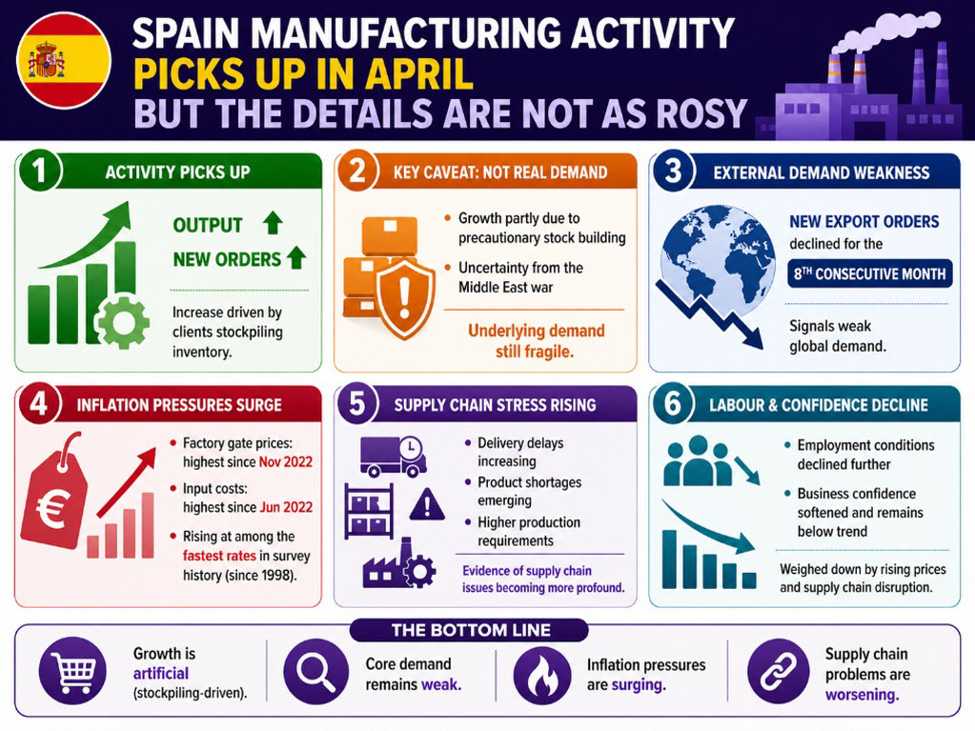
Manufacturing PMI 51.7 vs 49.5 expectedPrior 48.7That’s a surprising jump but the details show that it is mostly on the back of a notable push up in new orders and output as clients look to
secure stock. Of note, HCOB points out that “growth in new work however in part reflected client stock
building due to the uncertainty caused by the war in the
Middle East, especially in relation to supply chains, product
availability and prices”.Adding that underlying demand is still relatively fragile, as was the case with international demand, with new export orders declining
in April for an eighth successive month.Besides that, there was once again another considerable accelerations in inflation pressures. Factory gate prices rose at the steepest pace since
November 2022, which led to input prices increasing to the greatest degree since June 2022 and therefore at a
rate amongst the greatest seen in the survey history (which
began in early 1998).Meanwhile, delivery delays and higher production requirements were much more evident in April. That is evidence of supply chain issues starting to become more profound with product shortages also showing up.Rounding that off is a further drop in employment conditions and also softening confidence levels. The latter continues to run below trend amid over
price trends and supply chain disruption.HCOB notes that:“Spain’s manufacturing sector recorded growth of
both output and new orders in April, marking a positive
reversal from March’s outturn. However, lift the lid on
the latest data and growth was in part supported by
client inventory building as firms raced to secure goods
given the product shortages and supply disruption
caused by the war in the Middle East. Overall, sentiment
remains historically low, and firms are expressing
notable uncertainty in the outlook.
“Moreover, amid the energy shock and supply disruption,
input prices are rising at a severe rate and to a degree
not seen since mid-2022. Crucially the level of pass
through was also significant, with selling price inflation
picking up to its fastest level in just short of threeand-a-half years. Although there remains significant
uncertainty on the length and duration of the price and
supply shock, the willingness of a notable number of
firms to raise their prices increases the possibility of
second round inflation effects already being in play.”
This article was written by Justin Low at investinglive.com.
💡 DMK Insight
The unexpected rise in Manufacturing PMI to 51.7 signals potential economic resilience, but here’s the catch: it’s driven mainly by new orders, not broad-based growth. For traders, this could mean short-term bullish sentiment, especially in sectors tied to manufacturing and supply chains. However, the underlying details suggest caution; if new orders are merely stockpiling rather than sustained demand, we might see a pullback. Keep an eye on related assets like industrials and materials, as they could react strongly to this data. Watch for key resistance levels around 52.5 in PMI, which could indicate whether this uptick is a trend or a blip. Also, monitor the next few weeks for any shifts in consumer sentiment or further economic indicators that could confirm or contradict this PMI reading.
📮 Takeaway
Watch for PMI resistance at 52.5 and monitor new orders for signs of sustained demand; volatility could follow if expectations shift.