Bitcoin
  Ethereum
  Tether
  XRP
XRP  BNB
BNB  USDC
USDC  Solana
  TRON
TRON  Lido Staked Ether
  Figure Heloc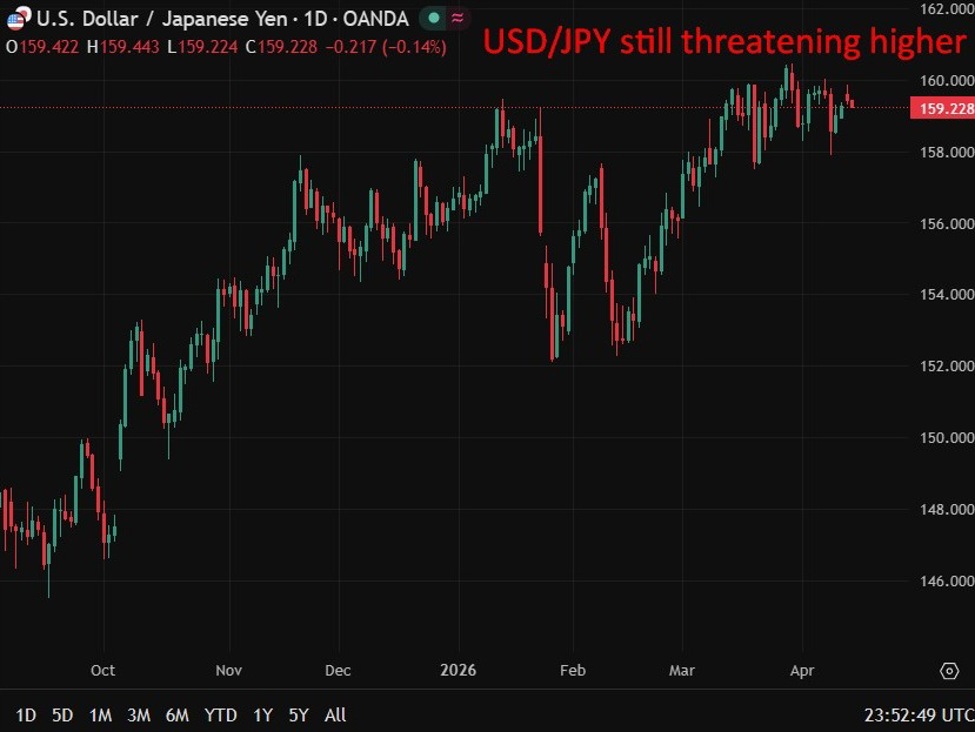
Japan’s Katayama outlines global meeting agenda, offers no new policy signals.Summary:Katayama to attend G7, G20, IMF, World Bank meetings
Talks to cover financial markets and energy situation
Japan signals readiness to support Asian economies
Monitoring JGB yields, maintaining market dialogue
Monetary policy decisions left to BoJJapan’s Finance Minister Satsuki Katayama outlined her upcoming participation in a series of international meetings in Washington, signalling continued engagement on global financial and economic developments, though her remarks carried little in the way of new policy signals.Katayama confirmed she will attend gatherings of G7 and G20 finance leaders, alongside meetings hosted by the International Monetary Fund and World Bank, beginning April 15. The discussions are expected to focus on key global themes, including financial market conditions and the evolving energy landscape, particularly in light of ongoing geopolitical tensions.She indicated that Japan will use these forums to coordinate closely with international counterparts, with energy market developments and financial stability likely to be central topics. Katayama also noted that Japan stands ready to support Asian economies if needed, suggesting a willingness to contribute to regional stability efforts amid the broader global shock.On domestic matters, Katayama addressed the recent rise in Japanese government bond yields, reiterating that authorities will maintain close communication with market participants. However, she stopped short of signalling any specific intervention measures or policy shifts.She also reinforced the division of responsibilities between fiscal and monetary authorities, stating that decisions regarding monetary policy operations remain firmly within the remit of the Bank of Japan.Overall, the comments were largely procedural, highlighting Japan’s participation in upcoming global discussions and its readiness to engage on key issues, without introducing new guidance on policy direction or market intervention.
This article was written by Eamonn Sheridan at investinglive.com.
💡 DMK Insight
Japan’s Finance Minister Katayama’s recent comments signal a cautious approach to monetary policy, and here’s why that matters: With no new policy signals emerging from the upcoming G7 and G20 meetings, traders should be wary of potential volatility in the yen and Japanese government bonds (JGBs). The focus on monitoring JGB yields indicates that the Bank of Japan (BoJ) may be preparing for a more proactive stance if yields rise too sharply, which could impact global markets. If JGB yields spike, it might lead to a stronger yen, affecting export-driven stocks and potentially causing a ripple effect across Asian economies. Traders should keep an eye on the 10-year JGB yield as a key indicator; any significant movement could prompt a reaction from the BoJ. On the flip side, the lack of immediate policy changes could mean that the current low-interest environment remains intact for longer, which might support equities in Japan. However, with global economic pressures mounting, the situation could change rapidly. Watch for any updates from the BoJ or unexpected shifts in yield that could signal a change in market sentiment.
📮 Takeaway
Monitor the 10-year JGB yield closely; any significant rise could trigger a BoJ response and impact the yen and Asian markets.