Bitcoin
  Ethereum
  Tether
  XRP
XRP  BNB
BNB  USDC
USDC  Solana
  TRON
TRON  Lido Staked Ether
  Figure Heloc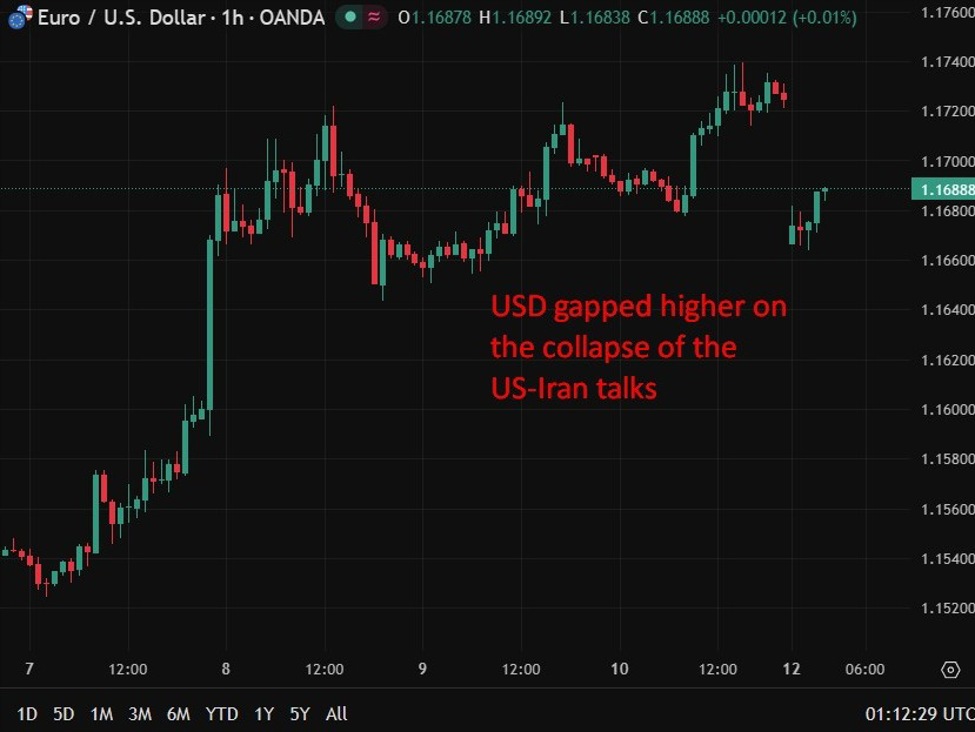
Recapping this ICYMI earlier. Hungary’s election removes a key EU disruptor, signalling a shift toward greater integration, policy alignment, and potential economic support flows from Brussels.Summary:Hungary delivers political shock with Orbán ousted after 16 years
Centre-right Tisza party wins decisive majority amid record turnout
Outcome signals shift back toward EU alignment and policy cooperation
Opens door to EU funding release and reduced internal bloc friction
Markets see marginally positive implications for the euroHungary’s election has delivered a major political reset, with long-time Prime Minister Viktor Orbán losing power after 16 years to the centre-right Tisza party led by Péter Magyar. The result, confirmed after near-complete vote counting, gives Tisza a strong parliamentary majority and potentially the two-thirds control required to implement sweeping reforms. The scale of the outcome was underscored by record turnout, estimated at around 79%, reflecting the significance voters attached to the election. Magyar framed the vote as a strategic choice between alignment with the European mainstream and continued divergence under Orbán’s “illiberal” model. Voters ultimately opted for change, amid concerns over economic stagnation, governance issues, and Hungary’s increasingly isolated position within the European Union. The implications extend well beyond domestic politics. Orbán had frequently acted as a disruptive force within the EU, blocking key initiatives including financial support for Ukraine. His departure is expected to ease internal tensions and improve policy coordination across the bloc. Early expectations are that Hungary could now support previously stalled measures, including significant EU financial assistance packages. The shift may also unlock EU funds that had been withheld over rule-of-law concerns, providing a boost to Hungary’s economic outlook. At the same time, it weakens Russia’s influence within the EU by removing one of its closest political allies inside the bloc.While challenges remain, particularly around migration and domestic reforms, the overall direction points toward a more cooperative and integrated Hungary within the European framework. —This is incrementally euro-positive at the margin. Orbán’s exit reduces internal EU fragmentation risk, particularly around fiscal coordination and Ukraine funding, which markets had viewed as a recurring tail risk. The potential release of frozen EU funds into Hungary supports regional growth and reduces intra-bloc divergence, both constructive for the euro.More broadly, the result strengthens the perception of EU policy cohesion at a time of external geopolitical stress (energy, war). That matters for FX: a more unified EU lowers political risk premia embedded in EUR assets.That said, the impact is second-order rather than dominant. In the current environment, EUR will still be driven primarily by energy prices and global risk sentiment (especially via the US–Iran conflict). But at the margin, this removes a persistent structural headwind for the currency.
This article was written by Eamonn Sheridan at investinglive.com.
💡 DMK Insight
Hungary’s election results are a game changer for EU markets, and here’s why: the ousting of Orbán could lead to smoother relations with Brussels, which traders need to watch closely. With the Tisza party’s decisive majority, we might see a shift toward policies that align more closely with EU standards. This could open the door for increased economic support and investment flows from the EU, impacting sectors like infrastructure and energy. Traders should keep an eye on the Hungarian forint and related assets, as any signs of renewed confidence could lead to a rally. The broader implications could ripple through Central and Eastern European markets, especially if Hungary’s new government pushes for reforms that attract foreign investment. But don’t overlook the potential volatility. Political shifts can lead to uncertainty in the short term, so monitoring key economic indicators and sentiment in the region will be crucial. Watch for any statements from the new government regarding EU relations and economic policy, as these will likely influence market movements in the coming weeks.
📮 Takeaway
Traders should monitor Hungary’s new government’s policy announcements closely, as they could signal increased EU support and impact the forint and regional markets.