Bitcoin
  Ethereum
  Tether
  XRP
XRP  BNB
BNB  USDC
USDC  Solana
  TRON
TRON  Lido Staked Ether
  Figure Heloc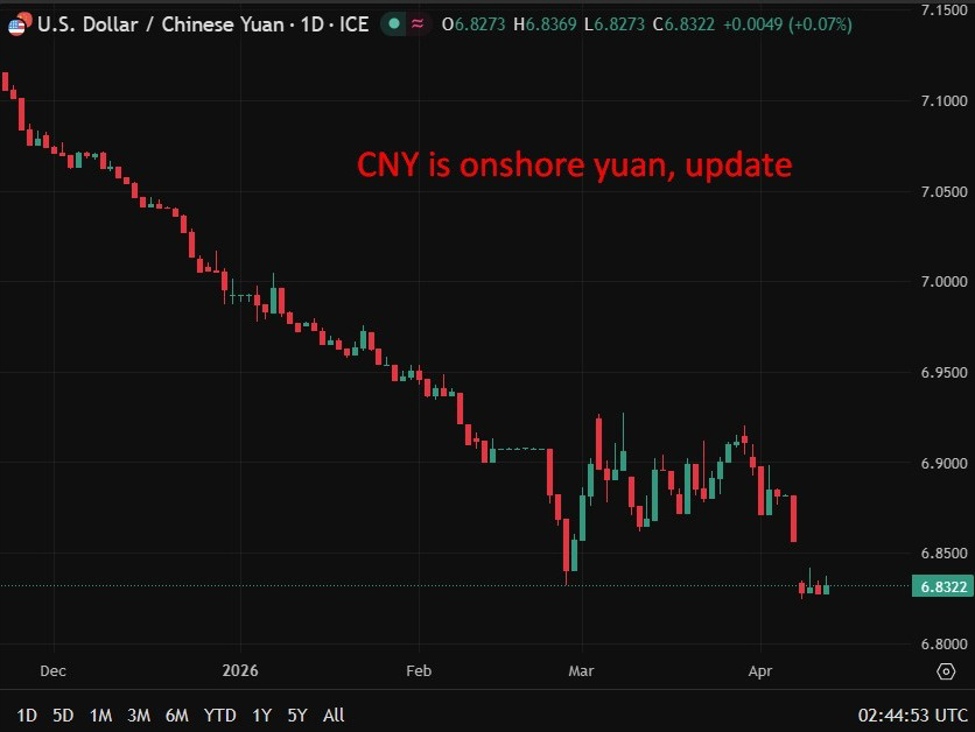
China’s inflation outlook has been nudged higher, but externally driven price pressures and weak domestic demand mean policymakers still have room to ease further.Summary:BofA lifts China inflation forecasts but sees pressures externally driven
CPI seen at 1.0%, PPI at 1.2% for 2026
Inflation remains below PBoC comfort levels
Weak domestic demand keeps easing bias intact
Policy space remains open for further rate cuts
China’s policymakers are expected to retain flexibility to ease monetary policy further, despite a modest upgrade to the country’s inflation outlook (China’s March inflation data confirms a key turning point), according to Bank of America. The bank has revised its 2026 forecasts higher, now seeing consumer price inflation (CPI) at 1.0% and producer price inflation (PPI) at 1.2%.However, the upward revision does not signal a meaningful shift in underlying economic momentum. BofA emphasises that the recent firming in prices is largely being driven by external factors, particularly higher global energy and commodity costs, rather than a sustained recovery in domestic demand. This distinction is critical for policymakers assessing the appropriate stance of monetary policy.Inflation remains well below levels that would typically constrain the People’s Bank of China (PBoC). As a result, authorities are unlikely to view the modest uptick in price pressures as a barrier to further easing, especially if economic activity fails to gain traction. Weak consumption, ongoing property sector challenges, and subdued private sector confidence continue to weigh on the domestic growth outlook.Against this backdrop, BofA argues that the PBoC retains scope to cut interest rates further or deploy additional supportive measures if needed. The central bank’s priority remains stabilising growth rather than containing inflation, given the absence of demand-driven price pressures.The outlook reinforces the view that China’s macro environment remains characterised by low inflation and policy support, even as global factors introduce some upward pressure on prices. For markets, this suggests that easing bias remains firmly in place, with policy likely to stay accommodative unless there is a more convincing improvement in domestic demand conditions.
This article was written by Eamonn Sheridan at investinglive.com.
💡 DMK Insight
China’s inflation outlook is shifting, and here’s why it matters for traders: With Bank of America raising its inflation forecasts to 1.0% for CPI and 1.2% for PPI by 2026, traders need to pay attention to how this could influence the People’s Bank of China’s (PBoC) monetary policy. The weak domestic demand suggests that while inflation is nudging higher, the PBoC still has room to ease, which could lead to a weaker yuan and impact forex markets. If the PBoC decides to cut rates further, it could trigger capital outflows, affecting not just the yuan but also commodities and equities tied to Chinese growth. But here’s the flip side: if inflation pressures are primarily externally driven, it might not lead to the expected easing. Traders should keep an eye on key economic indicators, especially any shifts in consumer spending or manufacturing data in China. Watch for the yuan’s performance against the dollar; a significant move could indicate broader market sentiment. The immediate focus should be on how the PBoC reacts in the coming months, especially as we approach key economic reports.
📮 Takeaway
Monitor the yuan’s performance against the dollar closely; any significant weakness could signal PBoC easing, impacting forex and commodity markets.