Bitcoin
  Ethereum
  Tether
  XRP
XRP  BNB
BNB  USDC
USDC  Solana
  TRON
TRON  Lido Staked Ether
  Figure Heloc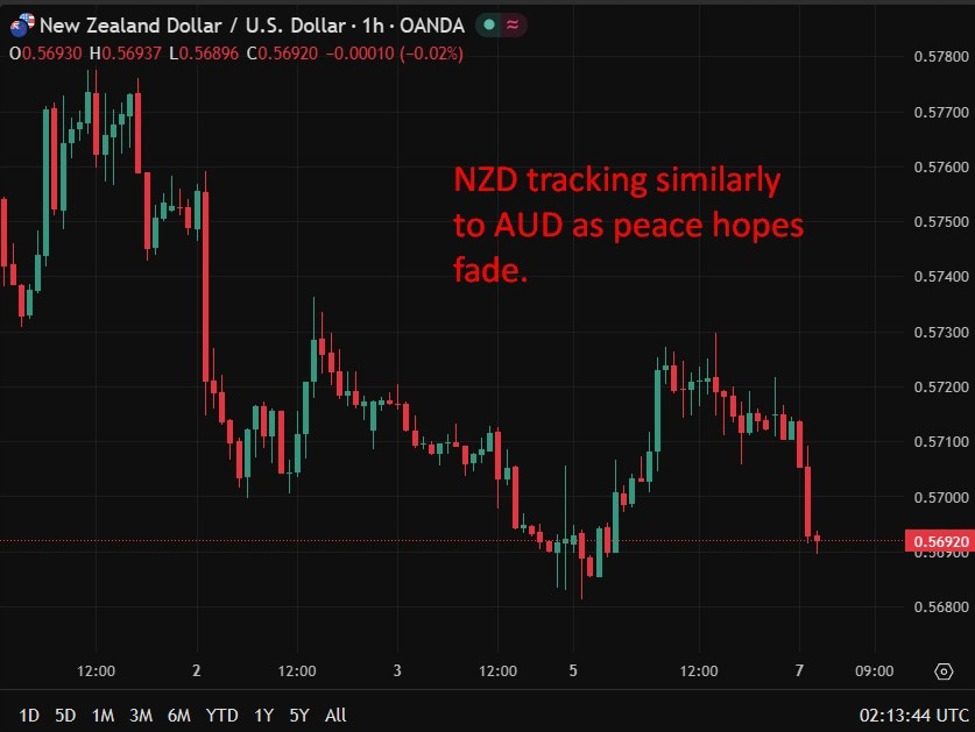
Middle East supply shock drives broad commodity surge, pushing ANZ index near record highs.Summary:Commodity prices surged in March amid Middle East conflict
ANZ index rose 4.1% m/m, near record highs
Gains broad-based; dairy, aluminium led
Supply fears triggered precautionary buying
UAE smelter damage tightened aluminium supply
NZD weakness boosted local price index to recordGlobal commodity prices surged sharply in March, with the ANZ World Commodity Price Index rising 4.1% m/m, driven primarily by the escalation of the Middle East conflict that began in late February. The move pushed the index to its second-highest monthly level on record in world price terms, surpassed only by the spike seen at the onset of the Russia–Ukraine war in March 2022. The breadth of the gains underscores the scale of the shock, with nearly all major commodity categories rising over the month.Dairy prices led the advance, climbing 5.9% m/m as importers accelerated purchases to secure supply amid concerns over potential disruptions to global trade flows. While underlying milk supply remains relatively healthy, the current surge reflects precautionary demand rather than structural shortages, suggesting some risk of reversal once conditions stabilise. Industrial metals also saw strong upside, with aluminium prices jumping 9.8% m/m. This was partly driven by direct supply disruption, after a major smelter in the UAE sustained damage in late March. Given Gulf producers account for roughly 8–9% of global aluminium output, the incident has tightened supply expectations and reinforced upward price pressure. Agricultural markets also contributed, with meat and fibre prices rising 2.4% m/m amid firm global demand and constrained supply conditions. Meanwhile, forestry prices rose modestly, though margins remain under pressure due to rising shipping costs linked to higher fuel prices.The New Zealand dollar weakened over the month, averaging around 2.8% lower against the US dollar. This amplified gains in local currency terms, pushing the NZD Commodity Price Index up 6.4% m/m to a record high.Overall, the March data highlights how rapidly geopolitical shocks are feeding through into global commodity markets, with both direct supply disruptions and precautionary demand combining to drive a broad-based price surge. —ps. Reserve Bank of New Zealand expected on hold tomorrow.
This article was written by Eamonn Sheridan at investinglive.com.
💡 DMK Insight
Commodity prices are on fire, and here’s why traders need to pay attention: The recent surge in the ANZ index, up 4.1% month-over-month, signals a significant shift in market dynamics, largely driven by geopolitical tensions in the Middle East. This isn’t just a blip; supply fears are causing precautionary buying across the board, particularly in dairy and aluminum. With aluminum supply tightening due to damage at a UAE smelter, traders should be on alert for potential price spikes. The NZD’s weakness also plays into this, as it could lead to increased export competitiveness, but it also raises concerns about inflationary pressures domestically. Look, while the mainstream narrative might focus solely on the immediate price increases, the real story is the potential for sustained volatility in commodity markets. If these tensions escalate, we could see further disruptions, impacting not just commodities but also related assets like the NZD and broader equity markets. Keep an eye on key levels in aluminum and dairy prices, as well as the NZD/USD exchange rate, for potential trading opportunities.
📮 Takeaway
Watch for aluminum prices to break key resistance levels and monitor the NZD/USD for potential volatility as geopolitical tensions evolve.