Bitcoin
  Ethereum
  Tether
  BNB
BNB  XRP
XRP  USDC
USDC  Solana
  TRON
TRON  Lido Staked Ether
  Figure Heloc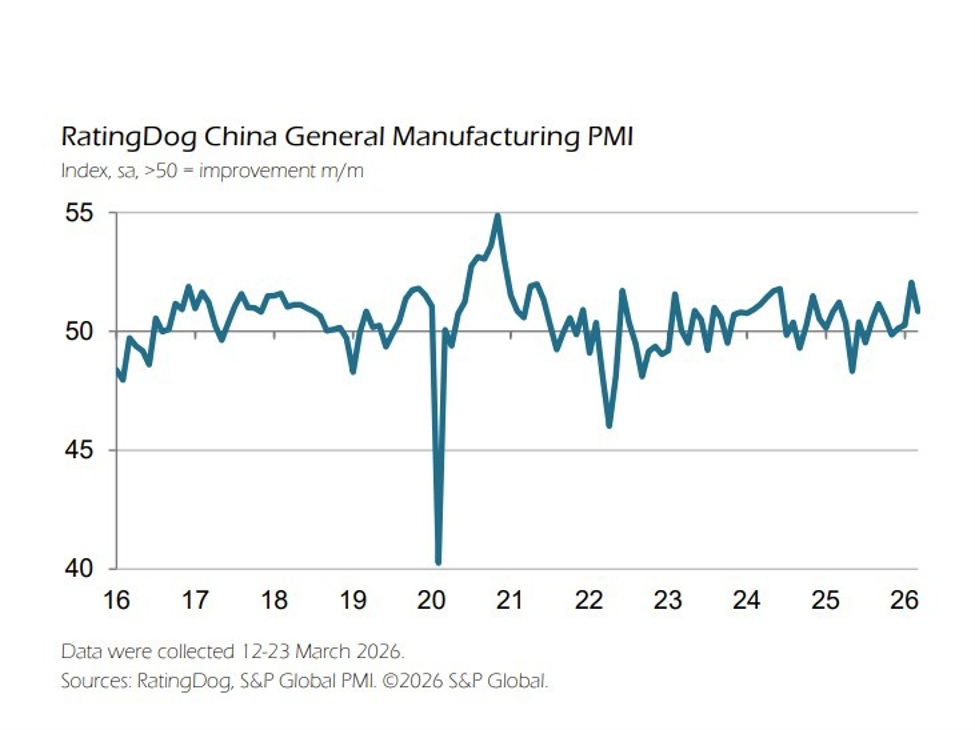
RatingDog / S&P Global China manufacturing PMI for March 2026. Yesterday we had the official PMIs. Summary:China manufacturing PMI at 50.8 (prev. 52.1), still in expansion for 4th straight month
Growth slows but remains second-strongest in six months
Output, new orders and employment all continue to rise
Input price inflation jumps to highest since March 2022
Output prices hit four-year high, signalling pass-through
Supply chains deteriorate: delivery times longest since Dec 2022
Middle East conflict cited as key driver of cost pressuresChina’s manufacturing sector continued to expand in March, though momentum cooled as rising cost pressures and supply chain disruptions began to weigh on activity.The headline PMI came in at 50.8, down from February’s recent peak of 52.1 but still above the 50 threshold that separates expansion from contraction. This marks a fourth consecutive month of growth, with operating conditions continuing to improve overall, albeit at a more moderate pace. Underlying demand remained supportive. Both output and new orders increased again, with firms citing stronger market demand, customer acquisition and competitive pricing. Export orders also rose, though at a slower pace than the prior month, suggesting some softening in external demand.Production expanded for a fourth straight month, while employment rose for a third consecutive month, marking the longest stretch of job creation since mid-2021. Firms also increased purchasing activity, reflecting ongoing efforts to meet demand.However, the survey highlighted a sharp deterioration in cost conditions. Input prices rose at the fastest pace in two years, driven by higher raw material costs and energy prices. Output prices also increased at the strongest rate in four years, indicating that firms are increasingly passing on these higher costs to customers.At the same time, supply chain pressures intensified. Supplier delivery times lengthened to the greatest extent since December 2022, reflecting disruptions linked to volatile input prices, capacity constraints and logistical challenges. Rising backlogs of work point to growing strain on production capacity.Despite these headwinds, manufacturers remain broadly optimistic about the year ahead, supported by expectations of improved demand, capacity investment and supportive government policy. However, sentiment has softened from recent highs.The data highlight a more complex macro environment. While domestic policy remains geared toward stability with moderate growth targets, external risks—particularly geopolitical tensions driving higher energy prices—are emerging as a key challenge. This combination of steady growth and rising inflationary pressure underscores the delicate balance facing China’s industrial sector in the months ahead.
This article was written by Eamonn Sheridan at investinglive.com.
💡 DMK Insight
China’s manufacturing PMI dipped to 50.8, but here’s why that matters: While still in expansion, the decline from 52.1 signals a slowdown in growth momentum, which could impact global markets. For traders, this PMI reading is crucial as it reflects underlying economic health and can influence commodity prices, especially in sectors reliant on Chinese demand. Watch for how this affects related assets like copper and oil, which often react to shifts in manufacturing activity. If the trend continues, we might see volatility in these commodities as traders adjust their positions based on anticipated demand changes. On the flip side, the fact that output, new orders, and employment are still rising suggests that the slowdown might be more of a cooling off rather than a full-blown contraction. Keep an eye on the 50 level; if PMI drops below that, it could trigger bearish sentiment across markets. For now, monitor the next PMI release and any related economic indicators for further insights into China’s economic trajectory.
📮 Takeaway
Watch for the next PMI release; if it drops below 50, expect increased volatility in commodities like copper and oil.