Bitcoin
  Ethereum
  Tether
  BNB
BNB  XRP
XRP  USDC
USDC  Solana
  TRON
TRON  Lido Staked Ether
  Figure Heloc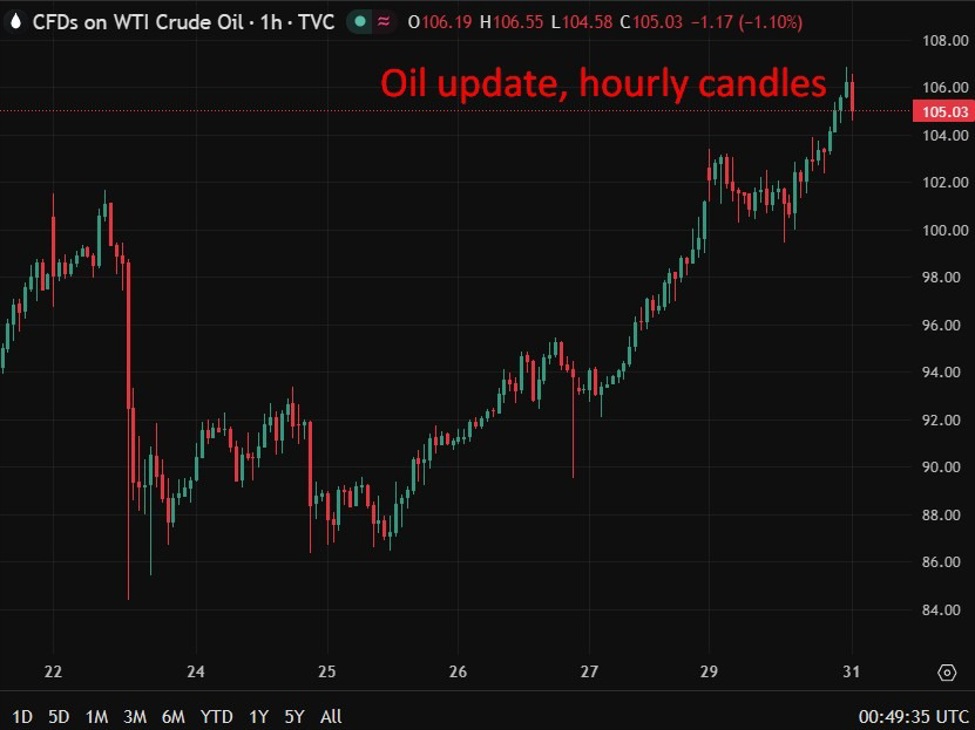
Trump is reportedly open to ending the Iran war without reopening the Strait of Hormuz, signalling a shift in priorities, though continued U.S. troop build-up suggests mixed messaging and ongoing risks to global energy flows. Wall Street Journal has the article, though (see below) I am wondering ifs its misdirection given the surge in US troops and other military assets in the region. Summary:Trump reportedly open to ending war without reopening Strait of Hormuz
Would prioritise degrading Iran’s military over restoring energy flows
Hormuz closure continues to disrupt global trade and energy markets
U.S. still deploying additional troops and assets to the region
Policy signals remain mixed, with shifting objectives and messaging
Raises risk of prolonged disruption despite potential de-escalationU.S. President Donald Trump is reportedly willing to wind down the military campaign against Iran even if the Strait of Hormuz remains largely closed, signalling a potential shift in strategic priorities as the conflict enters its second month.According to officials familiar with internal discussions, the administration is increasingly focused on achieving core military objectives, including degrading Iran’s naval and missile capabilities, rather than immediately restoring the flow of global energy through the critical shipping chokepoint. The Strait of Hormuz, which handles roughly 20% of global oil flows, has seen traffic reduced to a trickle following Iranian mining activity and threats against commercial vessels. The disruption has already pushed oil prices above USD100/bbl and triggered shortages across key industrial supply chains.Officials reportedly assessed that forcibly reopening the waterway would require a significantly longer and more complex military campaign, potentially extending beyond the administration’s preferred timeline. As a result, the current strategy appears to favour winding down active hostilities while shifting pressure onto diplomatic channels and allied nations to address the shipping disruption.However, the messaging remains fluid. Trump has alternated between downplaying the importance of the strait to the U.S. economy and threatening direct action against Iranian energy infrastructure if it is not reopened. At the same time, senior officials have suggested that securing freedom of navigation could be deferred to a later phase or handled through multinational efforts.Notably, the apparent willingness to tolerate a partially closed Hormuz sits uneasily alongside a continued build-up of U.S. military forces in the region, including additional naval deployments and the potential for expanded ground troop presence. This divergence raises the possibility that current rhetoric may reflect tactical signalling rather than a definitive shift in strategy.Overall, the evolving stance highlights a complex balancing act: pursuing de-escalation while maintaining pressure on Iran, even as the global economic fallout from disrupted energy flows continues to intensify.
This article was written by Eamonn Sheridan at investinglive.com.
💡 DMK Insight
Trump’s potential shift on the Iran war could shake up energy markets significantly. If he follows through, it might ease tensions that have kept oil prices elevated, especially with the Strait of Hormuz being a critical chokepoint for global oil supply. Traders should keep an eye on crude oil futures, particularly the WTI and Brent benchmarks, as any de-escalation could lead to a price drop. However, the ongoing U.S. troop build-up suggests that the situation remains precarious, and any sudden moves could trigger volatility. This mixed messaging could lead to uncertainty in the markets, making it crucial for traders to monitor geopolitical developments closely. Look for key resistance levels in oil prices around recent highs, and watch for any official announcements or actions from the U.S. government that could impact troop deployments or sanctions. The real story here is how quickly traders react to news—if tensions ease, we might see a rapid sell-off in oil, but if troop levels increase, expect the opposite. Keep your charts ready for sudden shifts in sentiment.
📮 Takeaway
Watch for crude oil price reactions around key resistance levels as geopolitical tensions evolve, particularly with any announcements regarding U.S. troop deployments.