Bitcoin
  Ethereum
  Tether
  BNB
BNB  XRP
XRP  USDC
USDC  Solana
  TRON
TRON  Lido Staked Ether
  Figure Heloc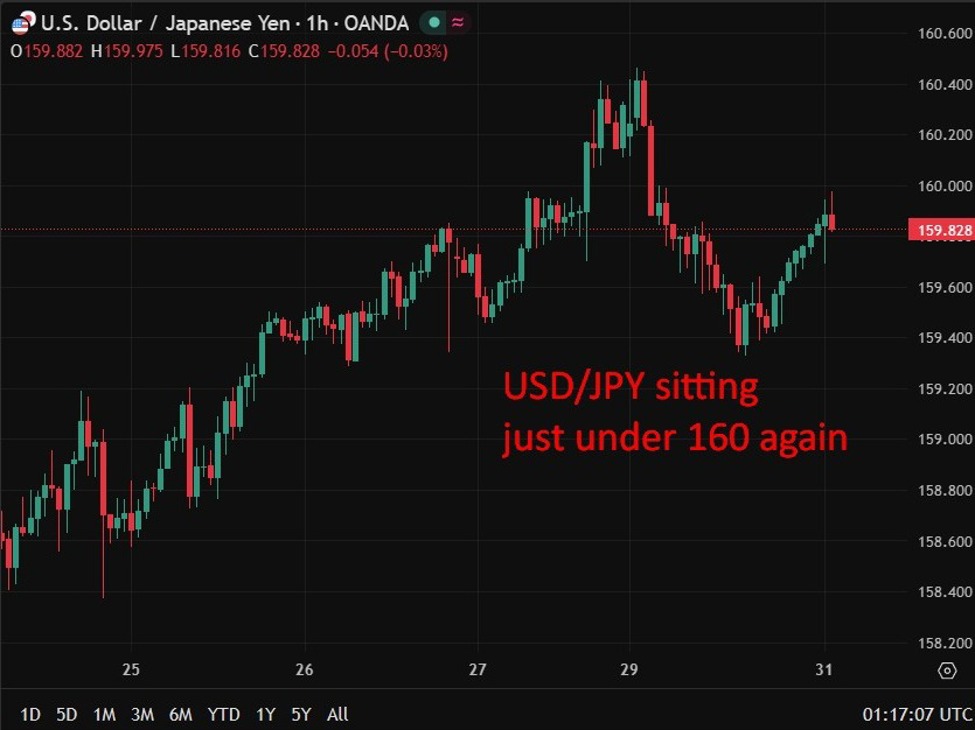
Summary:Tokyo CPI slowed to its weakest pace in four years in March
Headline inflation eased to 1.4% (prev. 1.5%)
Core CPI (ex-fresh food) slowed to 1.7% (exp. 1.8%)
Core-core inflation (ex-food, energy) eased to 2.3% (prev. 2.5%)
Government subsidies continue to suppress price pressures
Underlying inflation still above 2%, but momentum cooling
Inflation in Tokyo slowed to its weakest pace in four years in March, reinforcing the view that near-term price pressures in Japan are easing even as underlying inflation dynamics remain intact. Tokyo area March core CPI rises at slowest pace since April 2024
Tokyo area March core-core CPI rises at slowest pace since March 2025
Tokyo area March overall CPI rises at slowest pace since March 2022Headline consumer prices rose 1.4% year-on-year, down from 1.5% in February and marking the softest pace since March 2022. Core inflation, which excludes fresh food, also cooled to 1.7%, undershooting expectations and remaining below the Bank of Japan’s 2% target for a second consecutive month.A broader measure of underlying inflation, which strips out both fresh food and energy, eased to 2.3% from 2.5% previously. While still above target, the moderation suggests that momentum in price growth is softening, particularly as government measures continue to dampen energy and food costs.The slowdown reflects ongoing policy efforts to shield households from rising living costs, with subsidies helping offset the impact of higher import prices driven by a weaker yen. These measures have played a key role in containing headline inflation in recent months, even as global cost pressures remain elevated.However, the cooling trend is widely expected to prove temporary. Rising energy prices linked to the Middle East conflict, alongside persistent currency weakness, are likely to reintroduce upward pressure on inflation in the months ahead. At the same time, improving wage dynamics are expected to support a more durable inflation backdrop.For the Bank of Japan, the data reinforces a delicate balancing act. While the recent slowdown may reduce urgency in the near term, policymakers have signalled confidence that inflation will pick up later this year as subsidy effects fade and wage growth feeds through more fully.Overall, Tokyo inflation continues to point to a gradual transition rather than a reversal, with underlying price pressures still consistent with the central bank’s longer-term normalisation path.
This article was written by Eamonn Sheridan at investinglive.com.
💡 DMK Insight
Tokyo’s CPI slowdown is a big deal for traders watching Japan’s economic health. With headline inflation dropping to 1.4% and core CPI easing to 1.7%, this signals a potential shift in the Bank of Japan’s (BoJ) monetary policy stance. If inflation continues to trend down, the BoJ might delay any tightening measures, impacting the yen’s strength against major currencies. Traders should keep an eye on the USD/JPY pair, especially if it approaches key support levels around 130.00. The current inflation figures suggest that while price pressures are easing, they remain above the BoJ’s target, creating a complex scenario for monetary policy. This could lead to volatility in forex markets, particularly if the market reacts to any hints from the BoJ about future policy adjustments. On the flip side, if inflation unexpectedly rebounds, it could trigger a hawkish shift from the BoJ, leading to a rapid strengthening of the yen. Watch for any comments from BoJ officials in the coming weeks, as they could provide clues on the central bank’s next moves.
📮 Takeaway
Monitor USD/JPY closely; a break below 130.00 could signal further yen strength if inflation trends continue downward.