Bitcoin
  Ethereum
  Tether
  BNB
BNB  XRP
XRP  USDC
USDC  Solana
  TRON
TRON  Lido Staked Ether
  Figure Heloc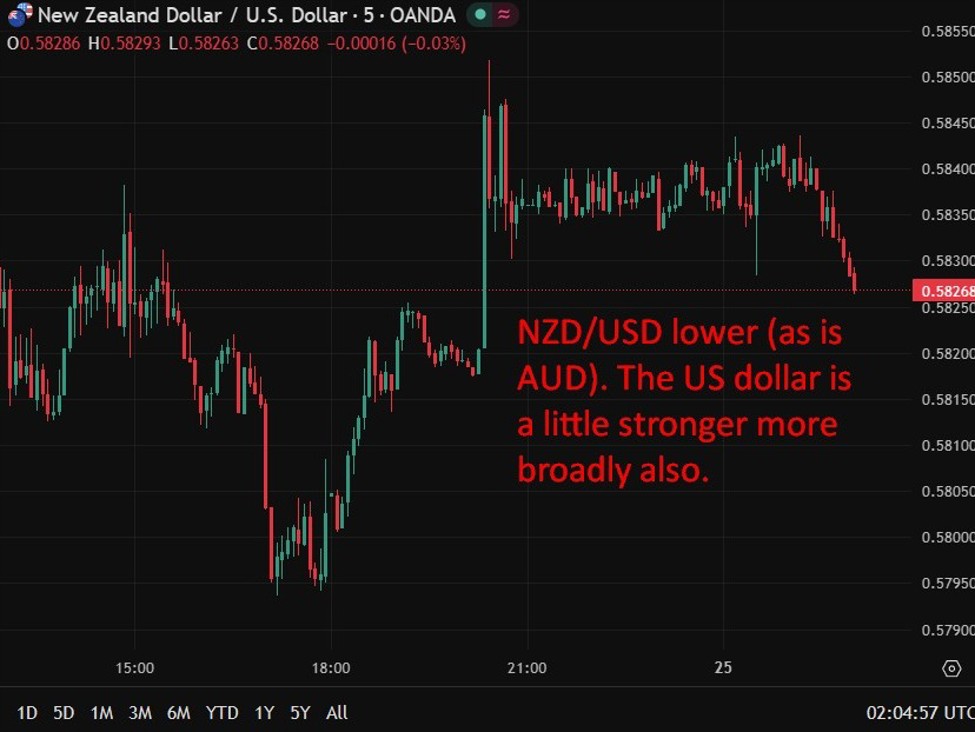
Summary:Conway frames cost of living as purchasing power, not just inflation, with NZ prices structurally high vs OECD
Pandemic inflation lifted price levels ~26%, while income growth only just kept pace
Real wages modestly higher, but purchasing power still only around OECD average
Middle East conflict flagged as a new inflation risk via energy and shipping costs
Monetary policy can anchor inflation but cannot fix affordability alone — productivity is key-
Westpac warns Q2 GDP contraction, rising unemployment and weak sentiment
RBNZ faces a stagflation-style squeeze → likely hold near-term before later normalisation
NZD outlook skewed softer near-term on growth hit, with policy path uncertain
Reserve Bank of New Zealand Chief Economist Paul Conway struck a measured but cautionary tone on the country’s economic outlook, arguing that the cost-of-living debate is being misunderstood and that structural weaknesses—not just inflation—are at the heart of New Zealand’s affordability challenges.In a speech focused on purchasing power, Conway emphasised that the true issue facing households is not simply the pace of price increases, but what incomes can buy. While inflation has moderated significantly from its pandemic peak above 7%, the cumulative rise in prices—around 26% since 2020—has permanently lifted the cost base of the economy. Income growth has broadly kept pace with that surge, but only just, leaving purchasing power largely unchanged. Real wages have risen modestly, supported in part by job switching and labour shortages, but broader income growth has slowed sharply compared to pre-pandemic trends. Crucially, Conway highlighted that New Zealand remains a structurally expensive economy, with prices for many goods and services sitting well above OECD averages, particularly in housing, utilities and construction. This means that even stable inflation does not resolve affordability pressures.On policy, the message was clear: monetary policy can deliver low and stable inflation, but it cannot meaningfully lift purchasing power on its own. Instead, sustained improvements require stronger productivity, better structural settings, and more competitive markets.The near-term outlook, however, has become more complicated. Conway acknowledged that the Middle East conflict is already pushing up global energy and shipping costs, creating fresh upside risks to inflation and forcing a reassessment of the central bank’s outlook ahead of the April review. This aligns with private sector views. Westpac now expects New Zealand’s economy to contract in Q2 2026 as higher fuel costs weigh on activity. The bank sees unemployment rising, house prices falling, and sentiment deteriorating sharply, leaving the RBNZ caught between elevated inflation and weakening growth.That combination points to a difficult policy trade-off. While inflation risks argue against easing, the growth outlook suggests the current stimulatory stance will need to be maintained in the near term. Westpac expects the central bank to hold the OCR steady for now before eventually moving toward normalisation later in the year.For markets, this reinforces a near-term stagflationary backdrop for New Zealand—where external shocks, rather than domestic demand, are driving inflation dynamics.
This article was written by Eamonn Sheridan at investinglive.com.
💡 DMK Insight
Conway’s perspective on purchasing power versus inflation is crucial for traders right now. With New Zealand’s prices structurally high compared to OECD averages, the recent 26% pandemic-driven price increase could signal a shift in consumer behavior. Traders should be aware that while real wages have seen modest growth, purchasing power remains stagnant, which could impact spending and economic growth. This context is vital for those trading NZD pairs, as a weaker purchasing power might lead to a bearish sentiment in the currency. Additionally, the mention of Middle East conflict adds another layer of geopolitical risk that could influence market volatility. Keep an eye on NZD/USD and related pairs for potential breakouts or breakdowns, especially if economic data releases show further strain on purchasing power. Watch for upcoming economic indicators that could reveal shifts in consumer sentiment or spending patterns, as these will likely affect currency valuations and trading strategies.
📮 Takeaway
Monitor NZD/USD closely for volatility, especially in light of economic data that may reflect changing purchasing power and consumer behavior.